
Southern Dirty Cabbage Skillet With Ground Beef and Smoked Sausage
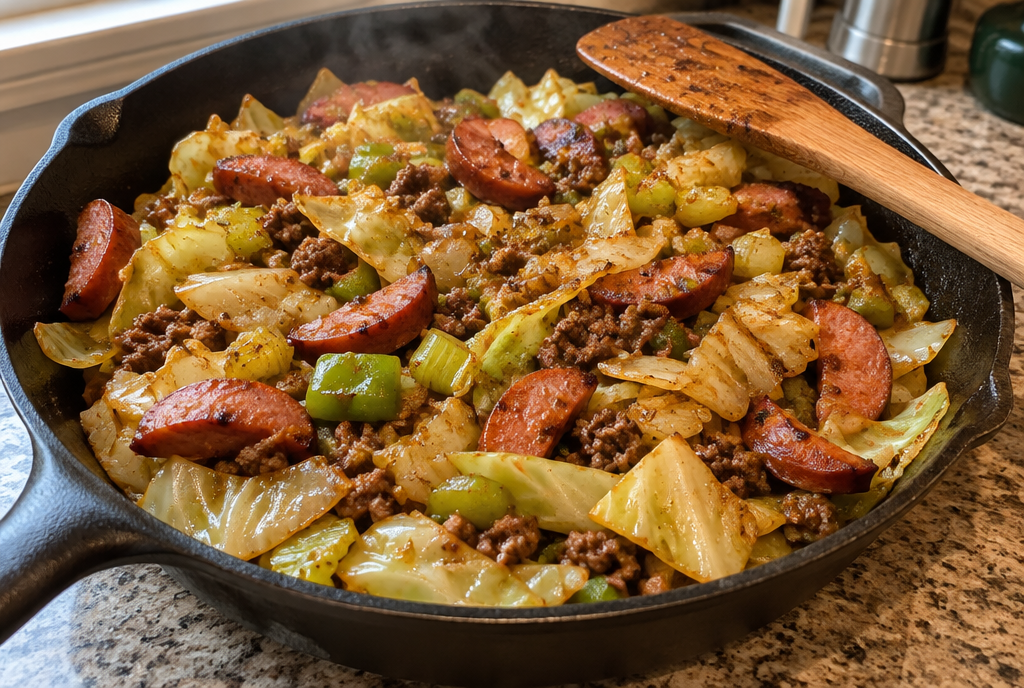
This dirty cabbage recipe combines tender green cabbage with deeply browned ground beef, sliced smoked sausage, onion, bell pepper, celery, garlic, and warm Cajun-style seasonings. It’s a one-pan American comfort-food dinner inspired by the savory, browned flavor of Southern dirty rice, but the cabbage takes the place of the rice. Expect a moist skillet dish rather than a soup or a creamy casserole.
Quick answer: brown sliced fully cooked smoked sausage and set it aside. Brown ground beef until a food thermometer reads at least 160°F (71°C). Soften onion, bell pepper, and celery with the meat, add garlic and spices, then fold in chopped cabbage, low-sodium broth, and Worcestershire. Cover just long enough to soften the cabbage, uncover to cook off extra liquid, and fold the sausage back through until hot. The result should show browned meat throughout the leaves, giving the dish its characteristic “dirty” appearance.
This is an original editorial formulation, not independently kitchen-tested. Times are approximate and vary with the skillet, cabbage, and heat settings. Use a thermometer for meat rather than relying on color.
Ingredients for 6 servings
- 1 pound (450 g) 90% lean ground beef
- 8 ounces (225 g) fully cooked smoked kielbasa or andouille-style sausage, sliced into 1/4-inch half-moons
- 1 small green cabbage, about 1 1/2 pounds (680 g) after trimming, chopped into 1- to 1 1/2-inch pieces
- 1 medium yellow onion (about 150 g), diced
- 1 medium green bell pepper (about 150 g), diced
- 2 celery ribs (about 100 g), diced
- 3 garlic cloves, minced
- 1 tablespoon (15 ml) olive oil
- 1 teaspoon sweet or smoked paprika
- 1 teaspoon salt-free Cajun-style seasoning
- 1/2 teaspoon dried thyme
- 1/4 teaspoon freshly ground black pepper
- 1/2 cup (120 ml) low-sodium beef broth
- 2 teaspoons Worcestershire sauce
- Fine salt, if needed, added only after tasting
Select an appropriate sausage based on its package instructions. This recipe assumes fully cooked sausage, not raw links. Andouille can vary in heat and salt, so use less Cajun seasoning if the sausage is especially assertive. Check Worcestershire and other condiments for allergens, including fish ingredients in some brands.
Kitchen equipment
Choose a large, wide, heavy-bottomed Dutch oven, sauté pan, or deep 12-inch skillet with a fitting lid. The cabbage starts out bulky and shrinks as it cooks; a small frying pan is not a good substitute for a spacious vessel. You also need a sharp knife, sturdy cutting board, wooden spoon or spatula, and an instant-read food thermometer for confirming the ground beef reaches 160°F.
A colander is useful for washing the cabbage. Use separate clean utensils for raw meat and cooked vegetables to reduce cross-contamination. If your skillet does not have a proper lid, use a suitable oven-safe cover designed for the pan, avoiding makeshift coverings that might melt or tip.
How to make dirty cabbage step by step
1. Cut the vegetables before starting the skillet
Remove damaged outer cabbage leaves, cut out the tough core, and chop the remaining leaves into bite-size pieces. Rinse under running water and drain thoroughly. Dice the onion, green bell pepper, and celery to similar sizes so they soften at about the same rate. Mince the garlic separately, because it enters the pan later and can burn if cooked with the onion from the beginning.
2. Brown the fully cooked smoked sausage
Heat the olive oil in a broad skillet over medium heat. Add the sliced fully cooked sausage in a single layer and cook about 3–4 minutes, turning once, until the cut surfaces have golden-brown patches. Transfer to a clean plate and keep aside. Leaving a thin film of flavorful fat in the skillet is useful, but remove excess if the sausage renders heavily.
3. Cook and brown the ground beef safely
Add the ground beef to the skillet and press it into an even layer. Leave it undisturbed briefly to develop a savory brown crust, then break it into small crumbles and continue cooking until a food thermometer confirms at least 160°F (71°C) in the meat. Do not trust a uniformly brown color by itself. This may take around 7–9 minutes depending on heat and pan size. If the pan collects a large pool of fat, drain excess carefully before adding vegetables.
4. Cook the onion, pepper, celery, garlic, and spices
Add the diced onion, bell pepper, and celery to the browned beef and stir over medium heat for 4–6 minutes until they begin to soften. Stir in the minced garlic for the last 30 seconds. Sprinkle paprika, salt-free Cajun seasoning, dried thyme, and pepper over the mixture; stir for another 30 seconds to distribute their aroma without scorching the spices.
5. Fold in the cabbage and a little broth
Add the cabbage in two or three batches if necessary, stirring between additions as the leaves wilt. Pour in the low-sodium beef broth and Worcestershire sauce, scrape up the tasty browned bits from the skillet bottom, then cover and reduce the heat to medium-low. Cook about 8–10 minutes, checking once or twice so the bottom remains moist and doesn’t stick.
6. Uncover and finish the cabbage texture
Remove the lid and cook a further 5–8 minutes, stirring gently, until the cabbage is tender but still holds some shape. The pan should be moist, not soupy; let excess broth evaporate rather than adding a thickener. Taste the cooking liquid first, because the sausage, Worcestershire, and broth contribute salt. Add a small pinch of fine salt only if needed.
7. Return the sausage and serve hot
Fold the browned smoked sausage back into the cabbage mixture and cook a few minutes until the sausage is thoroughly heated according to its package guidance. Stir carefully so the cabbage doesn’t collapse into a mash. Divide into six warm servings. For leftovers, move the food into shallow covered containers and refrigerate promptly, rather than leaving a large covered skillet on the counter.
What is dirty cabbage?
The “dirty” in dirty cabbage describes the appearance and flavor of the dish, not unwashed vegetables. The cabbage becomes flecked with darkened, seasoned ground meat and brown pan juices. The idea is similar to how Louisiana-style dirty rice gets its appearance from finely browned meat and aromatics. Dirty cabbage is a modern Southern-inspired home-cooking adaptation, and there is no single standardized formula that every cook uses.
Some versions include rice, some use ground beef alone, and others add smoked sausage. This version deliberately keeps the dish cabbage-forward and combines both ground beef and sausage for a bold main-course skillet. It does not claim to be a historically certified Cajun or Creole recipe. The purpose is a practical weeknight meal with recognizable ingredients and a satisfying, slightly smoky taste.
Why two kinds of meat?
Ground beef supplies small browned crumbles that coat the cabbage and create the signature “dirty” look. Sliced smoked sausage brings a different texture: meaty browned edges and bites that remain distinct against the soft vegetables. Using a moderate amount of sausage prevents the dish from becoming overwhelmingly salty or greasy.
Choose 90% lean ground beef when possible. Very fatty meat may release enough grease to leave the cabbage oily, in which case drain the pan after cooking the beef. A fattier sausage also contributes extra grease. Since brands vary, the instruction to taste the finished skillet before adding salt is important.
Fully cooked smoked kielbasa is an accessible substitute when andouille is unavailable. It generally has a milder flavor than spicy andouille, but the paprika and Cajun-style seasoning still build a seasoned Southern-inspired profile. If your sausage is uncooked, do not treat it as ready-to-eat; cook it according to its package instructions and appropriate safe-temperature guidance before combining it with the other ingredients.
Browning is the flavor-building step
A wide hot pan allows some moisture from the beef to evaporate and lets the surface brown. If you stir constantly from the first second, the beef may steam and turn gray without much depth. Pressing it into a thin layer and briefly leaving it in contact with the skillet creates caramelized edges that later mix into the cabbage.
The sausage browning step is similar: the cut sides develop a few golden patches before the slices are moved to a clean plate. Do not crowd all the sausage into a small pan. If needed, brown it in two batches. The goal is flavor, not a hard black crust; reduce the heat if the rendered fat starts smoking heavily.
Browning must not replace food safety verification. A brown exterior does not guarantee ground beef has reached the safe internal temperature. The FDA’s safe food handling guidance explains why a thermometer matters. Check the thickest patches or several small crumbles gathered together to get a representative reading of at least 160°F.
The Southern-style aromatic base
Onion, green bell pepper, and celery are a familiar aromatic combination in Louisiana-influenced cooking. The pieces should be small enough to mingle with the ground beef rather than forming large isolated vegetable chunks. Cook them until the sharp raw onion smell fades and the pepper becomes slightly tender.
Garlic goes in later because it can become bitter under prolonged direct heat. Start with paprika, dried thyme, and salt-free Cajun seasoning rather than a heavily salted commercial spice blend. The sausage already contributes seasoning, and Worcestershire adds savory complexity. The resulting blend is warming and smoky but not automatically fiery-hot.
A home cook who prefers less heat can use mild kielbasa instead of spicy andouille. For a hotter version, a small amount of cayenne can be added separately, but that would be a change from the measured baseline. Be clear when adapting spices: a “Cajun seasoning” label alone does not tell you how much sodium or chili it contains.
Choosing and cutting the cabbage
Green cabbage is sturdy and becomes sweeter as it softens, which makes it suitable for a long enough simmer to integrate with cooked meat. Start with a head that feels heavy for its size, has tightly held leaves, and shows no slimy or moldy sections. Remove rough outer leaves, cut around the central core, and chop the usable leaves into irregular squares roughly one to one and a half inches wide.
Very thin shredded cabbage cooks so quickly that it can turn mushy by the time the broth evaporates. Huge wedge-like pieces cook unevenly and can stay firm in the middle. Aim for consistent bite-size pieces without expecting perfect squares. The weight in the ingredient list refers to cabbage after removing the core and outer waste.
Wash the leaves under running water and drain them well. Excess surface water adds to the broth and delays browning at the finish. Don’t deliberately soak cut cabbage for hours before cooking. If you prep it earlier in the day, keep it covered and refrigerated until it goes into the skillet.
Why the lid matters—and when to remove it
Covering the skillet briefly traps steam, helping the bulky cabbage shrink and soften. The broth prevents the meat and spices from burning while the leaves release their own moisture. Because cabbage varies in water content, you may not need all the stated cooking time. Check after the first eight minutes and continue just until the thickest pieces begin to soften.
The uncovered finish is just as important. The pan juices need to concentrate so the seasonings cling to the cabbage rather than collecting as a watery puddle at the bottom. Stir only enough to prevent sticking. If the bottom looks dry while the cabbage is still firm, add two tablespoons of broth or water at a time, not another full cup.
Avoid boiling vigorously after the cabbage becomes tender. You want a mixture that looks generously coated with meat and darkened pan juices while still showing identifiable green leaves and half-moons of sausage.
How to tell when the skillet is finished
The finished meat should be fully cooked, and the cabbage should offer a tender bite without feeling stringy or raw. Some browned edges are desirable, but the pan should not taste scorched. The broth should have reduced enough that the vegetables are coated, not floating. Taste a small forkful of cabbage together with a little beef and sausage to judge the overall salt and spice balance.
For cooks who enjoy cabbage with more crunch, stop the uncovered stage sooner. Those who prefer softer cabbage can cover the pan for a few additional minutes, adding a splash of water if the bottom dries. Neither result changes the food safety requirement for the ground beef, which must already have reached 160°F.
If the pan looks greasy, tilt it slightly and spoon off excess surface fat before serving. Do not try to absorb the grease with dry flour or breadcrumbs, which would make a different dish.
Common mistakes and their fixes
Too much liquid: The cabbage released water, or the pan was narrow. Uncover and simmer a few more minutes, stirring so the meat doesn’t stick. Don’t add flour simply to imitate gravy.
Cabbage turned mushy: It was shredded too finely or covered for too long. Cut larger pieces next time and check the texture earlier. A little chew is a feature in a skillet dish, not a flaw.
Too salty: Smoked sausage, Worcestershire, Cajun seasoning, and broth can all contain sodium. Begin with a salt-free spice blend and low-sodium broth. Never add the optional fine salt until the very end.
Meat looks gray: The skillet may have been crowded or stirred too often before browning. Brown in batches if needed while still cooking ground beef fully and checking 160°F with a thermometer.
Spices taste burnt: Paprika and dry spice blends can scorch quickly. Add them with the cooked vegetables and stir briefly before the cabbage and broth go in.
Uneven sausage texture: Brown the fully cooked slices first, set aside, then return them close to serving. This preserves seared edges without letting them turn rubbery during the full cabbage simmer.
What to serve with dirty cabbage
This is substantial enough to serve as a main course, especially when using the full beef and sausage quantities. Some families serve it alongside white rice, cornbread, or roasted potatoes, but those sides are optional and not part of the recipe. If you want a lighter plate, a simple salad or cooked vegetables can accompany a smaller scoop.
For other cabbage ideas on MySavorista, compare our bacon and cabbage sliders for a sandwich-style use of cabbage. Our air fryer egg rolls use cabbage in a completely different crispy appetizer format. For another beef-centered, Cajun-inspired comfort meal, the Cajun skillet meatloaf bake shows how a similar seasoning direction can work in a baked dish. These are reading suggestions, not instructions to put additional ingredients in the dirty cabbage.
Make-ahead planning
You can trim and chop the cabbage, onion, bell pepper, and celery in advance. Store them in separate closed containers in the refrigerator, then cook the meat when you’re ready to make dinner. Keep raw ground beef refrigerated and separate from washed vegetables. Don’t chop vegetables on a board contaminated with raw beef unless it has been properly washed and sanitized.
The cooked skillet can be refrigerated in shallow portions for meal prep. Warm it on the stove with a spoonful of water if needed to prevent sticking; a short reheat can soften the cabbage further, so stir gently. Reheat leftovers to 165°F (74°C) as indicated by CDC food-safety guidance.
How to store dirty cabbage safely
The FDA safe food handling recommendations emphasize prompt chilling of cooked foods. Divide leftovers into shallow containers and refrigerate within two hours of cooking, or within one hour when conditions exceed 90°F (32°C). Maintain a refrigerator temperature of 40°F (4°C) or below. Use refrigerated leftovers within three to four days, or freeze portions for longer storage.
Freeze in sealed, correctly labeled meal-size portions. Thaw in the refrigerator, then heat thoroughly. The cabbage may soften more after thawing because frozen vegetables release water during reheating. This is a quality change, not proof that the meal can safely be stored without refrigeration.
Don’t keep a large batch sitting in a switched-off skillet for several hours. Even if the pan retains some heat, cooked ground beef and sausage are perishable. The recipe isn’t intended for canning or pantry storage.
Frequently asked questions
What makes dirty cabbage “dirty”?
The name describes the dark brown flecks of seasoned meat and pan juices mixed through the cabbage, by analogy with dirty rice. It does not mean leaving the cabbage unwashed; rinse and trim it before cooking.
Is dirty cabbage traditionally made with rice?
Some modern versions include rice, but this particular skillet uses cabbage in place of rice. It is Southern-inspired and does not claim to be one specific historical Cajun or Creole preparation.
Can I use ground turkey instead of ground beef?
You can adapt the dish, but ground turkey must reach 165°F (74°C) rather than the 160°F used for ground beef. Lean turkey may need more attention to moisture and browning.
Is smoked kielbasa the same as andouille?
Not exactly. Smoked kielbasa is often milder, while andouille typically has a more pronounced smoky and spicy profile. Use only fully cooked sausage for this step sequence and check the packaging.
Why does my cabbage end up watery?
Cabbage releases moisture as it softens. A crowded narrow pot also slows evaporation. Finish uncovered for a few minutes, stirring occasionally, and stop when the juices coat the leaves rather than pooling.
Can I prepare the dish without extra salt?
Yes. Salt-free Cajun seasoning and low-sodium broth help because the smoked sausage and Worcestershire already add salt. Taste the finished dish and use the optional pinch only if necessary.
How do I know the ground beef is safe to eat?
Use a food thermometer to confirm at least 160°F (71°C). Ground beef can look brown before it reaches a safe internal temperature, so color alone isn’t a reliable safety test.
Can I refrigerate dirty cabbage and reheat it?
Yes. Refrigerate within two hours in shallow containers, keep at 40°F (4°C) or below, and generally use within three to four days. Reheat leftovers to 165°F (74°C) before serving.
Editorial transparency and reliable food-safety sources
This recipe is a new, original AI-assisted editorial formulation and has not been independently kitchen-tested. Ingredient amounts, cook times, texture cues, and optional adaptations describe a plausible home-cooking procedure, not a physically verified cooking session. The featured image is an AI-generated illustration of the intended food appearance, not a photograph of a meal actually prepared by our editorial team. No laboratory nutrition analysis or independent allergen certification is claimed.
For temperature guidance, the FDA’s safe food handling reference lists 160°F for ground beef and 165°F for cooked leftover foods; the CDC’s food-safety overview also explains thermometer use and prompt refrigeration. These authoritative references support the safety advice but do not imply that our particular recipe was independently tested.
Editorial transparency: This recipe has not been independently kitchen-tested. This original AI-generated illustration is a visual representation of the planned recipe, not a photograph of a physical cooking session. Follow FDA safety temperatures and refrigerator guidance.
Print
Southern Dirty Cabbage Skillet with Ground Beef and Smoked Sausage
- Prep Time: 15 minutes
- Cook Time: 35 minutes
- Total Time: 50 minutes
- Yield: 6 servings 1x
- Category: Dinner
- Method: One-pan stovetop skillet
- Cuisine: American, Southern-inspired
Description
Southern-inspired one-pan dirty cabbage with browned ground beef, fully cooked smoky sausage, tender green cabbage, onions, bell pepper, celery and warm Cajun-style spices.
Ingredients
1 pound (450 g) 90% lean ground beef
8 ounces (225 g) fully cooked smoked kielbasa or andouille-style sausage, sliced into 1/4-inch half-moons
1 small green cabbage, about 1 1/2 pounds (680 g) after trimming, cut into 1- to 1 1/2-inch pieces
1 medium yellow onion (about 150 g), diced
1 medium green bell pepper (about 150 g), diced
2 celery ribs (about 100 g), diced
3 garlic cloves, minced
1 tablespoon (15 ml) olive oil
1 teaspoon sweet or smoked paprika
1 teaspoon salt-free Cajun-style seasoning
1/2 teaspoon dried thyme
1/4 teaspoon freshly ground black pepper
1/2 cup (120 ml) low-sodium beef broth
2 teaspoons Worcestershire sauce
Fine salt to taste, added only after cooking
Instructions
Trim and rinse the cabbage, remove the tough core and cut leaves into bite-size pieces. Dice onion, bell pepper and celery; mince garlic separately.
Heat oil in a wide covered skillet over medium heat. Brown sliced fully cooked smoked sausage for about 3–4 minutes, turning once, then move it to a clean plate.
Add ground beef and brown while breaking into small crumbles, about 7–9 minutes depending on the pan. Verify a food thermometer reads at least 160°F (71°C); drain excess grease if needed.
Add onion, green bell pepper and celery to the beef and cook 4–6 minutes until softened. Stir in garlic for 30 seconds, then paprika, salt-free Cajun seasoning, thyme and black pepper for another 30 seconds.
Add chopped cabbage in batches and toss to wilt. Pour in low-sodium beef broth and Worcestershire sauce, scraping up browned skillet bits. Cover, lower the heat and cook 8–10 minutes, checking for sticking.
Uncover and cook 5–8 more minutes, stirring gently, until cabbage is tender and excess liquid reduces. Taste before adding any optional salt.
Return the browned fully cooked sausage and heat thoroughly according to its package guidance, then serve hot. Refrigerate leftovers promptly in shallow covered containers and reheat leftovers to 165°F (74°C).
Notes
Original AI-assisted editorial recipe, not independently kitchen-tested. Safety: verify ground beef reaches 160°F (71°C) by thermometer; if changing to ground turkey, cook to 165°F (74°C). Uses only fully cooked smoked sausage; handle raw links per label and required cooking temperatures. Cooked leftovers should be chilled within 2 hours (1 hour above 90°F), stored at or below 40°F, used within 3–4 days or frozen, then reheated to 165°F. Worcestershire may contain fish, and smoked sausages may contain additional allergens; read labels. No verified nutrition analysis.
Nutrition
- Serving Size: 1/6 of prepared skillet
Keywords: dirty cabbage recipe, Southern dirty cabbage, ground beef and cabbage skillet, dirty cabbage with smoked sausage
2 thoughts on “Southern Dirty Cabbage Skillet with Ground Beef and Smoked Sausage”