
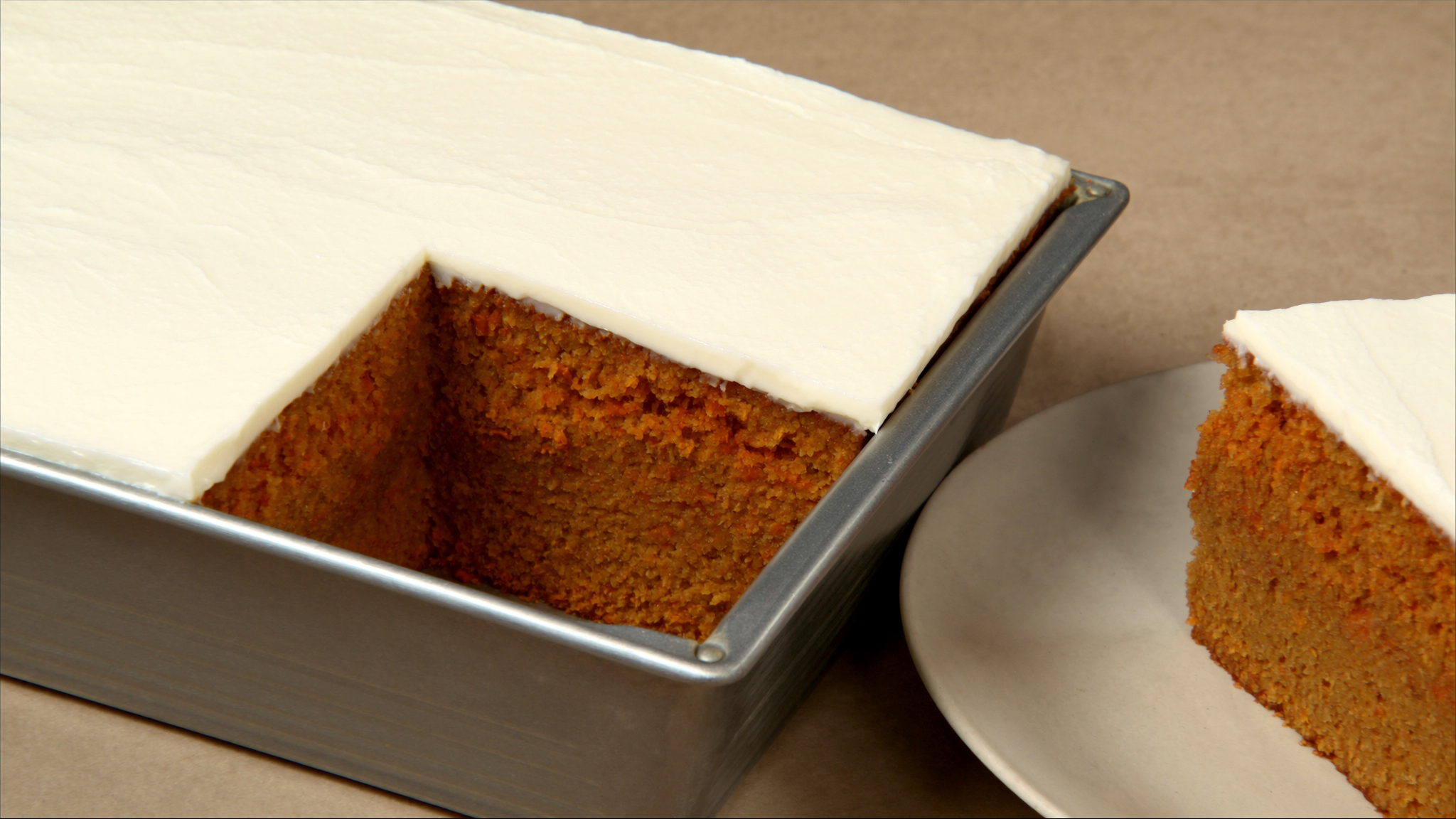
Carrot cake sheet cake with a smooth cream cheese frosting
For anyone searching the exact phrase carrot cake cake recipe, this original American sheet cake offers a clear, practical answer: a single-layer 9×13-inch carrot cake made with freshly grated carrots, cinnamon, a little ground ginger, eggs, vegetable oil and unsweetened applesauce. After baking and complete cooling, it receives a smooth, thin, pale cream-cheese frosting. The carrot flecks should be visible inside the warm orange-gold cake crumb, but there are no whole carrot pieces on top. This is not a two-layer celebration cake, a bundt, muffins, a loaf, or a nut-heavy cake. The exact recipe intentionally excludes walnuts, pecans, raisins, pineapple, coconut and decorative carrot shapes. MySavorista developed this as an original editorial formula, and it has not been independently kitchen-tested. AI photographs are illustrative and do not prove real baking.
Quick guide to the ingredients and oven
Use two cups of all-purpose flour, one and a half cups granulated sugar, two teaspoons baking powder, one teaspoon baking soda, two teaspoons ground cinnamon, half a teaspoon ground ginger and half a teaspoon fine salt. Whisk four large eggs with three-quarter cup neutral oil, half a cup unsweetened applesauce and two teaspoons vanilla, then fold with the dry ingredients and three cups finely grated raw carrots. Spread in a lined or greased 9×13-inch pan and bake in a preheated 350°F oven approximately 30–38 minutes until the center is baked, checking with a toothpick for raw batter. Cool completely before spreading frosting made from eight ounces cream cheese, one-quarter cup unsalted butter, one and a half cups powdered sugar, a teaspoon vanilla and a pinch of salt. Refrigerate the cream-cheese-frosted cake.
Why a single-layer carrot cake is practical
A 9×13-inch rectangular cake does not require stacking rounds, trimming domes or making a thick frosting center. One even batter layer makes it easier to portion into twelve to fifteen squares for a family dessert. The pan also presents a recognizable home-baked look: one golden layer with real orange carrot flecks and one thin flat pale cream-cheese top. It is not supposed to look like a towering bakery wedding cake. A sheet cake can be easier to transport and slice than tall layers, though this one still needs temperature control because its frosting contains cream cheese. The exact portion count depends on how the cake is cut; we have not measured baked weights. An untested recipe should present practical starting dimensions rather than an invented guarantee of perfectly uniform squares.
Use finely grated fresh carrots
Measure about three lightly packed cups of freshly grated raw carrots, roughly 300 grams depending on moisture and shred size. Wash and peel them as appropriate, trim the ends and grate them finely using a box grater or food processor grating disc. Smaller shreds distribute more evenly through the batter and show distinct orange flecks when a square is cut. Do not boil or puree the carrots, and do not use a large quantity of packaged dried carrot chips. Thick shredded pieces may remain more noticeable in the cake and produce a different visual texture. The ingredients include carrot only inside the batter, not whole baby carrots placed on the frosting. If you use store-bought pre-shredded carrots, their dryness or thickness may change the result from the intended fine grate.
Why raw carrots are not a cake garnish
Fresh carrots belong in the cake batter in this recipe. Adding whole peeled carrots, green tops, bright orange marzipan carrots or piped carrot-shaped icing to the frosting would change the appearance and the ingredient list. Real carrot cake can be recognizable without decorative props: orange flecks in a tender spice cake under white frosting tell the story. For photography, a removed square can expose the crumb and show the shredded carrot naturally, while the top remains smooth. A few ordinary crumbs on the serving plate are acceptable, but fake sprigs or an unexplained orange fruit garnish are not. Keeping the recipe plain also makes the cream-cheese frosting’s texture easier to judge. The main target is an authentic 9×13 sheet cake rather than a decorated pastry-shop display.
Weigh or measure the flour consistently
The recipe uses two cups of ordinary all-purpose wheat flour, approximately 250 grams when measured correctly. For more repeatable results, a kitchen scale is preferable. If using cups, spoon flour into the vessel and level the top rather than packing a scoop directly from a compressed bag. Too much flour can leave the crumb dense, while too little can make it difficult to hold a slice. The formulation was written for wheat flour and has not been verified with almond flour, coconut flour or gluten-free blends. Those alternatives absorb liquids differently and should not be assumed equivalent. Flour is also a raw food, so do not taste uncooked batter to decide whether sugar needs adjusting. Keep raw flour away from the ready-to-eat frosting utensils.
Granulated sugar supports texture and browning
One and a half cups granulated sugar, approximately 300 grams, is mixed with the dry ingredients. Sugar affects tenderness, surface browning and moisture, not just the perceived sweetness. The cream-cheese frosting adds sweetness later, so we do not include a sugar syrup soak, caramel drizzle or extra coarse sugar on top. Reducing the sugar by half would change the formula, and this editorial version has not been tested for that adjustment. Do not claim the finished cake is low-sugar or designed for a medical diet; no nutrient calculation is provided. The sugar should dissolve during baking, leaving a fine golden crumb with visible carrot flecks and warm spice. Thick crunchy sugar crystals on the finished frosting are not part of the intended result.
Baking powder and baking soda serve different roles
Two teaspoons baking powder and one teaspoon baking soda are included, mixed thoroughly with the flour before wet ingredients are added. These leaveners help the cake rise and produce a soft crumb. The baking soda is balanced within the overall wet batter and applesauce formulation, but no exact acidity measurement was performed. Check that both powders are fresh and stored dry; old leavening can leave a flatter cake. Do not double either powder in the hope of producing a giant professional dome. The recipe is intended for a level rectangular cake that will be frosted, not a tall rounded loaf. Spread the batter evenly, and avoid vigorous mixing after adding flour, which can affect crumb tenderness. This process differs from creaming butter for a pound cake.
Cinnamon and ginger make the spice profile
Two teaspoons ground cinnamon and half a teaspoon ground ginger give the cake a warm familiar flavor without introducing cloves, nutmeg, allspice or pumpkin pie blend. Stronger spices can be delicious in other recipes, but those additions are not part of this exact ingredient list. The cinnamon should be distributed with the flour so no dark pocket appears in one slice. Ground ginger is subtle, supporting the carrot rather than tasting like a gingerbread cake. If the jars are old and have little aroma, the finished flavor may be muted; replace stale ground spices rather than measuring an enormous extra quantity. The photo should show a naturally warm orange-gold crumb, not a dark brown chocolate cake or pieces of whole cinnamon stick in the dessert.
Four large eggs create structure
Use four large eggs, cracked individually into a clean bowl so stray shell fragments can be removed. Whisk them with oil, applesauce and vanilla until reasonably even before combining with the flour mixture. Raw eggs require clean-handling practices and are not safe to taste in uncooked cake batter. The four-egg amount is specific to a broad sheet cake with three cups grated carrots; replacing all eggs without a separately tested formula can alter structure and moisture. The fully baked cake should hold square portions, not be wet in the center or crumbly enough to fall apart when lifted. Keep raw egg tools separate from ready-to-eat frosting tools or wash them thoroughly. The oven does the cooking; an attractive batter color does not establish doneness.
Neutral vegetable oil for a tender cake
Three-quarter cup neutral oil helps keep the carrot cake soft without requiring butter to be creamed into the batter. A mild canola or other neutral vegetable oil is appropriate; strong flavored oils might distract from carrot and cinnamon. Use a clear liquid measuring cup and avoid accidentally adding a full cup. There is also butter in the frosting, but the cake batter itself does not contain melted butter. The combination of oil and applesauce is intended to make a moist crumb, not a greasy one. An excessive amount of oil can cause a shiny wet surface and poor slicing. We have not physically tested the formulation and cannot promise identical texture with every oil brand; the measured amount is a practical starting point for the defined pan.
Unsweetened applesauce in place of pineapple
Half a cup unsweetened smooth applesauce contributes moisture without chunks of pineapple, crushed canned fruit or raisins. Use a plain product so no unlisted cinnamon or sweetener appears in the formula. The applesauce is blended with the eggs, oil and vanilla and should disappear into the crumb rather than form visible apple pockets. This choice keeps the cake’s main fruit-and-vegetable identity focused on carrot. Other carrot cakes may include pineapple or shredded coconut; those are different formulas and require altered liquid balance. Do not insert pineapple tidbits into an image simply because some carrot cakes use them. The finished square should show small orange grated carrot flecks, a soft golden crumb and pale frosting, not yellow pineapple chunks or large raisins embedded in the slice.
Vanilla in both cake and frosting
Use two teaspoons vanilla extract in the wet cake mixture and one additional teaspoon in the cream-cheese frosting. These are separate measured additions, and the total ingredients list should make that distinction clear. Vanilla supports the cinnamon-carrot flavor without adding a visibly different ingredient to the baked cake. Avoid almond extract or imitation butter flavor when reproducing the exact primary version. The frosting’s vanilla should be blended until smooth, without visible dark streaks. If a product is unusually concentrated, check the manufacturer’s instructions rather than automatically adding the same volume. Neither vanilla addition makes a raw egg batter safe to taste. The cake should bake fully before any frosting is applied, and all utensils used for ready-to-eat frosting should be clean.
Prepare a 9×13-inch baking pan
Use a standard 9×13-inch rectangular baking pan and grease it lightly or line with parchment so the cooled cake can be lifted safely. Parchment should remain inside the pan and not approach oven heating elements. A different pan size changes the depth of the batter and therefore the cooking time; a 9-inch round pan would create a much thicker cake that needs its own instructions. Check the pan manufacturer’s temperature guidance and set it on a level oven rack. Before mixing the batter, turn the conventional oven to 350°F, approximately 175°C, so it is fully heated when ready. Do not put cream-cheese frosting into the oven or bake the cake in a frosting-lined pan. Prepare the pan while all cold dairy remains safely refrigerated.
Mix the dry ingredients until evenly distributed
In a large clean bowl whisk together flour, granulated sugar, baking powder, baking soda, cinnamon, ground ginger and fine salt. The powder mixture should have a uniform pale brown tint from cinnamon without clumps of leavener. Using a whisk is useful but does not require heavy electric beating. Measure one-half teaspoon fine salt for the full cake; it balances sweetness without making a savory dessert. Do not add chopped nuts, raisins, coconut or decorative sugar during this stage. This recipe is deliberately simpler than many loaded carrot cakes. Mixing the dry components well helps avoid strong baking-soda pockets or uneven spice in the finished squares. When the wet batter arrives, fold gently rather than beating for an extended time.
Combine eggs, oil, applesauce and vanilla
In a second clean bowl whisk four large eggs, three-quarter cup neutral oil, half a cup unsweetened applesauce and two teaspoons vanilla until the mixture looks evenly combined. The oil may form tiny droplets before being incorporated, which is natural, but no large intact yolks should remain. Pour this wet mixture into the dry bowl shortly before adding the carrots. Avoid tasting it because raw eggs remain present. Do not add milk, yogurt, pineapple juice or melted butter; they are not listed in the cake formula. If the applesauce came from a refrigerated jar, use a clean spoon and promptly return the remaining product to appropriate storage. It does not need to be cooked separately before joining the cake batter.
Fold the shredded carrots without crushing them
After the wet and dry components come together into a thick batter, fold in three cups finely shredded raw carrots with a broad spatula. Stop when carrot flecks are distributed rather than stirring until they disappear into a puree. Small orange shreds should remain recognizable in the baked crumb. Do not add walnuts, raisins, coconut, pineapple, apples pieces or chocolate chips at this stage. Those ingredients are common in other carrot cakes, but they change the flavor, texture, and photographed food identity of this version. The batter should be thick but spreadable across a rectangular pan, not watery like pancake batter or stiff like cookie dough. If the batter appears unexpectedly dry, recheck whether the flour was overmeasured before making arbitrary liquid additions.
Spread the batter level in the pan
Use a clean spatula to transfer the completed cake batter into the prepared 9×13-inch pan. Spread it toward all four corners in an even layer without pressing it down hard or leaving a deep mound in the center. A more level surface helps the cake bake evenly and makes it easier to apply a smooth frosting top after cooling. Tap the pan gently to settle any very large air pockets, but do not vigorously shake or bang it against a fragile counter. The batter contains eggs and raw flour and should not be tasted. Place the filled pan directly into the preheated 350°F oven rather than leaving it on a warm stove for a long period. The finished cake should be one continuous rectangular sheet, not separate carrot muffins.
Bake around thirty to thirty-eight minutes at 350°F
Bake on a middle oven rack in a conventional oven already at 350°F, approximately 175°C. Begin checking around thirty minutes and allow approximately thirty to thirty-eight minutes as an editorial starting range. A darker metal pan, ceramic dish or poorly calibrated oven can change the actual duration. The center should spring back gently and a toothpick inserted into a cake-only area should come out without wet raw batter; a few moist baked crumbs can be acceptable. Do not rely on a golden top alone, especially with carrots adding moisture. If the center is visibly raw, continue baking in short increments rather than immediately frosting it. We have not independently tested the exact timing and do not represent it as a universal guarantee.
How to avoid a raw center and dark edges
A sheet cake can brown near its edges before the deepest center is baked, especially in a dark pan or an oven that runs hotter than its dial. Use a middle rack and check the actual center with a clean toothpick. If the edges become overly dark while the center remains underbaked, consider lowering the temperature slightly or using a suitable loose shield, without letting foil touch a heating element. Avoid opening the oven repeatedly in the first part of baking, which can cause temperature fluctuations. Do not add cream-cheese frosting to a cake with raw batter in the middle or assume cooling will cook it completely. The goal is a tender fully baked crumb with visible carrot flecks, no wet shiny streaks and no bitter burned crust.
Cool completely before making a clean frosting layer
Set the baked cake pan on a stable wire rack and let it cool thoroughly. A warm cake can melt cream-cheese frosting, causing it to slide into translucent puddles and soak unevenly into the crumb. Do not place a hot glass or metal pan directly into a refrigerator without considering appliance and dish safety; let it cool safely first. The exact cooling time depends on ambient temperature, cake depth and pan material, so wait until the cake is genuinely cool rather than setting an arbitrary 15-minute rule. If using parchment, you may lift the cooled cake carefully to a clean board before frosting and cutting. An authentic finished photo should show one even pale frosting layer on a room-temperature or safely chilled cake, not melted white drips.
Cream-cheese frosting ingredients and proportions
For a relatively thin smooth frosting layer on a 9×13 sheet cake, use eight ounces plain full-fat cream cheese, one-quarter cup unsalted butter, one and a half cups powdered sugar, one teaspoon vanilla extract and a tiny pinch fine salt. Both cream cheese and butter should be softened enough to mix but should not be left at room temperature for extended periods. The frosting is not a shelf-stable icing unless a validated formulation demonstrates that; this recipe has no such laboratory testing. Keep the dairy refrigerated before preparation and store the finished frosted cake cold. Do not substitute whipped cream, canned white frosting or a thick buttercream without updating the ingredient list. The target is a modest flat cream-cheese layer, not a giant piped frosting tower.
Beat cream cheese and butter only until smooth
Place softened cream cheese and unsalted butter in a clean bowl and beat briefly with a hand mixer or sturdy spatula until the mixture looks smooth. Large cold lumps can create uneven frosting that tears the cake during spreading. Add powdered sugar gradually at low speed so it does not form a cloud across the kitchen, then blend in vanilla and salt. Stop once the frosting looks pale, creamy and spreadable; there is no need to whip it into a very airy mousse. Use clean utensils that have not contacted raw cake batter. If the frosting becomes too soft, chill it briefly rather than pouring in many unmeasured cups of sugar. The finished frosting should look like a natural thin cream-cheese top with small spatula marks.
Spread the frosting without decoration
Once the cake is fully cool, transfer the frosting to the center and use a clean offset spatula or ordinary butter knife to move it toward the edges in an even pale ivory layer. It is fine to have subtle home-style swirls or a few spatula tracks, but not tall piped rosettes or fake carrot shapes. Do not dust the surface with cinnamon, chopped walnuts, cocoa, coconut, orange zest or colored sprinkles. No garnish is listed in the recipe, so none should be added for photography. A small amount of frosting can meet the sides, but the intended cake has one visible cake layer and one white frosting layer. This simple appearance helps readers see the actual carrot crumb when a square is lifted from the pan.
Cut into squares after the frosting sets
For serving, lightly chill the frosted cake so the cream-cheese layer is more stable, then cut into twelve or fifteen squares with a clean sharp knife. Wipe the blade between cuts when needed for cleaner edges. The precise number of portions is flexible because the cake’s dimensions are known but the finished cake weight has not been independently measured. One removed square shows a golden carrot-flecked interior below a pale frosting top, which can make an appetizing honest serving photograph. Do not stack three pieces into an invented multi-layer cake. A single square on a plain plate alongside the actual sheet cake can demonstrate the result without adding extra fruit or nuts. Handle the cold cake cleanly and refrigerate remaining portions promptly.
Food safety: never eat raw cake batter
The FDA warns that flour is a raw food and recommends not tasting raw dough or batter. The CDC also explains risks of raw flour and eggs. Children should not lick mixing spoons before baking, even when a batter smells delicious. Keep bowls, whisk and mixer beaters that touched uncooked batter away from ready-to-eat frosting ingredients until washed. The cake must be fully baked, not simply browned on top. Do not describe raw carrot cake batter as an edible treat or use it to make uncooked milkshakes. The safest workflow is to mix, bake, clean the raw-work area and only then make the perishable cream-cheese frosting on clean equipment.
Cream-cheese frosting requires cold storage
Cream cheese is a perishable dairy ingredient, so this unfrozen, untested cream-cheese frosting should not be assumed safe at room temperature for extended periods. Iowa State University Extension discusses refrigeration for cream-cheese frosting. Store the finished cake covered in a refrigerator at 40°F or below and do not display it on an unrefrigerated table all afternoon. For household servings, remove only the pieces needed and return the remainder promptly to cold storage. This recipe’s frosting sugar amount has not undergone pH or water-activity testing and cannot be claimed shelf-stable for cottage-food sale. If travelling to an event, transport the cake chilled with appropriate food-safe cold holding.
How long can frosted carrot cake be stored?
Storage safety depends on the freshness of the eggs and dairy, the cleanliness of the kitchen, and how long the cake has spent outside refrigeration. A conservative approach is to keep the cream-cheese-frosted sheet cake in a clean covered container in the refrigerator and use it within roughly three to four days if handled safely, without promising an independently verified shelf life. A sour smell, visible mold or unsafe storage history requires discarding it rather than tasting to investigate. For a longer period, individual unfrosted cake squares may freeze more predictably than the frosted cake, though texture changes after thawing have not been tested for this exact version. Always thaw refrigerated foods safely, not on a sunny counter for hours.
Why cake can turn dry or dense
Packed flour, overmixing after the flour becomes wet, excessive baking or an unexpectedly hot oven can all contribute to a dry or tough cake. Weigh roughly 250 grams all-purpose flour if possible, mix the wet and dry ingredients only until combined, and check the center near the shorter end of the baking window. The three cups of finely shredded carrots and half a cup applesauce are intended to add moisture, but they cannot compensate for drastically incorrect flour measurements. Do not use a high-speed mixer to beat the finished batter for several minutes; it can affect tenderness. A completely cooled cake will slice more neatly, so assess crumb after cooling before changing the formula. The exact moisture and texture have not been independently physically measured.
Why the frosting sometimes turns runny
A frosting may become loose if cream cheese or butter is overheated, a very warm cake is frosted, or too much liquid is added. Keep dairy cool but workable, use the measured powdered sugar, and make sure the cake has fully cooled. No milk, cream or lemon juice is required in this frosting formula. If the mixture becomes too soft, refrigerate briefly and stir gently rather than adding an unmeasured mound of sugar that changes sweetness. Do not put a soft frosted cake under hot lights to improve its photo; the frosting can slide and the food requires cold holding. A slight spatula wave is normal for homemade frosting, but large liquid white drips would not match the intended single-layer cake.
How this differs from MySavorista zucchini chocolate sheet cake
The site already has chocolate zucchini sheet cake with cocoa glaze. Its dark chocolate flavor, zucchini ingredient and cocoa topping make it distinct from a warmly spiced orange-flecked carrot cake with pale cream-cheese frosting. Both are rectangular home bakes, but they do not have the same vegetable, flavor profile or frosting. This internal comparison helps readers choose the style they prefer without pretending a cocoa sheet cake is an interchangeable carrot cake. We do not import chocolate chips, cocoa, a thick glossy glaze or zucchini pieces into the current recipe. The feature image should stay recognizably carrot-based, with warm crumb and a flat ivory topping, not a dark brownie or chocolate frosting.
Compare with easy peach crumb cake
The easy peach crumb cake with frozen peaches is another approachable dessert format, but it places fruit and a crumb topping in the baking process. This carrot cake instead disperses finely grated carrots through a spiced batter and finishes with a cool dairy frosting only after baking. No peach wedges, crunchy streusel pieces or cinnamon crumble should appear on top. Readers who prefer baked fruit pieces and a golden crumb lid can follow the peach recipe as a separate alternative. A careful internal link makes the site more useful than reshaping an unrelated dessert into a carrot cake title. The two recipes should not share generated photo assets or duplicate steps verbatim.
A different baked texture from zucchini banana bread
MySavorista’s moist zucchini banana bread with cinnamon is a loaf-style quick bread with different fruit and vegetable ingredients. The carrot cake is poured into a broad 9×13 pan and frosted with cream cheese; the banana bread is not an equivalent substitute simply because both can contain cinnamon. No banana chunks or zucchini pieces belong in the main carrot cake. The comparison is useful for readers looking for a tender home bake with familiar pantry ingredients but a different format. The links are relevant recommendations, not claims that one measured cake formula can be switched to another without testing. Each page should preserve its own ingredients and photographs to avoid search-intent confusion.
Original images must match the sheet cake precisely
The featured native 2K image should show an ordinary rectangular single-layer carrot sheet cake in a 9×13 pan with a thin smooth cream-cheese frosting, one square removed so the orange carrot-flecked baked crumb is visible, and no extra food or props. The independent Tasty card image should be a different original close view of one or two plain carrot cake squares on a simple ceramic plate, exposing one orange-speckled cake layer and one ivory frosting layer. There must be no nuts, raisins, pineapple, decorative whole carrots, fondant ornaments, sprinkles, text, packaging, hands or utensils. Both images require source-byte proof, full-frame visual review and native-resolution center crops before any WordPress write. AI imagery illustrates the recipe; it does not establish that the cake was baked or chilled safely.
What to know before serving this original recipe
The cake’s identity depends on a specific one-layer batter with three cups finely grated carrot, plain applesauce and warm cinnamon-ginger, followed by a modest cream-cheese topping after full cooling. A home cook should verify actual oven doneness with a toothpick and handle raw flour and eggs carefully. The finished dairy frosting requires prompt refrigeration, not a claim of all-day room-temperature safety. This is an original editorial formulation with transparent ingredient amounts and sensible baking steps but no independently documented physical taste test. We do not invent nutrition facts, shelf-stability tests or exact cooked weights. The most useful outcome is a clear family sheet-cake recipe whose photographs and instructions agree and whose limitations remain visible to readers.
Carrot Cake Sheet Cake Frequently Asked Questions
How do I make a carrot cake in a 9×13 pan?
Mix two cups all-purpose flour, one and a half cups sugar, leaveners, cinnamon, ginger and salt. Combine four eggs, three-quarter cup oil, half a cup applesauce, vanilla and three cups finely grated carrots. Bake at 350°F approximately 30–38 minutes and cool before frosting.
What is the difference between a sheet cake and layered carrot cake?
This recipe uses one rectangular 9×13 cake with a thin cream-cheese top. A stacked layered cake requires different pans, assembly, and potentially baking time; the photographs do not show that style.
Do I need pineapple, nuts or raisins?
No. This exact cake intentionally excludes pineapple, raisins, walnuts, pecans and coconut. Fine raw carrot shreds provide the visible orange specks throughout the baked crumb.
How many carrots are in this recipe?
Use three cups of finely grated raw carrots, roughly 300 grams depending on shred size and packing. Measure the grated volume rather than counting whole carrots of different sizes.
What temperature should I bake carrot cake?
Use a conventional oven fully preheated to 350°F, approximately 175°C, and a standard 9×13 pan. Start checking near thirty minutes; oven and pan differences affect timing.
How do I know the center is baked?
The middle should be set and a toothpick inserted into a cake-only area should come out without wet raw batter. Some baked moist crumbs are acceptable; a browned top alone is not enough.
Why is my carrot cake dry?
Flour may have been packed into cups, the batter overmixed, or the cake overbaked. Measure flour carefully, fold just until combined and test near the beginning of the baking window.
Why does the recipe use unsweetened applesauce?
Half a cup adds moisture in the defined formula without visible pineapple pieces. A sweetened or flavored applesauce could change sweetness and spice balance.
Can I frost the cake while it is warm?
No. Warm cake can melt the cream-cheese topping and cause it to slide or soak into the crumb. Cool the cake completely before applying frosting.
Does cream-cheese frosting need refrigeration?
Yes for this untested formulation. Keep the frosted cake covered at 40°F or below and do not assume it is shelf-stable; its water activity and pH were not tested.
Is it safe to taste raw carrot cake batter?
No. Raw flour and eggs can contain harmful germs. FDA and CDC guidance advises against eating raw dough or cake batter, even if it looks ready to taste.
How many servings does a 9×13 carrot sheet cake make?
Roughly twelve to fifteen square servings depending on cut size. The recipe was written as an editorial formulation and finished slice weights have not been physically measured.
Print
Moist Carrot Cake Sheet Cake With Cream Cheese Frosting
- Prep Time: Approximately 25 minutes for washing, finely grating carrots, mixing batter and preparing the baking pan
- Cook Time: Approximately 30–38 minutes in a conventional 350°F oven; check actual center for doneness
- Total Time: Approximately 55–65 minutes before complete cooling and frosting, plus additional cooling and chilling as needed
- Yield: One 9×13-inch rectangular sheet cake, approximately 12–15 squares depending on cuts; baked weight unmeasured 1x
- Category: Sweet & Savory Mashups
- Method: Two-bowl cake batter, bake in 9×13 pan at 350°F, cool completely, spread refrigerated cream-cheese frosting
- Cuisine: American home baking, carrot sheet cake with cream-cheese frosting
Description
A single-layer 9×13 moist carrot cake with fine real carrot flecks, cinnamon, ginger and a simple smooth cream-cheese frosting. Original editorial formula not independently kitchen-tested.
Ingredients
CAKE: 2 cups (about 250 g) all-purpose WHEAT flour, spooned and leveled
1 1/2 cups (about 300 g) granulated sugar
2 tsp baking powder
1 tsp baking soda
2 tsp ground cinnamon
1/2 tsp ground ginger
1/2 tsp fine salt
4 large eggs
3/4 cup (180 ml) neutral vegetable or canola oil
1/2 cup (about 120 g) plain unsweetened smooth applesauce
2 tsp vanilla extract for the CAKE
3 cups (roughly 300 g) finely grated fresh RAW carrots, trimmed and washed
FROSTING: 8 oz (227 g) plain full-fat cream cheese, softened only as long as needed
1/4 cup (57 g) unsalted butter, softened
1 1/2 cups (about 180 g) powdered sugar
1 tsp vanilla extract for the FROSTING
1 tiny pinch fine salt for the frosting
Instructions
Preheat the oven to 350°F (175°C). Prepare a clean 9×13-inch rectangular cake pan with a light grease coating or parchment safe for oven heat. Wash, trim and finely grate enough fresh carrots to measure 3 cups, approximately 300 g.
In a large bowl whisk together 2 cups all-purpose flour, 1½ cups granulated sugar, 2 tsp baking powder, 1 tsp baking soda, 2 tsp cinnamon, ½ tsp ginger and ½ tsp fine salt until evenly combined.
In a separate clean bowl whisk 4 large eggs, ¾ cup neutral oil, ½ cup unsweetened applesauce and 2 tsp vanilla extract until reasonably smooth. Do not taste this raw flour-and-egg batter.
Fold wet mixture into dry ingredients with a spatula just until no dry streaks remain. Fold in 3 cups finely grated raw carrots until distributed; do not add nuts, raisins, pineapple or other unlisted foods.
Spread the cake batter evenly into the prepared 9×13 pan, smoothing it into the corners without vigorous beating.
Bake on the middle rack at 350°F for approximately 30–38 minutes, checking near the earlier end. The center should be set and a toothpick inserted into the cake should show no wet raw batter. Oven and pan differences can require adjusted time. Do not frost underbaked cake.
Cool the cake in its pan on a stable rack until completely cool. Do not add frosting to a hot or warm cake, because it can melt and slide off.
For the frosting, beat 8 oz softened plain cream cheese with ¼ cup softened unsalted butter briefly until smooth. Gradually beat in 1½ cups powdered sugar, then add 1 tsp vanilla and a tiny pinch salt. Mix just until smooth and spreadable; do not add extra cream or liquid.
Spread a thin even pale cream-cheese frosting layer across the completely cooled cake using clean utensils. No walnuts, cinnamon dust, piped carrots, sprinkles or other garnish. Briefly chill if needed for cleaner cutting, then slice roughly 12–15 squares.
Refrigerate the cream-cheese-frosted cake promptly in a clean covered container at 40°F/4°C or below. Because this homemade cream-cheese frosting has not been tested for shelf stability, do not leave the whole cake unrefrigerated for extended periods. Keep chilled during transport and discard food held unsafely.
Notes
This original MySavorista editorial formula is NOT physically kitchen-tested. The baking range, final yield, nutrition, cake texture and frosting shelf life are not independently measured. The AI images are illustrative and not proof of an actual bake. Contains WHEAT/GLUTEN, EGG and MILK. Do NOT eat raw flour-and-egg batter; FDA and CDC advise against this. The homemade cream-cheese frosting is perishable and must be refrigerated at 40°F/4°C or below; no shelf-stability testing was performed. Exact dish has ONE carrot-flecked cake layer and ONE thin smooth ivory cream-cheese frosting layer, NO nuts, raisins, pineapple, coconut, whole carrot garnish, chocolate or multiple cake layers.
Nutrition
- Serving Size: One square, approximately one-twelfth to one-fifteenth of the pan, finished weight not measured
Keywords: carrot cake cake recipe, easy carrot sheet cake, moist carrot cake cream cheese frosting, carrot cake 9×13