

Chocolate Zucchini Sheet Cake With Cocoa Glaze
This chocolate zucchini cake recipe is written for a simple 9-by-13-inch baking pan: an easy, deeply chocolatey sheet cake with finely grated zucchini folded straight into the batter. The zucchini is there to contribute moisture and a tender crumb, not to turn dessert into a vegetable side. Plain yogurt, unsweetened cocoa powder, a little neutral oil and semisweet chocolate chips round out the batter. A thin powdered-sugar-and-cocoa glaze finishes the cooled cake without a thick layer of frosting.
Quick answer: heat the oven to 350°F (175°C), line a 9-by-13-inch metal pan, whisk the dry ingredients separately from the eggs, sugar, oil, yogurt and vanilla, then combine gently. Fold in 2 cups (about 240 g) of finely grated zucchini, without squeezing it bone-dry, plus the chocolate chips. Bake approximately 30–38 minutes, beginning to check at 30 minutes, until the center is baked and a tester shows no wet cake batter. Cool completely before adding the cocoa glaze and cutting into 12 squares.
This is an original AI-assisted editorial formulation that has not been independently kitchen-tested. Pan material, zucchini moisture, ingredient brands and individual ovens can change the results. Rely on the center of the cake rather than a rigid minute on the timer.
Ingredients for a 9-by-13-inch chocolate zucchini cake
Cake batter
- 2 cups (250 g) all-purpose wheat flour, measured by spooning and leveling or preferably weighed
- ¾ cup (65 g) unsweetened natural cocoa powder
- 1½ teaspoons baking powder
- ½ teaspoon baking soda
- ½ teaspoon fine salt
- 1¼ cups (250 g) granulated sugar
- 2 large eggs
- ½ cup (120 ml) neutral oil, such as canola or another mild baking oil
- ¾ cup (180 ml) plain whole-milk yogurt, not flavored or sweetened
- 1 teaspoon vanilla extract
- 2 cups (about 240 g) finely grated fresh zucchini, lightly packed, not squeezed completely dry
- ½ cup (85 g) semisweet chocolate chips
Simple chocolate glaze
- ¾ cup (90 g) powdered sugar
- 2 tablespoons (10 g) unsweetened cocoa powder
- 2–3 tablespoons milk, added gradually to reach a drizzle-friendly consistency
The baseline makes one rectangular cake for 12 pieces. The yogurt and milk contain dairy, the eggs are an allergen for some people, and the flour contains wheat. Read the chocolate chip package for other ingredients or allergen warnings. No cream cheese, buttercream, nuts, or decorative candy are required.
Equipment and pan size
Use a 9-by-13-inch metal baking pan, oven-safe parchment, two mixing bowls, a sturdy whisk, a flexible spatula, a box grater with fine or medium holes, measuring cups or a scale, and a cooling rack. A clean wooden skewer or cake tester helps check the center. If your pan is glass or a different size, baking time may vary, so treat the time range as guidance rather than a guaranteed finish.
Line the bottom and long sides of the metal pan with parchment, leaving a little overhang so the cake can be lifted out later. A light coating of oil under the parchment can keep it from sliding while you spread the batter. Avoid a tiny deep cake pan: a thick layer of batter would require a different bake time and could leave an underbaked middle.
Before beginning, place the eggs and yogurt on the work surface only for the time needed to measure and mix; do not leave perishable ingredients out for extended periods. Keep raw flour away from ready-to-eat foods and wash hands and utensils after handling raw batter.
Step-by-step chocolate zucchini sheet cake
1. Preheat and prepare the pan
Heat the oven to 350°F (175°C) with a rack near the center. Prepare a 9-by-13-inch metal baking pan with parchment paper. Position the pan so the cake will bake evenly, away from the extreme top or bottom heating elements. Check that the parchment is rated for your baking temperature and isn’t hanging out near a heating element.
2. Whisk the dry ingredients
In a medium bowl whisk together 2 cups of flour, ¾ cup cocoa powder, 1½ teaspoons baking powder, ½ teaspoon baking soda and ½ teaspoon fine salt. Break up obvious cocoa clumps with the whisk. An even mixture helps avoid pale pockets of flour and makes the leavening more consistent throughout the batter.
3. Combine the wet ingredients and sugar
In a larger bowl whisk together 1¼ cups sugar, two large eggs, ½ cup neutral oil, ¾ cup plain whole-milk yogurt and 1 teaspoon vanilla. Whisk until the mixture looks fairly uniform. The sugar does not have to disappear completely, but large streaks of egg or yogurt should be incorporated before the dry ingredients enter the bowl.
4. Fold the mixtures together gently
Add the flour-and-cocoa mixture to the wet bowl and use a flexible spatula to fold just until no obvious dry patches remain. Avoid beating the batter for several minutes. Too much mixing after adding flour can make a cake less tender. The batter may feel fairly thick at this point; the moisture from the shredded zucchini will loosen it slightly.
5. Add zucchini and chocolate chips
Rinse the zucchini under running water, pat it dry and grate it finely, keeping edible green skin if it’s tender and clean. Measure 2 lightly packed cups, about 240 g. Fold it into the batter with ½ cup chocolate chips, distributing both evenly. Do not squeeze all the water from the zucchini: that moisture is part of this particular cake’s ingredient balance. Avoid adding a large puddle of free liquid from the bottom of the grating bowl.
6. Spread and bake until the center is done
Scrape the batter into the prepared pan and smooth it into the corners. Bake for approximately 30–38 minutes, starting the doneness check at 30 minutes. A tester inserted into an area without a chocolate chip should come out without wet batter, and the center should look set and spring back gently. Moist crumbs are fine; a streak of molten chocolate from a chip is not necessarily uncooked batter. If the center is still raw, return the pan to the oven and check again soon.
7. Cool before glazing
Leave the cake in the pan for about 20 minutes after baking. Use the parchment overhang to lift it carefully to a wire rack, if it is stable enough to lift; otherwise let it finish cooling in the pan. Wait until the cake is completely cool before glazing. Glazing a hot cake can make the cocoa mixture turn watery and disappear into the surface.
8. Make and apply the cocoa glaze
In a small bowl whisk ¾ cup powdered sugar with 2 tablespoons cocoa powder. Add 2 tablespoons milk and stir; add up to one more tablespoon, a teaspoon at a time, until the glaze drizzles from a spoon without becoming watery. Spread or drizzle over the cooled cake. Once the glaze has settled, cut the sheet into 12 squares with a clean knife and serve.
Why zucchini belongs in chocolate cake
Finely grated zucchini adds water and a subtle vegetable structure that can help create a soft crumb. It is not included to give the cake a zucchini flavor: cocoa, sugar, vanilla, and chocolate chips remain the primary tastes. The green flecks are usually small when the zucchini is grated finely and folded evenly into the batter, so the finished cake looks like a chocolate dessert rather than a visible vegetable casserole.
Zucchini moisture is not constant. A very young small zucchini can feel firmer and release less water when grated, while a very large mature one may have a soft seedy middle and lots of liquid. That difference changes how thick the batter feels. For this recipe, choose reasonably firm fresh zucchini and measure it after grating rather than guessing by number of vegetables.
Don’t promise that zucchini makes cake nutritionally equivalent to vegetables served as a side dish. This is still a sweet cake with flour, sugar, oil, yogurt and chocolate. The vegetable plays a baking-function role, and dessert portions should be considered accordingly.
How finely should zucchini be grated?
Use the small or medium holes of a box grater to create short strands that mix evenly. A very coarse shred can remain visible as long green threads in a chocolate crumb and can make an uneven distribution. A fine grate usually suits a sheet cake better because it blends with the cocoa batter while still delivering moisture.
Wash the zucchini first, trim both ends and check for bruises or decay. Leave tender clean skin on if desired, but remove any obviously damaged area. If the zucchini has an unusually large seedy, watery core, trim it before grating so you can measure mostly firm flesh. The recipe calls for 240 g of prepared grated zucchini, not 240 g of untrimmed whole zucchini.
Pack the grated zucchini into the cup lightly. Compressing it tightly creates a much larger vegetable weight than expected, whereas tossing only a few loose strands into a measuring cup might provide too little moisture. A kitchen scale is more repeatable. Do not puree the zucchini unless you plan to develop and test a different recipe; puree contributes liquid and texture differently from shreds.
Should you squeeze zucchini before adding it?
For this baseline recipe, do not squeeze it bone-dry. Grated zucchini brings moisture to the cake, and squeezing hard until the shreds are almost dry can change the intended balance. However, the goal is not to add an extra pool of water that accumulated in the bowl, either. If there is obvious free water, lift the shreds out with a spoon, allowing loose liquid to drain away naturally.
The difference matters because the batter already contains yogurt, oil, eggs and milk only in the glaze. Extra zucchini water can push the middle toward a gummy texture, while too little water can yield a drier crumb. The safest preparation is to grate fresh zucchini shortly before mixing, weigh the prepared shreds and fold them in gently without a prolonged soak.
Some recipes instruct cooks to squeeze the grated zucchini thoroughly, while others explicitly retain the moisture. Those instructions can’t be mixed blindly because the other liquid and flour amounts in each recipe may differ. Follow the method for the formula you actually use.
Why use yogurt and oil instead of melted butter?
Plain whole-milk yogurt brings moisture and a slightly tangy dairy background that balances the cocoa. Neutral oil contributes richness without requiring the creaming step often used for butter cakes. This combination is convenient when making a sheet cake in one afternoon: you don’t have to wait for butter to soften or operate a stand mixer.
A neutral oil also keeps the chocolate flavor straightforward. A strong-tasting oil could compete with the cocoa, which is not the effect we’re aiming for. The recipe uses unsweetened yogurt to keep the sugar calculation predictable; vanilla-sweetened yogurt could raise the overall sweetness and change the balance.
Don’t assume every yogurt can be substituted one-to-one. Thick strained Greek yogurt contains a different amount of water from standard plain yogurt. If that’s the only yogurt available, you can experiment, but the baseline recipe and bake checks are written for regular plain whole-milk yogurt and have not been independently tested with alternatives.
Cocoa powder and chocolate chips do different jobs
Unsweetened cocoa powder distributes chocolate flavor through the batter, while semisweet chocolate chips provide localized little pockets of melted chocolate. The two ingredients serve different purposes, so removing all the chips would give a somewhat different eating experience, even though the cocoa would remain.
Natural cocoa powder is a reasonable default for this recipe, which uses both baking soda and baking powder. Dutch-process cocoa has a different acidity and may interact differently with leavening. The full recipe hasn’t been kitchen-tested, so don’t silently substitute one type while promising an identical rise and color.
Whisk the cocoa thoroughly with the flour before adding wet ingredients. Cocoa can clump, especially if stored in a humid cupboard. A quick whisk or sift breaks up those lumps and helps prevent dry streaks in the finished slices.
A thin cocoa glaze instead of thick frosting
The glaze uses only three measured ingredients: powdered sugar, cocoa and a little milk. That is intentionally different from a thick buttercream or ganache. The mixture is spread thinly over the finished cake, lending a deeper cocoa note without making each piece extremely heavy.
Start with the smaller amount of milk and adjust in teaspoons. Powdered sugar absorbs liquid quickly, and one extra tablespoon can turn a glaze into a watery sauce. If it becomes too thin, a small spoonful of powdered sugar can bring it back, though that changes the measured formula slightly. Stir until no obvious dry sugar clumps remain.
Cool the cake entirely first. On a warm cake, the glaze tends to melt into the surface and may not form a recognizable top layer. If you’d rather serve the cake without glaze, the chocolate chips still provide a chocolate accent, but describe that as an unglazed variation instead of claiming the exact same recipe result.
Why the 9-by-13-inch pan matters
A 9-by-13-inch sheet cake has a broad, relatively shallow surface, helping the center bake through without the edges spending too long in the oven. The pan’s material changes heating characteristics. Metal generally heats differently from thick ceramic or glass, so a recipe developed around a metal pan shouldn’t promise an identical minute count in any vessel.
Spread the batter into the corners with a spatula; don’t leave a large mound in the center. Try to keep the surface level without repeatedly banging a pan full of cake batter on the counter. The goal is even thickness across the full area, which helps the center and edges finish at a similar time.
If you use a different pan size, the cake depth changes. Small square pans make a deeper cake, and shallow sheet pans make a thinner one; both require revised bake checks and possibly revised ingredient amounts. This is why the recipe isn’t described as a universal pan-size formula.
A better way to check that the cake is baked
At around 30 minutes, open the oven briefly and inspect the center. A correctly baked cake should appear set, not shiny with raw fluid batter. Insert a clean wooden skewer into a spot between visible chocolate chips. If it brings up wet cake batter, give the cake more time. If it brings only a few moist crumbs, it may be ready. A melted chip can coat the skewer with chocolate; inspect whether the residue is actually batter.
Avoid relying entirely on the edges pulling away from the pan. Some cakes do that before the middle sets; others stay close to the parchment. The center test matters most. If the top is already browning strongly while the interior seems raw, verify oven temperature and consider that the batter might be too deep for the chosen pan.
Do not taste uncooked batter. The FDA’s guidance on safely handling flour explains that raw flour can carry harmful germs, and raw eggs can also introduce food-safety concerns. Baking—not tasting—is how you turn the batter into a ready-to-eat food.
Common mistakes and practical fixes
Cake is dry at the edges. The pan may be too thin or the cake may have spent too long in the oven. Begin checking at 30 minutes and remove when the middle shows no wet batter. Avoid leaving the cake in a switched-on oven merely because guests haven’t arrived.
Center stays wet. The batter may contain excess loose zucchini water, or the pan may be smaller than specified. Use the stated 9-by-13-inch pan, measure 240 g of shreds and keep baking until the center is fully set.
Zucchini is obvious in every bite. The grate may be too coarse. Use a finer grater so strands distribute through the chocolate batter. The green skin is edible and may leave faint flecks; this isn’t necessarily a problem.
Glaze runs off the sides. It might contain too much milk or the cake wasn’t fully cool. Start with two tablespoons of milk, add more in teaspoons and wait until the cake cools completely.
Texture feels tough. Too much mixing once flour entered the wet ingredients can make a less tender cake. Fold just until no dry pockets remain.
Cocoa tastes bitter or dull. Use fresh unsweetened cocoa, measure accurately and don’t skip the salt and vanilla. A very large dose of cocoa relative to sugar can create a different result.
Chocolate chips sink. A very thin batter or heavy concentration of chips can affect distribution. Here, the relatively thick zucchini-cocoa batter should help; fold the measured ½ cup in with the zucchini and spread promptly into the pan.
Making the cake a day ahead
A 9-by-13-inch sheet cake is practical for family gatherings because it can be portioned into 12 squares and the glaze can be applied after it cools. If baking earlier in the day, let the cake cool fully before covering. Wrapping a hot cake tightly can trap steam and make the surface sticky.
For an overnight bake, refrigerate the completely cooled cake in a covered container and consider adding glaze only once you are ready to present it. The recipe includes yogurt, eggs and a milk-based glaze, so we recommend keeping it refrigerated rather than promising several days of counter storage. Follow the usual prompt-cooling rules and avoid leaving perishable finished food out all afternoon.
If you are transporting the cake, use a carrier that keeps the slices together without crushing the glaze. Chill before transport and return leftovers promptly to refrigeration. The recipe isn’t intended as a shelf-stable commercial cake, and no preservative or laboratory shelf-life testing has been performed.
Related treats for American home bakers
If you want a chocolate cake without grated vegetables, see our one-bowl chocolate cake with easy cocoa glaze. It is a different cake concept with a simpler mixing approach and no zucchini. For a cookie rather than a sheet cake, our chocolate chocolate-chip cookies with soft centers offer a hand-held chocolate dessert with an entirely different baking time.
A fruit-forward bake can be another option: the gluten-free blueberry muffins use different flour choices and make individual portions rather than a pan cake. These are genuine alternatives, not ingredients to add to the chocolate zucchini batter.
Linking related recipes gives readers useful choices without presenting separate desserts as the same dish. In particular, this article focuses on a zucchini-enhanced 9-by-13-inch cake, making it distinct from the previously published one-bowl chocolate cake.
Storage and food safety for the finished cake
Let the cake cool, then store it in a clean sealed container in the refrigerator at 40°F (4°C) or lower. As a conservative home guideline, use within 3–4 days, or freeze individual unglazed or glazed slices in suitable packaging for longer storage. Texture may change after freezing, particularly in the glaze.
Because the glaze contains milk, we recommend chilling the cake rather than leaving it at room temperature for several days. Refrigerate perishable leftovers within two hours, or within one hour if the surrounding temperature is above 90°F (32°C). The FDA’s egg-safety recommendations emphasize hygienic handling and appropriate refrigeration for egg-containing dishes.
To serve chilled slices, allow a portion to lose some refrigerator chill briefly just before eating, but don’t repeatedly bring the entire cake in and out of the refrigerator over many hours. If the cake has been left in unsafe conditions or shows spoilage, discard it. Appearance alone doesn’t certify safety.
Frequently asked questions about chocolate zucchini cake
Can you taste zucchini in chocolate zucchini cake?
Fine shreds usually blend into the cocoa-rich crumb, so the main flavor is chocolate. Larger coarse strands may be more noticeable. The zucchini contributes moisture rather than a strong vegetable flavor.
Should I peel zucchini before grating it for cake?
Not usually. Wash the vegetable thoroughly and leave tender edible skin on. Trim damaged areas and remove any unusually large watery seedy center if necessary.
Do I need to squeeze the water out of grated zucchini?
For this specific recipe, do not squeeze it completely dry. Measure about 240 g of fresh, lightly packed shreds and avoid pouring loose standing water from the bowl into the batter.
What size pan works best for this recipe?
Use a 9-by-13-inch metal pan. Different pan sizes and glass pans can change depth and bake time and have not been validated for this editorial formula.
How long does chocolate zucchini sheet cake take to bake?
Approximately 30–38 minutes at 350°F, starting the doneness check at 30 minutes. Bake until a tester from the center shows no wet cake batter, accounting for melted chocolate chips.
Can I use Dutch-process cocoa instead of natural cocoa?
The baseline is written for unsweetened natural cocoa. Dutch-process cocoa has different acidity and may affect the leavening balance, so a substitution shouldn’t be claimed as identical without a separate test.
Is Greek yogurt interchangeable with regular plain yogurt?
They differ in thickness and water content. This recipe uses standard plain whole-milk yogurt. Greek yogurt might require adjustments, and that variation has not been tested.
Can I leave out the chocolate chips?
Yes, as a personal variation, but the finished cake will have fewer melted chocolate pockets. The cocoa will still flavor the crumb, although the result won’t be exactly the same.
Why is my chocolate glaze thin?
Too much milk can make a powdered-sugar glaze runny. Begin with two tablespoons and add any remaining milk by the teaspoon. Glaze the cake only after it has cooled completely.
Can I freeze chocolate zucchini cake?
Yes. Cool it thoroughly, wrap portions securely and freeze promptly. Thaw safely in the refrigerator; the cake and glaze can soften slightly after freezing.
Does this cake count as a serving of vegetables?
No. Zucchini is included as a baking ingredient, but this is a dessert with sugar, flour, oil, chocolate and dairy. It shouldn’t be presented as a substitute for vegetables in a balanced meal.
Editorial transparency and reference links
This cake formulation is original editorial work assisted by AI and has not been independently kitchen-tested. Ingredient amounts, baking-time range and expected texture are practical guidance, not measurements recorded from a completed MySavorista test batch. The featured image is an AI-generated illustration of the intended chocolate zucchini sheet cake, not a photo of food baked by the editorial team. No validated nutrient analysis or health claims are offered.
The FDA’s raw flour safety information explains why uncooked batter shouldn’t be tasted; its egg-safety advice supports hygiene and refrigeration recommendations. These are public food-safety references rather than proof this particular recipe was independently cooked or laboratory tested.
Editorial disclosure: This original AI-assisted cake formulation has not been independently kitchen-tested. The featured food image is an AI-generated illustration, not a photograph from a physical MySavorista bake test. Do not taste raw batter; refrigerate dairy-glazed cake leftovers promptly.
Print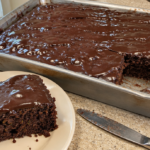
Chocolate Zucchini Sheet Cake With Cocoa Glaze
- Prep Time: 20 minutes
- Cook Time: 35 minutes
- Total Time: 55 minutes
- Yield: 12 slices 1x
- Category: Dessert
- Method: Oven-baked
- Cuisine: American
Description
Tender cocoa-rich chocolate zucchini sheet cake with a simple chocolate glaze; zucchini is finely grated and folded into the batter.
Ingredients
2 cups (250 g) all-purpose flour
3/4 cup (65 g) unsweetened cocoa powder
1 1/2 teaspoons baking powder
1/2 teaspoon baking soda
1/2 teaspoon fine salt
1 1/4 cups (250 g) granulated sugar
2 large eggs
1/2 cup (120 ml) neutral oil
3/4 cup (180 ml) plain whole-milk yogurt
1 teaspoon vanilla extract
2 cups (about 240 g) finely grated zucchini, lightly packed, not squeezed dry
1/2 cup (85 g) semisweet chocolate chips
For glaze: 3/4 cup (90 g) powdered sugar
For glaze: 2 tablespoons (10 g) cocoa powder
For glaze: 2 to 3 tablespoons milk
Instructions
Preheat oven to 350°F (175°C). Line a 9-by-13-inch metal baking pan with parchment, leaving an overhang.
Whisk flour, cocoa, baking powder, baking soda and salt in a medium bowl until uniform.
In a large bowl, whisk sugar, eggs, oil, yogurt and vanilla until smooth.
Fold the dry mixture into the wet mixture just until no dry pockets remain; avoid overmixing.
Fold in the finely grated zucchini and chocolate chips, distributing evenly.
Spread batter evenly in the pan. Bake 30 to 38 minutes, checking from 30 minutes, until the center springs back and a tester comes out without wet batter; melted chocolate on the tester is normal.
Cool in the pan 20 minutes, then lift out and cool completely on a rack before glazing.
Whisk powdered sugar, cocoa and 2 tablespoons milk until pourable, adding remaining milk a teaspoon at a time. Drizzle over the cooled cake. Slice into 12 portions.
Notes
This recipe is editorially developed and not independently kitchen-tested. Use fresh zucchini, wash before grating and do not taste raw batter. Oven performance and zucchini moisture vary; verify the center is fully baked. Refrigerate glazed leftovers in an airtight container within 2 hours; consume within 3 to 4 days. The featured illustration, if approved, must be labeled as AI-generated rather than a photograph.
Nutrition
- Serving Size: 1 slice (1/12 cake)
Keywords: chocolate zucchini cake, cocoa zucchini cake, chocolate sheet cake
1 thought on “Chocolate Zucchini Sheet Cake With Cocoa Glaze”