
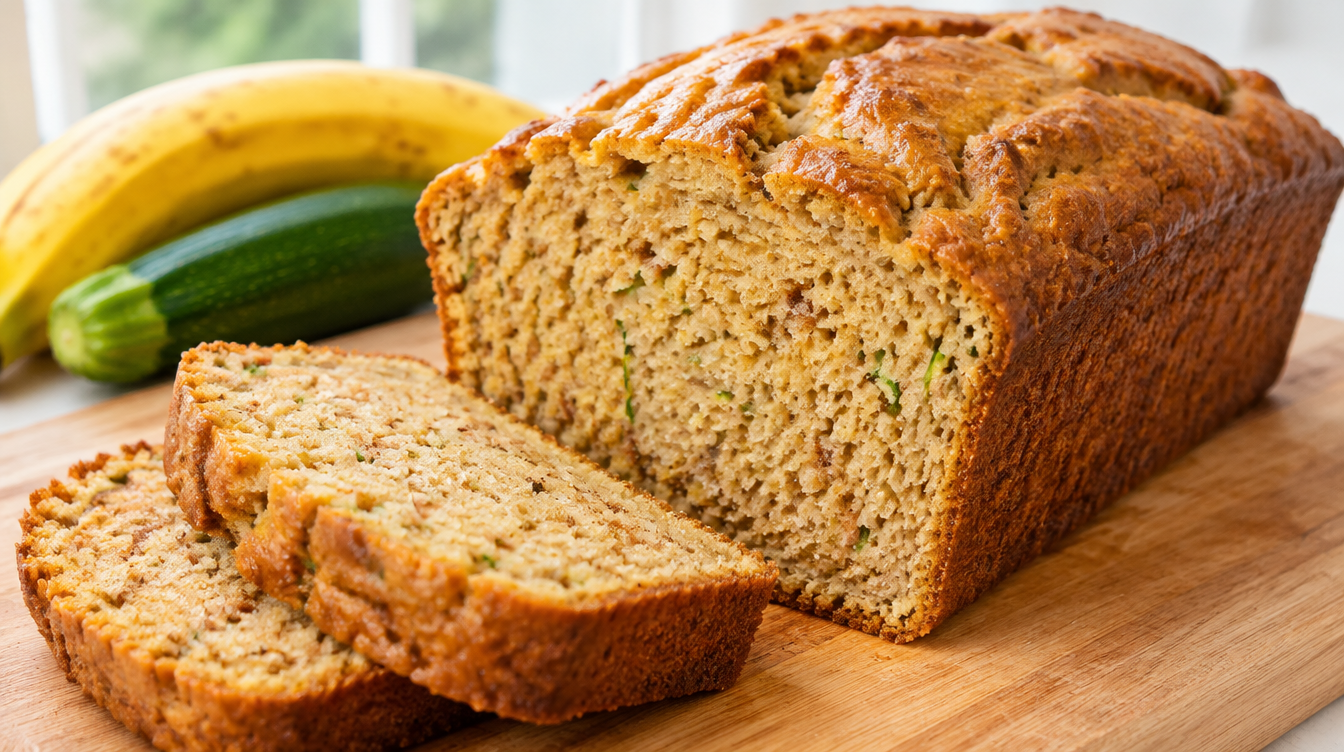
Quick answer. This zucchini banana bread recipe makes one nine-by-five-inch cinnamon quick bread with one cup mashed ripe banana and one cup grated zucchini. Whisk the flour, leavening, salt and cinnamon separately; combine eggs, brown sugar, oil, vanilla and banana; fold in zucchini and flour just until combined. Bake at 350°F (175°C), checking from 55 minutes and allowing approximately 55–75 minutes depending on the oven and moisture. The finished loaf should be tender, lightly domed and fully set at its deepest center, with small zucchini flecks visible in each slice.
Two naturally moist ingredients make measurement and doneness checks especially important. Measure the banana mash after peeling and the zucchini after grating, lightly squeezing only if visibly dripping. Overmixing the flour can make a tougher crumb, while baking strictly by the clock can leave a gummy center. A skewer without raw batter and, if helpful, a center temperature near 200–205°F provide more meaningful checkpoints than a golden top alone. This version intentionally contains no nuts, chocolate or icing.
This recipe has not been independently kitchen-tested. It is a digitally assisted original editorial formula developed from a documented MySavorista workorder. The baking guidance is informed by established quick-bread references, including King Arthur Baking, and safe produce-handling advice from the FDA. The accompanying food photographs are original digitally generated illustrations, not photos of a physically tested loaf. This recipe has not been independently kitchen-tested, and individual ovens and produce moisture vary.
Why combine ripe bananas with grated zucchini
This loaf is a practical way to combine the sweetness of ripe bananas with the light texture and moisture of summer squash. The banana is mashed until largely smooth and supplies the recognizable aroma; the zucchini is coarsely grated so that small green flecks remain visible in the crumb. The vegetables do not need to become a puree. Unlike chocolate zucchini cake, this is a single nine-by-five-inch quick-bread loaf flavored with cinnamon and vanilla rather than cocoa, icing or chocolate chips. The batter depends on baking soda and baking powder for its lift and goes straight into the oven without a yeast rise. Because both main produce ingredients contain water, measuring them matters: extra-large bananas or dripping zucchini can make the middle slow to bake. A slightly domed top and tender slices with no gummy wet batter are the actual goals.
Ingredient amounts for one full-size loaf
Use one and three-quarter cups (220 grams) all-purpose flour, one teaspoon baking soda, half a teaspoon baking powder, half a teaspoon fine salt and one and a half teaspoons ground cinnamon. For the wet ingredients, measure two large eggs, half a cup (100 grams) packed light brown sugar, one-third cup (80 milliliters) neutral oil and one teaspoon vanilla extract. Add one cup (about 225 grams) thoroughly mashed ripe banana and one cup (about 125 grams) coarsely grated zucchini that has been lightly squeezed only if visibly dripping. A nine-by-five-inch metal loaf pan is the intended size. Do not casually add a whole additional banana or several handfuls of shredded squash; those changes increase moisture without increasing the supporting flour and leavening. The recipe does not need nuts, chocolate, milk, butter or frosting and the final photographs should not show them.
Selecting bananas at the right ripeness
Choose bananas that have become noticeably ripe, with yellow peels carrying brown spots and soft flesh that mashes easily. They tend to be sweeter and more aromatic than firm green-tipped bananas, but overly damaged or moldy fruit should be discarded. Peel the bananas and mash them in a bowl using a fork until only small lumps remain. Measure the mash after peeling rather than relying entirely on a count of bananas, since fruit sizes vary widely. This is especially important in a recipe that already contains grated zucchini: using significantly more than one cup of banana can create a dense, wet line near the base of the loaf. Very cold frozen-and-thawed banana mash can be watery; if using it, assess and measure the actual mash carefully rather than pouring in an extra pool of thawing liquid. The intended flavor is banana-forward with a soft cinnamon background.
Choosing a zucchini and handling the skin
A small or medium firm zucchini is a suitable starting point. Wash the vegetable under running water before slicing or grating, even if you would otherwise remove its skin. FDA fresh-produce guidance advises washing produce under plain water rather than soap or detergent, and trimming bruised or damaged parts. For this loaf the skin can remain: it contributes the subtle green flecks visible in the finished slices. A giant mature zucchini may have a thick skin and a watery seedy interior, which can affect texture; if using one, remove unusually tough seeds and measure the grated flesh accurately. Do not include a flower stem or a large hard end piece in the batter. A box grater’s coarse side is adequate, but keep fingertips clear of the teeth, use a stable surface and clean the grater promptly after handling produce.
How much moisture should be squeezed out?
A cup of shredded zucchini can vary dramatically in water content. After grating, place it in a clean towel or fine sieve and check whether liquid drips freely. If it is very wet, squeeze just lightly to remove excess free water; do not wring it completely dry as if preparing fritters. The measured target is about 125 grams after coarse grating and any light squeezing, not an unlimited pile of wet zucchini. The loaf still relies on some vegetable moisture for tenderness. If you squeeze too aggressively and use an especially dry batch, the bread may be less soft than intended. If you leave a large pool of water beneath the shreds, the wet batter may take much longer to set. The workorder specifies this limited squeeze rather than a fixed tablespoon of water to remove, because that cannot be predicted across produce.
Why the flour needs a careful measure
Scooping a measuring cup directly into a densely packed flour bag can produce more flour than a lightly spooned and leveled measure. That extra flour may make a quick bread tougher, drier and more compact. The formula offers 220 grams as a useful weighing target, or one and three-quarter cups gently spooned into dry measures and leveled. Do not substitute almond flour or coconut flour as if they behave identically: each absorbs liquid and forms structure differently and would need a separately developed formulation. Likewise, a bag labeled self-rising flour already contains leavening and salt, so adding the specified baking soda and baking powder could overdo it. All-purpose wheat flour is the default here and must be declared as a wheat allergen. Keep the bowl dry before the flour goes in to avoid clumping.
Baking soda and baking powder have distinct roles
This recipe uses both one teaspoon baking soda and half a teaspoon baking powder, amounts specified for a loaf with banana and zucchini. Baking powder supplies a more predictable lift, while soda contributes browning and reacts with available acidic components in the batter. Check that these pantry ingredients are within their normal usability window, especially if they have been stored for years near heat and steam. Too much soda can lead to unpleasant flavor or exaggerated browning, while too little leavening may make the loaf heavy. Distribute both through the dry flour mixture with a whisk instead of dropping concentrated lumps into the wet ingredients. The batter is stirred rather than kneaded, and it does not need a proofing period. Use actual measuring spoons so that a loose kitchen teaspoon does not turn a precise quick-bread formula into guesswork.
Cinnamon as a warm accent, not a separate filling
One and a half teaspoons of ground cinnamon gives a noticeable warm aroma without hiding the banana. Mix it into the dry ingredients so the color distributes through the crumb as small flecks rather than appearing in a thick spiral layer. The identity lock here is a cinnamon-flecked zucchini-banana loaf, not a cinnamon-roll swirl or streusel coffee cake. A separate sugar-cinnamon topping could create additional sweetness and change the crust, so this base version does not include one. If cinnamon has been stored in an open container for a long period, its aroma may have faded; check freshness before beginning. The goal is a balanced bread that is pleasant plain, without a glaze or icing required for flavor. The images should show realistic brown cinnamon specks and fine strands of zucchini, not bright artificial green marbling.
Choosing a pan and lining it correctly
A metal loaf pan measuring about nine by five inches is the intended baking vessel. Line the long sides and bottom with parchment, leaving a small overhang for lifting, and lightly grease any exposed surfaces. Make sure the parchment brand is safe at the recipe’s 350°F oven temperature. A smaller eight-and-a-half-inch loaf pan makes the batter deeper and can extend baking time; a wider pan may bake faster and produce a flatter loaf. Glass and ceramic conduct heat differently, so do not assume the exact same minutes without checking the manufacturer’s guidance and the center of the bread. Place the pan on a middle oven rack with space for air circulation. If batter rises close to the rim before baking, verify that the pan dimensions are correct and do not attempt to bake a dangerously overfilled pan.
Preheat the oven all the way to 350°F
Set the oven to 350°F (175°C) and let it preheat completely before mixing the final batter. An oven indicator may signal readiness before the center rack has stabilized at the desired temperature, so an independent oven thermometer can be useful in a kitchen known for temperature differences. King Arthur Baking notes that underheated ovens can leave banana bread damp in the center long after the surface appears dark. This formula’s oven setting is designed for a metal loaf pan; do not switch to broil to speed the top. If your oven has a strong back-wall hot spot, rotate the pan gently late in baking once the structure has started to set, not in the first minutes. The target is an evenly baked loaf with a lightly browned top, not a blackened crust hiding an underbaked core.
Whisk dry ingredients before mixing the wet bowl
In a medium bowl whisk together the measured flour, baking soda, baking powder, fine salt and cinnamon. Take several seconds to distribute the smaller ingredients evenly through the flour. A separate dry bowl reduces the chance of encountering an unmixed patch of soda in the finished loaf. This is also a useful moment to confirm there is no accidental addition of baking yeast, which is a different leavening method. Set the whisk aside and prepare a larger bowl for the eggs and banana. Do not taste dry flour or raw quick-bread batter: commercial flour is a raw agricultural product and eggs may carry foodborne risks until the loaf has been thoroughly baked. Keep utensils that touch raw batter away from ready-to-eat slices after baking, and wash bowls and work surfaces during cleanup.
Combine wet ingredients without overbeating
In a large mixing bowl whisk the two eggs with the packed brown sugar, neutral oil and vanilla until the mixture looks evenly combined. Stir in the measured cup of mashed ripe banana. You do not need to beat the mixture into a large foam or run an electric mixer for ten minutes. A few soft banana lumps can remain and will give the loaf natural variation in the crumb. Use fresh eggs stored properly, and crack them into the bowl without leaving shell fragments. Do not add milk simply because most cakes use it: this particular formula gets much of its moisture from fruit and vegetable, with measured oil providing tenderness. The consistency will look quite wet before the flour goes in, which is expected for this combined banana-and-zucchini quick bread.
Fold in the zucchini at the right time
Add the coarsely grated, measured zucchini to the banana-egg mixture and stir gently until the strands are dispersed. This ordering helps ensure the zucchini is distributed before the dry flour starts absorbing moisture, reducing the amount of mixing later. The green shreds should be visible as thin strands rather than disappearing into a blended vegetable puree. If the zucchini has collected another little pool of water during preparation, remove that loose liquid before stirring rather than tipping in everything automatically. Avoid adding grated carrots, apple or pineapple during this step, even if the ingredients sound compatible; the formula has already been balanced around two moist main ingredients. A photograph showing bright carrot strands would inaccurately represent this specific loaf and create a mismatch with the finished recipe card.
Add the dry ingredients only until combined
Tip the dry mixture into the wet bowl and fold with a flexible spatula until there are no visible dry flour streaks. Scrape the bottom and sides so pockets of flour do not remain hidden. Stop once the ingredients are combined; the batter does not need to become glossy and perfectly smooth. Prolonged mixing after flour is hydrated can create a tougher loaf because wheat gluten develops. The finished batter should be thick enough to scoop into the pan but still softer than bread dough. If it is extremely loose, recheck the banana and zucchini measurements before adding random extra flour. If it is unusually stiff, check whether the cup of flour was compressed or whether much of the zucchini moisture was squeezed away. This recipe relies on measurable starting amounts and an honest visual consistency check rather than untested fixes.
Fill the pan without compressing the batter
Spoon the batter into the prepared loaf pan and spread it gently toward the corners. Smooth the top lightly, leaving a natural slight mound if it forms. Avoid repeatedly dropping the pan hard on the counter, which can deflate the limited air incorporated during mixing. The batter should have some headroom in the pan to rise during baking; if it reaches the rim before entering the oven, stop and reconsider the pan size rather than hoping the mixture will not overflow. You do not need a decorative banana half laid on the top because that introduces extra moisture and would change the intended photo. The simple surface should rise and crack naturally in the oven, with a golden-brown top and no cinnamon sugar crust unless that ingredient has been specified and measured.
Bake and check from the fifty-five-minute mark
Place the loaf on the oven’s middle rack and plan for roughly fifty-five to seventy-five minutes, beginning to check around minute fifty-five. Actual time changes with pan material, the moisture in the zucchini and banana, the oven’s accuracy and how deeply the batter is placed. The upper crust may look finished before the center has set, so color alone cannot determine doneness. Use a long thin skewer or knife inserted into the deepest middle portion; it should not bring up a smear of raw batter. A few moist, baked crumbs are acceptable. If the top is browning too quickly while the center remains underdone, loosely tent it with foil rated for oven use for the remaining minutes. This is a reasonable control, not permission to ignore a still-wet middle at the end of the stated time.
Thermometer guidance for a moist quick bread
An instant-read thermometer can be a valuable second check, especially for a loaf that contains both mashed banana and grated zucchini. King Arthur Baking recommends approximately 200–205°F at the center of standard banana bread as a useful doneness indicator, together with visual cues. The exact probe reading is not an absolute safety certification for every special recipe; it is a practical quality checkpoint. Slide the probe into the thickest section without striking the hot pan bottom, and sample more than one place if necessary. If the loaf is below that range and a toothpick carries wet batter, continue baking and check again after a short interval. Conversely, a probe that passes through an isolated moist banana pocket can read differently from the crumb around it, so interpret temperature together with the skewer and crumb structure.
Cool first in the pan and then on a rack
When the center is set, remove the loaf with oven mitts and let it stand in its pan for about fifteen minutes. This pause allows the tender structure to firm up enough for lifting without breaking in two. Use the parchment overhang to transfer it carefully to a wire rack and let it cool further before slicing. The sides may still be warm and fragile, so avoid pulling hard on a single corner of parchment. Cutting a very hot loaf can smear the soft crumb and make it appear underbaked even when the center was cooked correctly. A clean serrated knife is useful for making roughly ten slices without compressing the bread. Allow the loaf to cool where air can circulate rather than sealing it immediately in a plastic bag while steaming hot, which can create condensation.
Why a gummy stripe can appear in the middle
A damp, compressed line through the center often suggests that the loaf was removed before the batter had set, although an unusually wet ingredient ratio or an inappropriate pan may also contribute. Zucchini and bananas vary in water content, which is why both are measured and the squash is lightly squeezed only when dripping. If the loaf is already sliced and still contains raw batter, do not serve those underbaked portions or claim they are simply extra moist. The better preventive strategy is to check the deepest section before removing the pan from the oven and to extend baking in brief intervals when necessary. Do not solve a persistent gummy center by setting the oven excessively hot: the crust may burn while the interior remains underdone. Check pan size, oven temperature and mixing method together.
When the top browns too early
Brown sugar and ripe banana can encourage a golden crust while the center still needs time. If the top becomes quite dark after the loaf has developed structure, lay a loose sheet of foil over it without pressing into the batter. Continue baking at the intended oven temperature and check the interior until no raw batter remains. Avoid sealing the whole pan tightly with foil from the beginning because that can trap excessive steam and change the crust. A very dark edge may also indicate that the pan is too small or that an oven hot spot is pushing one side to finish much faster. Make a note of the actual bake time and pan type for the next batch rather than pretending a single duration applies to every oven and every zucchini.
What to do if the loaf is dry
The most useful prevention for dryness is accurate flour measurement, short mixing, and stopping the bake once the core is cooked instead of leaving the pan for an extra half hour out of caution. A loaf that is dry even when the center reached a proper baked state may have been made with too little banana mash or zucchini squeezed excessively. Recheck the ingredient scale before adding new liquid ingredients to an already established recipe. Extra oil or milk added at random can produce different texture and will require new testing. Once the loaf is baked, slices may taste more pleasant served with a beverage, but this does not alter the underlying formulation. The official photographs should not hide a dry crumb under an unlisted syrup, glaze or cream cheese frosting that is absent from the actual ingredient list.
How this differs from other MySavorista baking pages
MySavorista already publishes Chocolate Zucchini Sheet Cake With Cocoa Glaze, which uses zucchini in a cocoa-flavored sheet cake with icing. This loaf instead combines banana and zucchini in a cinnamon-flavored quick-bread format without frosting. The site also offers Easy Peach Crumb Cake With Frozen Peaches, where fruit and crumb topping play different roles from the banana-zucchini batter here. For another breakfast-style baked preparation, Easy Crispy Homemade Buttermilk Waffles use a waffle iron rather than a loaf pan. Explore those related recipes to compare how different produce and baking methods change the finished texture and flavor.
Cooling and storing slices safely
Allow the loaf to cool so condensation does not accumulate inside its container. A clean covered storage container or suitable wrap helps prevent it from drying out or picking up odors. Since this unusually moist quick bread contains produce and is intended for possible longer storage, refrigeration is a conservative option, especially in warm or humid homes. Freeze well-wrapped slices for longer-term storage, label the date and thaw under appropriate conditions. Do not promise a laboratory-validated countertop or refrigerator lifespan for this particular untested formulation. If mold or other signs of spoilage appear, discard the bread rather than trimming around extensive contamination. General food safety guidance emphasizes clean handling, reasonable holding times and refrigeration of perishable ingredients. The loaf itself should not be placed into a refrigerator while dangerously hot in a large sealed mass; first cool and divide appropriately.
Tips for baking with zucchini year-round
Bananas are easy to find year-round, while the freshness and water content of zucchini can vary by season. Look for small or medium firm zucchini with intact skin and no soft spots. If your zucchini is exceptionally wet, lightly squeeze out only the freely dripping water before measuring the required cup of grated vegetable. Do not use a frozen zucchini purée as a direct one-to-one substitute; thawed squash can contain much more loose water and change the batter. The precise measured amounts and a fully baked center matter more than the season. For the best slices, let the loaf cool before cutting so its tender crumb has time to set.
Serving and sharing cinnamon zucchini banana bread
Slice this quick bread when cool and enjoy it plain to appreciate the banana aroma, gentle cinnamon warmth and small zucchini flecks. A serrated bread knife helps create neat slices without crushing the soft center. For a family breakfast or afternoon snack, cut portions just before serving. Wrap individual cooled slices for freezing so a portion can be thawed when needed. The standard recipe uses no nuts, chocolate, icing or glaze, allowing the natural cinnamon-banana flavor to remain the focus.
About this recipe’s testing and estimates
This recipe has not been independently kitchen-tested. It is an original editorial formulation developed with digital assistance and informed by established quick-bread guidance. The stated bake range, yield and optional 200–205°F center benchmark are practical estimates rather than results from a physical kitchen test. Use the visual skewer check alongside the suggested thermometer reading and continue baking if wet batter remains. The accompanying food images are digitally generated illustrations, not evidence that the loaf was prepared or photographed in a real test kitchen. There are no invented reader ratings or fabricated nutrition measurements.
Frequently asked questions about zucchini banana bread
Can I make zucchini banana bread with two very ripe bananas?
Yes, provided their peeled mashed flesh measures around one cup (about 225 grams). Banana sizes vary and extra mash can leave the center too wet.
Do I need to peel zucchini before grating it?
No. Wash the zucchini thoroughly and use the tender skin; its fine green flecks are normal in the crumb.
Should I squeeze the grated zucchini completely dry?
No. Remove loose dripping water only if needed, then measure approximately one cup or 125 grams. Very dry shreds may make the loaf less tender.
What size loaf pan does this formula use?
One metal nine-by-five-inch pan, greased and optionally lined with parchment for lifting.
How long should zucchini banana bread bake?
Start checking at 55 minutes in a 350°F oven. Depending on pan, produce and oven conditions, the loaf may take about 55–75 minutes.
How do I know the center is done?
The deepest portion should show no raw batter on a thin skewer; a properly inserted thermometer can provide another quality check near 200–205°F.
What if the top browns before the middle is baked?
Loosely tent with foil once the loaf has developed structure and continue baking at the intended temperature, checking the center.
Does this recipe include nuts or chocolate chips?
No. The measured version is cinnamon-flavored zucchini banana bread without nuts, chips, frosting or glaze.
Can I replace the wheat flour with coconut flour?
Not one-to-one. Coconut flour absorbs liquid very differently and requires another developed formula.
What if I only have baking powder and no baking soda?
This recipe uses both. Changing the leavening may affect the rise and color and would require a separately tested formula.
Why is the inside gummy?
The loaf may need longer baking, the produce quantities may be too wet or the pan may be too small. Use measured ingredients and check the deepest center.
How many slices will a loaf make?
Approximately ten slices from a nine-by-five-inch loaf, depending on the thickness of each cut.
Should I refrigerate leftovers?
Refrigeration is a prudent choice for longer storage in warm or humid conditions, and freezing well-wrapped slices is suitable for longer-term keeping. Do not rely on an unverified shelf-life promise.
Has this particular formula been independently baked and tested?
No. This recipe has not been independently kitchen-tested, and the article openly distinguishes editorial estimates from a verified physical test.
Baking and food safety references
King Arthur Baking’s guide to testing banana-bread doneness explains why a fully preheated oven and a thermometer near 200–205°F may help confirm a well-baked center. Its banana-zucchini bread discussion provides culinary context for the combination but follows a distinct formula. The FDA’s fresh-produce safety guidance supports washing zucchini under running water before cutting or grating. These external sources are not endorsements or physical tests of this independent editorial recipe.
Print
Moist Zucchini Banana Bread with Cinnamon
- Prep Time: 20 minutes
- Cook Time: 55–75 minutes
- Total Time: About 75–95 minutes before additional cooling
- Yield: One 9-by-5-inch loaf; approximately 10 slices 1x
- Category: Breakfast and sweet quick breads
- Method: Oven-baked quick bread
- Cuisine: American home baking
Description
A tender cinnamon zucchini banana quick bread with ripe mashed banana and finely flecked grated zucchini, baked in one 9-by-5-inch metal loaf pan.
Ingredients
1¾ cups (220 g) all-purpose wheat flour, spooned and leveled
1 teaspoon baking soda
½ teaspoon baking powder
½ teaspoon fine salt
1½ teaspoons ground cinnamon
2 large eggs
½ cup (100 g) packed light brown sugar
⅓ cup (80 ml) neutral oil
1 teaspoon vanilla extract
1 cup (about 225 g) ripe mashed banana
1 cup (about 125 g) coarsely grated zucchini, lightly squeezed only if dripping wet
Instructions
Preheat a conventional oven to 350°F (175°C) with a rack near the middle. Lightly grease and line a 9-by-5-inch METAL loaf pan with oven-rated parchment.
Wash one small-to-medium zucchini under running water, trim it and coarsely grate. Remove any loose dripping water with a clean towel if needed, then measure about 1 cup (125 g). Peel and mash ripe bananas until you have 1 cup (about 225 g).
In a medium bowl whisk together 1¾ cups (220 g) all-purpose flour, 1 tsp baking soda, ½ tsp baking powder, ½ tsp fine salt and 1½ tsp ground cinnamon.
In a larger bowl whisk 2 eggs, ½ cup (100 g) packed light brown sugar, ⅓ cup (80 ml) neutral oil and 1 tsp vanilla until combined.
Stir the measured mashed banana into the wet ingredients, then fold in the grated zucchini until distributed.
Fold the dry mixture into the wet ingredients using a spatula, stopping as soon as no dry flour streaks remain. Do not overbeat or taste the raw egg-and-flour batter.
Transfer the batter to the prepared loaf pan and smooth the surface gently. Leave sufficient headroom for the bread to rise.
Bake in the preheated 350°F oven for about 55–75 minutes, beginning to check at minute 55. If the top browns too quickly once the loaf is set, loosely tent with oven-safe foil.
Verify the deepest center no longer has wet raw batter using a skewer. An instant-read thermometer near 200–205°F can be an additional quick-bread doneness checkpoint, but interpret with the skewer and crumb structure.
Remove the pan with oven mitts and cool the loaf in its pan about 15 minutes. Lift carefully to a wire rack and cool further before slicing into approximately 10 pieces.
Store the cooled bread in clean covered packaging; refrigerate for longer storage in warm or humid conditions or freeze wrapped slices. Do not leave moist bread in a sealed bag while steaming hot.
Notes
Use 9×5-inch METAL loaf pan at 350°F; baking time and center set depend on banana and zucchini moisture and pan/oven differences. The middle must not have wet raw batter; a center probe near 200–205°F is a quality guide for banana quick bread, not proof of physical testing of this formulation. Do not taste raw egg-and-flour batter. Wash zucchini before grating and clean kitchen surfaces. ALLERGENS: WHEAT and EGGS. This recipe has not been independently kitchen-tested. No invented nutrition analysis, reader ratings or source photos. Seasonality/US search trend remains unverified; no zero-competition claim.
Nutrition
- Serving Size: 1 of approximately 10 slices
Keywords: zucchini banana bread recipe, moist zucchini banana loaf, cinnamon banana zucchini bread