
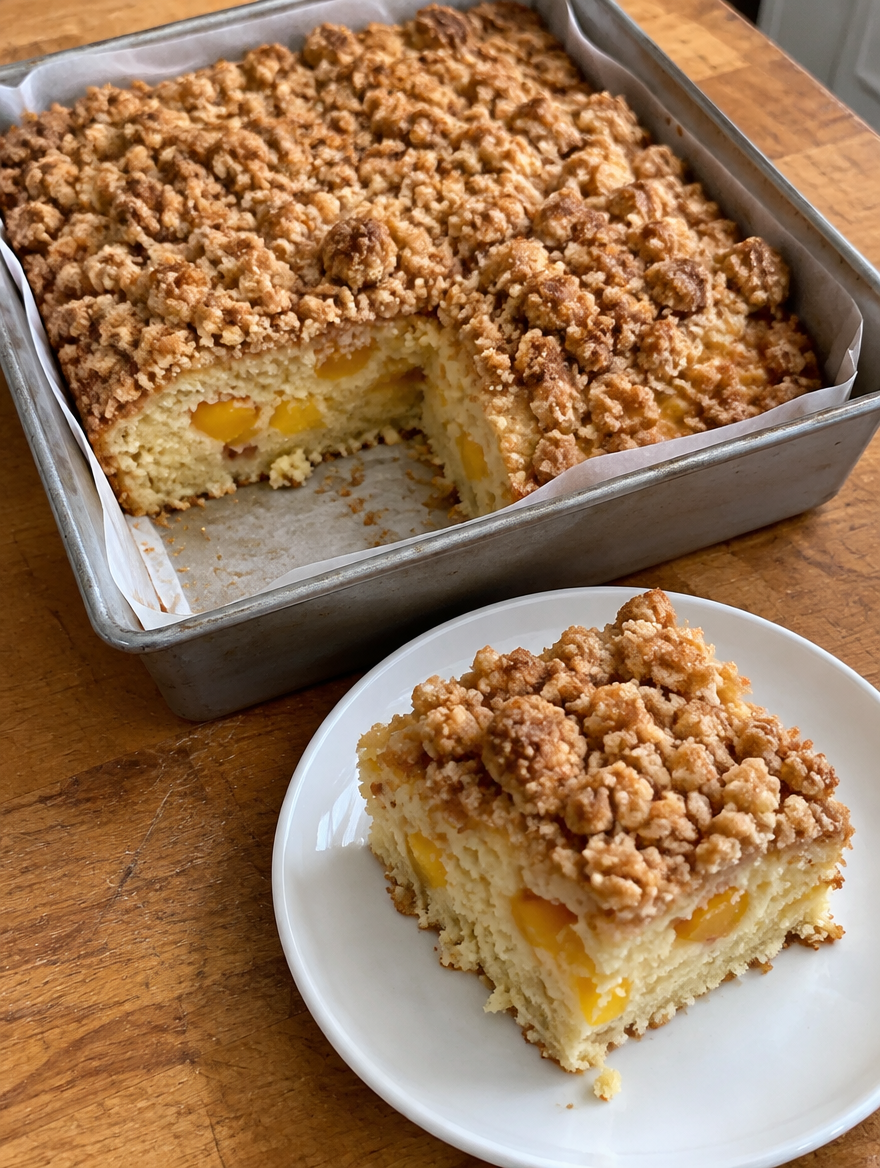
This easy peach crumb cake with frozen peaches puts yellow fruit pieces inside a tender vanilla-buttermilk cake and covers the top with coarse, golden cinnamon streusel. It bakes in a simple 9-inch square pan and can be made when ripe fresh peaches are unavailable. You don’t need pie crust, puff pastry, cream cheese frosting or a glaze. The cake is meant to have distinct soft peach pieces embedded in the sliced crumb beneath a recognizable brown-sugar flour-and-butter topping.
Quick recipe: Thaw 2 cups (about 300–320 g) frozen peach pieces in the refrigerator, drain and blot dry, then toss with 1 tablespoon (8 g) flour. For streusel, combine ¾ cup (95 g) flour, ⅓ cup (70 g) packed light brown sugar, ½ teaspoon cinnamon, ⅛ teaspoon fine salt and ¼ cup (57 g) melted unsalted butter until coarse crumbs form. Make the cake with 1¾ cups (220 g) flour, 2 teaspoons baking powder, ½ teaspoon fine salt, ½ cup (113 g) softened unsalted butter, ¾ cup (150 g) granulated sugar, 2 large eggs, 2 teaspoons vanilla and ½ cup (120 ml) buttermilk. Fold peaches into batter, spread in a greased and parchment-lined 9-inch square pan, sprinkle with streusel and bake at 350°F (175°C) for approximately 45–55 minutes, until the cake center is set and a tester inserted away from a peach comes out without wet raw batter. Cool at least 30 minutes. Yield 9 square portions. Allow about 25 minutes preparation, 45–55 minutes baking, and 30 minutes cooling, plus refrigerator fruit-thawing time.
Editorial transparency: This original AI-assisted recipe has not been independently kitchen-tested. Its approximate timing and specific proportions are an original editorial formulation, not results of a physical test bake. Any accompanying food photo is an AI-generated illustration, not documentation of a verified kitchen session. No laboratory nutrient or shelf-life analysis has been conducted.
Why Frozen Peaches Are Useful in a Crumb Cake
Frozen peaches provide a convenient fruit option outside fresh-peach season, and many grocery stores carry sliced or chopped peaches year-round. Unlike peaches packed in heavy syrup, frozen unsweetened fruit does not require draining a sweet canning liquid. However, its texture changes when frozen and thawed, and ice crystals can release water. That is why this method explicitly calls for safe refrigerator thawing, thorough draining and a gentle blot with paper towels before the fruit is mixed into the batter.
A cake with too much added fruit liquid may bake with heavy, damp patches around the peaches. There is already 120 ml buttermilk in the batter, so thawed peach liquid is not a free extra ingredient. The one tablespoon of flour used to coat peaches is measured separately and helps lightly cover their surfaces; it does not replace proper draining.
The method is deliberately different from peach cobbler. Cobblers usually emphasize baked fruit and a separate biscuit-like or batter topping. Here the peach pieces are inside a vanilla cake, with a crumbly streusel baked over the top. You should be able to cut nine clean squares after cooling, rather than spoon fruit from a baking dish.
Ingredient List for a 9-Inch Square Cake
Keep the cake, fruit and streusel ingredients separate. Sharing the same type of flour or butter does not mean you should double-count one bowl’s amount.
For the Peach Pieces
- 2 cups (approximately 300–320 g) frozen unsweetened peach pieces, thawed safely in the refrigerator, drained, patted dry and chopped if very large.
- 1 tablespoon (approximately 8 g) all-purpose flour for coating the drained fruit.
For the Cake Batter
- 1¾ cups (220 g) all-purpose flour, measured accurately.
- 2 teaspoons baking powder.
- ½ teaspoon fine salt.
- ½ cup (113 g) unsalted butter, softened but not melted.
- ¾ cup (150 g) granulated sugar.
- 2 large eggs.
- 2 teaspoons vanilla extract.
- ½ cup (120 ml) cultured buttermilk.
For the Brown-Sugar Streusel
- ¾ cup (95 g) all-purpose flour.
- ⅓ cup (70 g) packed light brown sugar.
- ½ teaspoon ground cinnamon.
- ⅛ teaspoon fine salt.
- ¼ cup (57 g) unsalted butter, melted and cooled slightly.
The complete recipe uses wheat flour, dairy butter, dairy buttermilk and eggs. It is not gluten-free, dairy-free, egg-free or vegan. Packaged ingredients can include allergen warnings or cross-contact concerns; check actual labels when feeding someone with allergies. No oats, chopped nuts, frosting, icing, syrup or cream cheese are part of the original cake.
Safely Thawing and Draining Frozen Peaches
Refrigerator thawing is more predictable than leaving a large bowl of frozen fruit on the counter overnight. Move the peach pieces into a covered food-safe container and follow any package-specific handling instructions. Depending on the size of the slices and whether they froze into a block, thawing may take longer than expected. That time is not included in the quick preparation estimate.
Once soft enough to separate, put the fruit in a colander over a bowl and let the thawed juice drain. Pat the fruit lightly with clean paper towels. The aim is not to squeeze each peach into a dry cube, but to prevent visible liquid from running into the cake batter. Chop especially large slices into bite-size pieces for a more even distribution in the nine squares.
Just before folding into the finished batter, toss the fruit gently with its separate 8 g of flour. Do not add extra sugar or unmeasured fruit syrup. Canned peaches in heavy syrup and fresh peaches are different ingredients with varying moisture, so the bake time and texture may not be identical if you substitute them.
Choosing the Right Pan and Oven Temperature
A 9-by-9-inch metal baking pan is the recipe reference. Grease it lightly and line the bottom with parchment, allowing a modest overhang for lifting the cooled cake if desired. Parchment should be rated for oven use at 350°F, and loose edges should not touch heating elements. Bake on a middle rack with room for circulating air.
A smaller 8-inch pan yields a deeper batter layer, which can take longer to set. A larger 9-by-13-inch pan spreads the batter thinner and changes the expected baking time. Glass, ceramic and metal pans conduct heat differently. For the instructions below, do not assume those pans are exact substitutions without changes.
The oven must be fully preheated to 350°F (175°C) before the cake enters. Start checking doneness near the lower end of the specified 45–55 minute range, then continue carefully if the center still has wet raw batter. An oven thermometer can help detect large temperature differences, but the center must still be checked.
Why Buttermilk Is in the Batter
Buttermilk provides a slightly tangy dairy flavor and liquid that helps produce a tender cake. The batter uses ½ cup (120 ml), measured after shaking the carton as appropriate. It is added alternately with the dry ingredients after the softened butter and sugar have been creamed and the eggs incorporated.
A thick but spreadable batter is intentional. It helps hold drained fruit pieces throughout the cake rather than making the fruit float in a thin liquid. If you add a significant extra amount of buttermilk or peach juice, you change that structure and can create underbaked patches around the pieces.
Ordinary milk, a sweet yogurt drink or water is not independently proven to be an identical substitution in this editorial formulation. A modified dairy ingredient may need adjustments to the leavening and moisture balance.
How to Make Coarse Cinnamon Streusel
Streusel is a combination of flour, sugar and butter that bakes into irregular sweet crumbs. In this recipe, melted unsalted butter is stirred into flour, light brown sugar, cinnamon and a pinch of salt. The mixture should form damp pebbles of different sizes, not a smooth pourable glaze or an oatmeal bar mixture.
Use a fork to combine the topping. If a large clump forms, break it into smaller chunks before scattering it evenly over the batter. The goal is a noticeable layer of rough topping that browns and contrasts with the softer cake underneath. The topping’s flour is 95 g, separate from the cake’s 220 g and the peach coating’s 8 g.
Keeping the topping on top rather than mixing it into the batter is important for the final appearance. The featured dish is a crumb cake, not a cinnamon swirl cake with topping hidden inside.
Step-by-Step Peach Crumb Cake
1. Prepare the Frozen Peaches
Thaw 2 cups frozen peach pieces in the refrigerator according to the product’s directions. Drain the fruit in a colander and gently blot dry. Cut very long slices into bite-size chunks, then toss with 1 tablespoon (8 g) all-purpose flour. Set the fruit aside while you make the batter.
Do not pour thawing juice into the mixing bowl. The batter’s listed liquid is buttermilk, not a changing amount of peach liquid.
2. Prepare the Pan and Preheat
Heat the oven to 350°F (175°C). Grease and parchment-line a 9-inch square baking pan. Place a rack near the middle of the oven. Make sure the oven has actually reached temperature before baking.
Use a clean work surface, wash hands, and keep raw eggs and dairy appropriately chilled until they are used.
3. Make the Streusel Topping
Mix ¾ cup flour, ⅓ cup packed light brown sugar, ½ teaspoon cinnamon and ⅛ teaspoon fine salt in a small bowl. Stir in ¼ cup melted unsalted butter with a fork until you have coarse irregular crumbs. Leave the mixture in its bowl, separate from the cake ingredients.
The topping should be scatterable. Break any dough-like mass into smaller clusters before using.
4. Whisk the Cake’s Dry Ingredients
In a second bowl whisk 1¾ cups all-purpose flour, 2 teaspoons baking powder and ½ teaspoon fine salt. Combining them before adding wet ingredients reduces uneven distribution of baking powder.
Do not substitute baking soda directly for the full quantity of baking powder. They are different leaveners and are not generally equal one-for-one.
5. Cream Butter and Sugar; Add Eggs
Beat ½ cup softened unsalted butter with ¾ cup granulated sugar for about 2–3 minutes until somewhat lighter and creamy. Beat in the two eggs one at a time, then mix in 2 teaspoons vanilla. Scrape down the mixing bowl when needed.
Butter should be softened but still solid. Fully melting the butter before this step changes the creaming process and may alter the cake’s texture.
6. Finish the Batter and Fold In Fruit
Add the dry ingredients in two additions, alternating with ½ cup buttermilk. Mix gently until the last dry flour streaks disappear. Fold in the flour-coated drained peaches with a spatula, taking care not to crush the fruit.
Spread the moderately thick batter evenly in the prepared pan. Distribute peach pieces throughout the surface rather than leaving a large pile in one corner.
7. Scatter Streusel and Bake
Scatter all the coarse streusel evenly across the surface. Bake at 350°F for approximately 45–55 minutes. Check a representative spot in the center away from a peach piece; the tester should not come out with wet, raw cake batter. The surface should appear set rather than wobble.
If the topping gets too dark before the center sets, tent it loosely with foil and continue checking in short increments. The precise baking duration varies with oven calibration, pan material and moisture in the fruit.
8. Cool and Cut Nine Squares
Place the hot pan on a heat-resistant cooling rack and wait at least 30 minutes before lifting or slicing. Hot peaches and streusel are delicate, and cutting immediately can cause the cake to break apart. Cut into three rows and three columns for nine squares.
Serve plain. The original recipe does not call for glaze, ice cream, whipped cream or powdered sugar on the cake.
How to Tell When Peach Crumb Cake Is Done
The crumb topping often becomes golden before the interior has fully set. Color alone is therefore not a reliable finish cue. Begin checking around 45 minutes and insert a clean cake tester or toothpick into the center where it does not pass directly through a piece of peach. If it emerges coated with wet raw batter, continue baking and test again. A few moist cake crumbs can be normal, but you should not see a liquid batter pocket.
A large cluster of peaches can make one section wetter than another. Check another location if the first tester meets fruit. If the surface starts to brown too aggressively while the middle is still soft, loosely tent the top with aluminum foil, leaving space above the crumb topping. The objective is a baked, set center without burning the sugar-rich streusel.
The specified baking time is an editorial estimate for a 9-inch square metal pan. If you use another pan material or different peach moisture, do not interpret 55 minutes as a guaranteed maximum. Oven performance differs, so use an actual center check and allow the cake to cool before cutting.
Why Fruit May Sink to the Bottom
Pieces of fruit are denser and moister than cake batter. If the batter is thin or the fruit is unusually large, pieces can shift as the cake rises. Draining the thawed peaches and coating them in the separately measured tablespoon of flour helps prepare the pieces for folding into a moderately thick batter. It doesn’t guarantee that every piece remains at exactly the same height.
Cut very long frozen peach slices into smaller pieces after safe thawing. The recipe aims for recognizable chunks rather than puree or a single dense fruit layer. Fold gently rather than stirring until the peach pieces break down; this keeps their identity visible in a sliced square.
If the cake comes out with nearly all the fruit at the base, check whether you added the juice released during thawing, undermeasured the flour, used the wrong pan size or overmixed the batter. Each of those can affect the overall structure.
Streusel Mistakes to Avoid
Topping too fine: a perfectly sandy topping may brown uniformly but won’t look like the irregular clusters expected of crumb cake. Stir the butter into the dry ingredients with a fork and leave some larger pebbles.
Topping too wet: pouring in extra melted butter can produce clumps that resemble dough instead of loose streusel. Measure 57 g for the topping, rather than treating it as an unlimited addition.
Topping baked before cake: this formulation is designed to be sprinkled on raw batter and baked together. Prebaking the topping separately changes the process and may cause excessive browning.
Too much cinnamon: the half-teaspoon amount is intended to support peach flavor, not dominate it. Increase only as a conscious flavor variation; it is not necessary to get a golden crumb.
Sealing a hot cake immediately: steam trapped beneath a lid can condense and soften the topping. Cool safely on a rack before covering and refrigerating leftovers.
Frozen Peaches Versus Fresh and Canned
Unsweetened frozen peaches can be a practical choice outside fresh peach season. Their main challenge is moisture from thawing. Fresh ripe peaches may be firmer or juicier depending on variety, so using them changes the initial preparation; this exact recipe has not been physically tested with a fresh-fruit substitution.
Canned peaches are another product. Those packed in sweet syrup have additional sugar and liquid. Even thoroughly drained canned peaches may be softer than thawed frozen ones. Avoid casually adding their syrup to the batter, because the cake already has a measured amount of buttermilk.
If you need to use something other than unsweetened frozen peaches, consider the result an adaptation requiring its own checks. Don’t claim that every peach product creates an identical cake or that a specific baking time is guaranteed.
How to Serve the Cake
This cake is intended to be served plain, with golden crumb topping as its finish. The cinnamon-brown-sugar streusel is sweet enough that an extra glaze is not required. Cutting it into nine squares makes it suitable for a family dessert, brunch table or afternoon coffee gathering.
Allow enough cooling time for cleaner slices. A hot square can crumble because the fruit and streusel are still soft. Lift with a thin spatula, supporting the base rather than pulling at the top crumbs. Keep a few loose crumbs on the plate; an imperfect homemade slice is normal.
For another easy bake with a different flavor and topping style, see our one-bowl chocolate cake with cocoa glaze. That cake uses chocolate and glaze; it should not be mistaken for peach crumb cake. Our chocolate zucchini sheet cake likewise has a very different moisture and cocoa profile.
If you prefer individually portioned baking, our gluten-free blueberry muffins are a separate recipe. Their ingredients are not an approved substitution for the wheat flour in this cake; link them as another option, not the same formula.
Food Safety: Eggs, Buttermilk and Leftovers
The cake batter contains two raw eggs before baking, so do not taste it uncooked. Use clean mixing bowls and utensils and wash hands after handling eggs. The official FDA safe food-handling guidance explains routine cleaning, separation, cooking and chilling precautions. The cake center should be fully baked before you eat it, not merely brown on top.
Keep raw eggs and buttermilk appropriately refrigerated until mixing. Thaw frozen fruit in the refrigerator rather than leaving an uncovered bowl at room temperature overnight. Clean any surfaces contaminated by raw egg and do not reuse a dirty utensil for the cooled cake.
Once the cake has cooled, cover remaining pieces and refrigerate them promptly at 40°F (4°C) or colder. As a conservative practice, refrigerate within two hours, or sooner in especially hot conditions, and use well-handled leftovers in approximately three to four days. The FoodSafety.gov FoodKeeper resource provides more general food-storage guidance. This cake has not been laboratory tested for a specific safe shelf life.
Refrigeration can soften the crumb topping. If desired, a portion can be warmed briefly using appropriate oven-safe equipment after removing it from unsuitable plastic packaging. Do not heat it until the topping burns, and remember that fruit can stay hot after the outer cake cools.
Frequently Asked Questions
Can I use frozen peaches directly from the bag?
This exact recipe is written for refrigerator-thawed, drained and blotted fruit. Frozen-solid peaches may release liquid and cool the batter unevenly, so their baking behavior has not been independently validated with these timings.
How much frozen fruit do I need?
Use two cups, about 300–320 g, of thawed well-drained peach pieces. The recipe does not include the peach juice that accumulates in the thawing container.
What pan makes nine squares?
A 9-inch square metal cake pan is the reference. Cut the finished cake into a three-by-three grid after at least 30 minutes of cooling.
Why is the cake wet around the peaches?
Fruit releases moisture, especially after freezing and thawing. Drain thoroughly, blot the pieces, avoid adding the thawing liquid and bake until the plain cake area near the center is set.
Why did the streusel turn soft?
Moisture from the cake or steam trapped under a cover can soften the crumbs. Cool on a rack before covering. Refrigeration also changes the texture, even when the cake is stored properly.
Can I use quick oats in the topping?
Oats are not in this flour-brown-sugar streusel. Adding them changes the texture and should be considered a different recipe rather than a hidden ingredient.
Can I use ordinary milk instead of buttermilk?
This untested formulation specifies ½ cup cultured buttermilk. Another dairy product may change acidity and cake structure, so an equal swap has not been validated.
Do I need a stand mixer?
No. A handheld electric mixer is convenient for creaming butter and sugar, but you can also work with suitable manual equipment. The main goal is an even creamed mixture before adding eggs.
Is this a coffee cake?
It is a crumb-topped fruit cake that can be served with coffee, but there is no coffee in the ingredients. The named recipe is peach crumb cake with frozen peaches.
Can I add a peach glaze?
You can devise a variation, but the original recipe intentionally has no glaze. A wet topping would also change the streusel texture and the final photograph’s accuracy.
How many eggs and how much butter do I need?
The cake uses two large eggs and 113 g softened unsalted butter. The streusel separately requires 57 g melted unsalted butter, for 170 g butter total across the two components.
Is this recipe gluten-free or dairy-free?
No. It contains wheat flour, butter and buttermilk, as well as eggs. Always check the packaged ingredients and allergy-related handling requirements.
Can I freeze the baked cake?
Freezing may affect peach moisture and crumb texture. This particular baked result has not been independently tested for freezer shelf life or texture, so do not assume that it stays identical after thawing.
Final Baking Notes
A good square of this cake has yellow peach pieces inside a tender pale vanilla crumb, with a generous coarse cinnamon streusel on top. Start with safely thawed, drained peaches, measure butter and flour for each component separately and bake in the specified square pan. Check the actual cake center instead of relying only on how dark the topping looks.
This is an original, practical frozen-fruit cake idea rather than a claim of a single traditional regional dessert. Using frozen peaches makes it accessible when fresh peaches are out of season, but individual brands and thawing behavior can still affect moisture.
Final disclosure: This original AI-assisted recipe has not been independently kitchen-tested. Any featured food photo is an AI-generated illustration, not evidence of an actual home-kitchen test. No independently verified nutrition values, allergy guarantees or shelf-life measurements are provided.
Print
Easy Peach Crumb Cake With Frozen Peaches
- Prep Time: 25 minutes hands-on, excluding refrigerator thawing
- Cook Time: 45–55 minutes at 350°F (175°C)
- Total Time: About 1 hour 40 minutes to 1 hour 50 minutes, including 30-minute cooling, excluding frozen peach refrigerator thawing
- Yield: 9 square cake servings 1x
- Category: Sweet & Savory Mashups
- Method: Creamed butter-and-sugar cake with folded thawed drained frozen peaches; buttery brown-sugar flour streusel, 9-inch square pan, oven bake 350°F
- Cuisine: American home baking
Description
A tender square vanilla-buttermilk cake filled with well-drained frozen peach pieces, topped with coarse cinnamon brown-sugar buttery streusel and baked in a 9-inch square pan.
Ingredients
PEACHES:
2 cups (about 300–320 g) unsweetened frozen peach pieces, safely thawed in refrigerator, well drained and blotted, chopped if too large
1 tablespoon (about 8 g) all-purpose flour for coating drained peaches
CAKE:
1 3/4 cups (220 g) all-purpose flour
2 teaspoons baking powder
1/2 teaspoon fine salt
1/2 cup (113 g) unsalted butter, softened but not melted
3/4 cup (150 g) granulated sugar
2 large eggs
2 teaspoons vanilla extract
1/2 cup (120 ml) cultured buttermilk
STREUSEL:
3/4 cup (95 g) all-purpose flour
1/3 cup (70 g) packed light brown sugar
1/2 teaspoon ground cinnamon
1/8 teaspoon fine salt
1/4 cup (57 g) unsalted butter, melted and cooled briefly
Instructions
Thaw 2 cups (300–320 g) unsweetened frozen peach pieces in refrigerator according to package. Drain well and blot dry with clean paper towels; chop long slices. Toss with the extra 1 tablespoon (8 g) flour. Do NOT add peach thawing juice to batter.
Heat oven to 350°F (175°C). Lightly grease and parchment-line a 9-inch square metal baking pan; use parchment rated for oven heat, leaving room for edges and oven airflow.
In separate bowl mix 3/4 cup (95 g) flour, 1/3 cup (70 g) packed light brown sugar, 1/2 tsp cinnamon and 1/8 tsp salt. Add 1/4 cup (57 g) MELTED butter and stir with fork to coarse uneven crumbs. Keep topping separate.
Whisk 1 3/4 cups (220 g) flour, 2 tsp baking powder and 1/2 tsp fine salt in a separate cake dry-ingredient bowl.
Cream 1/2 cup (113 g) SOFTENED (not melted) butter with 3/4 cup (150 g) sugar around 2–3 minutes. Beat in 2 large eggs individually and mix in 2 tsp vanilla.
Alternate cake dry ingredients with 1/2 cup (120 ml) cultured buttermilk, mixing gently just until flour streaks disappear. Fold in drained flour-coated peach pieces; spread thick batter evenly into prepared 9-inch square pan.
Scatter all coarse streusel topping over batter. Bake at 350°F for around 45–55 minutes until center is SET and tester inserted into cake AWAY FROM A PEACH shows no wet raw batter. Tent loosely with foil if streusel browns before cake center sets; verify actual doneness, do not rely only on time or top color.
Set pan on heat-resistant rack, cool at least 30 minutes then cut into 3×3 nine square pieces. Serve plain without glaze/frosting. Promptly refrigerate covered leftovers in clean container at 40°F (4°C) or colder.
Notes
Original AI-assisted recipe has NOT been independently kitchen-tested; AI-generated food photo is illustrative and not a real test-bake image. 9-inch square pan, 9 squares. Frozen peach thawing occurs in refrigerator and is EXCLUDED from 25-minute prep. Drained unsweetened peaches required; syrup/canned fruit not equivalent. Dry and wet measured separately, use exactly 170g total butter across cake (113g softened) and streusel (57g melted), 220g cake flour +95g topping flour +8g extra peach coating flour. Do not taste raw egg batter. Allergens WHEAT, MILK, EGG. Do not claim gluten-/dairy-/egg-free. Baking is estimated 45–55min 350F; check center away from peach for no raw batter; pan/fruit moisture varies. Refrigerate covered cooked cake leftovers promptly within 2h at <=40F; conservative use in 3–4 days is general storage practice not a physically verified shelf life. No made-up calories, health treatment or nutrition certification. No nuts, oats, glaze or frosting in core recipe.
Nutrition
- Serving Size: 1 of 9 squares cut from 9-inch pan
Keywords: peach cake recipe, peach crumb cake frozen peaches, easy peach coffee cake, frozen peach dessert, peach streusel cake