
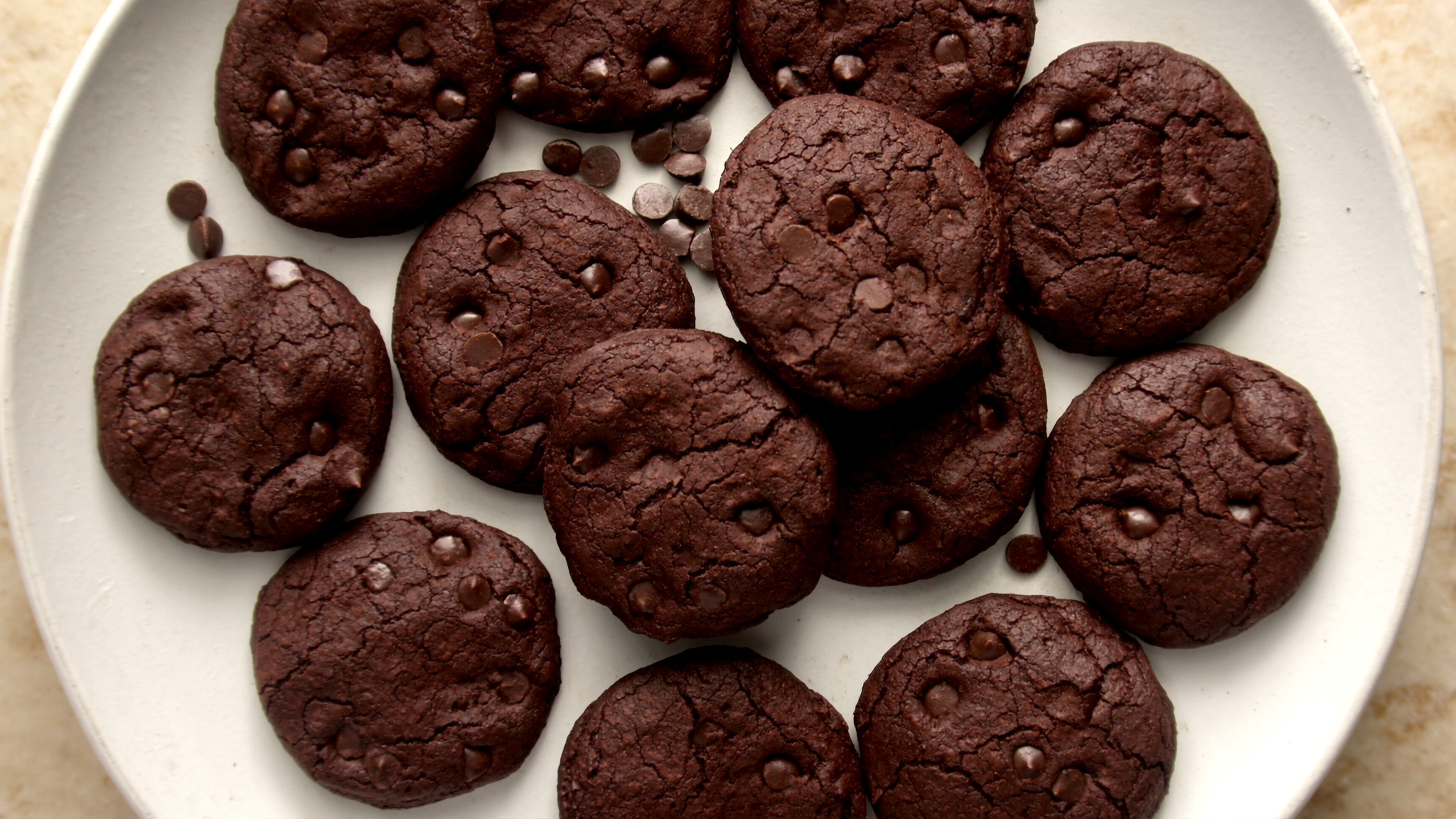
This brownie mix cookie recipe turns one familiar box of dry fudge brownie mix into separate, scoopable chocolate cookies instead of a rectangular pan of brownies. The intended cookies have gently crinkled chocolate tops, modestly defined edges, a baked soft interior, and scattered semisweet chocolate chips. They are not a runny brownie batter spread onto a sheet, and they are not cake-like sandwich cookies with frosting. The formula uses a specified 18.3-ounce box size, eggs, neutral oil, flour, chocolate chips, and a small amount of vanilla. It is an original editorial formulation that has not been independently kitchen-tested by MySavorista; exact yield, spread, and timing must be checked with your own brownie mix and oven. The photos are illustrative, not evidence of physical baking.
At a glance: the box and what to add
Use one 18.3-ounce box of dry fudge-style brownie mix, two large eggs, one-quarter cup neutral vegetable oil, one-quarter cup all-purpose flour, one-half cup semisweet chocolate chips, and one teaspoon vanilla extract. Preheat the oven to 350°F (175°C) and line baking sheets with parchment. Mix the dry brownie powder and flour, add eggs, oil, and vanilla, and fold in chips. If the dough is overly sticky, cover and refrigerate for 20–30 minutes so it becomes easier to scoop. Portion into approximately 1½-tablespoon mounds spaced two inches apart. Bake about 10–12 minutes, stopping when the edges are set and the center no longer looks wet or raw, then cool on the baking sheet before moving. Oven differences matter; this is a guide, not a guaranteed test result.
Brownie mix already contains cocoa, sugar, flour, and leavening in proportions chosen by its manufacturer. When combined with less liquid than the pan-brownie directions typically require, the mix can form a thicker dough suitable for individual cookies. Here, a measured extra quarter cup of flour is intended to support the dough’s structure, while chocolate chips provide small melted pockets. The result belongs to the brownie-cookie hybrid category rather than an ordinary chocolate chip cookie made with flour and butter from scratch. We do not add frosting, sandwich filling, cream cheese, caramel, sprinkles, or pretzels to the primary recipe. Those would alter the clearly specified finished-food identity and complicate its baking instructions.
Choose the right brownie mix box size
The recipe is designed around one approximately 18.3-ounce family-size fudge brownie mix box, used as dry powder. Brownie mixes come in different weights, and a 15-ounce package may not behave like an 18.3-ounce one with the same eggs and oil. Check the net weight before opening. Avoid assuming all store brands have identical ingredients, chocolate chip inclusions, or suggested pan sizes. If your box already includes a separate packet of frosting or sauce, this is not the correct product for this defined version. Do not pour in the water and oil printed on the package; those amounts refer to making pan brownies, not these cookies. The extra ingredients listed here replace the box’s usual mixing directions.
Dry mix alone is not safe to taste
Although boxed brownie mix looks like cocoa powder, it can contain raw flour and other ingredients that should be fully baked. Never taste the powdered mix or dough to judge sweetness or doneness. The US Food and Drug Administration advises against eating raw flour or dough, and the same rule applies to mixes that may contain raw flour. Use clean measuring utensils, avoid cross-contamination, and keep children from playing with edible-looking raw dough. Check any current recall notices before using a box that has been sitting in the pantry for a long time. Cookies should be baked as instructed rather than sampled raw.
Our ingredients measured for a single batch
Gather one 18.3-ounce box of fudge brownie mix; two large eggs, preferably kept refrigerated until needed; one-quarter cup neutral vegetable or canola oil; one-quarter cup all-purpose flour, lightly spooned into the measure and leveled; one-half cup semisweet chocolate chips; and one teaspoon vanilla extract. You will also need parchment paper for two baking sheets. There is no added granulated sugar, brown sugar, salt, cocoa powder, baking powder, or milk in this recipe because the boxed mix provides much of the dry formula. Some mixes contain their own small chocolate chips, so the visible number of chips can vary. The photo should still show recognizable dark chocolate cookies with cracks and a few scattered semisweet chips, not a frosting-covered dessert.
Why two large eggs are used
Eggs contribute moisture, structure, and binding as the cookies bake. Two large eggs are the fixed quantity in this original editorial formulation; substituting one or three changes the consistency and would require a distinct test. Crack each egg into a separate small bowl first so you can check for shell fragments before adding it to the mixture. Wash your hands and surfaces after handling raw eggs. Do not leave eggs out at room temperature for hours to speed mixing. An egg’s actual size can vary, as can the powders in different brownie mixes, which is why the finished dough’s texture must be assessed rather than assumed identical across brands.
Neutral oil instead of melted butter
A quarter cup of neutral vegetable oil supplies fat without adding the distinct flavor of melted butter. This works with the simple pantry-friendly identity of the recipe and avoids needing a stovetop step. Measure it in a liquid cup if possible and pour the whole amount into the bowl. If you use extra oil merely because a different brownie box calls for it, the dough may spread too much. Melted butter can behave differently, particularly as it cools, and would count as a variation rather than the formula described here. Do not mix in both butter and oil. The recipe is not called dairy-free because the brownie mix and chocolate chips themselves may contain milk ingredients.
A quarter cup of flour for scoopable dough
Additional all-purpose flour is intended to firm the box mix into a cookie dough that holds separated mounds on a sheet pan. Measure it by lightly spooning flour into a quarter-cup measure and leveling it rather than packing it tightly. Too much flour may make the cookies dry or cakey; too little may leave a loose brownie batter. The recipe gives one set amount so readers are not forced to guess. If your brand produces a much thinner mixture, a short chill is preferable to pouring in random extra cups of flour. Raw flour must be baked, and flour dust should be cleaned from work surfaces before the cookies are ready to eat.
Chocolate chips for visible fudge pockets
One-half cup of semisweet chocolate chips is enough to create recognizable scattered pieces throughout the cookies without obscuring the top surface. Fold them in after the eggs, oil, and flour are combined, not before the dough is formed. Mini chips would distribute differently, and adding a full extra bag could make the dough harder to portion. For image accuracy, the chips should appear naturally within or at the surface of the baked cookies, not arranged into letters or decorative symbols. The primary recipe does not include nuts, candy pieces, white chocolate, frosting, peanut butter, caramel, or sea salt flakes. If you choose a brownie mix with built-in chips, the number in the final cookie may be slightly higher.
Vanilla as a small background note
One teaspoon of vanilla extract rounds out the chocolate flavor, but it is not meant to dominate. Adding much more can create an unusually perfumed dough and slightly alter moisture. The exact extract product varies in alcohol and flavor composition, which is why this is a culinary quantity rather than an assertion about chemical content after baking. For households avoiding a particular ingredient, choose a suitable product and check labels. If vanilla is unavailable, you may omit it as a clearly disclosed variation, although the primary Tasty recipe uses one teaspoon. The cookies should still smell primarily like baked chocolate, not vanilla cake. Do not add a second teaspoon just because some cake recipes do.
Preheat the oven to a real 350°F
Set the oven to 350°F, or approximately 175°C, before you mix the dough. Allow it to finish preheating rather than putting cookies into a cold oven, which can change spread and texture. If you have a separate oven thermometer, it can help reveal a large temperature difference between the dial and actual heat. Some convection ovens require adjustments, but this defined recipe is written for a conventional oven. Arrange a rack near the middle and prepare two sturdy light-colored baking sheets. Never rely entirely on a displayed temperature if your cookies brown unusually fast. Parchment should lie flat and remain within the manufacturer’s heat rating without dangling over the rack near heating elements.
Line two baking sheets with parchment
Use clean, oven-safe parchment paper cut to fit the bottoms of two baking sheets, leaving no long corners near the heater or fan. Parchment makes it easier to move delicate warm cookies without leaving bits stuck to a greasy surface. Do not use wax paper, which is not the same material and is not suitable for oven use. If you own only one sheet pan, bake in separate rounds and allow the pan to cool before adding the second batch. Placing raw dough on a hot sheet can cause immediate spreading before baking even begins. Wash hands after handling raw dough and keep ready-to-eat utensils separate from the egg-and-flour mixture.
Whisk dry mix and flour together first
Empty the entire 18.3-ounce dry brownie mix into a large mixing bowl and add the quarter cup of flour. Stir them together with a clean spatula or whisk until the flour is distributed. Avoid inhaling flour dust and keep the bowl stable on the counter. There is no need to sift a boxed brownie mix unless it contains large compacted lumps that will not break apart. If a separate syrup packet or frosting pouch came with your product, the box is not the intended type. This step helps keep the added flour from forming a hidden dry pocket when eggs and oil arrive. Do not sample the raw mixture even if it resembles cocoa-flavored powdered sugar.
Add eggs, oil, and vanilla all at once
Crack the eggs into the dry mix, then add the measured oil and vanilla. Fold with a strong spatula until no obvious dry streaks remain and the mixture looks thick and dark. It will be heavier than ordinary cake batter and should hold a mound when lifted, although brand differences matter. Do not use the water listed on a brownie mix package; that instruction is for an entirely different pan-baking ratio. Overmixing can make some cookies tougher or less pleasant, so stop once the ingredients are evenly combined. Scrape the bottom and sides of the bowl to include unmixed powder, keeping your fingers away from raw dough. The texture should resemble scoopable dough, not a pourable chocolate sauce.
Fold in the chocolate chips gently
When the dough is evenly dark and thick, sprinkle in the semisweet chips and fold just enough to distribute them. A few chips on the surface are welcome, because they identify the mix-in without artificial decoration. Avoid continuing to beat vigorously after they are incorporated. This dough is not intended to be kneaded like bread or rolled thin with a pin. If the chocolate chips are unusually large, there may be more uneven lumps, which is not necessarily an error. Keep the bowl covered if you are not scooping right away. The raw mix contains eggs and potentially untreated flour, so it should not be left at room temperature for long periods during a busy baking session.
Chill sticky dough for twenty to thirty minutes
A short 20–30-minute refrigerator chill can make soft brownie-mix dough easier to scoop and reduce excessive spreading. Cover the bowl to keep it from drying or absorbing refrigerator odors. The precise need for chilling depends on the brand, room temperature, and how fluid your eggs and oil made the mixture. The main method includes this pause as part of its total time, so the cookie portioning is less rushed. Do not freeze a giant bowl of dough solid in an attempt to save time. If the dough is already exceptionally firm, remove it from the refrigerator just long enough to portion safely. Keep raw dough away from other ready-to-eat foods while it chills.
Portion one-and-a-half-tablespoon mounds
Use a small cookie scoop or two spoons to portion the chilled dough into roughly 1½-tablespoon mounds, placing them about two inches apart. That portion size is intended to yield approximately 20–24 cookies from the specified box and mix-ins, but it has not been physically verified in a kitchen test. Different scoop sizes and the amount of chips caught in each portion will change the count. Aim for similar mound sizes rather than perfectly polished spheres. Do not press the dough very flat, which could encourage a thin cookie. If you handle dough directly, wash your hands thoroughly afterward. The pieces should look like thick dark chocolate mounds, not frozen slices or brownie squares.
Brownie-style cookie dough spreads as fat warms and the structure sets. Leaving about two inches between mounds reduces the chance that they merge into one giant sheet. An overcrowded pan can also create uneven baking near the edges. If you are not sure how much your brand spreads, bake a small test tray of three or four cookies before committing the entire batch; this is advice for the reader to do at home, not a claim that we performed the test. Space subsequent portions more widely if necessary. Do not place a large decorative chocolate bar on top of each mound: it could hide cracks, alter baking time, and make the finished photo inconsistent with the defined recipe.
Bake until edges hold and centers are set
Place a sheet on the middle rack of the preheated 350°F oven. Bake approximately 10–12 minutes, checking sooner if the cookies are small or the pan is dark. They should have set edges, a slightly crinkled top, and centers that no longer look glossy-wet or raw. The centers can still feel soft while hot because they continue to firm during cooling, but the recipe does not recommend eating underbaked dough containing raw flour and eggs. Do not assume that a timer alone guarantees safety: actual size and oven temperature matter. If one cookie spreads into a thin puddle, cool the tray, chill the remaining dough, and review the box size and measurements before baking the next batch.
Cooling on the sheet is part of the process
Leave the baked cookies on the hot sheet for approximately five minutes before transferring them carefully to a clean wire rack. This allows the soft centers to become more stable and reduces cracking when you lift them. Use a thin spatula rather than grabbing them with bare fingers while the chocolate is still hot. The exact texture after cooling will depend on the mix and oven, so evaluate a fully cooled cookie before deciding if the next tray needs a slightly longer bake. Do not stack piping-hot cookies in an airtight container, because trapped moisture can make their surfaces sticky. If you are baking multiple trays, avoid reusing a hot sheet for raw dough without letting it cool first.
A good target is an individual round chocolate cookie with a dark cocoa surface, small natural crackles, a few visible chips, and a tender baked interior. The cookie should hold together when lifted after cooling. It is acceptable for the center to be soft, but it should not contain liquid raw batter. Do not judge doneness by the color alone: dark chocolate dough can remain dark at every stage. Watch the edges, top texture, and firmness after the brief sheet-pan rest. The pictures should show baked cookies, including perhaps one naturally broken cookie revealing a soft interior, not molten uncooked batter or a spoonful of raw dough. A convincing home-baked cookie does not need artificial frosting or printed decorations.
Why brownie mix brands behave differently
The exact contents of brownie mixes vary. Some contain extra chocolate chips, different leaveners, different amounts of sugar, or other stabilizers. A 15-ounce packet, an 18.3-ounce family-size box, and a 20-ounce box may not yield the same dough with two eggs and a quarter cup of oil. We specify one box size to reduce ambiguity, but still cannot guarantee identical spread without a physical test. If you wish to adapt the recipe to another weight, record the new ingredients and observe the results rather than silently claiming the same times apply. Manufacturers can change products and labels. Always read allergen information and ensure the package is intended for normal baking before you begin.
MySavorista already has chocolate chocolate chip cookies with soft centers, a different recipe whose preparation begins with traditional cookie ingredients. This new article specifically transforms an approximately 18.3-ounce dry brownie mix into a scoopable dough with measured eggs, oil, flour, chips, and vanilla. Different starting ingredients, mixing behavior, and baking cues justify a separate page and recipe card. We should not borrow the earlier article’s baking times without checking this new formula, nor should its original photo be reused. A keyword variation alone does not establish originality; the actual technique and reader-facing explanation must be distinct.
Traditional pan brownies use a spreadable batter baked in a baking dish and cut into squares after cooling. Here the batter is intentionally thicker, portioned into discrete mounds on parchment, and baked briefly as cookies. The added flour and smaller amount of liquid help support that shape. The finished food should not be photographed as squares, bars, or cake slices. For a contrasting dessert with layers, MySavorista’s maple pecan cheesecake swirl brownies use a different composition and format. That contrast helps readers choose between a cookie for a lunchbox or tray and a richer baked bar. Do not describe these cookies as a baked pan brownie simply because the dry ingredient came from a brownie box.
How this relates to one-bowl chocolate cake
Another chocolate option on the site is the one-bowl chocolate cake with an easy cocoa glaze. That recipe is a tender cake with a glaze, while these are individual cookies without frosting or poured icing. The distinction in portion size, recipe format, and final texture should be clear to search readers. We include this internal link as a useful alternative rather than repackaging the same recipe under a new title. Brownie-cookie dough should not be thinned to cake-batter consistency and poured into a round pan; that would undo the purpose of the extra flour and careful scoop spacing. Save the cake glaze for a separate dish, not for these cookies.
If your mounds turn into thin connected discs, start by checking the net weight of the brownie mix and whether you accidentally added the package’s brownie-batter water or extra oil. A very warm dough and hot baking sheet can also encourage spreading. Chill the remaining dough for 20–30 minutes, let the sheet cool, and space the portions farther apart. Do not attempt to correct an already baked sheet with more flour. You can enjoy safely baked thin cookies as a different texture, but they are not the intended thick brownie-cookie shape. For the next trial, measure oil carefully and level the additional quarter cup of flour. Brand differences may still require testing in your home oven.
Dry cookies may come from too much flour, a small box of mix paired with excessive extra flour, or a longer bake than needed. The next time, check the package weight, measure flour lightly, and watch for set edges before the oven dries out the centers. Do not simply add a cup of oil or liquid to an already mixed dough; that could produce a sticky batter that spreads into puddles. A cake-like texture can also be caused by a particular mix’s leavening and flour content, which we cannot control. The intent is a tender, baked, brownie-like cookie with modest cracking, not a hard chocolate biscuit or a very airy cupcake.
If the tops do not develop visible cracks
Some brownie mixes make smooth-topped cookies even when baked properly. Small cracks depend on sugar level, moisture, batter viscosity, oven heat, and size of portions. The absence of perfect fissures is not a reliable indicator of unsafe baking or a reason to keep cookies in the oven until they are dry. Instead, check that the edges set and the middle no longer resembles raw batter before cooling. For imagery, natural irregular cracking is appropriate, but a staged oversized crack or liquid chocolate river would misrepresent what many home bakers see. These are homemade cookies, not precision manufactured desserts. Avoid promising a uniform shiny crinkle on every brand of brownie mix.
What if I only have a 15-ounce package?
A 15-ounce mix is materially smaller than the specified 18.3-ounce box. Using the full two eggs, quarter cup oil, and quarter cup flour without any calculation may produce a different consistency. We do not present an untested scaling formula as guaranteed. You can instead obtain the intended family-size package, or follow a recipe written specifically for the smaller box. Do not combine random partial packages unless you know their ingredients are compatible. Flour and leavening ratios can vary between formulations even when the weights match. If you experiment on your own, record the amounts, oven temperature, and bake time, and follow all raw-dough and egg handling precautions during the trial.
Let every cookie cool until steam has dissipated and the centers feel firm enough to lift. Arrange the cookies in a clean airtight container with parchment between layers if they seem likely to stick together. In a cool, dry household environment, baked cookies are commonly stored briefly at room temperature, but their exact shelf life depends on ingredients, humidity, packaging, and kitchen conditions. We avoid giving an absolute storage promise for an untested formula. Keep them away from heat, pets, and moisture. For longer keeping, freeze fully cooled cookies in a freezer-safe container and thaw a portion as needed. Do not store raw dough near ready-to-eat food or treat frozen raw dough as safe to eat without baking.
A simple dessert for casual gatherings
A tray of brownie-style cookies can be useful for a family movie night, a potluck dessert table, or lunchbox treats when children can safely eat the ingredients. Prepare the batch in advance so the cookies have time to cool before anyone handles them. Label or communicate allergens when sharing with guests; brownie mix and chocolate chips may contain wheat, soy, milk, nuts, and egg ingredients depending on manufacturer and cross-contact. Do not assume an unlabeled homemade treat is suitable for every dietary need. The cookies can be served plain, without ice cream, frosting, edible glitter, or candy decorations. Their appeal comes from the recognizable dark chocolate surface and familiar cookie shape.
Allergen checks are more important than brand names
The most likely concerns include wheat flour, eggs, chocolate ingredients containing milk or soy, and potential nut cross-contact. Ingredient statements vary by box, which is another reason not to treat all mixes as interchangeable. Read both brownie mix and chocolate chip labels, especially when baking for someone with a serious allergy. The primary formulation uses ordinary wheat flour and eggs, so it is not gluten-free, vegan, or egg-free. We make no health or nutrition promises and have not computed calories or macro totals. If a guest requires an alternative, choose a separately validated recipe made for that restriction rather than casually replacing eggs, flour, and oil in this one and assuming the texture and safety stay the same.
What official food-safety guidance says about raw dough
The CDC’s raw flour and dough safety advice warns that raw flour can carry harmful germs even though it looks like a dry shelf-stable product. Raw eggs also warrant careful handling. For this recipe, do not taste the dough, clean work surfaces after mixing, bake the cookies until properly set, and wash utensils that contacted raw ingredients. Cookies from an unknown oven should not be described as safely baked solely because they smell chocolaty or show cracks. Do not put brownie mix into no-bake milkshakes or dessert dips unless using an ingredient specifically treated and labeled for that use. The normal brownie mix here is intended to be baked.
Ingredient photos and recipe-card photos must match
Both original images for this article should show discrete finished dark brownie-style chocolate cookies on a simple household plate or baking tray, with a few semisweet chips and subtle naturally cracked tops. One photograph can show several cookies with a single gently broken cookie revealing a soft baked middle; the other can be a clean closer image with a genuinely different angle. Neither should introduce frosting, powdered sugar, strawberries, whipped cream, raw eggs, a spoonful of unbaked dough, brand logos, printed cookie labels, or fake recipe instructions. A photoreal image is illustrative and must not be presented as a kitchen-tested proof of the published quantities. Two separately generated originals are required, not a cropped duplicate.
Editorial transparency about the recipe
The ingredient list and method were designed to be internally coherent and useful for a home cook, not copied verbatim from a particular food blog. Comparable products show that brownie mix can be adapted to cookies using reduced liquid and short baking, but no local test was performed here. We have not measured cookie spread, actual cooled weights, nutrients, or how every branded box behaves. A reference such as We Are Not Martha’s brownie mix cookies offers a separate published interpretation of this broad baking idea, while our own combination uses the fixed 18.3-ounce box, quarter cup oil, quarter cup flour, vanilla, chips, and a short covered refrigeration stage. Exact procedures, safe handling, and honest limits remain more important than exaggerated claims of guaranteed results.
What do you add to brownie mix to make cookies?
For this specific recipe, combine an 18.3-ounce box of dry fudge brownie mix with two large eggs, one-quarter cup neutral oil, one-quarter cup all-purpose flour, one teaspoon vanilla, and one-half cup semisweet chips. Do not use the usual pan-brownie water and oil instructions printed on the box.
Can I use any size brownie mix box?
Not without adjustment. This recipe is specifically formulated editorially for about 18.3 ounces of dry family-size fudge brownie mix. A 15-ounce box contains substantially less dry mix and may give a looser dough with the same eggs and oil.
How long do brownie mix cookies bake?
Start with around 10–12 minutes in a preheated conventional 350°F oven for roughly 1½-tablespoon portions. Actual baking varies with size, pan, and oven. The edges should be set and centers no longer look wet or raw; cool on the sheet before transferring.
Why add extra flour to brownie mix?
The quarter cup of all-purpose flour helps turn brownie batter into a thicker scoopable cookie dough. Without it, some brownie mixes may be too loose. Too much extra flour can produce dry or cake-like cookies, so measure it carefully.
Do you need to chill brownie mix cookie dough?
The main method includes a 20–30-minute covered refrigerator chill to make sticky dough easier to scoop and reduce spreading. The need varies with brand and room temperature. Do not leave raw egg-and-flour dough on the counter for an extended time.
Why are my brownie mix cookies flat?
Check whether you accidentally used a small box of mix, added the package’s pan-brownie water, overmeasured oil, or scooped dough onto a hot tray. Chill the remaining dough and use a cool parchment-lined baking sheet with adequate spacing.
Are fudgy brownie cookies supposed to be raw inside?
No. They may remain tender after cooling, but this recipe contains raw flour and eggs before baking. Do not serve liquid or uncooked dough. Watch for set edges and a center that no longer looks wet or raw.
Can I bake these on wax paper?
No. Use parchment paper rated for oven baking, not wax paper. Keep parchment corners away from exposed heating elements and do not exceed the manufacturer’s temperature limit.
How many cookies does one box make?
With 1½-tablespoon mounds, the intended yield is approximately 20–24 cookies, but exact count varies with scoop size and brownie mix. This recipe has not been physically kitchen-tested, so the finished count is a guide rather than a verified guarantee.
Can I skip chocolate chips?
You can omit them as a disclosed variation, but the original recipe and photo identity include one-half cup semisweet chips. Without them the cookies will be plainer and slightly different in texture and appearance.
Can children eat the dough before baking?
No. Raw flour in brownie mix or added flour and raw eggs may carry harmful germs. The FDA and CDC advise against tasting raw flour dough or batter. Bake the cookies completely and clean utensils and hands after handling the mixture.
How should I store the baked cookies?
Cool cookies completely, then place in a clean airtight container away from heat and moisture. For longer keeping, freeze fully cooled cookies. Actual shelf life depends on mix formulation, humidity, packaging, and kitchen conditions; no universal number is promised for this untested formula.
Print
Brownie Mix Cookie Recipe With Fudgy Chocolate Centers
- Prep Time: About 15 minutes active mixing and portioning, plus 20–30 minutes of optional-but-included refrigerator chilling
- Cook Time: 10–12 minutes per baking tray in a conventional 350°F oven; multiple batches may take longer
- Total Time: Approximately 55–80 minutes including chill, baking multiple trays and initial cooling
- Yield: Approximately 20–24 individual 1½-tablespoon brownie-style cookies, yield not physically measured 1x
- Category: Sweet & Savory Mashups
- Method: Mix dry boxed brownie powder into thick dough, refrigerate, scoop onto parchment and bake at 350°F until baked centers are set
- Cuisine: American home baking, boxed brownie and cookie mashup
Description
Fudgy brownie mix cookie recipe using an 18.3-ounce boxed fudge brownie mix, eggs, oil, flour, semisweet chips and vanilla. Original editorial preparation, not independently kitchen-tested.
Ingredients
1 box (18.3 oz / about 519 g) dry fudge brownie mix, family-size plain powdered mix (do NOT follow boxed pan-brownie oil/water instructions)
2 large eggs, refrigerated until use
1/4 cup neutral vegetable or canola oil
1/4 cup all-purpose flour, spooned and leveled
1/2 cup semisweet chocolate chips
1 teaspoon vanilla extract
Parchment paper for baking sheets (not edible)
Instructions
Preheat a conventional oven to 350°F (175°C). Set a rack near the middle and line two cool, sturdy baking sheets with oven-safe parchment paper, not wax paper.
Verify the box contains approximately 18.3 oz of plain dry fudge brownie mix. Do not use a 15-oz box without separate adjustment; do not follow the box’s regular pan-brownie instructions.
Pour all brownie mix powder into a large clean bowl. Add 1/4 cup all-purpose flour and stir until distributed, without inhaling dry powder.
Add 2 large eggs, 1/4 cup neutral oil, and 1 teaspoon vanilla. Fold with a strong spatula until a thick dark scoopable dough forms and no visible dry flour pockets remain. Do not add the box’s pan-brownie water.
Fold in 1/2 cup semisweet chocolate chips, mixing just to distribute. Do not taste raw batter or dough, as raw flour and eggs can carry harmful germs.
Cover the dough and refrigerate for 20–30 minutes to improve portioning and reduce spread, especially if sticky. Keep raw dough separate from ready-to-eat foods.
Scoop roughly 1½-tablespoon portions onto the cooled parchment-lined baking sheets, spacing mounds approximately 2 inches apart. Aim for 20–24 cookies; actual count depends on scoop size.
Bake each tray on the middle rack about 10–12 minutes, checking for edges that hold and a center that no longer appears wet or raw. Timing depends on cookie size and actual oven temperature. Do not serve uncooked centers.
Cool baked cookies on the tray for approximately 5 minutes, then carefully transfer to a clean wire rack to finish cooling. Let baking sheets cool before placing a new batch of raw dough.
Serve fully baked cookies without frosting. Cool completely before placing in a clean airtight container. For longer storage, freeze the cooled cookies; label allergens from the particular brownie mix and chips.
Notes
Original recipe is NOT independently kitchen-tested. Box sizes, added chocolate chips, flour percentage and oven behavior vary, so texture and exact yield are indicative, not guaranteed. DO NOT taste raw batter or brownie mix; the FDA and CDC caution that raw flour/baking mixes and eggs can carry germs. Ingredient allergies may include wheat/gluten, eggs, dairy, soy, and nuts depending on packaging and cross-contact. Cookies must be properly baked; a soft center should not be liquid raw batter. AI photos are illustrative, not physical baking proof. Use oven-safe parchment, never wax paper, and keep parchment away from heating elements.
Nutrition
- Serving Size: 1 individual baked cookie from an estimated batch of 20–24
Keywords: brownie mix cookie recipe, cookies from brownie mix, fudgy brownie mix cookies, chocolate brownie cookies