
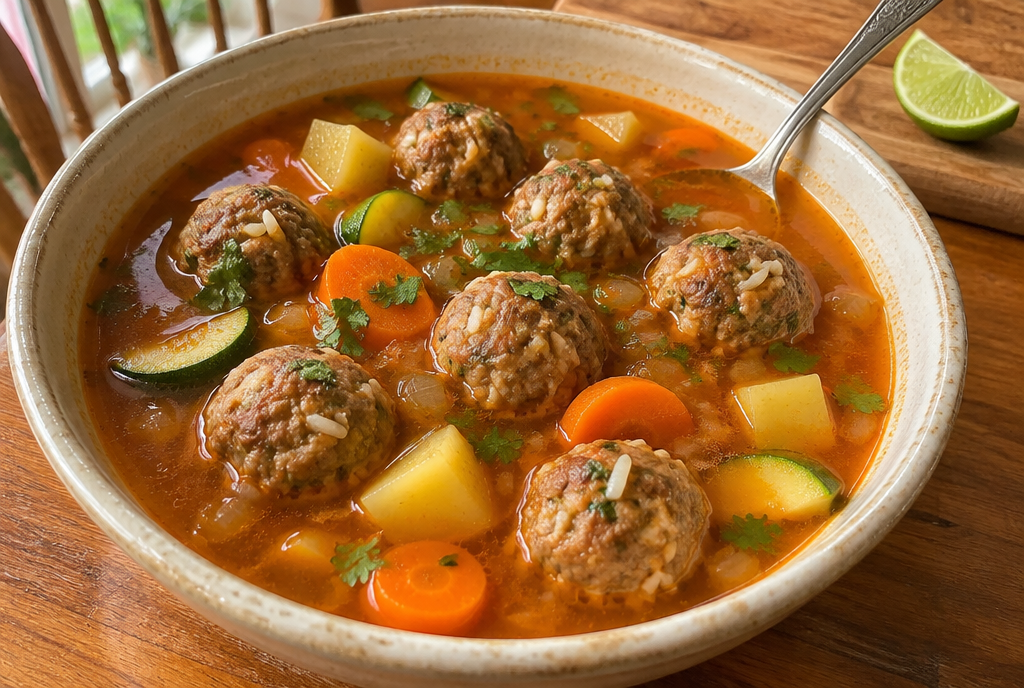
Mexican Albóndigas Soup With Rice Meatballs
This Mexican meatball soup recipe takes a pot of gently seasoned tomato broth and fills it with small beef-and-rice meatballs, potatoes, carrots, zucchini and herbs. Known as caldo de albóndigas or sopa de albóndigas, it is a family-style soup that makes sense for a weeknight dinner: a single pot holds the vegetables, the broth and the little meatballs. The fresh mint in the beef mixture is a defining flavor in many home versions; this recipe keeps it subtle rather than turning the soup into a strong mint dish.
Quick answer: make small meatballs with ground beef, rinsed and drained uncooked rice, egg, white onion, garlic, fresh mint, cilantro, cumin and oregano. Start a broth of onions, garlic, diced tomatoes, stock, potatoes and carrots; lower it to a gentle simmer and add the raw meatballs one at a time. Add zucchini toward the end so it stays tender, not mushy. Simmer until the meatballs’ centers reach 160°F (71°C) on a food thermometer and their rice is fully tender. Finish with cilantro and lime.
This is an original AI-assisted editorial formulation, not independently kitchen-tested. The estimated simmering times should be judged against both safe internal temperature and the doneness of the rice and vegetables, not the clock alone.
Ingredients for about 6 servings
For the beef-and-rice meatballs
- 1 pound (450 g) 85% lean ground beef
- ¼ cup (about 45 g) uncooked long-grain white rice, rinsed and drained, then soaked briefly if desired
- 1 large egg
- ¼ cup (40 g) finely minced white onion
- 1 garlic clove, finely minced
- 1 tablespoon finely chopped fresh mint
- 1 tablespoon finely chopped fresh cilantro
- ½ teaspoon ground cumin
- ½ teaspoon dried Mexican oregano
- ½ teaspoon kosher salt
- ¼ teaspoon ground black pepper
For the tomato-vegetable soup
- 1 tablespoon (15 ml) olive oil
- ½ medium white onion (about 75 g), finely diced
- 2 garlic cloves, minced
- 1 can (14½ ounces / 411 g) diced tomatoes with their juices, without added flavors
- 6 cups (1.4 liters) low-sodium beef broth
- 2 medium carrots, peeled and cut into ½-inch rounds
- 2 small Yukon Gold potatoes (about 10 ounces / 280 g total), cut into ½-inch cubes
- 1 medium zucchini, cut into ½-inch chunks
- 1 teaspoon dried Mexican oregano
- ½ teaspoon ground cumin
- 2 tablespoons chopped fresh cilantro for serving
- 1 lime, cut into wedges for serving
- Salt to taste, added only after the broth has simmered
The ingredient quantities make a moderately brothy pot of six servings. Because the meatballs contain uncooked rice, keep them small enough that the rice can hydrate and the beef can reach a safe temperature during simmering. Ground beef and raw egg are perishable and must be kept refrigerated until needed. The meatballs contain egg and the dish contains beef; review labels for other allergens in packaged broth.
Kitchen equipment and prep
Use a large heavy-bottomed soup pot or Dutch oven, a mixing bowl, a cutting board, knives, measuring cups, a wooden spoon and an instant-read food thermometer. A small plate can hold the shaped meatballs temporarily, but keep that plate separate from serving dishes because raw ground beef and egg have touched it. A strainer works well for rinsing rice.
Cut the vegetables before you turn on the stove. Uniform potato cubes and carrots are easier to cook evenly than a mixture of very large and very tiny pieces. Zucchini goes in later than carrots and potatoes because it softens more quickly. Finely minced onion in the meatball mixture helps the little balls hold together without leaving large crunchy pockets.
For a smoother broth, the canned diced tomatoes can be crushed slightly with a spoon, but don’t turn them into a sweet pasta sauce or a thick chili. Traditional family versions vary. This one is intentionally a light tomato broth with vegetables and recognizable small rice-studded meatballs.
How to make Mexican albóndigas soup
1. Rinse and drain the rice, then prepare the vegetables
Rinse the measured raw white rice in a fine strainer and allow it to drain thoroughly; if your preferred rice cooks slowly, soak it in cool water for about ten minutes and drain again. Chop the onion and garlic portions separately for the meatballs and broth. Peel and cut the potatoes and carrots into roughly half-inch pieces, then chop the zucchini the same size and set it aside.
2. Mix the meatballs carefully
In a clean mixing bowl combine ground beef, drained rice, egg, minced white onion, garlic, mint, cilantro, cumin, oregano, salt and pepper. Mix lightly with clean hands or a spoon just until evenly combined. Do not taste the raw beef mixture. Overworking can pack the meat tightly and make the cooked meatballs dense.
3. Shape small, even meatballs
With clean hands form approximately 20–24 small meatballs, each close to one inch in diameter. Set them on a clean plate or tray that will be treated as a raw-meat-contact surface. Wash hands and sanitize any counter or utensil touched by raw beef or egg before moving on to the vegetables or finished soup.
4. Build the aromatic tomato broth
Heat the olive oil in a large soup pot over medium-low heat. Soften the diced half onion for 4–5 minutes without browning it deeply, then add the minced garlic for about 30 seconds. Add the canned diced tomatoes and their juices, beef broth, sliced carrots, potato cubes, the additional oregano and cumin. Bring to a gentle simmer and cook about 8–10 minutes before adding the meatballs.
5. Lower the meatballs into the simmering soup
Reduce the heat so the surface bubbles gently rather than boiling violently. Add the raw meatballs one at a time using clean utensils, leaving enough room between them. Avoid stirring vigorously during the first few minutes; once the outside firms up, use a spoon to move them gently so they cook evenly. Simmer roughly 15–20 minutes at this stage.
6. Add zucchini and finish the safe cooking
Add the chopped zucchini and continue simmering gently another 8–10 minutes, or longer if needed. Check several meatballs in their centers with a cleaned instant-read thermometer; because they contain ground beef, the center must reach at least 160°F (71°C). Check that the rice grains are tender, with no hard chalky center, and the potatoes and carrots are fork-tender. Do not stop merely because the exterior meat looks brown.
7. Taste, garnish and serve
Once both safety and texture are satisfactory, taste the broth and adjust salt gradually. Ladle soup with meatballs and vegetables into six bowls, sprinkle with fresh cilantro and serve a lime wedge alongside each portion. Store leftovers promptly in shallow containers rather than leaving the whole pot cooling on the stovetop.
What makes albóndigas different from ordinary meatball soup?
The Spanish word albóndigas means meatballs. Mexican albóndigas soup is not a single universally standardized recipe; recipes differ by region, household and available produce. In many home versions, the meatballs include raw rice and fresh mint or another herb and cook directly in a tomato-based broth. Instead of serving them in a thick pasta sauce, the meatballs simmer together with everyday vegetables for a meal in a bowl.
The rice is especially important to this particular formulation. As it cooks inside the beef, it becomes tender and helps create the characteristic texture. The meatball should remain cohesive but not hard. A little mint gives a freshness that might be surprising if you are accustomed to Italian meatballs with breadcrumbs and cheese, yet it works nicely with cumin, garlic and tomato.
The New Mexico tourism bureau’s sopa de albóndigas recipe illustrates another regional approach with meatballs, herbs and broth. Our recipe uses its own proportions and vegetables and is not a copy of that formula. We avoid calling any one family’s version the only authentic method.
Why use rice inside the meatballs?
A modest quantity of raw long-grain rice absorbs liquid while the meatballs simmer. It brings texture and helps bind the mixture together with the egg, but the beef should remain the main ingredient. This recipe uses a quarter cup for one pound of beef, rather than so much rice that each meatball becomes mostly starch.
Rinsing removes loose surface starch and draining reduces unwanted water in the beef mixture. Some cooks soak rice briefly so it can begin hydrating, especially when using a firmer grain. Whatever rice you choose, the final check must include the texture of rice near the center of a meatball. A grain with a hard, chalky middle is not finished, even if the ground beef has reached its minimum safe temperature.
Avoid swapping in instant rice without reconsidering the liquid balance and cooking time. Instant rice is already processed differently and may become mushy before the meatballs and potatoes have finished. Brown rice also needs a different, generally longer schedule and is not a direct substitution in this formula.
Choosing ground beef for tender soup meatballs
Ground beef with some fat gives the meatballs flavor and prevents them from feeling especially dry. The 85% lean beef in the ingredient list is a practical starting point; higher-fat beef may release more oil into the broth. If fat accumulates at the surface, skim off some with a spoon at the end rather than allowing an oily layer to dominate the bowl.
Try to handle the beef minimally. Keep the pieces of onion fine, use only the measured rice, and mix until the ingredients are distributed. Dense, compacted meatballs can feel rubbery even after proper cooking. Form them into similar sizes so they cook evenly in the broth. Do not sear them in a pan first for this version: gently poaching in broth is part of the intended soft texture.
Food safety matters more than appearance. The FDA’s safe-handling guide lists 160°F (71°C) for ground meat, while poultry needs 165°F. Insert a cleaned food thermometer into the center of a representative large meatball. A brown exterior isn’t enough evidence of doneness.
Fresh mint gives the meatballs their character
The recipe uses one tablespoon of fresh chopped mint in the beef mixture, not an entire bunch. Mint is popular in many versions of albóndigas because it brings a gentle herbal contrast to meat and tomato. It should be cleaned, patted dry and finely chopped so no mouthful contains a large leaf clump.
If you dislike mint, you can experiment with cilantro, but the result will have a different flavor. Do not secretly change the recipe’s name or claim that every Mexican family includes mint. Regional traditions vary, and both mint and cilantro are used in different homes. We include a little of each for a fresh but balanced note.
Fresh herbs should also be handled hygienically. Wash them under running water, dry them before chopping and don’t return them to a cutting board contaminated by raw beef unless it has been cleaned properly.
How tomatoes flavor the broth
Diced canned tomatoes provide a consistent base even when garden tomatoes are out of season. A small amount of olive oil softens the onion and garlic first, then the tomatoes combine with low-sodium beef broth to become a light reddish soup. Avoid simmering the tomatoes into a very thick sauce before adding the broth. We want the liquid to be easy to ladle over vegetables and meatballs.
The broth’s salt level can change as it simmers and the meatballs release their seasoning. That is why the soup ingredients call for low-sodium broth and postpone added salt until the end. A flavorful bowl should taste of beef, tomato, cumin and herbs rather than salt alone.
If you prefer a smoother broth, briefly mash large tomato pieces with a spoon before the meatballs go in. Don’t use an immersion blender once the meatballs are in the pot—it would break them apart and change the character of the soup.
Why potatoes and carrots cook before zucchini
Potatoes and carrots are relatively firm vegetables. Cutting them into small, even pieces helps them soften by the time the meatballs are ready. They enter the broth before the raw meatballs so they get a head start without requiring the beef to cook unnecessarily long. Large potato cubes might stay firm while the meatballs become overdone, so keep the half-inch size.
Zucchini softens faster and can fall apart in a long simmer. Adding it later gives you tender pieces that still look recognizable. The exact timing varies with zucchini maturity and how vigorously the pot bubbles. Check with a fork rather than treating a clock as the only evidence of doneness.
Some families use chayote, corn or other local vegetables. Those can be excellent adaptations, but they change the produce combination and may require adjustments. The specific ingredient list here is carrots, potatoes and zucchini; it should not be presented as containing extra vegetables that are absent.
Keeping meatballs from falling apart in soup
Use the egg in the specified quantity, mince the onion finely, and press the mixture together gently into compact but not hard balls. The meatballs may feel delicate when raw because they contain rice and little starch other than the rice itself. Lowering them into gently simmering liquid, rather than a rolling boil, allows their outer surface to firm up without being torn apart.
Once the meatballs are in the pot, avoid repeated aggressive stirring. Lift the broth around them with a ladle if necessary; gently move them only once they begin holding their shape. If the broth is boiling hard, lower the heat. A violent boil can break up the meatballs and make the liquid cloudy.
If one ball does break apart, the soup is not automatically ruined, but check remaining pieces to ensure they reach 160°F. Next time, make the onions finer, form the balls to a consistent size and stir less often during the initial simmer.
The difference between cilantro and mint
Cilantro has a bright, distinctive flavor and appears in both the meatballs and the finished garnish. Mint is used only in a small measured amount within the beef. Together they make a soup that feels fresh without requiring sharp chili heat. This particular recipe is not intended to be very spicy, so families can enjoy it as a gentle broth.
Finely chop cilantro and mint separately, and add the reserved serving cilantro only when the soup is ready. Long boiling can mute the fresh aroma. Lime wedges are meant to be squeezed into individual bowls at the table, allowing each diner to adjust acidity.
If someone dislikes cilantro, omit the topping rather than substituting an unrelated herb without explanation. The meatball mixture’s cilantro can also be adjusted in a different version, but the baseline formula uses both herbs as listed.
Make a full meal without extra complications
A bowl of soup already includes beef, rice, potatoes, zucchini and carrots, making it substantial. Some families offer warm tortillas on the side or a simple salad; those are optional and are not ingredients of the main soup. Avoid adding noodles or heavy cheese sauces unless you intentionally want to create a different meal.
For a completely different meatball presentation, compare our spicy Thai chili meatball lettuce wraps, which are seasoned for a wrapped appetizer rather than poached in broth. For another comforting vegetable soup, our creamy harvest vegetable soup with sage croutons illustrates a thicker, creamy style. If you want a bright raw tomato accompaniment rather than cooked tomato broth, our fresh tomato salsa with lime and cilantro is a separate condiment with a different method.
These links connect readers to related home-cooking techniques and ingredients. They are not instructions to mix chili lettuce-wrap sauce, cream or salsa into this traditional-inspired soup.
Storage, freezing and reheating
Ground beef, rice and cooked vegetables are perishable, so cool leftovers quickly in shallow covered containers and refrigerate within two hours of cooking, or within one hour if the room is above 90°F (32°C). Keep the refrigerator at 40°F (4°C) or below. A conservative home plan is to eat leftovers within three to four days or freeze portions promptly. Because rice is part of the meatballs, avoid leaving the soup sitting at room temperature for extended periods.
Reheat leftovers to 165°F (74°C) in the center of the meatballs and bring the broth to a boil before serving, using a clean thermometer to verify the meatballs. Rice and potatoes may soften further after storage. Thaw frozen portions in the refrigerator rather than on a counter, and don’t repeatedly cool and reheat the entire pot.
The FDA’s safe food-handling guidance describes prompt refrigeration, correct meat cooking temperatures, and safe storage practices. This recipe is not a shelf-stable canned soup and has not been validated for pantry storage.
Troubleshooting a pot of albóndigas
Meatballs break apart: The pot may be boiling too hard or the onion pieces too coarse. Keep a gentle simmer, form evenly sized balls and avoid aggressive stirring when the meat is raw.
Rice remains firm inside: Continue simmering gently until tender, checking that the meatballs remain intact and safely reach at least 160°F. Rice type and meatball size affect timing.
Broth is too salty: Use low-sodium broth and delay added salt until tasting. Canned tomatoes may contain salt too, so read the label.
Potatoes are still hard: Cut them more evenly next time or give them a longer head start before adding the meatballs. Avoid increasing heat so dramatically that the meatballs break.
Zucchini becomes mushy: Put it into the broth later and stop cooking when just tender. Zucchini usually needs less time than carrots or potatoes.
Broth is too thick: Meatballs and rice can absorb liquid. Add a little warm water or unsalted broth, then taste again rather than automatically adding salt.
Soup tastes flat: Finish with cilantro, a squeeze of fresh lime and carefully adjusted salt. Avoid hiding the bright broth beneath unrelated heavy seasoning.
Frequently asked questions
What does albóndigas mean in Mexican cooking?
Albóndigas means meatballs. In Mexican home cooking, caldo de albóndigas is a soup with meatballs and often vegetables in a light broth. Many versions include raw rice or herbs inside the meatballs, but recipes differ among families.
Why is uncooked rice mixed into the meatballs?
The rice slowly hydrates in the simmering broth and adds tender texture. For this recipe it should finish fully soft; never assume the rice is done just because the meatball looks brown outside.
Can I use cooked rice instead?
Cooked rice behaves differently and may produce softer or looser meatballs. This formulation is written for a quarter cup of uncooked long-grain white rice, rinsed and drained. A cooked-rice substitution would need separate testing.
Can I substitute ground turkey for ground beef?
You can develop a variation with ground turkey, but poultry meatballs must reach 165°F (74°C), not the 160°F used for beef. Lean turkey also has different moisture and texture.
Are albóndigas meatballs supposed to be spicy?
Not necessarily. This version relies on cumin, oregano, mint and cilantro for flavor rather than very hot peppers. Add spicy condiments at the table if desired, recognizing they are separate additions.
How big should the meatballs be?
Form roughly one-inch balls, about 20–24 from a pound of beef mixture. Consistent size helps the centers cook evenly and makes them easier to portion into bowls.
What if I cannot find Mexican oregano?
Regular dried oregano is an available approximation, but its aroma differs somewhat. Use the measured amount, and don’t claim the substitution makes the recipe identical to a regional family original.
How do I know the meatballs are fully cooked?
Use a cleaned food thermometer to confirm at least 160°F (71°C) in the center of ground beef meatballs. Check rice tenderness as an additional texture cue. Appearance alone is not a sufficient safety test.
Can I freeze Mexican meatball soup?
Yes. Divide into meal-sized covered containers, cool promptly and freeze. Thaw safely in the refrigerator and reheat thoroughly to 165°F; the rice, potato and zucchini may soften after freezing.
How long does homemade albóndigas soup keep?
As a conservative plan, refrigerate promptly at 40°F or below and use within three to four days. Freeze portions sooner if they won’t be consumed within that window. Never leave the finished pot cooling on the stove for hours.
Editorial disclosure and sources
This is an original AI-assisted editorial recipe that has not been independently kitchen-tested. Ingredient ratios, rice tenderness cues and total simmer times are proposed for practical home cooking, not results of a filmed or documented kitchen trial. The featured photograph is an AI-generated illustration of the intended soup and does not show a batch physically cooked by the MySavorista editorial team. No verified nutrition values or shelf-stability claims are offered.
For the broader context of rice-and-herb meatball soups, consult the New Mexico tourism bureau’s sopa de albóndigas reference. For ground meat safety and leftovers, consult the FDA’s safe food-handling chart, which lists 160°F for ground meat and 165°F for reheated leftovers. Those sources inform the framing and safety guidance without implying this exact soup has been independently tested.
Editorial transparency: this recipe is an AI-assisted original that has not been independently kitchen-tested. The featured image is AI-generated, not an editorial cooking-test photograph. Ground beef meatballs require at least 160°F; reheat leftovers to 165°F.
Print
Mexican Albóndigas Soup With Rice Meatballs
- Prep Time: 25 minutes
- Cook Time: 45 minutes
- Total Time: 70 minutes
- Yield: 6 servings 1x
- Category: Soup, Dinner
- Method: One-pot gentle stovetop simmer
- Cuisine: Mexican-inspired home cooking
Description
Mexican-inspired albóndigas soup with rice-and-herb ground beef meatballs, potatoes, carrots, zucchini and tomato-beef broth, simmered and checked with a food thermometer.
Ingredients
MEATBALLS:
1 pound (450 g) 85% lean ground beef
1/4 cup (about 45 g) uncooked long-grain white rice, rinsed and drained
1 large egg
1/4 cup (40 g) finely minced white onion
1 garlic clove, minced
1 tablespoon chopped fresh mint
1 tablespoon chopped fresh cilantro
1/2 teaspoon ground cumin
1/2 teaspoon dried Mexican oregano
1/2 teaspoon kosher salt
1/4 teaspoon ground black pepper
SOUP:
1 tablespoon (15 ml) olive oil
1/2 medium white onion (about 75 g), diced
2 garlic cloves, minced
1 (14.5-ounce / 411 g) can diced tomatoes with their juices
6 cups (1.4 liters) low-sodium beef broth
2 carrots, peeled and sliced 1/2 inch thick
2 small Yukon Gold potatoes (about 10 ounces / 280 g), cut into 1/2-inch cubes
1 zucchini, cut into 1/2-inch chunks
1 teaspoon dried Mexican oregano
1/2 teaspoon ground cumin
2 tablespoons chopped cilantro for garnish
1 lime cut into serving wedges
Fine salt to taste after cooking
Instructions
Rinse and drain the quarter cup of uncooked white rice and optionally soak 10 minutes then drain again. Dice the separate onion and garlic portions, peel and cut potatoes and carrots to 1/2-inch size, and chop zucchini separately.
Combine raw ground beef, drained rice, egg, minced quarter cup white onion, 1 garlic clove, mint, cilantro, cumin, oregano, kosher salt and pepper. Mix just until combined without tasting raw meat.
Shape the mixture into about 20–24 small 1-inch meatballs on a clean raw-meat-only plate. Wash hands and sanitize surfaces after handling beef and egg.
Heat olive oil in a heavy large soup pot. Soften the remaining diced half onion for 4–5 minutes, add remaining 2 garlic cloves for 30 seconds, then add diced tomatoes with juices, low-sodium beef broth, carrots, potatoes, soup oregano and soup cumin. Simmer gently 8–10 minutes.
Reduce heat to a gentle simmer and lower raw meatballs one by one into broth. Avoid vigorous stirring until their exteriors firm up; simmer about 15–20 minutes.
Add zucchini and continue gently simmering 8–10 minutes or longer as required. Use a clean food thermometer to ensure several meatballs reach at least 160°F (71°C) in the center, and verify rice and potato pieces are fully tender; do not rely on color or time alone.
Taste soup, adjust salt only now, then ladle into 6 bowls with cilantro and lime wedges. Divide leftovers into shallow covered containers and refrigerate within 2 hours at 40°F (4°C) or below, or freeze promptly; reheat leftovers to 165°F (74°C).
Notes
Original AI-assisted editorial formula, not independently kitchen-tested. Ground beef meatballs must be checked at 160°F (71°C) before serving; if substituted with ground poultry, safe target is 165°F (74°C). Raw uncooked white rice mixed into the meatballs must also become tender. Refrigerate leftovers promptly at 40°F (4°C) or below, generally use within 3–4 days or freeze, and reheat to 165°F (74°C). Includes egg allergen; verify beef broth ingredients for other allergens. This recipe is not a shelf-stable canning formula. Featured image is AI-generated illustration.
Nutrition
- Serving Size: One-sixth of soup, including 3–4 small beef rice meatballs
Keywords: Mexican meatball soup recipe, sopa de albondigas, caldo de albondigas, albondigas with rice