
Easy Veal Scallopini With Lemon and Capers
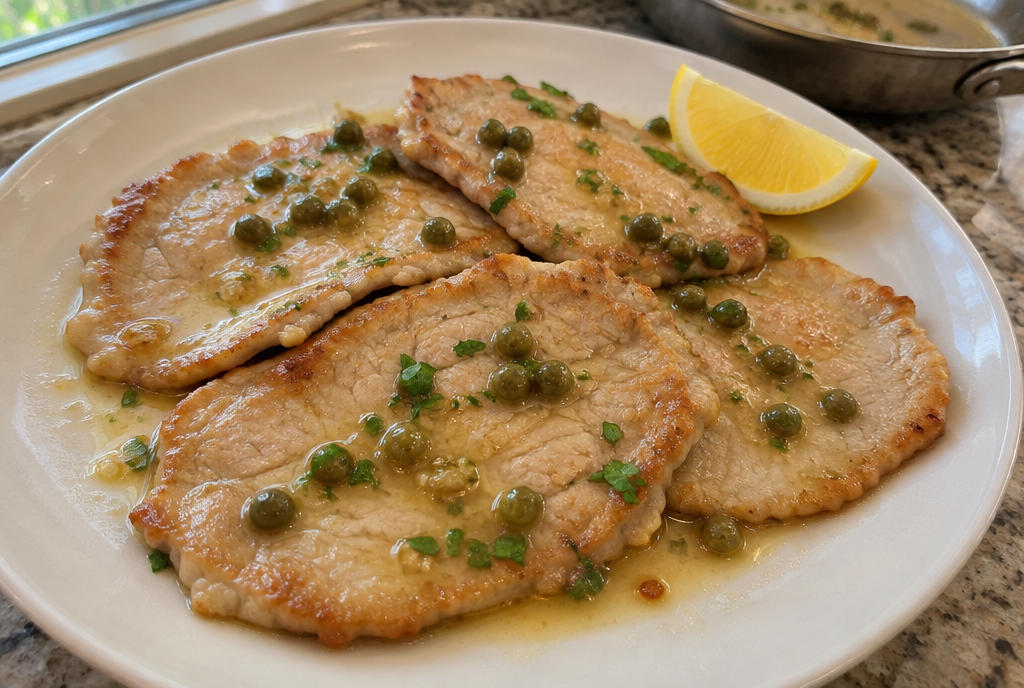
This veal scallopini recipe turns thin veal cutlets into a quick Italian-American dinner finished with a bright lemon-caper butter pan sauce. The meat gets a very light coating of flour, browns in a little olive oil, and rests while garlic, low-sodium broth, capers and fresh lemon juice become a glossy sauce in the same pan. A few spoonfuls of sauce are enough: the idea is to keep tender veal at the center of the plate, not hide it beneath a heavy cream dressing.
Quick answer: ask your butcher for thin veal scallopini, about ¼ inch thick. Pat dry, season lightly and dredge in flour. Pan-sear in batches until the veal reaches a safe internal temperature of 145°F (63°C), then let it rest at least three minutes. Build a separate sauce with garlic, broth, lemon, capers and cold butter, then spoon it over the cooked cutlets. Use an instant-read thermometer inserted carefully from the side of the meat; doneness must not be judged by color alone.
This recipe is an original AI-assisted editorial formulation that has not been independently kitchen-tested. The estimated minutes are a guide to preparation order, not a guarantee that all veal cutlets are cooked safely after the same number of minutes.
Ingredients for four servings
- 1¼ pounds (about 565 g) thinly sliced veal scallopini or veal cutlets, ideally about ¼ inch thick
- ⅓ cup (about 40 g) all-purpose flour, for a light dredge
- ½ teaspoon kosher salt, or adjusted to taste
- ¼ teaspoon freshly ground black pepper
- 2 tablespoons (30 ml) extra-virgin olive oil
- 2 tablespoons (28 g) unsalted butter, chilled and cut into two pieces
- 2 small garlic cloves, minced
- ½ cup (120 ml) low-sodium chicken broth
- 2 tablespoons (30 ml) freshly squeezed lemon juice
- 2 tablespoons capers in brine, well drained
- 2 tablespoons finely chopped fresh flat-leaf parsley
- 1 lemon, cut into thin wedges for serving, optional if you already have wedges from the juiced lemon
This is a no-wine version of a lemon-caper veal pan sauce. The broth supplies liquid and savory flavor without requiring alcohol. The flour is for a barely visible coating, not for creating thick schnitzel-style breading. The recipe contains wheat in the flour and milk in the butter; packaged broth and capers should also be checked for any individual allergen requirements.
Equipment for fast stovetop cooking
Use a broad heavy-bottomed skillet, ideally stainless steel or heavy nonstick, a sturdy spatula or tongs, a shallow flour plate, paper towels, a clean serving plate and an instant-read meat thermometer. A broad skillet allows the cutlets to make contact with the hot surface, helping them brown rather than steam. Because scallopini are thin, a thermometer with a fine probe that can enter from the cutlet’s side is especially useful.
Arrange the raw-meat station separately from the finished plates. Flour used to coat raw veal must not be saved for another use. If you need to pound an unusually thick cutlet, place it between appropriate food-safe parchment or wrap and gently flatten to an even thickness. Don’t pound it so thin that it tears into holes.
Have the lemon juiced, garlic minced, capers drained, parsley chopped and cold butter portioned before starting. The sauce moves quickly after the veal comes out of the pan, so mise en place prevents the garlic from burning while you look for another ingredient.
How to make lemon-caper veal scallopini
1. Prepare and season the veal
Pat each veal cutlet dry with disposable paper towels. If the pieces are unevenly thick, gently flatten the thicker sections to about ¼ inch. Sprinkle both sides with kosher salt and black pepper. Keep raw veal chilled while preparing the other ingredients, and clean any utensils that touch it before using them for cooked food.
2. Dredge very lightly in flour
Spread the all-purpose flour on a shallow plate. Press each cutlet into it briefly, turn once, then shake off the excess so only a thin dusting remains. Too much flour can become pasty once the lemon-broth sauce is added, so avoid a heavy coat. Discard any flour remaining after contact with raw veal.
3. Sear the cutlets in batches
Warm olive oil in a wide skillet over medium-high heat until it shimmers gently but is not smoking. Add only as many cutlets as fit in a single layer without overlapping. Sear approximately 2–3 minutes per side as an initial guide, reducing heat if the coating browns too fast. Use a thermometer inserted horizontally into the thickest part of each cutlet and continue cooking as needed until it reaches 145°F (63°C). Remove to a clean plate and let rest for at least three minutes before serving. Repeat in batches for remaining pieces.
4. Cook the garlic briefly in the same pan
Lower the skillet heat to medium-low. If the bottom is very dry, add a teaspoon of broth. Add the minced garlic and stir for about 20–30 seconds until fragrant, without allowing it to turn brown. The browned bits left from searing should smell savory, not burnt; if the pan has blackened scorched flour, clean it before making the sauce rather than scraping bitter material into the food.
5. Deglaze with broth and lemon
Pour the low-sodium chicken broth into the skillet carefully and scrape up any pleasant golden bits from the bottom. Add the fresh lemon juice and drained capers. Let the liquid bubble gently for a few minutes until it reduces slightly and begins to coat the back of a spoon. It should remain a light, spoonable pan sauce rather than a dense gravy.
6. Finish the sauce with chilled butter
Turn the heat to low or off and add the two pieces of cold unsalted butter, swirling or whisking gently until the liquid becomes glossy. Stir in the chopped parsley. Taste the sauce before adding any extra salt because capers and broth contribute their own seasoning. Don’t boil aggressively after adding the butter or the mixture may separate.
7. Plate the rested veal and serve
Arrange the veal cutlets on clean serving plates, confirming that each has completed its three-minute rest following the 145°F reading. Spoon the lemon-caper sauce over the top and offer lemon wedges on the side. Serve immediately with a separate side if desired, keeping raw-veal utensils away from the finished meal.
What exactly is veal scallopini?
Scallopini, or scaloppine, refers to small, relatively thin slices of meat prepared for quick cooking. In an Italian-American veal dish, the thinness is important because it creates a tender cutlet that can brown rapidly in a skillet. The exact cut from the animal can vary by butcher, so ask for thin slices from a suitable tender part and confirm they are veal rather than a different meat.
This recipe uses veal cutlets of roughly even thickness, not ground veal, veal shanks or a whole veal roast. Those other cuts require different preparation and temperatures. A package labeled only “veal stew meat” isn’t suitable for a brief scallopini sear because stew meat needs a moist, slower cooking method to become tender.
The lemon-caper sauce is a classic flavor direction for veal, but our version deliberately leaves out wine and uses broth for the pan liquid. It is meant to suit a typical American home kitchen and to focus on the delicate flavor of the cutlets.
Buying and preparing veal cutlets
Ask the butcher for scallopini cutlets no thicker than about ¼ inch, or for a cut that can be gently pounded to that thickness. The pieces should be reasonably similar in size so they cook in comparable periods. If a package contains very small and very large cutlets together, put the small ones in a separate batch rather than assuming all need an identical time.
Keep the veal cold until cooking. Raw meat should not be left on the counter while you prepare every other component of dinner. Check package dates and follow safe refrigeration instructions. If you purchase frozen veal, thaw it safely in the refrigerator, not on the kitchen counter.
You do not need to rinse raw veal under running water. Instead, pat it dry with paper towels and discard them safely. Wash hands and all food-contact surfaces after handling raw meat. Don’t reuse the raw-meat plate for finished cutlets; place them on a clean dish once safely cooked.
Why a light dusting of flour makes a difference
A small amount of flour helps the thin veal surface develop a pale golden crust in the skillet. It also contributes a little body to the eventual pan sauce when the meat is plated. But this isn’t a breaded Milanese cutlet: the coating should be delicate enough that you can still see the meat beneath it.
A heavy coating can clump when the cutlets are moved, especially if the surface is wet. Dry the cutlets first, press them into the flour briefly, and shake off the excess. Keep the dredging plate close to the skillet, so the meat goes straight into the pan instead of sitting for a long time in damp flour.
Discard used flour after the cutlets are coated. Flour that has touched raw veal may contain microorganisms and should not be put back into the bag or reserved to thicken the sauce later. The sauce gets its texture from gentle reduction and finishing butter instead.
A safe way to check thin veal with a thermometer
A thin cutlet can be difficult to probe straight down because a vertical thermometer tip might go through it into the skillet. Instead, carefully insert the probe horizontally from the side into the thickest section of a cutlet while keeping your fingers away from hot oil. Choose a fine-tipped instant-read thermometer suited to thin meat when possible. Check more than one cutlet if they differ in size or thickness.
The FDA safe food handling chart specifies 145°F (63°C) with a three-minute rest for intact veal chops, roasts and steaks. This recipe applies that precautionary threshold to the whole-muscle veal cutlets. It is not the same rule for ground veal: ground veal requires 160°F (71°C), and poultry requires 165°F (74°C).
A pale pink or golden appearance cannot replace a thermometer reading. If the center has not reached the required temperature, keep cooking and check again. Let each portion rest at least three minutes after removing it from the heat; the rest is part of the food-safety instruction, not just a stylistic suggestion.
How to keep veal tender instead of dry
Thickness, heat and timing matter more than simply adding extra butter to the finished plate. Very thin veal cutlets can overcook quickly, so avoid leaving them over strong heat while you prepare the sauce. Cook in batches and begin checking doneness early. Once 145°F is confirmed, transfer to a clean plate and begin the rest period.
Avoid overcrowding the pan. If several pieces overlap, steam can build underneath them and limit browning. A single layer with a little room around each cutlet gives more even results. If your skillet is small, divide the meat into two or three batches rather than forcing all four servings into one crowded pan.
Turn the pieces gently. Pulling or dragging them across the pan may tear the delicate meat or scrape off the thin flour coating. A fish spatula or wide tongs can help. If the meat sticks, let it cook a little longer before trying again rather than forcing it off the surface.
The role of lemon and capers
Fresh lemon juice brings acidity that balances the rich butter and tender veal. The listed two tablespoons are enough to brighten a modest amount of broth without turning the sauce sharply sour. If the lemon is especially tart, taste before adding any extra juice at the table.
Capers are small preserved buds with a briny flavor that suits lemon and parsley. Drain capers packed in brine; if they are very salty, a brief rinse may be helpful. Because they contribute salt, this recipe seasons the meat lightly and instructs you to taste the sauce before any final salt adjustment.
Use fresh parsley just before serving to preserve its color and aroma. There is no need for heavy dried herb blends, wine, cream, or tomato sauce in this version. The goal is a light sauce whose main flavors are lemon, savory broth, capers and a bit of butter.
Building a silky pan sauce without wine
Once the veal leaves the skillet, small golden browned bits remain on the bottom. These contribute savory flavor when dissolved with broth. Cook the minced garlic very briefly over reduced heat so it doesn’t scorch, then add the broth and lemon juice before the pan becomes too dry.
A short reduction concentrates the flavors. If you reduce the broth to almost nothing, the butter may become greasy instead of making a smooth sauce. Aim for a few tablespoons of liquid per serving, not a thick restaurant-style gravy. The flour on the cutlets already offers some natural body as the sauce touches them.
Adding cold butter after reducing the heat helps create a glossy finish. Swirl or whisk while the butter melts, then remove the pan from strong heat. Do not boil violently afterward. If the sauce becomes too thick, a teaspoon of warm low-sodium broth can loosen it; adjust gradually.
Choosing sides for an Italian-American dinner
Veal scallopini pairs with uncomplicated sides that can absorb a little of the lemon-caper pan sauce. Steamed green vegetables, tender potatoes or a small serving of pasta are all reasonable options, but they are not ingredients in this exact recipe. Keep the sides mild if you want the veal and capers to remain noticeable.
For a different Italian-American sauce profile, see our fresh tomato pasta sauce from scratch, which uses cooked fresh tomatoes rather than butter, capers and lemon. For another family-style baked Italian-American meal, the baked mostaccioli with beef and mozzarella is a richer, tomato-and-cheese option. If you’d rather cook poultry with a related garlic-herb direction, our crispy garlic-herb chicken thighs with roasted vegetables use a distinct preparation and the higher poultry cooking threshold.
These links are meant to help readers explore related dishes; they are not instructions to combine tomato sauce, mozzarella or chicken with this veal scallopini.
Simple mistakes and fixes
Cutlets turn tough: They may have been too thick or cooked far past the safe temperature. Ask for even, thin cuts, check early with a thermometer and allow the required three-minute rest.
Flour becomes gummy: The cutlets were damp or were dredged too heavily. Pat dry and shake off extra flour before putting them into the hot pan.
Garlic tastes burnt: The skillet remained too hot after the veal came out. Lower the heat, add the garlic briefly and pour broth before it darkens.
Sauce tastes overly sour: The lemon may be especially sharp or the broth too reduced. Add a small amount of warm unsalted broth and taste rather than spooning in sugar.
Sauce separates into butter and liquid: It may have boiled after the butter went in. Turn the heat down and swirl in small pieces of cold butter only after reducing the broth.
Veal lacks color: The skillet may be crowded, or the cutlets still wet. Work in batches and dry the meat before dredging.
Capers dominate the dish: The caper brand may be highly salty. Drain well, rinse briefly if necessary and measure rather than pouring in most of the jar.
How to prep ahead without losing quality
You can mince garlic, chop parsley, drain capers, squeeze lemon and measure broth before dinner. Store these ingredients covered and refrigerated as appropriate. Don’t dredge raw veal hours in advance; the moisture can soak the flour and create a sticky coating.
Cook the veal near the time you plan to serve it. Thin cutlets are at their best soon after browning, and repeated reheating can make them firmer. If multiple people are coming to dinner, have plates and side dishes prepared before starting the skillet so the cutlets aren’t waiting too long under a heat lamp or on a warm burner.
When storing leftover veal, divide it into shallow covered containers and refrigerate promptly. Keep the sauce with the cutlets to reduce drying. The recipe is not designed for canning or other room-temperature storage, and butter and cooked meat remain perishable.
Storage and reheating leftovers
The FDA safe food handling recommendations advise refrigerating perishable cooked foods within two hours, or one hour when the surrounding temperature exceeds 90°F (32°C), with a refrigerator held at 40°F (4°C) or below. For a conservative household plan, use cooked veal leftovers within three to four days or freeze promptly for longer storage.
When reheating, warm leftovers thoroughly to 165°F (74°C) as a leftover-food target. A little broth can help loosen the lemon-butter sauce, which may appear firm after refrigeration. Reheat in small portions rather than repeatedly heating the whole batch.
Do not leave cooked veal and its butter sauce at room temperature for hours, even if it still looks appealing. Freshness or food safety cannot be determined reliably by appearance alone after improper storage.
Frequently asked questions
What is the difference between veal scallopini and veal Parmesan?
Scallopini uses small thin veal cutlets, often in a quick pan sauce. Veal Parmesan is typically breaded more heavily and topped with tomato sauce and cheese. They’re distinct dishes with different preparation and flavor.
Can I use chicken instead of veal?
You can create a chicken piccata-style adaptation, but chicken must reach 165°F (74°C), not the 145°F cutlet threshold used for intact veal. Poultry texture and cooking time will also differ.
Do I need wine for lemon-caper scallopini?
No. This recipe uses low-sodium chicken broth with fresh lemon juice, garlic, capers and butter to make a bright sauce without wine.
How thin should veal scallopini be?
About ¼ inch thick is a practical target for quick skillet cooking. Try to keep cutlets evenly thin, and measure safe doneness with a thermometer inserted from the side.
What is the safe internal temperature for veal cutlets?
For whole-muscle veal, use a food thermometer to confirm 145°F (63°C) and let the meat rest at least three minutes. Ground veal needs 160°F (71°C) instead.
Can I make this recipe gluten-free?
The baseline uses all-purpose wheat flour. A different gluten-free dredge may work, but its browning and sauce-thickening behavior would need separate evaluation; do not label the standard recipe gluten-free.
Should capers be rinsed before cooking?
Drain them well. If packed in a very salty brine, a brief rinse can reduce surface salt. Taste the finished pan sauce before adding any more seasoning.
How can I tell when the pan sauce is ready?
After simmering the broth and lemon briefly, it should lightly coat a spoon. Turn the heat low before swirling in cold butter; it should look glossy rather than thick and creamy.
Can veal scallopini be prepared ahead?
Prepare the sauce ingredients and side dishes in advance, but dredge and cook the thin cutlets close to service for better texture. Keep raw veal safely refrigerated until use.
How do I reheat leftover veal without drying it out?
Place cutlets and sauce in a small covered pan, add a little broth if necessary and reheat gently until the center reaches 165°F (74°C), then serve immediately.
Editorial transparency and reliable references
This recipe is an original AI-assisted editorial formulation that has not been independently kitchen-tested. Quantities and timing are practical guidance for a home-cooking trial, not a recorded physical test. Its featured image is AI-generated to illustrate the intended appearance and is not a photograph of cutlets prepared by the MySavorista editorial team. No independently validated nutrition data are claimed.
For safe intact veal cooking temperatures and leftover refrigeration, the FDA safe food-handling chart supplies the reference temperatures. The USDA FSIS veal temperature guidance confirms the three-minute rest for veal steaks, chops and roasts and distinguishes ground veal. These sources inform safety instructions, not a claim that this recipe has been kitchen-tested.
Editorial transparency: this is an AI-assisted original recipe that has not been independently kitchen-tested. Its featured image is AI-generated and does not document a physically prepared batch. Check intact veal cutlets at 145°F and rest three minutes; ground veal requires 160°F.
Print
Easy Veal Scallopini With Lemon and Capers
- Prep Time: 15 minutes
- Cook Time: 20 minutes
- Total Time: 35 minutes
- Yield: 4 servings 1x
- Category: Dinner
- Method: Pan-seared veal cutlets with stovetop pan sauce
- Cuisine: Italian-American home cooking
Description
Thin pan-seared veal scallopini cutlets with a quick garlic, lemon, caper and butter pan sauce, made without wine; serve at 145°F after a three-minute rest.
Ingredients
1 1/4 pounds (565 g) thin veal cutlets or scallopini, about 1/4 inch thick
1/3 cup (40 g) all-purpose wheat flour for light dredging
1/2 teaspoon kosher salt
1/4 teaspoon freshly ground black pepper
2 tablespoons (30 ml) extra-virgin olive oil
2 tablespoons (28 g) cold unsalted butter
2 small garlic cloves, minced
1/2 cup (120 ml) low-sodium chicken broth
2 tablespoons (30 ml) fresh lemon juice
2 tablespoons brined capers, drained
2 tablespoons finely chopped flat-leaf parsley
1 lemon, cut into small wedges for serving, optional
Instructions
Pat the veal cutlets dry, gently flatten thicker spots to about 1/4 inch and lightly season each side with salt and pepper. Keep raw veal and utensils separate from serving surfaces.
Lightly dust each cutlet in all-purpose flour and shake off excess. Discard any flour that has contacted raw veal.
Heat olive oil in a wide skillet over medium-high, working in a single layer and batches if needed. Pan-sear cutlets about 2–3 minutes per side as a guide, but verify they reach at least 145°F (63°C) at their thickest part using a fine thermometer probe inserted from the side. Move to clean plates and REST AT LEAST THREE MINUTES before serving.
Lower skillet heat to medium-low and stir in minced garlic for about 20–30 seconds until fragrant without browning; discard any burned flour in the pan before building the sauce.
Carefully add low-sodium chicken broth, scrape up pleasant golden pan bits, then add fresh lemon juice and drained capers. Let simmer gently for a few minutes until slightly reduced and spoonable.
Lower heat or turn off; swirl in the cold unsalted butter until glossy, then add chopped fresh parsley. Taste first before adding any additional salt because capers and stock already contribute salt.
Serve safely cooked and rested veal on clean plates, spoon over the lemon-caper butter sauce and add optional lemon wedges. Refrigerate leftovers promptly at or below 40°F and reheat leftovers thoroughly to 165°F.
Notes
Original AI-assisted recipe not independently kitchen-tested; clear AI featured image disclosure. For WHOLE-MUSCLE veal cutlets, verify 145°F (63°C) with a 3-minute rest, per FDA/USDA intact veal guidance; ground veal requires 160°F and chicken substitutes need 165°F. Check thin meat with a small side-insert thermometer; cooking time is not a safety proof. Contains wheat flour and milk/butter. Refrigerate leftovers within 2h (1h above 90°F), keep <=40°F, use within ~3-4 days or freeze and reheat thoroughly to 165°F. No wine used.
Nutrition
- Serving Size: About 5 ounces (142 g) uncooked veal cutlet weight per serving, before cooking loss
Keywords: veal scallopini recipe, veal piccata without wine, lemon caper veal, easy veal recipes