
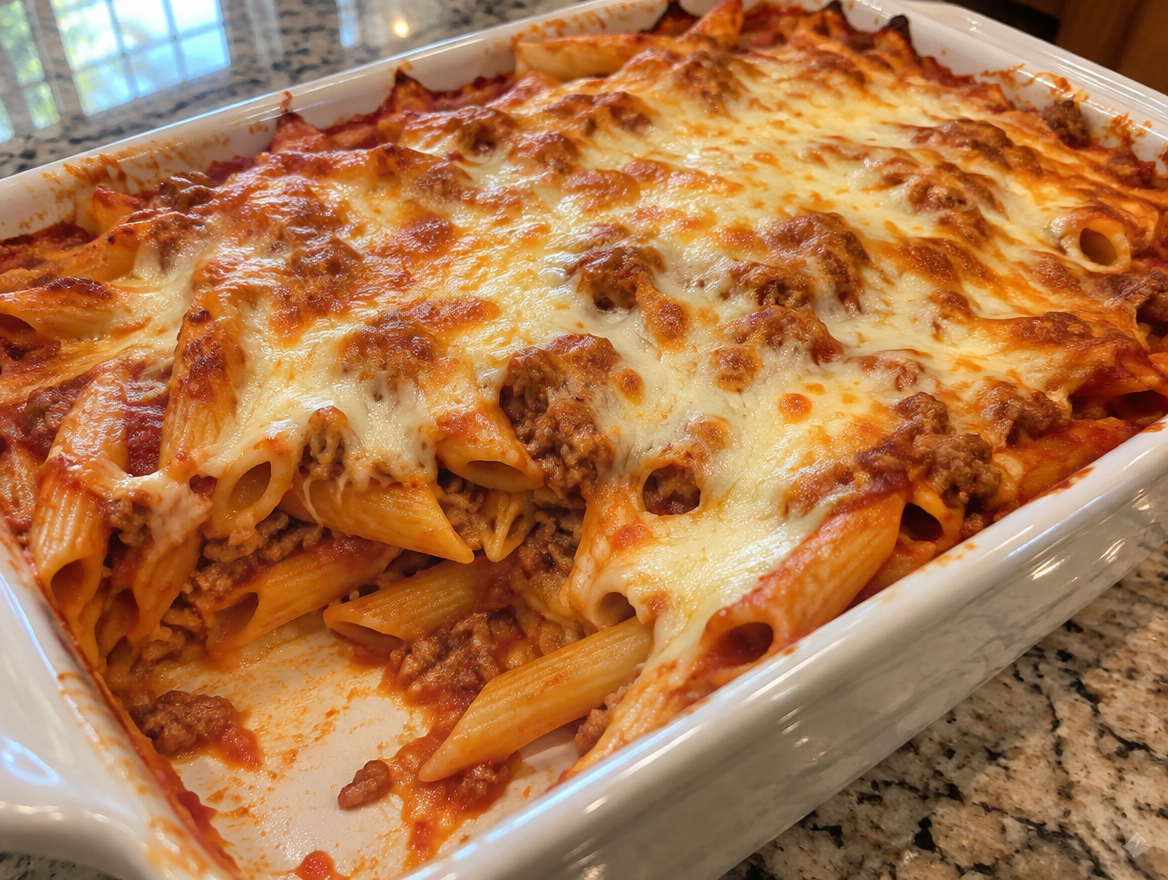
Baked mostaccioli is the kind of dinner that makes a regular weeknight feel a little more welcoming. Short pasta tubes catch a savory tomato-and-ground-beef sauce, and a layer of mozzarella melts into a bubbly, lightly golden top. It has the familiar appeal of a baked pasta casserole without the work of stacking lasagna noodles or making a complicated sauce from scratch.
This version keeps the ingredient list practical: one pound of mostaccioli, lean ground beef, onion, garlic, a jar of marinara, canned tomatoes, Italian seasoning, and two cheeses. A quick simmer develops the sauce while the pasta cooks, then everything finishes together in a 9-by-13-inch pan. The most important steps are slightly undercooking the pasta, using enough sauce, and checking that the center of the finished casserole is hot enough.
The recipe serves about eight and works for a family dinner, a potluck, or a make-ahead meal. Below you will find the full printable recipe card, detailed explanations of the ingredients, ways to avoid dry pasta or greasy sauce, storage guidance, and answers to common questions. Jump to the printable baked mostaccioli recipe if you already have your ingredients ready.
What is baked mostaccioli?
Mostaccioli is a short tube-shaped pasta with diagonal ends, closely related to penne. Some brands sell smooth mostaccioli, while others have ridges. Both work in the oven because the hollow centers and cut ends collect small pockets of sauce. Baked mostaccioli typically combines boiled pasta, tomato sauce, cheese, and sometimes ground meat before finishing in a casserole dish.
The American family-style version shares flavors with baked ziti but is not necessarily identical. You can build it in loose layers or stir the sauce throughout. Here, most of the beef sauce is mixed into the pasta and a smaller amount is saved for the top, so the center stays moist while mozzarella browns. The result is hearty but not excessively oily, with plenty of clearly identifiable pasta rather than a dense block of cheese.
Why this version works for weeknight dinners
There is no need for a long-simmered Sunday sauce. Onion and garlic establish flavor in the skillet, and a combination of marinara and crushed tomatoes creates enough liquid for the pasta to finish cooking without drying out. The ground beef makes it filling, while low-moisture mozzarella provides that stretchy melted top people expect from a baked pasta dinner.
Using a standard 9-by-13-inch baking dish also means the casserole spreads into an even layer that heats through more predictably than a very deep container. The recipe uses one saucepan for pasta and one skillet for sauce before everything moves to the pan. When you plan ahead, the sauce can be made earlier and reheated before assembly, making the oven portion straightforward.
Ingredients for a flavorful beef-and-mozzarella mostaccioli
Mostaccioli pasta: One 16-ounce box forms the base. Cook it about two minutes less than the package’s al dente recommendation because the oven and hot sauce will finish the cooking. Starting with very soft noodles is the most common cause of a mushy casserole. If the grocery store is out of mostaccioli, penne is a reasonable substitute, though the final recipe becomes baked penne rather than traditional mostaccioli.
Ground beef and aromatics: One pound of approximately 90% lean beef supplies savory flavor without excessive grease. A yellow onion brings sweetness, and garlic adds depth when stirred in near the end of browning. Season the sauce thoughtfully; jarred marinara already contains salt and herbs, so taste before adding much more. You do not need sugar or cream in this particular version.
Tomatoes and cheese: A 24-ounce jar of marinara plus a 14-ounce can of crushed tomatoes gives the casserole enough sauce to coat the tubes and survive the oven. Low-moisture mozzarella melts well without releasing as much water as fresh mozzarella. Parmesan contributes a salty, nutty finish. Freshly shredded cheese generally melts more smoothly, but packaged shreds can be used for convenience.
How to choose the right pasta shape
Mostaccioli often has a smooth outer surface and a clean diagonal cut, making it easy to distinguish from some ridged pastas. In this casserole, that smooth surface is not a drawback; sauce still fills the hollow centers. Try to purchase pasta with fairly even tube thickness so the pieces reach a similar texture. Regular dried wheat pasta is the simplest starting point for the times in this recipe.
Whole-wheat or gluten-free versions may need different cooking and hydration times. Do not rely blindly on the same boiling and baking schedule for every alternative. Instead, cook the pasta to just short of tender, make sure it is well coated, and watch the final texture during baking. For a first batch, the standard dry mostaccioli listed on the recipe card is the most predictable choice.
Build the tomato beef sauce without making it greasy
Start by softening diced onion in olive oil until it loses its raw edge. Add the ground beef, break it into small pieces, and allow it to brown. A heavy skillet gives you enough surface area for moisture to evaporate; an overcrowded pan can leave the beef steaming instead. Once it is cooked through, use a food thermometer to confirm ground beef reaches 160°F (71°C), then drain excess fat before adding the tomato sauce.
Add minced garlic for only a short time so it becomes fragrant without scorching. Pour in the marinara and crushed tomatoes, season with dried Italian herbs, and simmer the mixture for 8–10 minutes. This brief simmer blends the flavors and reduces a little excess moisture. If it thickens so much that a spoon leaves a dry trail, loosen it with a few tablespoons of water. The sauce should move easily around the pasta, not sit as a dry paste.
Why slightly undercooked noodles make better baked pasta
Dry pasta absorbs water during boiling, then keeps absorbing liquid while it sits in hot sauce. If it is fully tender before baking, it may become overly soft by the time the cheese has browned. Undercooking the mostaccioli by roughly two minutes gives it a chance to finish in the oven, where the sauce brings it to the intended consistency.
Do not rinse the cooked pasta under cold water unless you have a specific reason; a little surface starch helps sauce cling to it. Drain it well and combine it promptly with the beef mixture. If you need to pause, toss it with a small spoonful of the prepared sauce to prevent sticking. The goal is evenly coated pasta rather than dry tubes hidden beneath a separate red layer.
How to layer baked mostaccioli in a 9-by-13 pan
Mix most of the sauce with the drained pasta first. Spread half the mixture in a lightly oiled pan and sprinkle with part of the mozzarella. Add the remaining pasta, spoon over the reserved sauce, and finish with the rest of the mozzarella and Parmesan. This method puts cheese inside the casserole as well as on top, without turning the middle into an excessively thick layer.
Do not press down hard on the pasta. A loose, even arrangement lets heat circulate and gives the mozzarella room to melt between the tubes. If your baking dish is smaller than a standard 9-by-13-inch pan, the casserole may become deeper and require more time to heat through. In that situation, check the center temperature rather than following the clock alone.
Cover first, then uncover for the golden cheese topping
At 375°F, a loosely covered first stage keeps the pasta from drying while the center heats. Tent the foil so it does not stick to the mozzarella. After approximately 20 minutes, remove the foil and bake another 10–15 minutes until the cheese is melted, the edges bubble, and a few small golden patches appear on top. If your oven browns aggressively, move the pan to a lower rack rather than overbaking the center.
The center of the completed casserole should reach 165°F (74°C) as measured with a food thermometer. The official FoodSafety.gov temperature chart provides the recommended temperature for casseroles. Let the pan rest for 8–10 minutes after baking. This short pause makes serving easier and allows the sauce to settle around the pasta.
Baked mostaccioli printable recipe card
The card below contains the complete measured ingredient list, step-by-step method, timing, servings, and important safety notes. Follow the temperature checks in addition to the approximate baking time: ingredient brands, oven calibration, and pan depth can all affect the result.
Print
Baked Mostaccioli with Beef and Mozzarella
- Prep Time: 25 minutes
- Cook Time: 45 minutes
- Total Time: 70 minutes
- Yield: 8 servings 1x
- Category: Dinner
- Method: Stovetop and oven baked
- Cuisine: Italian-American
Description
A family-style baked mostaccioli casserole layered with tomato-beef sauce, tender pasta and bubbly mozzarella.
Ingredients
1 pound dry mostaccioli pasta
1 tablespoon olive oil
1 pound 90% lean ground beef
1 medium yellow onion, finely diced
3 garlic cloves, minced
1 jar (24 ounces) marinara sauce
1 can (14 ounces) crushed tomatoes
1 teaspoon dried Italian seasoning
1/2 teaspoon kosher salt, plus more for pasta water
1/4 teaspoon freshly ground black pepper
1/4 cup water, as needed to loosen the sauce
12 ounces low-moisture mozzarella, freshly shredded
1/2 cup finely grated Parmesan cheese
Instructions
Preheat oven to 375°F (190°C). Lightly oil a 9-by-13-inch baking dish. Bring a large pot of generously salted water to a boil.
Cook the mostaccioli for about 2 minutes less than the package’s al dente time. Drain well and set aside; the pasta will finish cooking in the sauce.
Meanwhile, warm olive oil in a large skillet over medium heat. Add diced onion and cook 4–5 minutes until softened.
Add ground beef. Break it up with a spoon, cook until no pink remains, and verify it reaches 160°F with a food thermometer. Drain excess grease from the skillet.
Add minced garlic and stir for 30 seconds, just until fragrant. Pour in marinara, crushed tomatoes, Italian seasoning, salt and pepper. Simmer uncovered for 8–10 minutes. Add up to 1/4 cup water if the sauce is very thick.
Combine the drained pasta with about three-quarters of the meat sauce, stirring until every piece is coated.
Spoon half of the sauced pasta into the baking dish. Scatter with half the mozzarella. Add the remaining pasta, top with the reserved meat sauce and the rest of the mozzarella and Parmesan.
Cover loosely with foil, tenting it so it does not stick to the cheese. Bake for 20 minutes, remove the foil, then bake another 10–15 minutes until bubbling and lightly browned.
Check the center of the casserole with a food thermometer; it must reach 165°F. If necessary, bake a little longer.
Rest for 8–10 minutes before serving so the cheese and sauce settle. Divide into eight servings and serve warm.
Notes
Food safety: ground beef must reach 160°F (71°C) during browning and the finished casserole 165°F (74°C). Refrigerate leftovers within 2 hours, store 3–4 days, and reheat to 165°F. Use ordinary low-moisture mozzarella for the intended melt. The featured photo is an AI-generated illustration; this AI-assisted recipe has not been independently kitchen-tested.
Nutrition
- Serving Size: about 1/8 of the casserole
Keywords: baked mostaccioli recipe, mostaccioli with ground beef, baked pasta with mozzarella, easy baked mostaccioli
How to keep the casserole saucy instead of dry
Dry baked pasta usually starts with one of three issues: too little tomato sauce, noodles boiled too long and left sitting uncovered, or baking much longer than necessary. This version uses both marinara and crushed tomatoes to create enough liquid for a full pound of pasta. If your tomatoes are unusually thick, a splash of water can loosen the sauce before assembly.
The top cheese should be melted and golden, but it does not need a hard brown crust. Once the casserole is steaming and has reached a safe internal temperature, take it out of the oven and let it settle. Leaving it to bake until every surface is deeply browned may seem appealing, but that extra time will also evaporate moisture from the pasta beneath.
Common mistakes and how to fix them
Greasy sauce: Choose reasonably lean beef and drain accumulated fat before adding tomatoes. Watery casserole: Simmer thin sauce briefly and choose low-moisture mozzarella. Mushy noodles: Reduce boiling time and mix the pasta into the sauce just before baking. Cold center: Use the intended pan size and keep baking until the thermometer reads 165°F.
If the cheese begins browning before the center is hot, cover loosely with foil again. If the pasta appears dry before it reaches serving temperature, spoon a few tablespoons of warmed sauce around the edges and continue heating. Avoid pouring a large volume of cold water into a hot glass dish, which can affect both texture and temperature stability.
Make-ahead instructions for busy nights
You can prepare the tomato beef sauce one day ahead and refrigerate it promptly in a shallow covered container. On the day of serving, reheat the sauce, boil the mostaccioli until just under al dente, assemble, and bake. This is often more reliable than fully assembling the pasta many hours in advance because uncooked or undercooked noodles can absorb sauce while refrigerated.
If you do assemble a refrigerated casserole in advance, keep it covered and chilled at 40°F or lower, and expect the center to take longer to reach 165°F. A cold ceramic or glass pan may not be suitable for an abrupt transition to a hot oven; consult the manufacturer’s instructions. Do not rely on the same baking time as a casserole made with hot ingredients.
Freezing and reheating baked mostaccioli
For leftovers, refrigerate within two hours of cooking. Divide a large casserole into smaller, shallow containers to help it cool more quickly. Stored correctly, cooked leftovers are generally best used within three to four days. Reheat individual portions covered with a spoonful of sauce or water so the pasta does not become hard around the edges.
To freeze, cool completely in the refrigerator first, then wrap portions well and label the date. Thaw overnight in the refrigerator for more even reheating. Whether reheating from chilled or safely thawed, bring the entire portion to 165°F. If you use a microwave, rotate the food and let it stand briefly so the middle catches up with the hotter edges.
Easy variations that stay true to this recipe
Ground Italian sausage can replace part of the ground beef for a more seasoned sauce, but the salt level may change significantly. For a meatless version, omit the beef and replace it with sautéed vegetables or cooked lentils, adjusting the tomato sauce so the pasta remains moist. These are variations, not the specific beef-and-mozzarella recipe in the card below.
Some families like ricotta in baked pasta. You can add small spoonfuls between layers if desired, although that creates a richer, softer center and changes the ingredient list. If you want a sharper cheese flavor, replace a small portion of the mozzarella with provolone; avoid swapping all of it for a very dry hard cheese because the casserole may lose its stretchy topping.
What to serve with baked mostaccioli
A crisp green salad with a bright vinaigrette balances the warm tomato sauce and cheese. Simple roasted broccoli or green beans also work well. If you are feeding a crowd, garlic bread can stretch the meal, but the casserole itself is already substantial, so there is no need for multiple heavy sides.
If you want to build a family-style comfort-food menu, consider pairing it with lighter portions of the site’s creamy chicken bacon Alfredo casserole for a larger potluck where guests want choices. For another baked comfort-food idea, see the smashed onion mac and cheese casserole. And if you would rather make your sauce from scratch next time, the guide to a flavorful homemade pasta sauce offers a relevant starting point.
Frequently asked questions
Is mostaccioli the same as penne?
They are similar short tube-shaped pasta formats, and either can work in baked pasta. Many mostaccioli products have a smoother exterior, while penne rigate has ridges. The hollow center and diagonal ends help both collect sauce.
Can I use a jar of marinara sauce?
Yes. A 24-ounce jar makes weeknight preparation practical. Combining it with crushed tomatoes provides enough sauce for the whole pound of pasta. Taste before adding extra salt because commercial sauces vary.
Do I need to cook the pasta before baking?
For this recipe, yes. Boil the dry mostaccioli until slightly firmer than al dente. The sauce amount and oven time are designed for partly cooked pasta, not for a no-boil casserole.
Can baked mostaccioli be made without ground beef?
Yes, although you will need to adjust the sauce and seasonings. Substitute sautéed mushrooms, lentils, or a plant-based crumble for a vegetarian-style version and confirm any dietary restrictions against the ingredient labels.
How do I know when the casserole is done?
The sauce should bubble, the cheese should be melted, and the center must reach 165°F on a food thermometer. Cheese color alone does not tell you whether the middle is hot enough.
Why did my baked pasta turn out dry?
Common reasons include too little sauce, cooking noodles too far before baking, and leaving the pan uncovered too long. Keep the sauce fluid, undercook the pasta slightly, and cover for the first portion of the oven time.
Can I freeze leftovers?
Yes. Chill promptly, freeze in sealed portions, and thaw safely in the refrigerator. Reheat covered with a little moisture to an internal temperature of 165°F.
Editorial notes and recipe transparency
This is an AI-assisted editorial recipe based on established home-cooking techniques; it has not been independently kitchen-tested. The featured image is an AI-generated illustration of the intended result, not a photo documenting a physical cooking test. Actual cooking times can vary by oven, pan, pasta brand, and ingredient temperature. Always use a thermometer for food-safety checks, and adjust seasoning after tasting.