

Fresh Tomato Pasta Sauce From Scratch
This tomato sauce recipe with fresh tomatoes turns ripe tomatoes, olive oil, onion, garlic, and basil into a simple homemade pasta sauce. No jarred pasta sauce or tomato paste is necessary. The method is a gentle, uncovered simmer that lets the fresh tomatoes release their juices and then thicken into a spoonable sauce. This is an original editorial recipe that has not been independently kitchen-tested; use the texture and doneness cues as guidance rather than a guarantee of identical results.
Quick answer: Chop about 2 pounds of ripe Roma tomatoes, soften a small onion in olive oil, briefly cook the garlic, add the fresh tomatoes, and simmer uncovered for 30–40 minutes. Stir more frequently as the sauce thickens, then finish with fresh basil. Use it right away on pasta, refrigerate promptly, or freeze in small portions. This is not a recipe for shelf-stable home canning.
Ingredients for about 4 servings
- 2 pounds (900 g) ripe fresh Roma or plum tomatoes
- 2 tablespoons (30 ml) extra-virgin olive oil
- 1 small yellow onion (about 120 g), finely diced
- 3 medium garlic cloves, minced
- 10 fresh basil leaves, torn just before serving
- 3/4 teaspoon kosher salt to start, adjusted after the sauce reduces
- 1/4 teaspoon freshly ground black pepper, optional
These amounts make a modest pan of fresh tomato sauce, generally enough for about four servings of pasta depending on how much liquid the tomatoes contain and how far you reduce them. Pasta itself is not included in this sauce’s ingredient quantities. Tomatoes vary naturally: a meaty Roma tomato gives a thicker result than a large, juicy slicing tomato.
Equipment you’ll need
Use a medium-wide, heavy-bottomed skillet or saucepan with room for tomatoes to simmer without overflowing. A broad pan helps water evaporate more efficiently than a narrow pot. Keep a wooden spoon or silicone spatula nearby, along with a sharp knife, cutting board, colander, and a clean bowl. If you prefer a smooth sauce, an immersion blender is optional, but the recipe as written is meant to stay lightly chunky.
A food mill can also remove skins and seeds, although it isn’t necessary for a rustic sauce. If the tomatoes have unusually tough skins, choose the peeling option explained below. You do not need a pressure cooker, canning jars, or other preserving equipment for this fresh, immediate-use preparation.
How to make fresh tomato pasta sauce
1. Wash and prepare the tomatoes
Rinse the tomatoes under running water, remove the stems and cores, and discard any spoiled sections. Cut into small, reasonably even pieces, about 1/2 inch across. For a rustic sauce, leave the skins on; for a smoother texture, briefly blanch and peel them first. Keep the chopped tomatoes and all their natural juices together in a clean bowl.
2. Soften the onion
Warm the olive oil in a broad saucepan over medium-low heat. Add the diced onion and cook for 5–7 minutes, stirring frequently, until translucent and softened rather than deeply browned. If the onion begins to scorch, lower the heat. Its sweetness should support the tomatoes, not dominate them.
3. Add the garlic briefly
Stir in the minced garlic and cook for about 30–45 seconds, just until fragrant. Avoid letting it turn dark brown: burned garlic introduces a harsh flavor that’s difficult to hide in a simple sauce. If the pan looks dry, a small splash of the reserved tomato juices can prevent sticking.
4. Add the fresh tomatoes and bring to a simmer
Pour in all the chopped tomatoes and their juices. Add the initial salt and, if using, black pepper. Stir once and raise the heat enough to bring the mixture to a gentle bubble. The tomatoes should begin to soften and break down, releasing water into the pan.
5. Cook uncovered until the sauce thickens
Reduce to medium-low heat and simmer uncovered for about 30–40 minutes. Stir occasionally at first and more often toward the end, when the sauce is thicker and more likely to catch on the bottom. Press some softened tomato pieces against the pan with a spoon if you’d like a slightly smoother finish. The final sauce should coat the back of a spoon rather than run like tomato juice.
6. Finish with fresh basil and season carefully
Turn off the heat. Tear the basil leaves into the warm sauce and stir gently. Taste, then adjust salt in small increments; evaporation has concentrated the salt added earlier. If the tomatoes are especially sharp, a little additional cooking may mellow the flavor. Do not assume every batch needs sugar.
7. Serve or cool safely
Serve immediately with hot pasta or another appropriate dish. To store leftovers, move the sauce into shallow, covered containers and refrigerate promptly at 40°F (4°C) or below within two hours of cooking, or one hour when the surrounding temperature is above 90°F. Freeze portions for longer storage. This specific combination is not validated for water-bath or pressure canning, and it must not be left in sealed jars on the pantry shelf.
What makes fresh-tomato sauce different from canned-tomato sauce?
Fresh tomatoes bring their own balance of water, sweetness, acidity, and texture to the pan. Canned tomatoes can give a predictable, consistent result year-round, but ripe summer plum tomatoes have a different fresh aroma that is worth preserving with a short ingredient list. The recipe above does not call for store-bought pasta sauce, tomato puree, or canned crushed tomatoes. That distinction makes it particularly helpful when you have a bowl of fresh garden tomatoes to use.
The tradeoff is moisture. Two pounds of very juicy tomatoes can take longer to reduce than two pounds of dense plum tomatoes. The starting weight matters less than the visual result: the finished sauce should remain tomato-forward, with softened pieces and enough liquid to coat pasta without pooling at the bottom of the plate. If your tomatoes are watery, a few additional uncovered minutes are more useful than guessing at an exact cooking time.
Choosing tomatoes that actually cook down well
Roma and other plum tomatoes are convenient because their relatively fleshy walls and smaller seed cavities help produce a thick sauce. Look for ripe, fragrant, unbruised fruit with an even color. A tomato that is still very firm and pale may need more time to soften, and its flavor can be less developed. Avoid using moldy or damaged tomatoes merely because they will be cooked; starting with sound produce is part of safe home food preparation.
You can mix several good tomato varieties if that’s what you have, but expect the pan to behave differently. Large slicing tomatoes may release more liquid, and grape or cherry tomatoes can taste sweeter or have a more noticeable skin-to-flesh ratio. This recipe’s baseline amounts and timing are built around fresh Roma or plum tomatoes; variations are possible but have not been independently tested under the same conditions.
Should you peel tomatoes for pasta sauce?
Peeling is optional for a rustic homemade sauce. After a long enough simmer, thin tomato skins soften, although some small pieces may remain visible. If that texture is welcome in your household, leaving the skins on saves time and preserves a straightforward, minimal-prep method. For a smoother, more uniform sauce, you can cut a shallow X on the bottom of each whole tomato, dip it briefly in simmering water until the skin loosens, then transfer it to cool water and peel before chopping.
Keep raw tomato preparation separate from any raw meat or poultry that may be present in the kitchen. Wash produce under running water even when you plan to peel it so surface debris isn’t dragged inward by the knife. If the tomatoes are already chopped, don’t attempt to fish out every tiny peel afterward; either leave the texture rustic or choose a food mill after cooking.
The onion and garlic base: simple, not browned
A finely diced yellow onion gives the sauce a gentle savory foundation. Cook it slowly enough to become translucent without deeply caramelizing. This recipe isn’t aiming for the smoky flavor of charred onions. A small onion is sufficient for two pounds of tomatoes; a much larger quantity can turn a tomato sauce into an onion sauce.
Garlic needs only a short time in hot oil before the tomatoes go in. Once minced garlic begins to brown, it changes quickly from fragrant to bitter. Add it only when the onions are ready, stir briefly, and move directly to the tomatoes. You can choose two cloves instead of three for a milder result, but don’t hide the difference from the main recipe by changing the measured ingredients silently.
Simmer uncovered for the right texture
The uncovered simmer is central to this recipe. Water leaves the pan gradually, the tomatoes collapse, and the vegetable mixture changes from a pile of chopped produce into a sauce that clings to pasta. A wide pan can finish in less time than a small deep pot; heat settings and tomato moisture also affect the clock. The stated 30–40 minutes is therefore a working range, not a promise that every batch will look the same.
Watch the bottom of the pan as the sauce thickens. When the spoon exposes a trail through the mixture for a brief moment, you’re approaching the right consistency. For a chunkier finish, leave some pieces intact; for a smoother sauce, mash them gently against the pan. Avoid reducing the sauce until it becomes dry or scorched just to meet an arbitrary thickness standard.
If it becomes too thick before you are ready to serve, stir in a little water, not an uncontrolled amount. If it is still watery after the recommended time, simmer a little longer, stirring to prevent sticking. Always base the final adjustment on the sauce in front of you.
Fresh basil goes in at the end
Basil adds an herbal finish that suits the brightness of fresh tomatoes. Tear the leaves shortly before using them, after washing and drying them. Stir them through the sauce once the heat is off so their aroma remains noticeable. Long cooking isn’t necessary for the fresh flavor we’re after.
If you don’t have basil, the sauce is still a tomato-onion-garlic sauce, but it is no longer identical to the listed version. Dried herbs can be used in other sauces, yet substituting a large quantity changes the profile and would require a separate test. The goal here is a short list of affordable ingredients and a fresh-tomato flavor, not a blend of numerous dried seasonings.
Adjusting salt, sharpness, and sweetness
Salt added at the beginning doesn’t remain at the same concentration as water cooks away. That’s why the ingredient list uses a moderate initial amount and explicitly tells you to taste at the end. Some tomatoes are naturally tangier than others. This is not a reason to add spoonfuls of sugar automatically. If the sauce tastes sharp but otherwise pleasant, continue a gentle simmer briefly and taste again before deciding whether any correction is needed.
For a richer mouthfeel, the two tablespoons of extra-virgin olive oil can be enough when the tomatoes are ripe. Adding butter, cheese, or meat would create a different sauce and isn’t necessary to make this specific recipe work. Keep the base simple when your goal is to taste the tomatoes.
What pasta works best with fresh tomato sauce?
Spaghetti, linguine, penne, and rigatoni can all work with this sauce. If your sauce is rustic and a little chunky, a ridged or tubular pasta can hold small pieces of tomato especially well. If it is smoother, long strands are a pleasant option. Cook the pasta according to the package instructions, reserving a small cup of its cooking water before draining.
Toss the pasta with the sauce in a bowl or pan off strong heat. Add a tablespoon or two of the pasta water only if needed to help the sauce coat the noodles. Avoid pouring in the entire cup, which could undo the reduction you worked to create. The sauce is also useful for simple pasta bakes, but those recipes have additional ingredients and different cooking requirements.
Related recipe ideas from MySavorista
If you’re comparing different uses for fresh tomatoes, our fresh tomato salsa with lime and cilantro is a separate uncooked preparation with a brighter, sharper flavor rather than a simmered pasta sauce. For more general sauce-building ideas, see how to create a flavorful homemade pasta sauce, which looks at a broader range of pantry and flavor decisions.
For a very different comforting pasta dinner, the creamy chicken bacon Alfredo casserole uses a rich, creamy baked approach rather than the fresh, red tomato reduction here. These links offer ways to explore related meals and textures; they aren’t instructions to add bacon, cream, or lime to the ingredient list above.
Make-ahead, refrigeration, and freezing
For meal prep, cook the sauce and divide it into shallow, covered containers so it cools efficiently. Refrigerate within two hours, or within one hour if ambient temperatures exceed 90°F. Keep the refrigerator at or below 40°F (4°C). A conservative home plan is to use refrigerated sauce within about three days, consistent with the University of Minnesota Extension’s marinara guidance. Freeze small meal-size portions for longer storage rather than leaving the sauce at room temperature.
Thaw frozen sauce in the refrigerator before reheating it thoroughly. If the sauce separates a little after freezing, a gentle stir during reheating can restore its texture. Don’t repeatedly warm and cool the same full container if you only need one serving; divide portions before freezing and remove only what you plan to use.
Important: this recipe is intended for immediate serving, refrigeration, or freezing. Even though tomatoes taste acidic, this particular combination of tomatoes, onion, garlic, and oil is not a tested home-canning formula. The University of Missouri Extension’s tomato-preservation guidance explains that safe canning requires validated recipes and carefully controlled proportions and processing. Do not use this article to infer shelf stability, fill jars for room-temperature storage, or invent a water-bath processing time.
Common mistakes and practical fixes
Sauce is watery: Keep simmering uncovered. A narrow pot or very juicy slicing tomatoes may require extra time. Stir toward the end to protect the bottom.
Garlic tastes bitter: It was likely cooked too long before the tomatoes were added. On the next batch, add the garlic only for a few fragrant seconds after the onion has softened.
Sauce tastes flat: Try adjusting salt after reducing, and add the fresh basil at the end. Don’t mask the tomato flavor with a long list of seasonings.
Too many noticeable tomato skins: Blanch and peel tomatoes before chopping next time, or use a food mill after cooking if a smoother sauce is desired.
Sauce is too thick for pasta: Add a small spoonful of pasta cooking water when tossing, not an entire glass of tap water during the simmer.
Tomatoes are too sharp: Use fully ripe tomatoes and allow the sauce to cook gently. Sugar isn’t a standard required ingredient in this particular formulation.
Frequently asked questions
Do I have to peel fresh tomatoes for pasta sauce?
No. You can leave thin skins on for a rustic texture. If you want a smooth sauce, blanch and peel the tomatoes before chopping, or pass the cooked mixture through a food mill.
Can I use large garden tomatoes instead of Roma tomatoes?
Yes, but large slicing tomatoes often carry more water and seeds. Simmer uncovered until the sauce has visibly thickened, and judge by texture rather than relying on the same cooking time.
How long should I simmer sauce made from fresh tomatoes?
Start with roughly 30–40 minutes uncovered for the amount in this recipe, then adjust as needed. The end point is a spoon-coating sauce, not a strict number of minutes.
Do I need tomato paste or canned crushed tomatoes?
No. This version uses fresh tomatoes as the main ingredient. Some different recipes include tomato paste for extra depth and predictable thickness, but it is not necessary here.
Can I use this fresh tomato sauce for pizza?
You can use a thicker version on pizza, but reduce it further so it doesn’t soak the crust. Pizza sauce and pasta sauce may use different thicknesses, so the result is an adaptation rather than the same serving method.
Is fresh tomato sauce the same thing as fresh salsa?
No. This sauce is simmered with onion and garlic and finished with basil. Fresh salsa such as pico de gallo is generally served uncooked with different seasonings and a different texture.
How do I store leftover homemade tomato sauce?
Refrigerate promptly in shallow containers at 40°F (4°C) or below and use within about three days as a conservative plan. Freeze meal-size portions if you need longer storage. Don’t leave cooked sauce out on the counter.
Can I can this sauce in jars to store in the pantry?
Not with this recipe. It has not been evaluated for safe canning or acidification. Use a tested tomato-canning formula from a reputable extension service if preservation is the goal; this page only covers fresh serving, refrigeration, and freezing.
Editorial transparency and sources
This recipe is an original, AI-assisted editorial formulation and has not been independently kitchen-tested. Tomatoes, pan dimensions, stove settings, and ripeness affect the result. The associated food illustration is AI-generated and depicts the intended appearance; it is not a photograph of a sauce physically prepared and photographed by our editorial team. No recipe-specific nutrition or shelf-stability testing has been performed.
Our general cooking techniques were checked against University of Maryland Extension’s fresh tomato sauce recipe and University of Minnesota Extension’s basic marinara guidance. The food-preservation warning is informed by the University of Missouri Extension’s tomato canning guidance. These references are not evidence that our original quantities or exact cooking time have been physically tested.
Editorial transparency: This recipe has not been independently kitchen-tested. The featured illustration was generated with AI and does not document a physical kitchen test. Not intended for home canning.
Print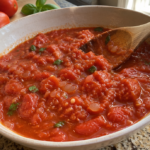
Fresh Tomato Pasta Sauce From Scratch
- Prep Time: 15 minutes
- Cook Time: 40 minutes
- Total Time: 55 minutes
- Yield: About 4 sauce servings 1x
- Category: Sauce
- Method: Stovetop simmer
- Cuisine: American home cooking, Italian-inspired
Description
Fresh tomato pasta sauce made from ripe Roma tomatoes, olive oil, yellow onion, garlic and basil, simmered until thick and rustic without tomato paste or canned sauce.
Ingredients
2 pounds (900 g) ripe fresh Roma or plum tomatoes
2 tablespoons (30 ml) extra-virgin olive oil
1 small yellow onion (about 120 g), finely diced
3 medium garlic cloves, minced
10 fresh basil leaves, torn just before serving
3/4 teaspoon kosher salt to start, adjusted after reducing
1/4 teaspoon freshly ground black pepper, optional
Instructions
Rinse the tomatoes under running water, remove cores and any spoiled sections, and chop into roughly 1/2-inch pieces. Keep all natural juices. If you prefer smooth sauce, peel tomatoes first using a brief blanch.
Heat olive oil in a wide saucepan over medium-low. Add finely diced onion and cook 5–7 minutes, stirring until translucent and softened, not deeply browned.
Add minced garlic and stir for 30–45 seconds, only until fragrant. If sticking begins, add a spoonful of the reserved tomato juices rather than browning garlic.
Add chopped fresh tomatoes with all their juices, kosher salt and optional black pepper. Stir and heat until the mixture comes to a gentle simmer.
Simmer uncovered over medium-low for about 30–40 minutes, stirring occasionally and more often as liquid evaporates. Mash softened tomatoes lightly and stop when the sauce coats a spoon without remaining watery.
Turn off heat. Tear in the fresh basil and stir. Taste and adjust salt only after the sauce has reduced. If needed, loosen with a small spoonful of pasta cooking water when serving.
Serve immediately over hot pasta or transfer leftovers promptly to shallow covered containers and refrigerate within 2 hours at 40°F (4°C) or below; freeze portions for longer storage. Do not can this unvalidated recipe for pantry storage.
Notes
Original AI-assisted editorial formulation not independently kitchen-tested; no verified nutrition data. Fresh-cooked sauce is NOT a shelf-stable preserve and the ingredient ratios are not approved for home canning. Refrigerate leftovers promptly at 40°F (4°C) or below, use within about 3 days as a conservative household plan, or freeze individual portions. Pasta is not included in the listed sauce ingredients.
Nutrition
- Serving Size: About 1/2 cup sauce per serving, depending on reduction
Keywords: tomato sauce recipe with fresh tomatoes, fresh tomato pasta sauce, homemade tomato sauce from scratch
2 thoughts on “Fresh Tomato Pasta Sauce From Scratch”