
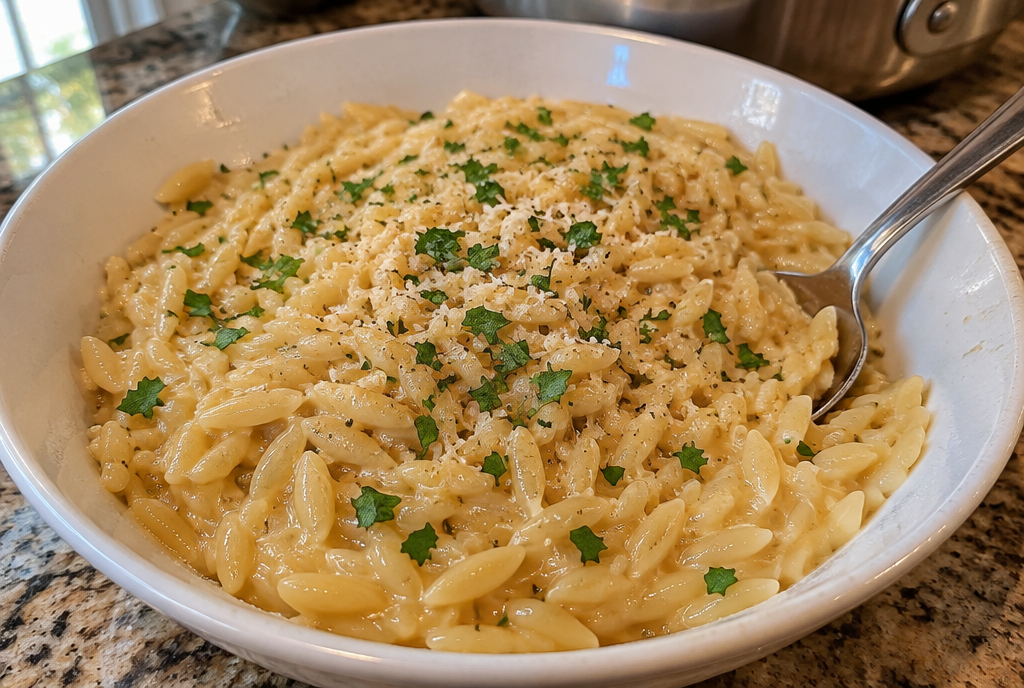
Creamy Parmesan Garlic Orzo in One Pot
This Parmesan garlic orzo recipe turns small rice-shaped pasta into a silky, savory side dish with everyday ingredients and a single pot. Dry orzo is lightly toasted in olive oil and butter, simmered in broth until tender, then finished off the heat with freshly grated Parmesan, a splash of milk and parsley. The result is creamy from the pasta’s own starch and the melted cheese, without a can of soup or a heavy flour-thickened sauce.
Quick answer: soften four minced garlic cloves in butter and olive oil, toast 1½ cups of dry orzo for about two minutes, then add 3 cups of low-sodium broth. Simmer gently, stirring often, for roughly 9–12 minutes and adding a little more liquid if necessary. When the pasta is tender and still moist, remove it from strong heat. Stir in ½ cup of milk, ¾ cup freshly grated Parmesan and chopped parsley. Adjust pepper and salt after tasting. Serve while the sauce is loose and glossy.
This is an original AI-assisted editorial formulation not independently kitchen-tested. Orzo brands, stove settings, pan sizes and the cheese used will change liquid absorption and final texture. Check the pasta itself rather than assuming the timer is an absolute doneness test.
Ingredients for four servings
- 1½ cups (about 270 g) dry, uncooked regular orzo pasta made from wheat semolina
- 2 tablespoons (28 g) unsalted butter
- 1 tablespoon (15 ml) extra-virgin olive oil
- 4 garlic cloves, finely minced
- 3 cups (720 ml) low-sodium vegetable broth, plus up to ½ cup (120 ml) extra if needed
- ½ cup (120 ml) plain whole milk
- ¾ cup (about 65–75 g) freshly grated Parmesan cheese, lightly packed
- 2 tablespoons chopped fresh flat-leaf parsley
- ¼ teaspoon freshly ground black pepper, or to taste
- Salt only after tasting the finished dish
The recipe deliberately uses uncooked orzo, not precooked rice or leftover pasta. A cup measurement for dry orzo may vary a little by pasta brand, so the weight is given as an approximate guide. The cheese should be finely grated so it melts into the warm liquid; large shavings can stay stringy instead of dispersing evenly.
This dish includes wheat/gluten in the pasta and milk in the butter, milk and cheese. Read labels carefully for any food allergies. Check the broth label too, especially when choosing a packaged product. Parmesan’s saltiness varies considerably, so a low-sodium broth and a final seasoning adjustment are more reliable than adding a full teaspoon of salt at the beginning.
Kitchen equipment you need
Choose a wide heavy-bottomed saucepan, sauté pan with tall enough sides or a small Dutch oven. The pan should hold the dry orzo and the simmering liquid without bubbling over. A wooden spoon or silicone spatula, liquid measuring cup, fine cheese grater, knife, cutting board and heat-resistant serving spoon complete the equipment list.
A broad pan helps the pasta cook evenly, but the liquid can evaporate faster if the surface area is very large. A narrow pot holds more steam but may cause the pasta on the bottom to clump unless you stir regularly. Whichever pan you choose, keep the heat at a gentle simmer after the broth goes in.
Grate the Parmesan and mince the garlic before turning on the stove. The sauce comes together quickly after the pasta finishes cooking, and you don’t want to hold it over high heat while you prepare the cheese. Have a little extra warm broth or water available in case the orzo thickens faster than expected.
How to make Parmesan garlic orzo
1. Measure ingredients and warm the pot
Measure out 1½ cups dry orzo, 3 cups broth and ½ cup milk separately. Mince the garlic cloves finely, grate the Parmesan and chop parsley. Warm a heavy saucepan over medium-low heat, then add 2 tablespoons butter and 1 tablespoon olive oil. Let the butter melt without browning heavily or smoking.
2. Gently cook the garlic
Add the minced garlic to the warm fat and stir for around 30–45 seconds, just until fragrant. Keep the heat moderate: small garlic pieces turn bitter when they scorch. The garlic should remain pale or only lightly golden. If it starts to darken too quickly, lower the heat before adding the pasta.
3. Toast the dry orzo briefly
Pour the dry orzo directly into the pan. Stir so each little pasta shape gets a thin coating of butter and oil, then continue stirring for about two minutes. Some grains can develop a lightly golden tint, but don’t let them become deeply brown. This step adds a modest toasted flavor while keeping the pasta separate.
4. Add broth and simmer gently
Pour in the 3 cups of low-sodium broth, carefully because the hot pot may steam. Stir thoroughly to release any grains sticking to the bottom. Bring to a gentle simmer, then reduce heat so the broth bubbles quietly. Cook uncovered for approximately 9–12 minutes, stirring frequently, until the orzo is tender or only slightly firm at the center. If liquid disappears before the pasta softens, add warm broth or water a few tablespoons at a time, up to about ½ cup extra.
5. Check texture before adding dairy
Taste a cooled grain of pasta. It should be tender, not chalky or hard. The mixture should still have a little fluid around the grains, because Parmesan will thicken it considerably. If the pan has become dry, add a splash of hot broth and stir. Turn the burner down to its lowest setting or remove the pan from heat.
6. Finish with milk and Parmesan
Stir in the ½ cup of whole milk while the orzo is hot but no longer boiling hard. Add the ¾ cup of finely grated Parmesan in small handfuls, folding gently as it melts. Avoid rapidly boiling the cheese mixture; too much heat can make it clump or separate. If the consistency becomes tighter than desired, add a spoonful of warm broth or milk until creamy and spoonable.
7. Add parsley and serve
Stir in chopped flat-leaf parsley and black pepper. Taste before adding any salt, since Parmesan and broth may already supply enough. Spoon the warm orzo into four bowls, keeping a little sauce around the grains. Serve promptly; orzo continues absorbing liquid after cooking, so a small splash of warm broth can loosen it just before serving.
What is orzo, exactly?
Orzo is a tiny pasta shaped somewhat like grains of rice. In typical American grocery stores it appears alongside dried pasta, not in the rice aisle, and is made from durum wheat semolina unless the package says otherwise. Its Italian-inspired shape makes it useful in soups, salads and creamy one-pot dishes.
Despite its appearance, orzo does not cook exactly like ordinary rice. Pasta contains starch that clouds the cooking liquid, and boiling it in a measured amount of broth produces a different texture from draining it through a colander. This recipe uses that released starch intentionally to make a creamy sauce that clings to the small pasta shapes.
Don’t substitute uncooked long-grain rice for orzo at the same volume and timing. Rice typically requires a different liquid ratio and cooking method. Likewise, fully cooked leftover rice will not produce the same starch-thickened pan sauce. If you want risotto, develop a rice recipe separately rather than relabeling this pasta dish.
Why one-pot orzo becomes naturally creamy
As the small pasta cooks in broth, surface starch enters the liquid. Frequent stirring distributes that starch and gives the broth some body. By the time the pasta is tender, there should be enough remaining liquid to look glossy rather than soupy. Parmesan then thickens and enriches the mixture further.
This is why the recipe doesn’t need heavy cream, cream cheese or a roux. Whole milk provides a mild, smooth dairy finish, but the primary texture comes from pasta starch, butter, Parmesan and the careful amount of cooking liquid. Adding all the cheese while the pot is vigorously boiling could make the sauce grainy, so turn the heat low first.
A little residual liquid is not a mistake. Orzo can look creamy while hot, then tighten as it sits on the table. For the most appetizing serving texture, remove the pan from heat when the pasta is tender and the sauce is still slightly loose.
How much broth should you use?
For the 1½ cups of dry orzo in this recipe, start with 3 cups of low-sodium broth. That is a practical starting point for an uncovered gentle simmer in a moderately wide pan. Because different stovetops and pan sizes evaporate water at different rates, keep up to another half cup handy.
If you notice hard pasta with almost no liquid left, add more warm broth by the tablespoon or small splash, stir and let it continue cooking. If the pasta is already tender but swimming in liquid, simmer a little longer without adding cheese yet, while watching carefully so the bottom does not stick.
A wider pan exposes more liquid to the air, so it may need the optional broth. A tightly covered saucepan reduces evaporation and might need less. This specific version is written for an uncovered simmer with frequent stirring; adapting it into a pressure cooker or slow cooker requires separate development.
Toasting orzo before simmering
The brief toasted step helps coat the pasta and build a mild nutty aroma. The butter and olive oil should be warm, not smoking, and the garlic should remain pale. Add the dry orzo and stir for only a couple of minutes, keeping it moving to prevent dark spots.
This doesn’t mean the finished pasta should be brown. The goal is a hint of color on some grains and a fragrant base, not a fried snack. Very dark pasta can taste bitter and lead to an uneven look beneath the Parmesan sauce.
If you skip toasting as a personal variation, the recipe may still cook, but the flavor and absorption can change a little. The baseline instructions include this step so the ingredient order and flavor development are predictable.
Garlic without bitterness
Four cloves give a noticeable garlic flavor to four servings without introducing raw chunks at the table. Chop them finely so they release aroma quickly into the melted butter. At medium-low heat, the garlic needs only a short time before the pasta follows.
Burned garlic is difficult to rescue. If the pieces turn black or smell acrid, starting over with a clean pan is better than trying to cover the bitterness with extra cheese. Once the broth enters the pot, the temperature is more moderated and the garlic flavor spreads through the pasta.
You can reduce garlic for a milder family dinner, but that changes the emphasis of a Parmesan garlic orzo recipe. The written version uses four small-to-medium cloves, not a whole bulb. Garlic salt is not a direct replacement, because it changes the amount of salt added to the dish.
Freshly grated Parmesan versus preshredded cheese
Parmesan freshly grated from a wedge usually disperses more evenly into hot pasta than larger preshredded pieces. Finely grated cheese has more surface area and can melt quickly when the pan is no longer boiling. Some packaged grated products contain anti-caking ingredients that may change the sauce texture.
Measure the Parmesan lightly packed; don’t compress a mountain of finely grated cheese into the measuring cup. A small amount of cheese tastes intense because of its natural saltiness and umami. This recipe is not intended to taste like processed cheese sauce or cheddar macaroni.
Look for ingredients that suit your dietary needs. Parmesan and some similar hard cheeses may use animal rennet, so a vegetarian who avoids animal-derived rennet should choose an appropriately labeled alternative and be aware that its melting and flavor may differ.
Does the orzo need to be rinsed?
No. This method depends on starch from the pasta staying in the cooking liquid. Rinsing dry orzo before simmering is unnecessary, and rinsing cooked orzo afterward would wash away the starchy sauce you’re building.
The goal is not to serve dry pasta grains that have been separately boiled and drained. Because the broth remains in the pan while the orzo cooks, there is no draining step. The small pasta absorbs some liquid and gives off starch at the same time.
If you’re making a cold orzo salad, you might use a completely different approach: boil in lots of water and drain, then cool promptly. That’s not this warm, creamy side dish.
Getting the right texture before serving
The ideal finish is spoonable rather than stiff. Each grain of orzo should hold its shape and look glossy, with just enough creamy sauce to settle around it. If the dish is dry and clumped, add a tablespoon or two of warm broth, stir gently, and check again.
If the sauce looks too thin, allow a short gentle simmer before adding the Parmesan, or give the finished pan a minute off heat to thicken. Keep in mind that the sauce will set further as it cools. Leaving the pan uncovered on a hot burner for another ten minutes after the pasta is done almost guarantees a drier result.
Serve as soon as the parsley is stirred in. For a big family meal where guests may arrive at different times, hold the orzo at a food-safe hot temperature if holding it, and loosen individual servings with hot broth rather than keeping the entire pot lukewarm for a long period.
Choosing a side or turning it into a meal
This Parmesan garlic orzo works as a side for grilled vegetables, roasted vegetables or a simple salad. It is deliberately a pasta side on its own; the ingredient list does not contain meat, seafood or hidden vegetables. That keeps the dish consistent and lets you decide separately what protein or produce belongs on the plate.
For a tomato-forward pasta alternative, see our fresh tomato pasta sauce from scratch, which has a different method and flavor profile. If you want a richer oven-baked pasta casserole rather than a stovetop side, try our bacon mac and cheese casserole. Our baked mostaccioli with beef and mozzarella is a separate red-sauce pasta family dinner with meat and melted cheese.
Each linked dish has its own ingredients and method. Treat them as alternative recipe choices, not additional components of this simple Parmesan orzo. Do not assume that the stove time used for orzo applies to the other recipes.
One-pot mistakes and easy fixes
Pasta remains hard after the broth disappears. Heat may be too high or the pan too wide. Add some warm broth, reduce heat and stir until the orzo becomes tender.
Orzo sticks to the bottom. It may be simmering without enough movement. Stir especially along the edges and base, and keep the liquid level high enough while the pasta finishes.
Garlic tastes bitter. It probably browned too deeply before you added the orzo. Use medium-low heat and only a short garlic sauté.
Parmesan turns stringy or clumpy. The sauce may be boiling too strongly or the cheese may be coarse. Remove from high heat and fold in finely grated cheese gradually.
Finished dish is too salty. Broth and Parmesan supply salt. Start with low-sodium broth and season only after the cheese is fully incorporated.
Sauce is watery. Orzo might not be cooked through yet or liquid was added too quickly. Simmer gently until the grains are tender, then finish with cheese off heat.
Orzo seems pasty. It may have been cooked far beyond tenderness or stirred aggressively with insufficient liquid. Check frequently and stop once the small pasta is just tender.
The reheated orzo is dry. Refrigeration allows starch to tighten. Add a splash of broth when reheating and warm thoroughly rather than heating dry leftovers in a skillet.
Can you make Parmesan garlic orzo ahead?
You can grate cheese, chop parsley and garlic, and measure the dry orzo and broth ahead of time. The best texture, however, comes from simmering the pasta shortly before serving. It takes little enough time that a full make-ahead cook may not be worth sacrificing its creamy texture.
If dinner must be prepared early, cook the orzo, transfer it promptly into shallow containers and refrigerate. Reheat only what you need, adding a little broth to restore moisture. Don’t leave a pan of milk-and-cheese pasta sitting lukewarm on the stove through an evening event.
This is not a pressure-canned pantry food or a shelf-stable sauce. It is a cooked pasta dish with milk and cheese. The FDA’s safe food handling guidance covers prompt refrigeration and keeping cooked foods out of unsafe temperature conditions.
Storing and reheating creamy orzo safely
Transfer leftovers into clean, shallow covered containers and place them in a refrigerator at 40°F (4°C) or below within two hours of cooking, or within one hour when the surrounding environment is above 90°F (32°C). A conservative home plan is to eat refrigerated leftovers within three to four days, or freeze promptly for longer storage.
When reheating, add enough broth to loosen the sauce and warm until the center of the leftovers reaches 165°F (74°C). A microwave or covered saucepan both work, provided you stir and check that the center heats fully. Some sauce separation is possible after chilling; that affects texture but is not a substitute for checking safe storage.
Never leave cooked pasta with milk and cheese at room temperature for many hours, and discard any leftovers that have been handled or stored unsafely. The FDA safe handling chart is a useful general reference for the temperature and refrigeration recommendations given here.
Frequently asked questions
Is orzo pasta or rice?
Orzo is a small rice-shaped pasta, generally made from wheat semolina. It is not ordinary long-grain rice even though individual pieces look similar.
How much broth is needed for 1½ cups of orzo?
Start with about 3 cups low-sodium broth in this recipe. Have up to ½ cup additional liquid ready because pan size and simmer intensity affect evaporation.
Can I cook orzo like risotto?
Stirring a small pasta in broth creates a risotto-like creamy result, but orzo is still pasta. This recipe simmers it in measured broth, rather than using a classic rice-risotto procedure.
Do I need heavy cream for creamy Parmesan orzo?
No. Starch from the orzo, a splash of whole milk and melted Parmesan create the creamy texture in this version.
Why should I add Parmesan after turning down the heat?
Finely grated Parmesan disperses more evenly in a warm, not violently boiling, sauce. High heat can make the cheese seize into grainy clumps.
Is Parmesan garlic orzo vegetarian?
It can be made with vegetable broth, but traditional Parmesan may contain animal rennet. Use a suitably labeled vegetarian hard cheese if that matters to your diet.
Can I make Parmesan garlic orzo with gluten-free pasta?
The baseline uses wheat orzo. Gluten-free orzo substitutes differ in starch content and cooking time, so a direct substitution cannot be promised without testing.
Can I use garlic powder instead of fresh garlic?
The flavor will differ, and you won’t have a sautéed-garlic aroma. This recipe was written for four fresh cloves and is not independently tested with powder.
Can I add mushrooms or peas to the same pot?
You can develop a version with separately cooked mushrooms or tender peas, but those ingredients will change the liquid balance and vegetable cooking times. This particular recipe remains focused on orzo, Parmesan, garlic and broth.
Does orzo absorb more broth after cooking?
Yes. Small pasta continues absorbing moisture as it cools, which is why this dish is served with a little extra loose sauce and can be revived with warm broth.
How long does creamy orzo keep in the refrigerator?
Refrigerate within two hours at 40°F or lower and use within three to four days as a conservative guideline. Reheat thoroughly to 165°F.
Editorial disclosure and sources
This is an original AI-assisted editorial recipe that has not been independently kitchen-tested. The ingredient ratios, suggested cook-time range and texture descriptions are practical instructions, not measurements from a physically documented MySavorista cooking trial. The featured food photograph is an AI-generated illustration of the intended dish, not an image of an actually prepared serving by our editorial team. No independently validated nutrition profile is claimed.
For cooling, refrigeration and reheating recommendations, see the FDA’s safe food handling guidance. This source supports general safety practices but is not an independent test or certification of the recipe.
Editorial transparency: This original AI-assisted one-pot orzo recipe has not been independently kitchen-tested. The featured image is AI-generated, not a photograph of a meal physically prepared by the editorial team. Cook orzo until tender and refrigerate leftover pasta with dairy promptly.
Print
Creamy Parmesan Garlic Orzo in One Pot
- Prep Time: 10 minutes
- Cook Time: 15 minutes
- Total Time: 25 minutes
- Yield: 4 side-dish servings 1x
- Category: Side Dish, Comfort Classics
- Method: One-pot stovetop simmer
- Cuisine: Italian-American home cooking
Description
One-pot creamy Parmesan garlic orzo: small wheat pasta shapes toasted in butter and olive oil, simmered in broth, finished with whole milk, grated Parmesan and parsley.
Ingredients
1 1/2 cups (about 270 g) dry uncooked wheat orzo pasta
2 tablespoons (28 g) unsalted butter
1 tablespoon (15 ml) extra-virgin olive oil
4 small garlic cloves, finely minced
3 cups (720 ml) low-sodium vegetable broth, plus up to 1/2 cup (120 ml) extra if needed
1/2 cup (120 ml) plain whole milk
3/4 cup (about 65–75 g) freshly finely grated Parmesan cheese
2 tablespoons chopped flat-leaf parsley
1/4 teaspoon freshly ground black pepper, or to taste
Salt only after tasting
Instructions
Measure all ingredients, mince garlic, grate Parmesan and chop parsley. Heat a heavy wide saucepan over medium-low. Melt 2 tablespoons butter with 1 tablespoon olive oil without smoking.
Add the 4 minced garlic cloves and stir about 30–45 seconds until fragrant but pale; lower the heat if they start to brown.
Add 1 1/2 cups DRY orzo pasta and stir for about 2 minutes to lightly toast it and coat in garlic butter; avoid letting it darken excessively.
Carefully pour in 3 cups low-sodium broth, scrape bottom, bring to a gentle simmer and cook uncovered 9–12 minutes while stirring frequently. If liquid disappears before orzo softens, add hot broth or water a few tablespoons at a time up to an additional 1/2 cup.
Taste a cooled pasta grain: it should be tender, not hard or chalky. Leave some fluid around grains before adding cheese, reducing heat to low or removing the pan from the heat.
Fold in 1/2 cup whole milk, then finely grated Parmesan in small handfuls until glossy. Do not boil cheese mixture violently. Add a little warm broth if the sauce thickens too far.
Stir in parsley and black pepper; taste before adding salt because broth and cheese may be salty. Spoon into four warm bowls and serve promptly, adding warm broth as needed to loosen leftovers.
Notes
Original AI-assisted editorial formula not independently kitchen-tested. This dish uses WHEAT/GLUTEN in orzo and DAIRY/MILK in butter, Parmesan and milk; read all packaged labels. Some Parmesan contains animal-derived rennet. Use fresh garlic and low-sodium broth, avoid scorching and add cheese off strong heat. Cook orzo to tender center; don’t confuse it with rice. Refrigerate leftovers within 2 hours (1 hour in heat over 90°F) at 40°F or below, eat within about 3–4 days or freeze. Reheat leftovers thoroughly to 165°F, with extra warm broth. Featured photo is AI illustration, not a cooked kitchen trial.
Nutrition
- Serving Size: One-quarter of prepared orzo, made from 1 1/2 cups uncooked orzo total
Keywords: parmesan garlic orzo recipe, creamy parmesan orzo, easy garlic orzo, one-pot orzo
1 thought on “Creamy Parmesan Garlic Orzo in One Pot”