
Fresh Tomato Salsa Recipe with Lime and Cilantro
A fresh tomato salsa recipe should taste like the tomatoes themselves, not like tomato sauce from a jar. This version is an easy, chunky, pico-style salsa made with diced ripe Roma tomatoes, white onion, jalapeño, cilantro, lime juice and a little salt. The vegetables stay crisp and recognizable, while a short rest gives the lime and tomato juices time to mingle. There is no cooking, blender or canned tomato involved.
This is a convenient salsa for taco night, a casual potluck or a quick bowl of vegetables to serve alongside a savory breakfast. It is also easy to adjust: mince the jalapeño more finely for an even heat, remove its seeds and membranes for a milder batch, and add extra lime a teaspoon at a time. You don’t need to drown good tomatoes in seasoning.
Quick answer: Dice 1½ pounds (about 680 g) of ripe Roma tomatoes, then combine them with ⅓ cup finely diced white onion, one small minced jalapeño, ⅓ cup chopped cilantro, 2 tablespoons fresh lime juice and ½ teaspoon kosher salt. Let the salsa rest in the refrigerator for 15 minutes and serve it cold or freshly chilled. Allow about 20 minutes of preparation and 15 minutes of resting for roughly 3 cups, enough for about eight appetizer-size portions.
This is an original AI-assisted editorial formulation, not claimed to have been independently kitchen-tested. The directions give concrete visual and texture cues so a home cook can adjust the finished bowl to the actual tomatoes being used.
What makes this salsa different from blended restaurant-style salsa?
The defining feature is texture. In this homemade salsa with fresh tomatoes, the ingredients are chopped by hand so each spoonful includes real tomato pieces, onion and herbs. The tomato juices are naturally thin; there is no concentrated paste or cooked sauce.
A blended salsa can be excellent, but it is a different result. A processor breaks the tomato cell walls and often produces a thinner, smoother dip. This recipe is closer to pico de gallo—fresh chopped tomatoes with onion, chile, cilantro and citrus—than it is to a canned salsa or a simmered taqueria sauce.
There is no single mandatory tomato variety or universal ratio for all homemade salsa. Ripe tomatoes differ in sweetness, water content and acidity. The quantities here provide a repeatable starting point, and the final seasoning is adjusted only after the vegetables release some juice.
Ingredients for eight appetizer-size servings
- 1½ pounds (about 680 g) ripe Roma tomatoes, typically about five or six medium tomatoes; stem ends removed.
- ⅓ cup (about 50 g) finely diced white onion, for crispness and savory bite.
- 1 small jalapeño pepper, stem removed and finely minced; discard seeds and white membranes for less heat.
- ⅓ cup loosely packed fresh cilantro, chopped with tender stems.
- 2 tablespoons freshly squeezed lime juice, about one juicy lime, with additional lime available only if needed after tasting.
- ½ teaspoon kosher salt, with a small additional pinch if necessary after resting.
These six ingredients form the complete base recipe. No garlic, sugar, cumin, vinegar or chili powder is required. If you like those flavors, treat them as deliberate variations rather than ingredients that must somehow appear in every homemade salsa.
Choosing tomatoes that will hold their shape
Roma tomatoes are convenient because they usually contain a substantial amount of flesh compared with their watery seed cavities. Select tomatoes that are ripe, fragrant and slightly yielding when gently pressed, without soft leaking spots, mold or bruised areas.
Beefsteak or vine-ripened tomatoes can work, but they sometimes release more liquid. With a particularly juicy variety, remove some loose seed gel before measuring the diced pieces. Don’t squeeze all the juice away: a little natural tomato liquid is part of fresh salsa’s appeal.
Unripe, hard tomatoes make a crunchy but less flavorful result. Very soft tomatoes can collapse into pulp. If your tomatoes are overripe and no longer hold a clean dice, a cooked tomato sauce may be a better use for them than a pico-style salsa.
White onion or red onion?
White onion delivers a traditional clean onion flavor and a crisp texture that contrasts with soft tomato pieces. Red onion is an acceptable substitution when you prefer its color and slightly different bite. Use the same ⅓ cup measure rather than an entire large onion.
For a less assertive onion flavor, rinse the diced onion briefly under cold running water and drain it thoroughly before mixing. This washes away some of the sharp surface compounds. It is optional, especially if your onions are mild.
How spicy is one jalapeño?
The heat of an individual jalapeño is variable. One small pepper gives a flexible starting point, but it cannot guarantee a specific spice level. The pale inner membranes carry much of the capsaicin, so removing them generally helps make the salsa gentler. Use gloves if you are sensitive to chile oils, and always wash your hands and knife before touching your face.
For a mild family-friendly bowl, begin with half of the prepared pepper, mix, rest and taste before adding the remainder. If you want more heat, increase the jalapeño gradually. There is no need to add hot sauce to a fresh-tomato recipe unless that is your personal preference.
Equipment and preparation time
You need a cutting board, a sharp knife, a small citrus juicer or fork, measuring cups and spoons, and a mixing bowl. A fine-mesh strainer can help if your tomatoes are unusually watery, but it is not required. A lid or reusable cover makes the short refrigerator rest easier.
Expect 20 minutes of active chopping and mixing and 15 minutes of refrigerator resting, for an estimated 35 minutes total. The recipe has no stovetop cooking time. The actual chopping time depends on the cook’s knife skills and how small the vegetables are diced.
Use a clean cutting board reserved for ready-to-eat vegetables. If another dish involves raw chicken or other raw meat, use separate boards and utensils. Because this salsa will not be cooked, clean preparation matters as much as flavor.
How to make fresh tomato salsa step by step
1. Wash and dry the produce
Rinse the tomatoes, jalapeño, lime and cilantro under cool running water. Gently rub the tomato surfaces, then pat the produce dry with clean paper towels or a clean kitchen towel. Discard cilantro leaves that are slimy or deteriorated.
The FDA’s guidance on selecting and serving produce safely recommends washing produce under running water before cutting and keeping preparation surfaces and utensils clean. Do not wash tomatoes with soap, bleach or household detergent.
2. Dice the Roma tomatoes
Remove the stem ends and cut the tomatoes into roughly ¼-inch to ⅜-inch pieces. Aim for small, recognizable cubes rather than a fine mush. If the tomatoes have large, loose watery seed cavities, scoop out a portion of that gel before chopping.
Move the diced tomatoes to a medium mixing bowl. A small amount of tomato juice on the cutting board is normal. Do not pulverize the tomatoes in a food processor—the hand-cut pieces give this salsa its defining texture.
3. Mince the onion and jalapeño
Measure ⅓ cup finely diced onion and add it to the tomatoes. The onion pieces should be a little smaller than the tomato pieces so the sharpness is distributed evenly.
Cut off the jalapeño stem. Split the pepper lengthwise and remove the white membranes and seeds if you want a milder salsa. Finely mince the flesh and start by adding about half of the pepper. You can add the rest after tasting; you cannot remove its heat after it is mixed.
4. Chop the cilantro and squeeze the lime
Finely chop ⅓ cup loosely packed cilantro, using the tender stems along with the leaves if you enjoy their aroma. Avoid thick or woody pieces.
Squeeze the lime and measure 2 tablespoons of juice. Fresh lime gives a cleaner flavor in a short-ingredient recipe, but the exact tartness varies between limes. Begin with the measured amount rather than adding an entire unknown quantity.
5. Mix and season
Add the cilantro, lime juice and ½ teaspoon kosher salt to the tomato bowl. Use a spoon to gently fold the ingredients together, lifting them from the bottom without crushing the tomato pieces. The vegetables should look bright and evenly distributed, with a little natural liquid developing underneath.
Taste a small spoonful. If the tomatoes are naturally very sweet, you may enjoy a touch more lime. If they are already tart, leave the lime as measured. Don’t add extra salt yet; the vegetables will release more juice as they rest.
6. Rest the salsa in the refrigerator
Cover the bowl and refrigerate for 15 minutes. This gives the salt time to draw a little tomato moisture into the dressing and helps the onion, cilantro and jalapeño flavors spread throughout the batch.
The rest is short by design. You are not trying to pickle the vegetables overnight. The salsa should still taste crisp and freshly chopped when served. Keep it refrigerated rather than letting it sit on a warm counter during the rest.
7. Stir, taste and serve
Stir once more from the bottom. Taste a small portion containing tomato, onion and some of the juice. Add a modest pinch of salt or a teaspoon of lime only if necessary. If you want more heat, incorporate a little more minced jalapeño.
Serve the fresh salsa in a clean bowl using a serving spoon. If the bottom liquid looks excessive, lift the chopped mixture into the serving bowl with a slotted spoon and leave only some of the juice behind. Do not strain it bone-dry; a little tomato-lime juice makes every bite more flavorful.
What should the finished salsa look and taste like?
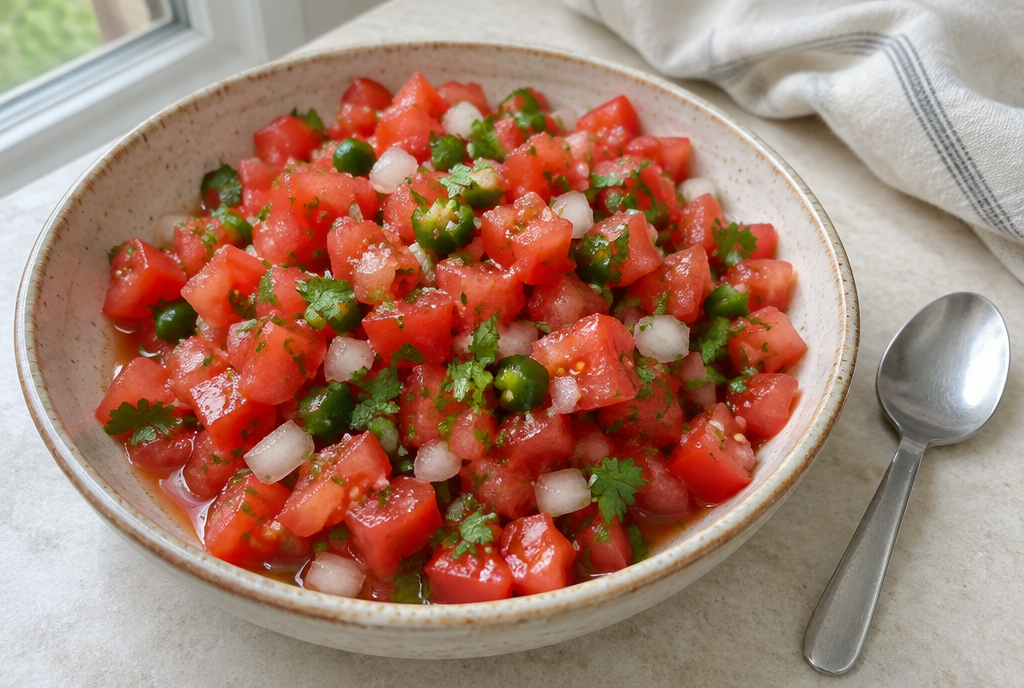
The best visual cue is a bowl filled mainly with bright red tomato pieces, flecked with green cilantro and jalapeño and small white onion pieces. You should still be able to recognize the individual vegetables. The mixture is moist, but it is not supposed to resemble tomato soup.
On the tongue, tomato comes first, then a crisp onion note, fresh citrus and a mild chile finish. The lime should brighten the tomato rather than overwhelm it. The salt should make the vegetables taste more like themselves, not make the salsa salty.
If the salsa looks unusually pale or watery, the tomatoes may be under-ripe or too juicy. If it looks almost solid and dry, a small spoonful of fresh tomato juice from the cutting board can bring the mixture together. Aim for natural fresh-chopped texture, not a thick commercial dip.
How to keep homemade salsa from getting watery
Tomatoes naturally contain plenty of water, and salt encourages them to release it. The goal is managing extra liquid, not pretending fresh tomato salsa will stay completely dry.
Choose firm, ripe Roma tomatoes when possible. Dice them cleanly, remove only unusually large watery seed pockets, and keep the pieces larger than a very fine mince. Add salt close to serving time if the salsa must sit before a party, or drain a little excess liquid with a slotted spoon before plating.
Avoid squeezing the diced tomatoes so hard that they lose all their juice. That can make the final salsa taste oddly flat. Fresh salsa benefits from a small amount of lime-tomato liquid at the bottom of the bowl.
A second solution is to make a small fresh batch rather than a huge bowl that stays on the table for hours. The texture is best when the vegetables have not had all day to collapse.
How to adjust heat without losing tomato flavor
For mild salsa, use half a small jalapeño with the white membranes and seeds removed. After resting, add the remaining pepper only if the salsa needs more heat.
For medium heat, use one whole small jalapeño, beginning with the flesh and including a small amount of membrane to taste. Remember that peppers vary considerably, so there is no single fixed heat rating for this recipe.
For a hotter bowl, add finely minced fresh chile a little at a time. Do not add a huge amount in one step, especially when serving a group. It’s easier to divide the salsa into two bowls and make one bowl hot than to surprise everyone at the table.
If you accidentally overdo the heat, a larger quantity of chopped tomato and onion can dilute it, but that also increases the batch size and may require more lime and salt. Adding large amounts of sugar does not truly remove capsaicin and changes the intended fresh savory profile.
Common mistakes and how to avoid them
Using under-ripe tomatoes. Hard, pale tomatoes do not have the same sweetness and aroma as ripe ones. Choose good produce first; extra lime and salt cannot fully replace tomato flavor.
Chopping everything too finely. Tiny tomato pieces collapse and release liquid quickly. A slightly larger tomato dice helps the salsa remain chunky and satisfying.
Adding all the jalapeño immediately. Heat is variable. Start small and adjust after the salsa rests, especially if children or spice-sensitive guests will eat it.
Adding too much lime. Citrus should brighten the salsa, not turn it into a sour tomato salad. Measure the first addition, then adjust teaspoon by teaspoon.
Not tasting after resting. Salt distributes and tomato juice collects during the 15-minute chill. Taste once more before serving rather than assuming the first seasoning was perfect.
Using a blender and expecting pico-style texture. A blender changes the recipe. If smooth restaurant-style salsa is the goal, use a separate blended-salsa method instead.
Leaving cut tomatoes out all afternoon. A fresh uncooked salsa is perishable. Keep it cold until serving, and return leftovers to the refrigerator promptly.
Ways to serve this salsa with MySavorista recipes
Fresh tomato salsa is versatile because it brings an acidic, crunchy contrast to warm, rich foods. For a quick dinner, spoon a modest amount alongside our Chipotle Honey Bacon Quesadillas for Game Day. The cold tomato and lime cut through the cheese and the sweet-spicy filling without needing another rich sauce.
For breakfast, offer it as a cold side with Loaded Breakfast Burritos with Cheesy Bacon Bliss. Keep the salsa in a separate small bowl until serving so the tortilla does not become soggy during storage.
If taco night is on the calendar, you can set it next to Spicy Korean BBQ Chicken Tacos with Slaw as an optional bright topping. The salsa is not a Korean condiment and is not part of that taco recipe; it is a separate fresh vegetable option for diners who want tomato and lime.
It also works as a simple side for plain cooked rice bowls, eggs cooked thoroughly, or grilled vegetables. If serving with tortilla chips, place the chips beside the bowl rather than mixing them in so they stay crisp.
Variations that still taste like fresh tomato salsa
With cherry tomatoes
Use the same 1½-pound weight of ripe cherry or grape tomatoes. Quarter them, then chop a little more if they are large. These tomatoes may be sweeter and release different amounts of juice. Taste before increasing the lime.
With red onion
Substitute ⅓ cup finely diced red onion for the white onion. This brings an attractive purple color and can taste slightly sharper. Rinse briefly and drain if desired, especially when the onion itself is strong.
Without cilantro
If cilantro tastes unpleasant to you, omit it and serve the salsa as a simple tomato, onion, chile and lime mixture. Flat-leaf parsley can add a different fresh herbal note, but do not claim it tastes the same as cilantro; the flavor profile will change.
With more lime
For tomatoes that taste particularly sweet or bland, add an extra 1 teaspoon fresh lime juice after the 15-minute rest. Taste before adding more. A very sour bowl may be difficult to balance without increasing the amount of tomato.
With a little garlic
For a stronger savory note, add one very small finely grated garlic clove. It is an optional variation, not part of the six-ingredient base. Raw garlic can become pronounced after resting, so begin with less than you think you need.
Without jalapeño
Omit the jalapeño entirely for a very mild tomato salad-style salsa. It will still be fresh, bright and suitable for spooning alongside savory food, though it will lack the green chile character of the original recipe.
Can you make fresh tomato salsa ahead?
Yes, but fresh salsa tastes best when the vegetables are still crisp. For a gathering, you can chop the clean vegetables a little ahead of time, cover and refrigerate them in separate containers. Combine the ingredients and add lime and salt close to serving.
If you prefer to mix everything in advance, keep the covered bowl refrigerated and stir it gently before transferring it to a serving dish. Some liquid separation is normal; it does not necessarily mean the salsa has failed.
Avoid leaving a large bowl on a buffet for an extended period. Instead, serve smaller chilled portions and replenish them from the refrigerator as needed. This protects quality and supports safer handling of freshly cut vegetables.
The FDA’s produce safety recommendations include refrigerating perishable produce and keeping cut produce chilled. Use those principles here rather than relying on the lime juice to preserve the salsa.
How to store leftover fresh salsa
Transfer leftovers to a clean, covered container and refrigerate them promptly at 40°F (4°C) or colder. A good quality target for this freshly chopped recipe is to enjoy it within about two days, provided it was handled and chilled properly. The tomatoes may soften and release additional liquid during storage.
If the salsa has been sitting outside for a long period, do not assume that adding another squeeze of lime makes it safe. For perishable produce, the usual food-safety guidance is to refrigerate within two hours, or within one hour when temperatures exceed 90°F (32°C). When in doubt about improper storage, discard it.
This salsa is not intended for freezing if you want the same crisp texture after thawing. You can freeze tomato mixtures for cooking, but thawed fresh tomatoes generally release more liquid and lose much of their original crunch.
Use clean utensils when serving and avoid dipping used food directly into the storage container. Handling matters, especially because the finished salsa is not cooked.
Important: this recipe is not a canning recipe
Do not put this fresh salsa into jars for storage at room temperature. Its lime juice is measured for flavor, not for a validated preservation process. The proportion of tomatoes, onion and peppers has not been tested for safe shelf-stable canning.
The National Center for Home Food Preservation’s salsa canning guidance explains why tested recipes and controlled acidity are essential for safe home-canned salsa. If you want jars that can remain in the pantry, follow a tested canning recipe exactly, including its specified type and amount of acid, jar processing method and processing time.
This recipe should be treated as fresh, refrigerated, ready-to-eat food. Its purpose is an easy bowl of homemade salsa for immediate service—not preserving the tomato harvest.
Frequently asked questions
What is the best tomato for homemade salsa?
Firm, ripe Roma tomatoes are a convenient choice because they hold a small dice well. Other ripe tomatoes work too, but juicier varieties may need a little loose seed gel removed before mixing.
Do I have to peel tomatoes for fresh salsa?
No. The tomato skins are edible and help hold diced pieces together. Wash tomatoes well under running water, remove the stem ends, and cut them with a sharp knife.
How do I make salsa without a blender?
Dice the tomatoes, mince the onion and jalapeño, chop the cilantro, then stir everything together with lime and salt. The result is deliberately chunky and pico-style rather than smooth.
How can I make this salsa mild?
Remove the jalapeño membranes and seeds, start with half the pepper, and taste after the short rest. You can always add more minced chile later.
Why is my fresh tomato salsa watery?
Tomatoes contain natural moisture, and salt draws more out as they rest. Use firm Roma tomatoes, avoid over-chopping and drain some excess liquid from the serving bowl if necessary.
Can I use bottled lime juice?
Freshly squeezed lime has the preferred flavor in this uncooked recipe. Bottled juice can taste different; if using it for seasoning, start with less and adjust. Neither version makes this untested salsa safe for canning.
Is fresh tomato salsa the same as pico de gallo?
This recipe is pico-style, with diced tomatoes, onion, jalapeño, cilantro and citrus. Exact names and regional versions vary, but the chunky hand-chopped texture distinguishes it from a smooth blended salsa.
How long should fresh salsa sit before serving?
About 15 minutes in the refrigerator is useful for this recipe. It allows flavors to combine without sacrificing too much crispness.
How long will it keep in the refrigerator?
For best texture, aim to use it within about two days, provided it was refrigerated promptly at 40°F or colder. Discard salsa that was improperly stored rather than attempting to rescue it with more lime or salt.
Can I freeze fresh salsa?
Freezing generally softens the tomato pieces when thawed, so it is not ideal if you want a fresh crunchy dip. A thawed tomato mixture may still be useful in a cooked dish, but that is a different use.
Is it safe to can this homemade salsa?
Not with this recipe. The lime and ingredient ratios are for flavor. Shelf-stable home canning requires a separately tested recipe from an authoritative preservation source and its complete processing instructions.
What can I serve with tomato salsa?
Serve it with quesadillas, cooked tacos, breakfast burritos, chips, rice bowls or grilled vegetables. For packed lunches, store it separately and keep it chilled until serving.
Final tips for the freshest bowl
Use tomatoes that actually smell and taste ripe; chop them cleanly; keep the onion smaller than the tomato pieces; add jalapeño carefully; and balance the fresh lime against the tomato’s natural sweetness. A short refrigerated rest is more helpful than adding a long list of seasonings.
This fresh tomato salsa recipe is designed for an everyday American kitchen, with six accessible ingredients and a clear no-cook method. Because it is an AI-assisted editorial formulation and not an independently documented kitchen trial, use the visual cues, measure carefully, taste before serving and follow the produce-storage guidance. Keep it refrigerated and enjoy it fresh, not as an untested pantry preserve.
Editorial transparency: this original AI-assisted recipe has not been independently kitchen-tested. The image is AI-generated to illustrate the ingredients, not a photograph proving a physical cooking trial.
Print
Fresh Tomato Salsa Recipe with Lime and Cilantro
- Prep Time: 20 minutes
- Cook Time: 0 minutes
- Total Time: 35 minutes including refrigerator rest
- Yield: About 3 cups; 8 appetizer-size servings 1x
- Category: Fresh Salsa
- Method: Hand-chopped, no-cook
- Cuisine: American, pico-style
Description
Fresh chunky homemade tomato salsa with Roma tomatoes, white onion, jalapeño, cilantro, lime and salt. No cooking or blending.
Ingredients
1½ lb (about 680 g) ripe Roma tomatoes, about 5–6 medium
⅓ cup (about 50 g) white onion, finely diced
1 small jalapeño, minced, with membranes and seeds removed for mild heat
⅓ cup loosely packed chopped fresh cilantro, including tender stems
2 tablespoons freshly squeezed lime juice, plus a little more to taste if needed
½ teaspoon kosher salt, plus a small pinch to taste if needed
Instructions
Rinse the tomatoes, lime, jalapeño and cilantro under running water; dry them and use a clean cutting board and knife. Do not use soap to wash produce.
Remove tomato stem ends and dice 1½ pounds of Roma tomatoes into roughly ¼- to ⅜-inch pieces. Remove only overly watery seed gel if needed, and transfer the diced tomatoes to a clean bowl.
Dice white onion very finely and add ⅓ cup to the tomatoes. Stem and mince a small jalapeño, removing seeds and white membranes for a mild salsa; start by adding half.
Finely chop ⅓ cup of cilantro and squeeze 2 tablespoons of fresh lime juice. Add cilantro and lime to the mixing bowl.
Sprinkle on ½ teaspoon kosher salt. Fold everything together gently, keeping tomato pieces intact; taste before making additional seasoning changes.
Cover and refrigerate for 15 minutes so the tomatoes release a little juice and the flavor develops. Do not leave the finished chopped produce on a warm counter.
Stir gently again, taste and add more minced jalapeño, a pinch of salt or a teaspoon of lime only if needed. Serve in a clean dish. Refrigerate leftovers promptly at 40°F (4°C) or colder.
Notes
This is an AI-assisted original editorial recipe and illustrative AI image, not independently kitchen-tested. Wash all produce, refrigerate at 40°F (4°C) or below and keep cut produce cold. Use within about two days for best quality; never treat this as a tested shelf-stable canning recipe.
Nutrition
- Serving Size: About 6 tablespoons
Keywords: salsa with fresh tomatoes recipe, fresh tomato salsa, homemade tomato salsa recipe, easy pico de gallo