
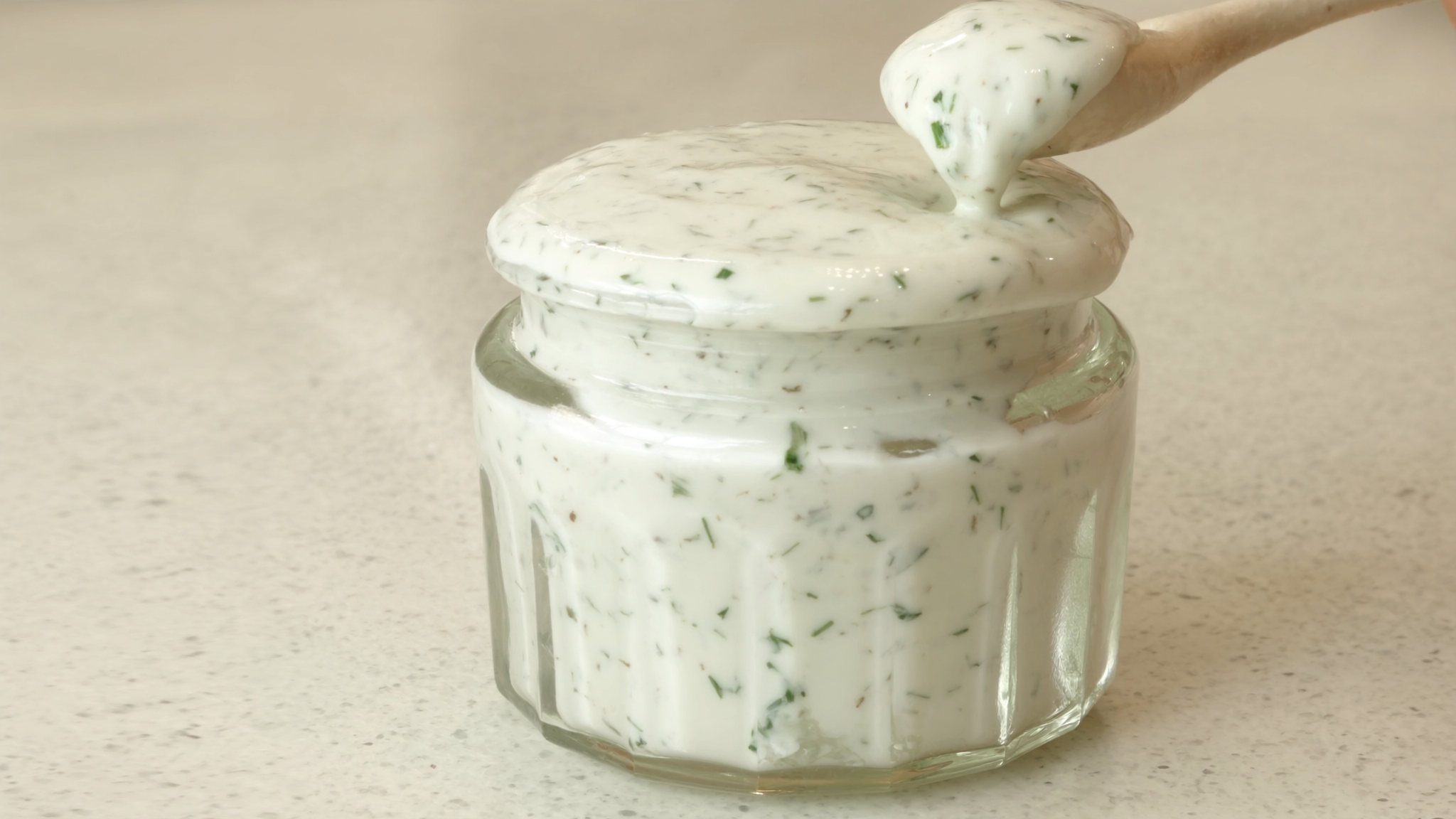
Greek yogurt ranch dressing recipe with plain Greek yogurt, cultured buttermilk, dill, parsley, chives, garlic and onion powder. Whisk this easy no-cook dressing, chill briefly, and spoon or drizzle it over savory wraps, bowls and cooked snacks. This dairy-based fresh sauce is for refrigeration only. The original editorial formula has not been independently kitchen-tested.
Greek yogurt ranch dressing recipe: quick answer
This greek yogurt ranch dressing recipe uses one cup (about 240 g) of plain unsweetened Greek yogurt, one-quarter cup (60 ml) of cultured buttermilk, two teaspoons lemon juice, dried dill, parsley and chives, garlic powder, onion powder, kosher salt and black pepper. Whisk everything until the herbs are evenly suspended, then refrigerate the dressing for 20 to 30 minutes before serving. It should pour from a spoon in a thick ribbon, unlike a stiff vegetable dip or a watery milk sauce. No mayonnaise, sour cream, raw egg or premade seasoning packet is required. This is a fresh dairy-based condiment and must stay refrigerated; the formulation has not been physically kitchen-tested.
What makes this dressing taste like ranch
Familiar American ranch dressing gets much of its signature character from cultured dairy, garlic, onion and a mix of green herbs. This small-batch version relies on tangy Greek yogurt rather than mayonnaise for body, while cultured buttermilk loosens it to a dressing consistency. Dill adds its distinct aromatic note, parsley contributes mild grassiness, and chives reinforce a soft onion flavor. The lemon makes the finish brighter without trying to turn the dip into tzatziki or a mint yogurt sauce. A light shake of black pepper adds subtle warmth. The finished dressing should look pale ivory to white with many tiny green herb flecks, not solid green pesto or fluorescent commercial ranch.
Greek yogurt is the creamy base
Use one measured cup of plain, unflavored Greek yogurt, approximately 240 grams depending on the brand. Whole-milk Greek yogurt produces a rounded, creamy result; two-percent or nonfat varieties can make a tangier or thinner-feeling dressing. The formula is defined with plain whole-milk Greek yogurt, not vanilla yogurt, a sweetened fruit-flavored cup, cottage cheese or sour cream. Stir the yogurt before measuring if whey has separated. The consistency varies considerably across brands, so the buttermilk is mixed in gradually while the recipe still lists its full quarter-cup amount. These are editorial measurements, not a claim that every grocery-brand yogurt has identical viscosity or nutritional content.
Why buttermilk makes it more pourable
A quarter cup of cultured buttermilk gives the yogurt enough fluidity to work as a salad dressing and as a sauce for warm savory wraps. Start by whisking in half of it, assess whether the yogurt softens, and then whisk in the remainder. The base should fall off a spoon in a continuous creamy ribbon rather than in a solid dollop. Buttermilk also contributes a slightly cultured tang; the yogurt already supplies acidity, so there is no need to add a large amount of vinegar. Unlike a bottled commercial product, this freshly mixed condiment is not sterile, pasteurized after mixing, or suitable for pantry storage. Keep it chilled before and after serving.
What happens if you use regular yogurt
Ordinary plain yogurt tends to have a more fluid texture than strained Greek yogurt. Substituting one-for-one and adding all the buttermilk immediately can result in a thin sauce that runs off salad leaves without coating them. If you prefer regular yogurt, treat that as a new texture variation and begin with substantially less added buttermilk. The defined recipe card uses Greek yogurt so readers have a clear starting point for repeatable proportions. Avoid accidentally purchasing a sweetened yogurt, since vanilla and fruit sugars do not belong in a savory ranch dressing. The image should never show a sugary smoothie or a dessert cream just because the main ingredient is yogurt.
Choose dried dill for repeatability
One teaspoon of dried dill weed provides the most recognizable green-herb note in this batch. Dried dill differs from dill seed, which is stronger and changes the texture when left whole, so select the leafy dried herb. Measure a level teaspoon rather than a large mound, and rub it gently between clean fingers before mixing if you want to release the aroma. Fresh dill can be used in a variation, but it is not the ingredient specified by the recipe and requires a different amount. Avoid adding an entire bunch of raw dill to make the sauce dark green: Greek yogurt ranch should still be a pale, creamy dressing dotted with fine green specks.
Parsley adds a mild fresh-herb background
One-half teaspoon of dried parsley flakes balances the more distinctive dill flavor without overwhelming the dairy base. Many dried parsley products come as relatively large flakes; crushing them lightly produces smaller pieces that are easier to disperse in a smooth dressing. The recipe does not include cilantro, mint, basil or oregano. While other green herbs can make interesting sauces, a broad mix would blur the familiar ranch flavor and produce a photograph that no longer resembles this defined formulation. Check the herb container for freshness; old dried herbs may look dusty and taste weak. Store opened herb jars closed and dry, and avoid shaking them directly over a steaming pot.
Chives supply the gentle onion note
Use one-half teaspoon dried chives, which usually come in small hollow green pieces. They complement onion powder without introducing noticeable crunchy bits of raw onion. Since dried chives can absorb a little liquid, the brief refrigerator rest helps their texture soften in the yogurt. If you happen to have fresh chives, you could make a separate version with minced leaves, but the original measurements on this page do not depend on fresh herbs being available year-round. The main photos should show a restrained scattering of tiny dried green flecks already incorporated into the dressing, not a pile of whole chive stalks across the bowl.
Garlic powder gives even seasoning
One-half teaspoon of garlic powder disperses cleanly into yogurt without the sharp raw bite or clumps of freshly minced garlic. Choose pure garlic powder rather than garlic salt, since the latter includes an unspecified amount of salt that could make the dressing much saltier. Whisk thoroughly so the powder does not form pale lumps on the surface. If you prefer raw garlic, that is a different version with a more aggressive flavor and altered storage handling. For this original recipe, no whole garlic cloves need to appear in the image, on the plate, or in a preparation step. The flavor should be savory but gentle enough to drizzle on wraps.
Onion powder fills out ranch flavor
A separate half teaspoon of onion powder reinforces the characteristic ranch seasoning without making the dressing smell like diced raw onions. As with garlic powder, pure onion powder is preferable to onion salt or a mixed seasoning blend because you can then control the salt independently. Small amounts matter in a dairy sauce: too much can give the dressing a harsh or dusty aftertaste, while a measured amount rounds the tangy yogurt and herbs. Do not add a prepared ranch packet on top of this recipe’s ingredients, because it would duplicate garlic, onion, herbs and salt in unknown quantities and change both taste and nutritional calculations.
Lemon juice should brighten, not dominate
Two level teaspoons (10 ml) fresh lemon juice lift the ranch flavor. If squeezed from a fresh lemon, strain out the seeds and measure the liquid rather than assuming every lemon yields the same amount. The dressing already contains two acidic dairy ingredients, so adding tablespoons of lemon would create a sharper sauce that tastes more like lemon yogurt than ranch. Taste after the herbs have rested and adjust cautiously only as a separate household preference. Lemon juice does not make this product safe for canning, unrefrigerated storage or extended shelf life. It is for flavor, and refrigeration remains essential regardless of how tangy the finished dressing seems.
Salt and pepper with a light hand
Start with a quarter teaspoon kosher salt and an eighth teaspoon freshly ground black pepper. Kosher salt brands have different crystal sizes, so check seasoning after mixing rather than assuming one brand’s teaspoon equals another’s by weight. This recipe is intended to accompany already seasoned foods, so avoid making it aggressively salty. Use a few small pepper specks, not a thick black crust covering the surface. If you plan to drizzle it over salty chicken or potato bites, begin with a small portion and taste the combination before adding extra salt to the entire batch. No precise sodium figure is asserted without measuring the exact products used.
Why no mayonnaise in this version
Commercial ranch frequently includes mayonnaise or other fat-rich bases. This version does not use it: the Greek yogurt supplies structure and the buttermilk supplies pourability. That makes the flavor notably tangier and often less rich than bottled ranch, but it is still a creamy dairy dressing. Do not describe it as dairy-free or automatically low-fat; the specified whole-milk yogurt and buttermilk contain dairy, and fat content depends on brands. It also would not be accurate to photograph a thick mayonnaise-based ranch and claim the picture shows a yogurt-only blend. An honest recipe explains the tradeoff rather than promising that every person will find the flavor identical to a favorite bottle.
Keep the ingredient contract intentionally short
The formula uses ten familiar ingredients counting the salt and pepper: Greek yogurt, buttermilk, lemon juice, dill, parsley, chives, garlic powder, onion powder, salt and pepper. There is no olive oil, added sugar, honey, hot sauce, avocado, cucumber, paprika or commercial dressing mix. This restraint helps the green-herb flecks remain easy to identify in pictures and allows readers to reproduce the same flavor without opening a cupboard full of spice jars. If you prefer a spicy jalapeño ranch or smoky chipotle version, develop that as another recipe rather than slipping unlisted ingredients into the final bowl. The product here is standard, softly herbed ranch dressing.
The tools make a fast no-cook dressing
Set out a small mixing bowl, a measuring cup for yogurt, measuring spoons, a whisk and a clean lidded jar. A blender is unnecessary because the yogurt and buttermilk combine easily by hand. The dry herbs need no chopping and the garlic and onion powders should disappear into the base when whisked properly. Rinse the mixing tools before use and keep them away from any raw meat that might be prepared for a separate dinner. Measure the lemon juice with a clean teaspoon, and have the refrigerator jar ready before you begin. No stovetop, microwave, eggs or heating stage is part of this exact recipe.
Step one: whisk the yogurt and buttermilk
Spoon one measured cup of plain whole-milk Greek yogurt into a clean bowl and stir it briefly until smooth. Add approximately half of the quarter cup of cold cultured buttermilk, whisk to loosen the yogurt, and then add the remaining amount while whisking. The mixture should become creamier and more mobile without turning into a watery puddle. Some brands of Greek yogurt remain quite thick even after all the milk is added. That is a normal variation; allow the finished dressing to rest before making extra dilution decisions. Keep dairy chilled before preparation rather than leaving containers out on the counter for a long photo session.
Step two: add the measured herbs and powders
Scatter one teaspoon dried dill, one-half teaspoon dried parsley, one-half teaspoon dried chives, one-half teaspoon garlic powder and one-half teaspoon onion powder across the yogurt mixture. Whisk well, scraping the sides and bottom of the bowl to break up any dry seasoning pockets. The tiny green flakes should be distributed throughout, not concentrated in a decorative pile. The color should remain pale white or ivory, with little green and black specks. Avoid whirring with a high-speed blender merely to hide herb flecks; the photo and finished dressing benefit from recognizable ranch seasoning. There should be no large vegetable chunks in this formula.
Step three: finish with lemon and seasoning
Measure in two teaspoons freshly squeezed and strained lemon juice, one-quarter teaspoon kosher salt and one-eighth teaspoon ground black pepper. Whisk again until the sauce looks even and smooth. Taste a small spoonful using a clean utensil after the ingredients are fully combined, not by returning a used tasting spoon to the storage jar. If the dressing seems especially sharp, remember that plain Greek yogurts vary in tanginess and that herbs mellow slightly while chilling. It is more accurate to serve a smaller amount over food than to cover the acidity with unlisted sweeteners. The fixed recipe card specifies its measured seasoning quantities.
Step four: refrigerate for a short rest
Transfer the dressing to a clean small glass jar or covered food-safe bowl and refrigerate for about twenty to thirty minutes before serving. This helps dried herbs hydrate and allows garlic, onion and lemon flavors to distribute more evenly. The rest takes place in a refrigerator kept at 40°F (4°C) or below, not on the countertop. The exact resting time is an editorial estimate and the recipe has not been physically kitchen-tested. If preparing a fresh batch for dinner, this interval is convenient because you can assemble the remaining meal while the dressing stays cold. Stir with a clean spoon before serving if needed.
Step five: pour or spoon into servings
When ready to serve, stir briefly, lift a clean spoon above the bowl and check whether the dressing falls in a thick but continuous ribbon. Spoon into a little ramekin for dipping, or drizzle a modest amount over wraps, chopped salads, roasted potatoes or cooked chicken. A very thick brand of yogurt may produce a dip-like consistency; that does not make the product spoiled, but it may need cautious thinning in a future adjusted batch. If you are serving a group, transfer a small amount to a separate bowl and keep the storage jar chilled. This simple habit prevents repeated contact with used utensils and helps limit the time dairy remains unrefrigerated.
A separate sauce, not an ingredient in an existing recipe
The ranch dressing stands on its own as a condiment; it is not baked into a casserole, mixed with raw poultry or used as the main liquid in rice. On MySavorista, crispy garlic Parmesan chicken and ranch potato bites provide a familiar savory pairing for a small side cup. Keep the dressing in a separate bowl rather than assuming it can replace every part of that dish’s seasoning. The intended reader can make the dressing once and decide where to use it, preserving both recipes’ distinct methods. An independent condiment page should not compete with full chicken-and-potato recipes as if it were the same cooking intent.
How it works with roasted vegetables
The creamy, tangy dressing can contrast with vegetables that have been roasted until tender, especially when served at the table rather than baked into the pan. oven-roasted eggplant with tomato and chickpeas is another published MySavorista dish that may benefit from a light separate drizzle. Taste a small amount first because the vegetable dish already has its own flavor balance. The yogurt ranch should stay cool until serving, and any sauce that has been exposed to food-handling contamination should not be returned to the storage jar. This pairing demonstrates how the source category’s street-food and bowl-friendly flavor lane can use the dressing without pretending ranch is a traditional ingredient of every global recipe.
A party dip alongside savory bites
This same fresh dressing can accompany cooked snacks as a chilled side dip. For instance, the site’s cottage cheese buffalo chicken dip offers a different creamy, spicy appetizer. There is no reason to mix the two dairy recipes together; instead, offer the ranch separately for crunchy vegetables, cooked finger foods or as a mild choice near spicier dishes. Distinguishing finished foods keeps their flavor profiles useful rather than claiming that yogurt ranch and buffalo dip are interchangeable. The recipe photograph should feature the dressing itself, without unrelated chicken wings or vegetable platters cluttering the dish identity.
Can you pour it over street-food-inspired wraps?
The sauce’s smooth texture makes it a practical finishing drizzle for a cooked chicken wrap, taco-inspired bowl or crispy potato-filled flatbread served separately. It brings a cool note that contrasts with spicy or richly seasoned fillings. This is a serving suggestion, not proof that ranch is historically part of the original cuisine represented by a particular wrap. If the filling already contains a salty sauce, use this dressing sparingly. For a social feed image, the main subject should still be the yogurt ranch in a clean bowl or jar, with its small green dill-and-chive flecks easy to see. Whole wraps and tacos are unnecessary to communicate the recipe.
Make it thicker for a dipping bowl
The primary recipe deliberately aims for a spoonable, pourable dressing. Greek yogurt brands vary; if yours remains thick after incorporating the prescribed quarter cup buttermilk, the mixture may be ideal for dipping crisp vegetables without any modification. Avoid adding mayonnaise or cream cheese solely to make it look thicker; those ingredients change the product. If you want a deliberately dense dip, a separate version could reduce the buttermilk amount, but that is not this card’s exact formula. The images should still show a creamy sauce with a small ribbon on a spoon rather than a scoopable, rigid cream-cheese ball. Keep it off the counter while serving.
Make a lighter pour without adding too much liquid
If you prefer a very thin dressing for delicate salad greens, you can develop a variation with an additional teaspoon or two of cold buttermilk. Do that outside the fixed ingredient formula and record the new amount, because adding several tablespoons changes yield and tanginess. Never assume a yogurt brand’s thickness will be exactly the same as another’s. The conservative approach is to whisk, chill, check texture, then adjust the next batch. Adding plain water may loosen the sauce but can dilute the cultured flavor that makes ranch recognizable. Do not substitute a whole cup of water for the measured quarter cup of buttermilk and still describe the result as the same recipe.
Why fresh dill behaves differently
Fresh dill has more moisture and a different volume-to-flavor relationship than dried dill. If a reader wants to substitute it, the amount must be decided as a variation rather than pretending one teaspoon of fresh dill equals one teaspoon dried in every case. Very large fresh herb pieces may create a chunky sauce, while dried small flecks spread smoothly. This original version deliberately uses dried dill, parsley and chives for predictable grocery availability and an easy weeknight method. No chopped fresh scallions, cilantro or basil are required. The final food image should show finely dispersed tiny green herbs, not a bouquet of fresh leafy stems standing in the jar.
How to avoid a powdery flavor
Garlic powder and onion powder can taste dusty if the dressing is eaten immediately after a quick stir, especially when the yogurt is extremely thick. Whisk thoroughly and let the mixture rest in the refrigerator so the powders hydrate and distribute. Do not heap additional powder on top of the dressing to make the image more decorative; the ingredient amounts are small for a reason. If there are visible clumps, press them against the bowl side with a clean spoon and whisk again. Choosing fresh, properly stored dried herbs can also make the result brighter without changing the recipe. A little black pepper is sufficient for balance.
How to fix a dressing that seems too sour
Plain Greek yogurt and cultured buttermilk are both tangy, and lemon juice contributes more acidity. Taste only after the specified ingredients have been fully combined and briefly chilled. If your brand of yogurt is unusually sharp, the result may taste more sour than a mayonnaise-heavy bottled ranch. Serve it in smaller amounts on rich food or choose a milder plain yogurt in a future batch. Do not add large amounts of sugar or honey to hide the tang while continuing to claim it is the same original recipe. The purpose of the lemon is brightness, not preservation, and the small quantity should not dominate.
How to fix a dressing that feels too salty
The easiest prevention is to measure salt before adding it, use pure garlic and onion powders rather than garlic salt or onion salt, and taste after mixing. Yogurt brands and buttermilk differ in sodium, so one-quarter teaspoon kosher salt is a starting point rather than proof of an exact concentration. If a batch turns too salty, using a small amount of it over an otherwise unsalted food may help balance the serving. Adding cups of yogurt would require revising every ingredient proportion, so it is not a precise rescue of the published formula. Do not claim a low-sodium or medically restricted-diet product without examining the real ingredient labels.
Why the color is white rather than green
A yogurt-based ranch should look pale white or slightly warm ivory, with scattered green dill, chive and parsley flecks plus tiny black pepper dots. If a photo shows a uniformly bright green dip, it may depict an herb puree, avocado sauce or cilantro yogurt blend instead. If it shows orange dressing, it might contain paprika or hot sauce not listed here. Neither would be faithful to this ingredient contract. The featured and Tasty card images must show one distinct dairy ranch dressing, not two different sauces. Their camera angle and vessel may differ, but the surface texture, herb size and overall pale color should be compatible.
No blender and no heat are required
Some dressings use a blender to pulverize fresh herbs or emulsify oil and eggs. This formula has neither step: the yogurt and buttermilk combine with a wire whisk, and the dried seasonings dissolve or hydrate during the short cold rest. Do not heat the yogurt to improve smoothness, as the dairy can change texture and the recipe is designed as a cold sauce. The absence of a cooking step does not mean the food is shelf-stable. Refrigerate the entire batch promptly, including after a photo shoot, and use a sanitized clean serving utensil. If you do use a blender, make sure it is clean and suitable for chilled dairy.
Use a clean jar but do not preserve the sauce
A small clear jar with a plain lid makes it easy to see the pale dressing and green flecks, but it is simply a refrigerator container. This is not a sealed commercial product or a home-canning recipe. You cannot hot-fill or water-bath can this mixture to make it shelf stable. Cultured yogurt, buttermilk, lemon and herbs have not been combined under any validated acidification or preservation process. Mark the preparation date if useful and keep it at 40°F or colder. Any remaining dressing from a communal dipping bowl that has been touched by food or used utensils should be discarded rather than poured back into the clean jar.
Keep the homemade yogurt dressing cold
The USDA’s leftover-handling guidance recommends prompt refrigeration at 40°F (4°C) or lower, with a two-hour room-temperature limit or one hour when surroundings exceed 90°F. The FoodSafety.gov four-step guidance reinforces the importance of chilling perishable foods. This fresh dairy-and-herb mixture has not been laboratory tested for its own specific shelf life. For practical home use, make a small batch and use promptly, conservatively within about three to four refrigerated days if it has been handled safely. This is an editorial precaution, not a guaranteed life span.
What if the dressing separates slightly?
Different Greek yogurts contain different amounts of whey. During chilling, a small layer of liquid can occasionally collect near the surface, particularly if the original yogurt had already separated. If the dressing was prepared and stored safely, a gentle stir with a clean spoon may restore an even texture. Separation by itself does not establish either safety or spoilage. If the jar was left unrefrigerated too long, shows mold, develops unexpected gas or odor, or has been contaminated by serving utensils, discard it rather than tasting to investigate. The recipe is intended for short-term cold storage and should not be aged like a fermented commercial product.
Can this be frozen for later?
Freezing may change the smoothness of strained yogurt and buttermilk, leading to graininess or visible separation after thawing. Because the exact formula has not been physically tested for freezer quality, this article does not promise a perfectly creamy result after months of freezing. For the best expected texture, make only the volume you plan to use within a few days. If you freeze a small extra portion anyway, choose a freezer-safe container with headspace, label it and thaw it in the refrigerator, then inspect and stir. Freezing is not a way to rescue dressing that was already held at unsafe temperature.
Allergens and ingredient labels
The defined dressing contains milk through Greek yogurt and cultured buttermilk. Check actual labels for additional ingredients or potential cross-contact; people allergic to milk proteins should not treat it as a dairy-free substitute merely because it uses yogurt instead of mayonnaise. For a strictly gluten-free meal, verify ingredient processing and any flavored yogurt or buttermilk label as appropriate. If serving alongside chicken or a prepared packaged snack, check those foods separately rather than assuming the ranch makes the plate allergen safe. Do not present fabricated protein, calorie or sodium totals for this batch, since the type of yogurt and final yield have not been measured in a real kitchen.
How much dressing does the recipe make?
The starting liquids are roughly one cup of thick yogurt plus one-quarter cup buttermilk, along with a small amount of lemon juice and dry seasoning. The estimated finished volume is about one and one-quarter cups, although whisking, air bubbles and yogurt brands can change what you observe in the measuring cup. That is sufficient for roughly eight two-tablespoon servings, but the exact yield has not been physically measured. The servings are reference amounts, not a nutrition or dietary prescription. If you need twice as much for a party, weigh and double each measured ingredient deliberately, keeping storage containers clean and chilled.
The finished-dish photograph is part of recipe accuracy
For the hero photograph, the sauce should fill a small plain clear glass refrigerator jar or a white ceramic bowl, with a single clean spoon showing how the dressing falls in a short ribbon. Green herb flecks should be finely dispersed; the sauce should remain ivory white rather than bright mint green or yellow. The separate Tasty image can show the same type of sauce in a different little ramekin and different perspective, but it must be generated independently as a second original, not cropped from the first. No mayonnaise, salad leaves, carrots, chicken wings, fresh giant herb bunches, packaged ranch packets or brand logos should be staged in the scene if not part of the exact recipe.
Editorial transparency and preparation limits
This original MySavorista editorial formulation is not independently kitchen-tested in a physical home kitchen. Ingredient ratios, resting time, yield, texture and storage window are reasoned recommendations rather than measurements from a documented cooking trial. AI-generated food photographs, if approved, illustrate the expected dressing and do not prove it was physically made. The article avoids inventing protein or calorie counts, a tested safe pH, a shelf-stable bottling process or a universal comparison with every commercial ranch. Use properly chilled dairy, clean utensils and actual ingredient labels, and discard improperly stored food. The goal is a practical, transparent fresh dressing that can accompany different cooked savory foods.
Greek yogurt ranch dressing recipe: 12 common questions
Can I make ranch dressing from Greek yogurt?
Yes. In this recipe plain whole-milk Greek yogurt is whisked with cultured buttermilk, lemon juice, dried dill, parsley, chives, garlic powder, onion powder, salt and black pepper. It needs no mayonnaise or ranch packet.
Does Greek yogurt ranch taste like bottled ranch?
It has familiar dill, chive, garlic and onion notes, but the Greek yogurt base is noticeably tangier and may be less rich than many mayonnaise-based bottled ranch dressings.
How do I thin Greek yogurt ranch dressing?
The main formula includes one-quarter cup buttermilk for every cup of Greek yogurt. Whisk gradually and allow the dressing to chill before deciding whether a separate adjusted batch needs extra liquid.
What herbs go in Greek yogurt ranch?
This version uses one teaspoon dried dill, one-half teaspoon dried parsley and one-half teaspoon dried chives. The herbs should create tiny green flecks throughout the pale dressing.
Can I use fresh herbs instead of dried?
You can make a variation with fresh herbs, but the volume and strength differ. The defined recipe uses dried herbs for specific, repeatable measurements and a smooth texture.
Do I need mayonnaise or sour cream?
No. This formulation uses plain Greek yogurt for body and buttermilk for pourability, without mayonnaise, sour cream, eggs, avocado or a commercial ranch packet.
Can I make Greek yogurt ranch without buttermilk?
Omitting buttermilk gives a substantially thicker and less pourable sauce. For this exact recipe use the measured cultured buttermilk; substitutions need their own adjustments.
How long should the dressing chill?
Allow roughly twenty to thirty minutes in the refrigerator so the dried herbs hydrate and the flavors distribute. This time is a practical estimate, not a physically tested exact requirement.
How long does homemade yogurt ranch last?
It has no laboratory-validated shelf life. Keep at 40°F or colder and use a small batch promptly, conservatively within about three to four days if handled safely; discard if unrefrigerated for too long.
Is this dressing shelf stable?
No. Yogurt and buttermilk are perishable dairy foods. Do not can it, hot-fill it for pantry storage, or infer preservation safety from lemon juice or its tangy taste.
Can I serve it with chicken wraps or potatoes?
Yes. It works as a separate cool dressing for cooked chicken wraps, tacos, bowls, potato bites or a small vegetable dip, without altering those recipes’ cooking instructions.
Was this recipe cooked and tested?
No. MySavorista developed this original editorial formula without an independent physical kitchen test. Food images are illustrative, and exact yield, flavor and nutrition are not empirically verified.
Print
Greek Yogurt Ranch Dressing Recipe With Dill and Chives
- Prep Time: Approximately 10 minutes to measure, whisk and transfer ingredients; editorial estimate
- Cook Time: No heating or cooking; fresh cold dressing
- Total Time: Approximately 30–40 minutes including an estimated 20–30-minute refrigerator rest; no physical test
- Yield: Approximately 1¼ cups, about eight 2-tbsp servings; final volume has not been measured in a kitchen 1x
- Category: Global Flavors & Street Food
- Method: Whisk Greek yogurt with gradually added buttermilk, dried green herbs, garlic and onion powder, lemon, salt and pepper until smooth; rest covered in a refrigerator and serve chilled
- Cuisine: American-style cultured-dairy ranch dressing for wraps and bowls
Description
Greek yogurt ranch dressing recipe with plain whole-milk Greek yogurt, cultured buttermilk, lemon, dried dill, parsley, chives, garlic and onion powder. Whisk, chill and serve as a refrigerator-only dressing. Not independently kitchen-tested.
Ingredients
1 cup (approximately 240 g) PLAIN UNSWEETENED WHOLE-MILK GREEK YOGURT, cold (not vanilla yogurt)
1/4 cup (60 ml) CULTURED BUTTERMILK, cold (no water substitute in primary recipe)
2 tsp (10 ml) FRESH LEMON JUICE, strained
1 tsp DRIED DILL WEED, NOT dill seeds
1/2 tsp DRIED PARSLEY flakes
1/2 tsp DRIED CHIVES, chopped or small dried pieces
1/2 tsp pure GARLIC POWDER, NOT garlic salt
1/2 tsp pure ONION POWDER, NOT onion salt
1/4 tsp KOSHER SALT (adjust modestly for brand/taste)
1/8 tsp GROUND BLACK PEPPER
No mayonnaise, sour cream, ranch seasoning packet, sugar, avocado, paprika, jalapenos, hot sauce, olive oil or additional foods
Instructions
1. Prepare a clean mixing bowl, whisk, measuring spoons, measuring cup and a clean food-safe refrigerator jar or covered bowl. Keep Greek yogurt and cultured buttermilk chilled at 40°F/4°C or below until use.
2. Spoon 1 measured cup (roughly 240 g) plain whole-milk Greek yogurt into the bowl and whisk briefly until smooth. Gradually add the full measured 1/4 cup (60 ml) cultured buttermilk, beginning with half and whisking, then adding the rest until creamy and thickly pourable.
3. Add 1 tsp dried dill weed, 1/2 tsp dried parsley, 1/2 tsp dried chives, 1/2 tsp pure garlic powder and 1/2 tsp pure onion powder. Whisk and scrape sides until every seasoning is evenly dispersed as tiny green and black flecks; do not add fresh giant herb clumps.
4. Add 2 tsp strained fresh lemon juice, 1/4 tsp kosher salt and 1/8 tsp ground black pepper. Whisk thoroughly. Taste a little with a CLEAN spoon after all ingredients are evenly mixed; avoid returning used utensils to the batch.
5. Transfer to a clean covered food-safe glass jar or bowl and REFRIGERATE at 40°F (4°C) or colder for approximately 20–30 minutes to let dried herbs hydrate and flavors develop. Never leave the dressing out to ferment or preserve.
6. Stir gently with a clean spoon and check that the sauce falls in a thick continuous ribbon rather than a rigid scoop. Serve small chilled spoonfuls as a dipping sauce, or drizzle over cooked chicken wraps, roasted vegetables, potato bites or other savory foods. Keep the storage jar refrigerated, and use separate serving dishes for group dipping.
7. Refrigerate immediately after serving. As a conservative editorial precaution, use promptly within about 3–4 days if consistently held at 40°F or below with clean handling, NOT as a validated microbiological shelf life. Discard any dressing left unrefrigerated more than 2 hours, or 1 hour if surroundings exceed 90°F (32°C). Do not can, hot-fill, sell as shelf-stable, or store in the pantry.
Notes
ORIGINAL MY SAVORISTA EDITORIAL FORMULATION NOT INDEPENDENTLY KITCHEN-TESTED. Dairy-based Greek yogurt and cultured buttermilk dressing is REFRIGERATOR ONLY, 40°F (4°C) or colder. Short 3–4 day use window is cautious editorial advice, NOT tested shelf life, pH safety, or a commercial food safety claim. Respect general 2-hour / 1-hour at >90°F refrigeration limit and use clean utensils. Contains MILK; check labels of buttermilk/yogurt and dried herbs for allergens. Photos are AI ILLUSTRATIONS, not proof of real kitchen preparation. Visual identity: pale white/ivory smooth but pourable ranch with FINE TINY GREEN dried dill/parsley/chive flecks and a few black pepper specks, in small white bowl or simple unbranded glass jar; no mayonnaise, leafy fresh herb piles, vegetables, ranch packet, oily yellow emulsion, avocado, other sauces or any text. Nutritional calories/protein are deliberately omitted, not lab-measured.
Nutrition
- Serving Size: Roughly 2 tablespoons per serving, estimated 8 servings, not experimentally measured
Keywords: greek yogurt ranch dressing recipe, homemade greek yogurt ranch, ranch dressing without mayo, yogurt ranch for wraps