
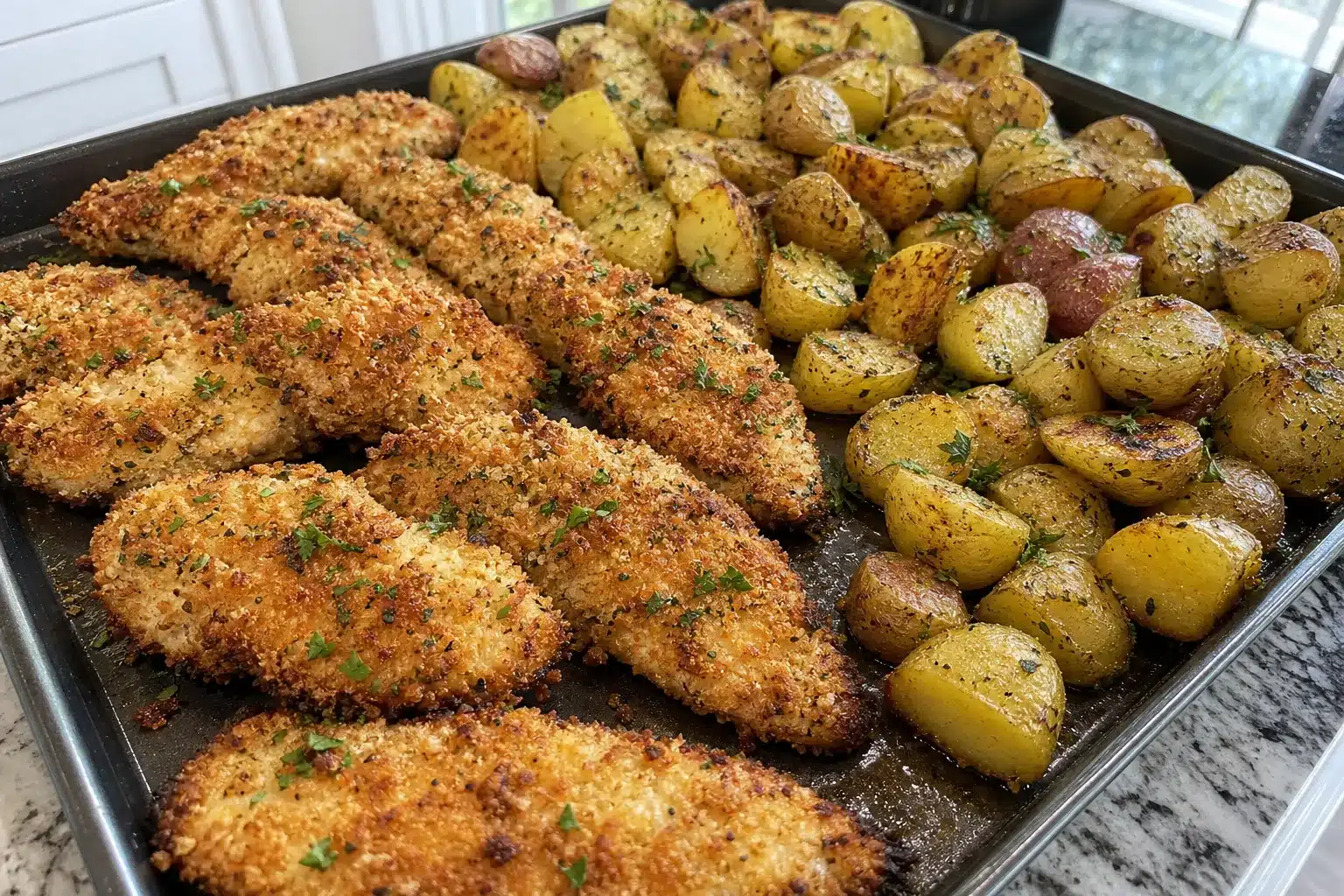
When you're craving a comforting, flavor-packed meal that's easy enough for a weeknight but special enough for guests, Crispy Garlic Parmesan Chicken and Ranch Potato Bites answer the call perfectly. This dynamic duo pairs tender, juicy chicken baked with a golden garlic-Parmesan crust alongside oven-roasted potato bites tossed in a zesty ranch seasoning. It brings together the familiar warmth of home-cooked classics with a little modern twist in flavors and textures. Whether you’re looking to impress your family or simply want a stress-free, crowd-pleasing dinner, this recipe fits seamlessly into the American home kitchen.
The secret to these crispy chicken tenders lies in a blend of panko, fresh Parmesan, and aromatic garlic baked to perfection for both crunch and depth. The potatoes, meanwhile, get a ranch-inspired upgrade, transforming humble spuds into flavor-packed bites that are both crispy outside and creamy inside. Preparing both components on a single sheet pan streamlines cooking and cleaning—a plus for busy evenings. You’ll achieve a bold, savory finish that feels indulgent, yet approachable, using ingredients you likely already have in your pantry and fridge.
Though simple in execution, this meal offers room for creativity with easy substitutions and helpful tips for perfect results every time. These chicken tenders and potato bites are kid-friendly, but sophisticated enough to serve at casual gatherings. In the sections that follow, you'll find details on technique, shopping and storage guidance, and advice for customizing the dish. This AI-assisted, untested recipe aims to empower you as an American home cook, with practicality and flavor in every step—so you can confidently bring Crispy Garlic Parmesan Chicken and Ranch Potato Bites to your table.
Ingredients
- 1.5 pounds boneless, skinless chicken breasts or tenders
- 1 cup panko breadcrumbs (regular or gluten-free)
- 1/2 cup freshly grated Parmesan cheese
- 2 cloves garlic, finely minced (or 1 teaspoon garlic powder)
- 1 teaspoon kosher salt, divided
- 1/2 teaspoon ground black pepper, divided
- 1/2 cup all-purpose flour (or gluten-free blend)
- 2 large eggs
- 1.5 pounds Yukon Gold or red potatoes
- 3 tablespoons olive oil, divided
- 1 tablespoon dried dill
- 1 tablespoon dried parsley
- 1 teaspoon dried chives
- 1 teaspoon onion powder
- 1/2 teaspoon buttermilk powder (optional, for ranch flavor)
- Cooking spray (optional, for extra crispness)
- Fresh chopped parsley or dill, for garnish
Choosing the Right Chicken
For this recipe, boneless, skinless chicken breasts or tenders are ideal due to their quick cooking and even texture. Cut chicken into uniform strips or use pre-cut tenders for consistent results; pieces about one inch wide ensure they cook through quickly without drying out. Look for fresh, firm chicken with minimal moisture in the packaging—excess liquid can cause sogginess in the finished breading and slow the crisping process.
If you're shopping in advance, keep chicken refrigerated and use within two days for best flavor and safety. Always handle raw chicken with care, using separate cutting boards and washing hands and utensils thoroughly. If you prefer chicken thighs, trim excess fat and cut them into similar-sized strips; they’ll yield slightly juicier results. Fresh or thawed chicken will coat better than frozen straight from the freezer.
Crafting the Garlic Parmesan Coating
The crispy coating starts with panko breadcrumbs, which are coarser than regular breadcrumbs and produce superior crunch. Freshly grated Parmesan cheese adds nutty, savory flavor while contributing to browning. Minced garlic or garlic powder infuses the crust with aromatic depth. Mixing these dry ingredients together before breading evenly distributes cheese and flavor.
For the best adhesion, dredge chicken in seasoned flour, then dip in beaten eggs before pressing into the garlic-Parmesan panko. This triple-layer approach locks in moisture and guarantees a substantial crust. If the mixture is too dry, a touch of olive oil can help. Be sure the chicken pieces are thoroughly coated, pressing down gently to ensure the crust sticks without gaps.
Ranch Potato Bites Technique
Choose waxy potatoes such as Yukon Gold or red potatoes for bite-sized pieces that crisp well but retain a creamy interior. Cut them into even half-inch chunks to promote uniform cooking. Soak cut potatoes briefly in cold water to reduce surface starch, patting them dry before seasoning for ultimate crispness after roasting.
For ranch flavor, toss the dried potato chunks with a homemade mix of dried dill, parsley, chives, garlic powder, onion powder, and a hint of buttermilk powder if available. A drizzle of olive oil helps the seasoning cling and encourages browning. Spread the potatoes in a single layer on your sheet pan for even caramelization and optimal crispy edges.
Sheet Pan Setup for Even Cooking
A half-sheet pan (about 18×13 inches) provides ample space for both chicken and potatoes to cook without crowding—crowding traps steam and hinders browning. Line the pan with parchment paper or nonstick foil for easy cleanup and minimal sticking, especially since melted Parmesan can adhere tenaciously to bare metal.
Arrange the seasoned potato bites on one half of the pan and the breaded chicken pieces on the other, leaving enough space between them for air to circulate. If your oven has hot spots, consider rotating the pan halfway through baking. If you want ultra-crispy results, you can use a rack under the chicken to promote airflow beneath it.
Oven Baking Tips for Maximum Crispiness
Bake at a relatively high temperature—425°F ensures the panko coating and potatoes crisp up without burning. Preheat your oven fully before placing the sheet pan inside; a hot oven is vital for setting the breading quickly and browning the potatoes. If your oven features convection, using it can further enhance crunch by increasing air circulation around the food.
Midway through roasting, gently flip the potato bites with a spatula to expose more surface area to the heat and ensure even browning. Chicken should be flipped only if you prefer a more uniformly browned crust; otherwise, leaving it undisturbed gives the Parmesan topping its signature golden look. Avoid opening the oven door too often, as this can cause the temperature to drop and the coating to soften.
Using Fresh Versus Dried Garlic
Fresh minced garlic imparts a strong, aromatic flavor that mellows slightly as it bakes, pairing beautifully with Parmesan. However, it can burn if spread directly on the exterior, so it’s best mixed thoroughly into the breadcrumb blend. Dried garlic powder is a more foolproof choice that delivers flavor without risk of burning, especially for beginners or those sensitive to garlic’s punch.
If substituting garlic powder for fresh, reduce the amount to avoid overpowering the dish—one-half teaspoon per cup of breadcrumbs is usually sufficient. For a variation, try roasted garlic for a sweeter, milder taste. Both forms of garlic contribute to the overall savoriness, so use whichever fits your preferences or pantry stock.
Achieving Ranch Flavor in Potatoes
Homemade ranch seasoning lets you control saltiness and freshness; blend dried dill, dried parsley, garlic powder, onion powder, and a pinch of ground black pepper. For added tang, a half-teaspoon of buttermilk powder or a splash of lemon juice can be added after baking. Store-bought ranch seasoning may be used as a shortcut, but taste testing is wise since commercial mixes often contain added salt.
Coat potatoes in olive oil before adding the ranch seasoning so the herbs adhere evenly during roasting. If some herbs turn a bit brown in the oven, don’t worry—they’ll still taste great. For best results, add a small sprinkle of fresh chopped dill or parsley after baking to reinforce the ranch flavor and add a touch of color before serving.
Substituting Ingredients for Dietary Needs
This recipe can be adapted to suit gluten-free diets by using gluten-free panko or crushed rice-based cereal in place of traditional breadcrumbs. For a dairy-free version, omit the Parmesan and choose a dairy-free cheese alternative, or simply ramp up the garlic and herbs for robust flavor. Egg allergies can be accommodated by substituting beaten aquafaba, buttermilk, or a flaxseed mixture for the egg wash.
To lighten the potato bites, use olive oil spray rather than drizzling, which reduces overall fat while still aiding crispness. Those seeking a lower-carb option can swap potatoes for peeled, cubed rutabaga or cauliflower florets and roast them similarly. Always taste for seasoning and adjust the ranch spices to suit substituted vegetables or cheeses.
Food Safety Considerations for Chicken
Ensuring chicken is fully cooked is crucial for both texture and food safety. The safest way to check doneness is by using an instant-read thermometer; chicken is ready when its thickest part reads 165°F. Avoid cutting into chicken repeatedly to check—it releases juices that can dry out the pieces. If children or immunocompromised individuals will be eating, err on the side of caution with temperature.
After handling raw chicken, sanitize work surfaces, tools, and your hands before proceeding with other kitchen tasks. Place used breading plates directly in the sink or dishwasher to minimize cross-contamination. Baked chicken is best enjoyed fresh, but leftovers should be cooled quickly and refrigerated within two hours of cooking to discourage bacterial growth.
Batch Cooking and Make-Ahead Strategies
For busy weeknights, both chicken and potatoes can be prepped ahead and stored separately. Bread the chicken, spread in a single layer on a tray, cover, and refrigerate up to 8 hours before baking. Season and cut potato bites in advance, but store submerged in cold water. Drain and dry them thoroughly just before roasting to ensure maximum crispness.
The breaded chicken can also be frozen raw: place in a single layer until solid, then transfer to a freezer bag. Unbaked, breaded tenders can go straight from freezer to oven with minimal adjustment to cook time (add an extra 5–7 minutes). Frozen potato bites don’t roast as well directly from the freezer, so for best texture, bake them fresh.
How to Keep Chicken and Potatoes Warm and Crisp
If you need to hold the food before serving, set your oven to its lowest 'warm' setting (usually 170–200°F), and place baked chicken and potatoes on a wire rack over a sheet pan. This prevents steam buildup and keeps both components crisp. Avoid covering tightly with foil, as trapped moisture softens the breading and potatoes.
Alternatively, if preparing in batches, re-crisp items by spreading them back onto a hot sheet pan and reheating for 5–8 minutes at 400°F just before dinner. Leftovers can also be revived in a countertop toaster oven or air fryer to restore texture. Always check internal temperature to confirm safe reheating of chicken.
Creative Dipping Sauces and Dressings
Complement your Crispy Garlic Parmesan Chicken and Ranch Potato Bites with a variety of dipping sauces. Classic choices include homemade ranch dressing, honey mustard, or a spicy aioli for those who enjoy a bit of heat. For added zest, try blending Greek yogurt with lemon juice, chives, and a touch of garlic powder for a light and tangy option.
Experiment with barbecue, bleu cheese, or even a simple ketchup for kid-friendly dipping. Offer several small bowls on the side so guests can sample different flavors. If making your own ranch dressing, use the same dried herbs as the potato seasoning to create continuity across the meal and tie the flavors together.
Pairing and Serving Suggestions
These chicken and potatoes can stand alone as a complete meal, but they also pair nicely with a crisp green salad or coleslaw for freshness and balance. Steamed broccoli, glazed carrots, or sautéed green beans make easy, nutritious sides if you’d like to round out the plate, especially for children or guests seeking extra vegetables.
To serve, arrange the hot chicken strips and potato bites on a large platter, accentuating with fresh herbs for color and aroma. For a more casual gathering, divide onto individual trays for a family-style or game-day treat. Offering a few assorted sauces on the side makes the spread feel communal and flexible for varied tastes.
Storage and Reheating Leftovers
Once cooled, leftovers should be stored in airtight containers in the refrigerator, ideally within two hours of cooking. Place a paper towel in the container with potatoes to absorb excess moisture and prolong their crispness. Consume leftovers within three days for best flavor and safety. Always reheat thoroughly, ensuring chicken returns to at least 165°F in the center.
To reheat, spread chicken and potatoes out on a baking sheet and warm in a preheated 375°F oven for 8–10 minutes, or use an air fryer for greater crispiness. Avoid microwaving if possible, as this tends to soften the breading and make potatoes rubbery. If the breading seems dry, a quick spritz of oil before reheating can refresh their crunch.
Troubleshooting Soggy Coatings
If your chicken breading turns out soft or patchy, consider whether your chicken was too wet—always pat pieces dry prior to breading. Flour each piece thoroughly before the egg dip to create a dry surface, which helps the panko-Parmesan mixture cling. Additionally, avoid stacking breaded pieces before baking, as this compresses the coating and prevents crisping.
Crowded sheet pans or low oven temperatures are other common causes for soggy results. Make sure there’s space between chicken and potatoes, and avoid opening the oven door repeatedly. If the coating is browning too slowly, try raising the oven rack closer to the heat source or finishing under the broiler for 1–2 minutes, watching carefully to prevent burning.
Scaling Up or Down for Groups
This recipe is easily doubled for a crowd—simply use two sheet pans and rotate their positions halfway through baking to ensure even cooking. If making for just one or two people, halve all ingredients, but keep in mind that a smaller batch may cook slightly faster due to increased airflow. Watch closely to avoid overbaking.
For parties, consider making bite-sized versions by cutting chicken into nuggets and potatoes into smaller cubes. Mini chicken bites make excellent finger food when served with toothpicks and dipping sauces. If you lack oven space, cook chicken in a countertop convection or air fryer, then roast potatoes separately to streamline the process.
Ingredient Quality and Shopping Tips
Seek out the freshest Parmesan cheese and grate it yourself if possible; pre-grated varieties may contain additives that hinder melting and browning. Look for firm, small potatoes with unblemished skin—they’re less likely to harbor moisture that can interfere with crispness. High-quality olive oil lends subtle flavor and assists with browning on both chicken and potatoes.
When purchasing dried herbs for ranch seasoning, buy from stores with high turnover to maximize potency. If you prefer store-bought ranch seasoning, check labels for MSG or salt content to anticipate flavor. Purchase pre-trimmed chicken tenders to save prep time, or slice whole chicken breasts for greater budget flexibility.
Cleaning Up After Cooking
Lining your sheet pan with parchment paper or nonstick foil greatly simplifies cleanup and helps prevent melted cheese from sticking. Place used breading stations—plates, bowls, and utensils—directly into the sink or dishwasher as soon as you finish breading to avoid letting residual flour and egg dry in place. Wipe down all surfaces touched by raw chicken with hot, soapy water or sanitizer immediately.
After dinner, allow any cooked cheese or stuck-on crumbs to soak briefly in hot water before scrubbing. Some food residue is easiest to remove when still warm, but stubborn spots may need a plastic scraper. Compost or discard potato peels and herb stems as you go to keep your kitchen tidy, and vacuum or sweep up stray breadcrumbs after the meal.
Recipe Card
Print
Crispy Garlic Parmesan Chicken and Ranch Potato Bites
- Prep Time: 25 minutes
- Cook Time: 25–30 minutes
- Total Time: 50–55 minutes
- Yield: 4 servings 1x
- Category: Main Course
- Method: Oven-baked
- Cuisine: American
Description
Oven-baked garlic Parmesan chicken tenders and crispy ranch potato bites, perfect for an easy, crowd-pleasing American meal.
Ingredients
1.5 pounds boneless, skinless chicken breasts or tenders
1 cup panko breadcrumbs (regular or gluten-free)
1/2 cup freshly grated Parmesan cheese
2 cloves garlic, finely minced (or 1 teaspoon garlic powder)
1 teaspoon kosher salt, divided
1/2 teaspoon ground black pepper, divided
1/2 cup all-purpose flour (or gluten-free blend)
2 large eggs
1.5 pounds Yukon Gold or red potatoes
3 tablespoons olive oil, divided
1 tablespoon dried dill
1 tablespoon dried parsley
1 teaspoon dried chives
1 teaspoon onion powder
1/2 teaspoon buttermilk powder (optional, for ranch flavor)
Cooking spray (optional, for extra crispness)
Fresh chopped parsley or dill, for garnish
Instructions
Preheat oven to 425°F. Line a half-sheet pan with parchment paper or foil for easy cleanup.
Cut chicken breasts into 1-inch wide strips if using whole breasts. Pat dry with paper towels.
Set up three shallow dishes: place flour in the first with 1/2 teaspoon salt and 1/4 teaspoon pepper; beaten eggs in the second; panko, Parmesan, garlic, and remaining salt and pepper in the third. Mix well.
Dredge each chicken piece in the flour mixture, then dip in egg, then press firmly into the panko-Parmesan mixture. Arrange on one side of the prepared sheet pan.
Scrub and cut potatoes into 1/2-inch chunks. If desired, soak in cold water 10 minutes, then drain and pat dry thoroughly.
In a large bowl, toss potatoes with 2 tablespoons olive oil, dill, parsley, chives, onion powder, buttermilk powder (if using), and a pinch of salt and pepper.
Spread potatoes in an even layer on the other half of the sheet pan. Drizzle remaining olive oil over the chicken for added crispness, if desired.
Bake for 23–28 minutes, flipping potato bites halfway through, until potatoes are crisp and golden and chicken reaches 165°F internally.
If a more browned top is desired, broil for 1–2 minutes, watching closely.
Transfer chicken and potatoes to a platter and garnish with fresh parsley or dill. Serve hot with your favorite dipping sauces.
Notes
This AI-assisted recipe draft has not been independently kitchen-tested. Adjust seasoning to taste and check food safety standards as needed.
Nutrition
- Serving Size: About 2–3 chicken tenders and 1 cup potato bites
Keywords: garlic parmesan chicken, ranch potato bites, sheet pan, easy chicken recipes, crispy chicken, homemade ranch potatoes
Frequently Asked Questions
Can I use chicken thighs instead of breasts?
Yes, boneless, skinless chicken thighs are an excellent substitute for chicken breasts or tenders in this recipe. They offer a juicier, richer flavor and remain moist even if slightly overcooked. Trim excess fat and cut thighs into uniform strips, similar in size to tenders, to ensure even cooking. Cooking time may be increased by a couple of minutes; check that the internal temperature reaches 165°F before serving.
What potatoes work best for ranch potato bites?
Waxy potatoes like Yukon Gold or red potatoes hold their shape well when roasted and provide a creamy, tender interior. If unavailable, russet potatoes can be used, but they may become crumblier and more prone to breaking apart. For extra crispness, cut potatoes into uniform half-inch chunks and soak briefly in cold water before roasting, patting them thoroughly dry before seasoning.
How can I make this recipe gluten-free?
To make this dish gluten-free, swap regular panko breadcrumbs for a certified gluten-free version or use finely crushed gluten-free rice cereal as a substitute. Also, ensure any ranch seasoning mix you use is labeled gluten-free, as some brands contain wheat-based anticaking agents. Check all other condiments and prepared ingredients for hidden gluten sources, especially if cooking for someone with celiac disease.
Is it possible to prep the dish ahead of time?
Yes, you can prepare both elements separately ahead of time. Bread the chicken and refrigerate, covered, for up to eight hours before baking. Cut potatoes can be soaked in cold water to prevent browning, then dried and seasoned just before roasting. You can also freeze raw, breaded chicken; bake from frozen, adding several minutes to the cook time for complete doneness.
What dipping sauces go well with this meal?
Classic ranch dressing is a natural pairing with both the chicken and potatoes. Other great options include honey mustard, garlic aioli, barbecue sauce, or a tangy Greek yogurt dip. For variety, offer a selection of sauces in small bowls so each diner can sample different flavors. Homemade ranch using the same dried herbs as the potatoes ties the whole meal together beautifully.
How do I store and reheat leftovers?
Store leftovers in airtight containers in the refrigerator, using a paper towel to absorb excess moisture, especially with potatoes. To reheat, spread chicken and potatoes on a baking sheet and warm at 375°F for 8–10 minutes, or use an air fryer if available for optimal crispness. Avoid microwaving, as it can cause breading and potatoes to become soft or rubbery.
Can I use pre-grated Parmesan cheese?
While it’s possible to use pre-grated Parmesan in a pinch, freshly grated Parmesan yields better melting, flavor, and browning. Pre-grated cheeses often contain anti-caking agents that can inhibit proper crisping. If using pre-grated cheese, opt for a high-quality brand and press it well into the breading mixture for the best coating adherence and flavor.
How do I prevent the breading from falling off?
Ensuring the chicken is well dried before breading and carefully following the flour-egg-panko sequence improves coating adhesion. Press the breading mixture firmly onto each piece. Avoid stacking breaded chicken before baking, and handle gently when flipping. Letting breaded chicken rest for a few minutes before baking can further secure the crust, preventing it from sliding off during cooking.
Recipe note: This AI-assisted recipe has not been independently kitchen-tested. Preparation and cooking times are estimates, and the image is an illustration rather than a record of a physical kitchen test. Follow safe food-handling practices and adjust the method for your equipment.