
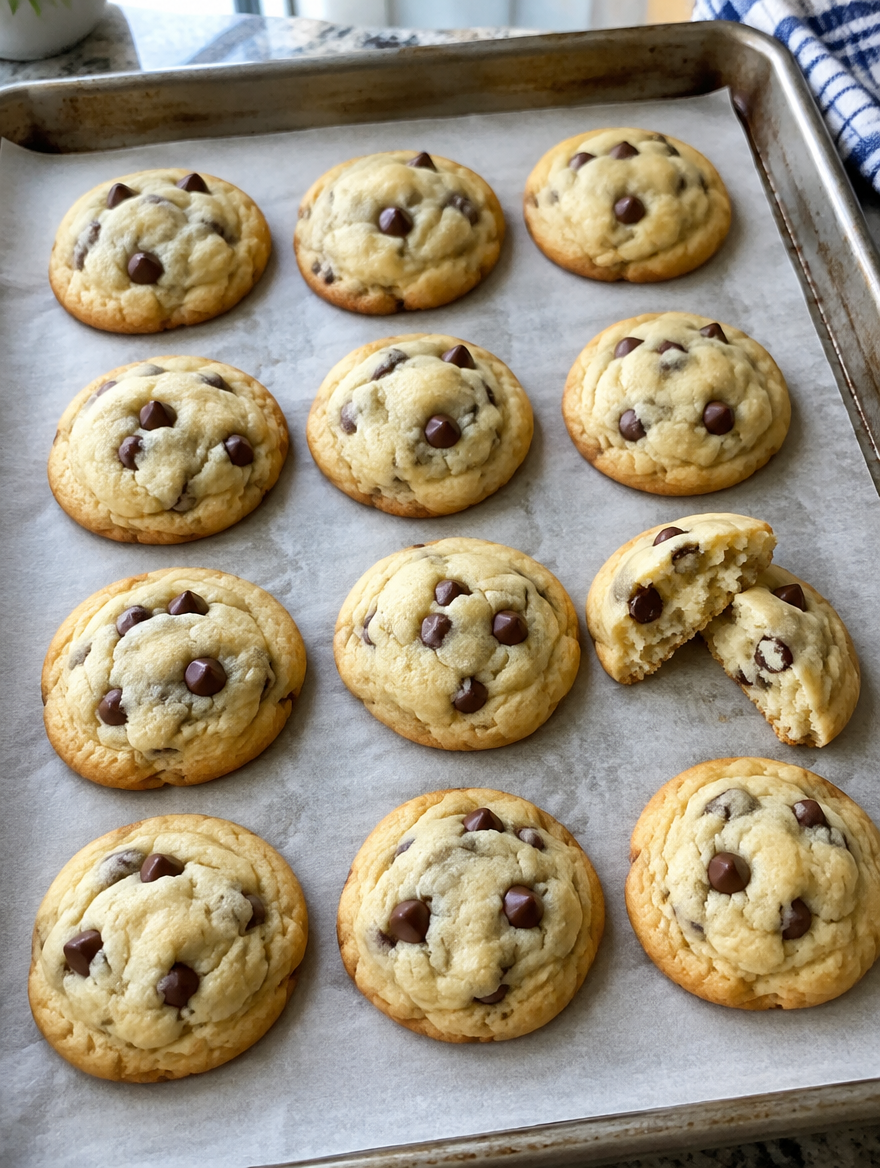
Easy Vanilla Cake Mix Cookies With Chocolate Chips
Quick answer: Combine one 15.25-ounce box of dry vanilla cake mix with two large eggs and 1/3 cup neutral oil, fold in 3/4 cup chocolate chips, portion into 24 small mounds and bake at 350°F for about 9–12 minutes until set. Do not add the cake-box liquids or taste raw dough.
This four-ingredient method makes soft, sweet cookies without measuring flour or creaming butter. It is intended for busy home bakers who have a standard boxed cake mix and want cookies rather than cake. The specific box size matters, and the oven timing is an estimate. The recipe has not been independently kitchen-tested.
Why boxed vanilla cake mix works
A regular 15.25-ounce box combines flour, sugar, leavening, salt and flavoring in one measured dry base. Eggs bind the dough while oil limits gluten development and keeps the centers tender. The goal is a scoopable cookie dough, not a pourable cake batter. Chocolate chips bring contrast without changing the basic mixing method. This shortcut differs from traditional cookies, which generally cream butter with sugar and measure flour and baking powder separately. The box is a starting formula rather than a universal interchangeable weight: a 13.25-ounce or 16.25-ounce mix may behave differently. Check the printed net weight before you begin.
Ingredient quantities and shopping notes
Use one 15.25-ounce (432 g) box of dry vanilla or yellow cake mix, two large eggs, 1/3 cup (80 mL) neutral vegetable oil and 3/4 cup (about 130 g) semisweet chocolate chips. These are the complete dough ingredients. Do not add the water, milk, butter or other ingredients from the cake directions printed on the box. Choose a standard cake mix rather than a gluten-free, keto, protein-enriched or pudding-heavy specialty blend; those formulas can absorb liquid differently. Neutral canola or sunflower oil is appropriate. Eggs should be intact and refrigerated until needed. Measure oil in a liquid measuring cup and chips in a dry cup. The yield is approximately 24 cookies when portioned into level 1 1/2-tablespoon mounds.
Eight-step method
- Heat the oven to 350°F (175°C). Position a rack in the middle and line two light-colored baking sheets with parchment. Keep a third sheet available if needed rather than crowding cookies.
- Empty the entire dry 15.25-ounce vanilla cake mix into a large bowl. Break up any large dry lumps with a fork; do not add the cake-box liquids.
- Add two large eggs and 1/3 cup neutral oil. Stir with a sturdy spatula until no dry powder remains and a thick, cohesive dough forms. Do not beat until airy.
- Fold in 3/4 cup chocolate chips just until distributed. If the dough is unusually sticky, chill it for 15–20 minutes rather than adding unmeasured flour.
- Portion level 1 1/2-tablespoon scoops onto the prepared sheets, leaving at least 2 inches between mounds. Keep scoops similarly sized for even baking.
- Bake one sheet at a time on the center rack for approximately 9–12 minutes, checking at 9 minutes. The edges should look set and lightly colored, while the centers may remain soft but not wet or shiny with raw batter. Oven performance varies.
- Leave the cookies on the hot sheet for 5 minutes to firm, then move with a thin spatula to a rack. Do not stack warm cookies.
- Cool until the centers have set before serving. Store completely cooled cookies in an airtight container, following the storage guidance below.
Understanding the dough
The mix contains sugar, so the dough can feel tacky even when properly proportioned. Stir only until combined: vigorous mixing after hydration can make a denser, tougher cookie. The chips should be folded rather than beaten into the batter. If oil pools at the bottom, continue folding gently until emulsified with the eggs and dry mix. If the dough is pourable, recheck whether the correct cake mix weight was used or whether extra box-directed liquid was accidentally added. If the mixture is dry and crumbly, confirm that both eggs and all the oil were incorporated before making changes. Avoid improvising large liquid additions, because this changes spreading and doneness.
Box-size differences
This formula is designed specifically for a standard 15.25-ounce box. Smaller 13.25-ounce mixes have less dry material and may spread more with the same oil and eggs. Larger mixes may produce a firmer dough. It is safer to select the specified package size than to assume all brands or formulations are identical. If only another size is available, treat that as a different formulation requiring its own adjusted recipe and baking checks. Chocolate chips also differ in weight by size; mini chips pack more densely than large chunks. For consistent results use the measured amount of regular semisweet chips rather than estimating from a partially used bag.
Temperature, pans and spreading
Preheating matters because a cold oven delays the structure setting while the sugar melts. Light aluminum sheets generally bake differently from dark nonstick pans, which may brown bottoms faster. Parchment helps release the cookies without additional grease. A silicone mat can change spread and browning. Bake a single sheet on the middle rack for the most predictable timing. If using two racks, rotate and swap the sheets carefully midway and expect variation. Do not place raw dough onto a still-hot baking sheet: residual heat can melt fat before the cookies reach the oven and encourage excess spreading. Allow the sheet to cool between batches.
How to judge doneness without overbaking
Cake-mix cookies can look pale on top because the sugar and leavening produce a different surface than a creamed-butter cookie. Look for edges that are no longer glossy and centers that have puffed slightly and begun to set. They will continue firming on the sheet during the five-minute rest. A center that is visibly wet, shiny with uncooked batter, or collapses into liquid needs additional baking. Conversely, a deeply browned edge and completely rigid center usually indicate a drier result. Always use a clean utensil for checking and never taste raw dough to decide whether it is ready. The 9–12-minute window is an estimate, not a guarantee for every oven.
Food safety and allergens
Dry boxed cake mix contains flour, a raw agricultural ingredient that is not ready to eat, and the dough also contains raw eggs. Never taste raw dough or allow children to sample it. Wash hands, bowls, scoops and countertops after contact with raw egg or dry mix, and avoid cross-contamination with ready-to-eat foods. According to the CDC guidance on raw flour and dough and FDA egg safety advice. Cake mixes typically contain wheat and may contain milk or soy; chocolate chips can also contain milk or soy. Check the actual package labels for allergens and manufacturing warnings. This recipe is not suitable for anyone with an ingredient allergy unless every ingredient has been independently verified as safe for that person.
Flavor and texture variations
For a stronger vanilla profile, a small amount of vanilla extract can be added, but the base formula already contains vanilla flavor and the recipe card intentionally uses only four ingredients. White chocolate chips, chopped dark chocolate or a combination of semisweet and mini chips can replace the chocolate chips by measured volume, though sweetness and spread may shift. A small pinch of flaky salt on the baked cookies can balance sweetness, but avoid adding it if the boxed mix is already notably salty. Keep any optional variation clearly separate from the core four-ingredient method so readers can reproduce the stated recipe.
Serving ideas and pairings
Serve the cookies after cooling, when their structure is stable enough to lift. For a dessert plate, offer fresh berries or a small scoop of vanilla ice cream on the side, not mixed into the dough. If you want a more traditional from-scratch chocolate cookie, compare the ingredient method in Chocolate Chocolate Chip Cookies With Soft Centers. For a citrus-focused cookie without boxed cake mix, see Soft Lemon Poppy Seed Cookies With Vanilla Glaze. For a cake rather than a cookie, Chocolate Zucchini Sheet Cake With Cocoa Glaze uses a different pan-baked approach.
Storage and make-ahead
Allow the cookies to cool fully before closing the container so trapped steam does not soften their surfaces. Keep at room temperature in a clean airtight container for up to three days as a conservative quality guideline; discard sooner if they develop off odors, visible mold or unusual moisture. For longer keeping, freeze baked and cooled cookies in a labeled freezer-safe container for about two months for best quality. Thaw covered at room temperature and avoid repeated warming and cooling. Refrigerate raw dough promptly if not baking immediately, keep it covered, and bake within 24 hours. The USDA FoodKeeper resource provides broader storage guidance; package ingredients and kitchen conditions may affect actual keeping quality.
Excess spreading can follow a warm baking sheet, a too-small cake mix box, oversized eggs, excessive oil, or an oven that has not fully preheated. First confirm the ingredients and net weight rather than adding flour without measuring. If the dough is soft, refrigerate it briefly before scooping. Use parchment on a cool, light-colored sheet. Spread can also increase if scoops are pressed flat, so leave them as mounds. For the next batch, bake a single test cookie to check how the dough behaves in your oven. Avoid making a second full batch with untested changes all at once.
Dry, crumbly cookies may result from too much dry mix, small eggs, overbaking, or small scoops left in the oven for the full time. Measure portions consistently and start checking at nine minutes. A darker pan can brown the bottoms sooner even when tops look pale. Transfer cookies to a rack after the five-minute sheet rest instead of leaving them on a hot pan indefinitely. If the cookie is firm but not burnt, serve with milk or tea rather than attempting to add liquid after baking. Do not claim that a specific pan or oven temperature has been kitchen-tested for this recipe.
Troubleshooting uneven centers
A mixture of large and small scoops makes some cookies finish before others. Portion dough with the same scoop and leave space for air circulation. Check that the rack is centered and that the oven reaches the selected temperature. A separate oven thermometer can help identify a thermostat that runs hot or cold. If the edges set while centers remain visibly wet, reduce scoop size for the next tray and extend baking in short increments for the current tray. Do not rely on color alone, especially with pale vanilla cake mix.
What makes this different from cake batter
The package’s cake instructions usually call for extra liquid to create a pourable batter. This recipe intentionally omits that liquid and uses a smaller measured amount of oil with eggs to create a thick dough. The same dry mix therefore bakes as individually portioned cookies instead of a single sponge cake. Do not prepare the boxed cake batter first and then attempt to scoop it. That mixture will spread and bake differently and will not match the instructions, yield or estimated timing here.
Disclosure and editorial method
This recipe has not been independently kitchen-tested. Ingredient proportions, food-safety cautions and baking checks are provided as an editorially developed method, not as a report of a completed physical kitchen trial. The accompanying food image is an original AI-generated illustration of the intended finished cookies and is not photographic evidence that the recipe was cooked. Oven, cake-mix formula, ingredient brands and portion sizes can change the results. Follow package allergen information and use visual doneness checks rather than treating a timer as proof of safety.
Frequently asked questions
Can I use yellow cake mix instead of vanilla?
Yes, a standard 15.25-ounce yellow cake mix is an acceptable alternative, although the flavor and color may differ. Avoid specialty formulas without a separate adjustment.
Do I add the water listed on the cake box?
No. Use the dry mix with only the two eggs, 1/3 cup oil and chocolate chips. The box’s cake directions produce a different batter.
Can I use a 13.25-ounce cake mix?
Not as an exact substitution. The reduced dry weight changes the wet-to-dry ratio and may increase spread. Choose the specified 15.25-ounce box.
Do I need to chill the dough?
Usually not if the dough holds a mound. Chill for 15–20 minutes when the dough is very sticky or the kitchen is warm; chilling is a corrective step rather than a mandatory ingredient.
Why are my cookies flat?
Check the box weight, oil measurement, oven preheat and whether the baking sheet was cool. A warm sheet can encourage spreading before the dough sets.
How many cookies does this make?
Approximately 24 cookies using level 1 1/2-tablespoon scoops. Larger scoops reduce the yield and require additional baking checks.
Can I taste the dough before baking?
No. Raw flour in cake mix and raw eggs can contain harmful germs. Bake the cookies fully and wash tools after contact with raw dough.
Can I substitute melted butter for oil?
That changes the formula, flavor and spread and has not been evaluated for this version. Neutral oil is the specified ingredient.
Can I use mini chocolate chips?
Yes, but measure them rather than guessing from the bag. Mini chips distribute differently and may make each bite taste more chocolate-forward.
How do I tell when cookies are done?
The edges should look set, with no visibly wet raw center. Let them rest on the sheet five minutes to finish firming. Check early because ovens vary.
Are these cookies gluten-free?
No. Standard boxed vanilla cake mix contains wheat flour. Gluten-free mixes need their own formulation and allergen verification.
Can I freeze the baked cookies?
Yes. Cool completely, seal in a freezer-safe container and freeze for approximately two months for best quality. Thaw covered before serving.
A practical baking timeline for two sheets
Before starting, gather a mixing bowl, sturdy spatula, measuring cup, 1 1/2-tablespoon scoop, parchment, two baking sheets and a wire rack. Read the cake mix’s ingredient and allergen statements while the oven heats. Mix the dough only after the oven is close to temperature so it does not sit needlessly in a warm room. Scoop every portion before baking the first sheet; this makes it easier to keep sizes consistent and avoids handling raw dough while moving a hot tray. Keep the second sheet away from the oven door so its dough does not warm prematurely.
Bake the first sheet in the middle of the oven. Set a timer for nine minutes and inspect the edges and centers without repeatedly opening the door. If they still look visibly wet, continue baking in short increments. Once removed, leave the cookies on their sheet for five minutes; this rest is part of the method rather than optional cooling time. Move them to the rack, then bake the next sheet. If only one sheet is available, wait until it is cool before loading the second batch. A large sheet can hold more cookies, but never crowd mounds to fit the entire batch at once.
Scaling the recipe responsibly
For a larger gathering, make separate batches using one correctly sized box per batch instead of doubling all ingredients in an oversized bowl. Separate batches make it easier to distribute eggs and oil evenly and to keep the dough from waiting too long near a hot oven. Use clean, dry measuring tools for each box and label any allergen-safe alternatives clearly. For a smaller household, baking the entire batch and freezing the cooled extras is more reliable than trying to split an egg into a partial recipe. A half-box formula would need carefully weighed dry mix and adjusted eggs and oil, so it is not offered as an equivalent shortcut here.
Recipe at a glance
Prep: 15 minutes. Bake: approximately 9–12 minutes per tray; allow additional time for sequential batches and cooling. Yield: approximately 24 cookies. Method: oven-baked. Cuisine: American-style home baking. Allergens: check cake mix and chocolate-chip labels for wheat, egg, milk and soy.
Print
Easy Vanilla Cake Mix Cookies With Chocolate Chips
- Prep Time: 15 minutes
- Cook Time: 24 minutes (two sequential trays, approximate)
- Total Time: 39 minutes plus cooling
- Yield: 24 cookies 1x
- Category: Sweet & Savory Mashups
- Method: Oven baking
- Cuisine: American
Description
Soft vanilla cake-mix chocolate chip cookies made from a 15.25-ounce dry boxed mix, eggs, oil and semisweet chips.
Ingredients
1 box (15.25 ounces / 432 g) dry vanilla or yellow cake mix
2 large eggs
1/3 cup (80 mL) neutral vegetable oil
3/4 cup (about 130 g) semisweet chocolate chips
Instructions
Preheat oven to 350°F (175°C), center the rack, and line two cool light-colored baking sheets with parchment.
Put the entire dry 15.25-ounce cake mix in a large bowl and break up lumps; do not add cake-box liquids.
Stir in 2 large eggs and 1/3 cup neutral oil until no dry mix remains and a thick dough forms.
Fold in 3/4 cup semisweet chocolate chips; if very sticky, chill 15–20 minutes.
Scoop level 1 1/2-tablespoon mounds onto the cool prepared sheets at least 2 inches apart.
Bake one sheet at a time 9–12 minutes, checking at 9, until edges are set and centers are not visibly wet; ovens vary.
Rest on baking sheet 5 minutes, then transfer to a rack; cool the sheet before reusing.
Let cookies cool until set before eating; store fully cooled cookies airtight.
Notes
Do not taste raw dough; boxed dry flour and raw eggs can carry harmful germs. Check wheat, egg, milk and soy labels. Recipe is designed for standard 15.25-oz cake mix; other sizes need reformulation. Cook time assumes two approximately 12-minute baking batches, excludes rack cooling, and may vary with pan capacity.
Nutrition
- Serving Size: 1 cookie
Keywords: cookie recipe using cake mix, vanilla cake mix cookies, chocolate chip cake mix cookies