
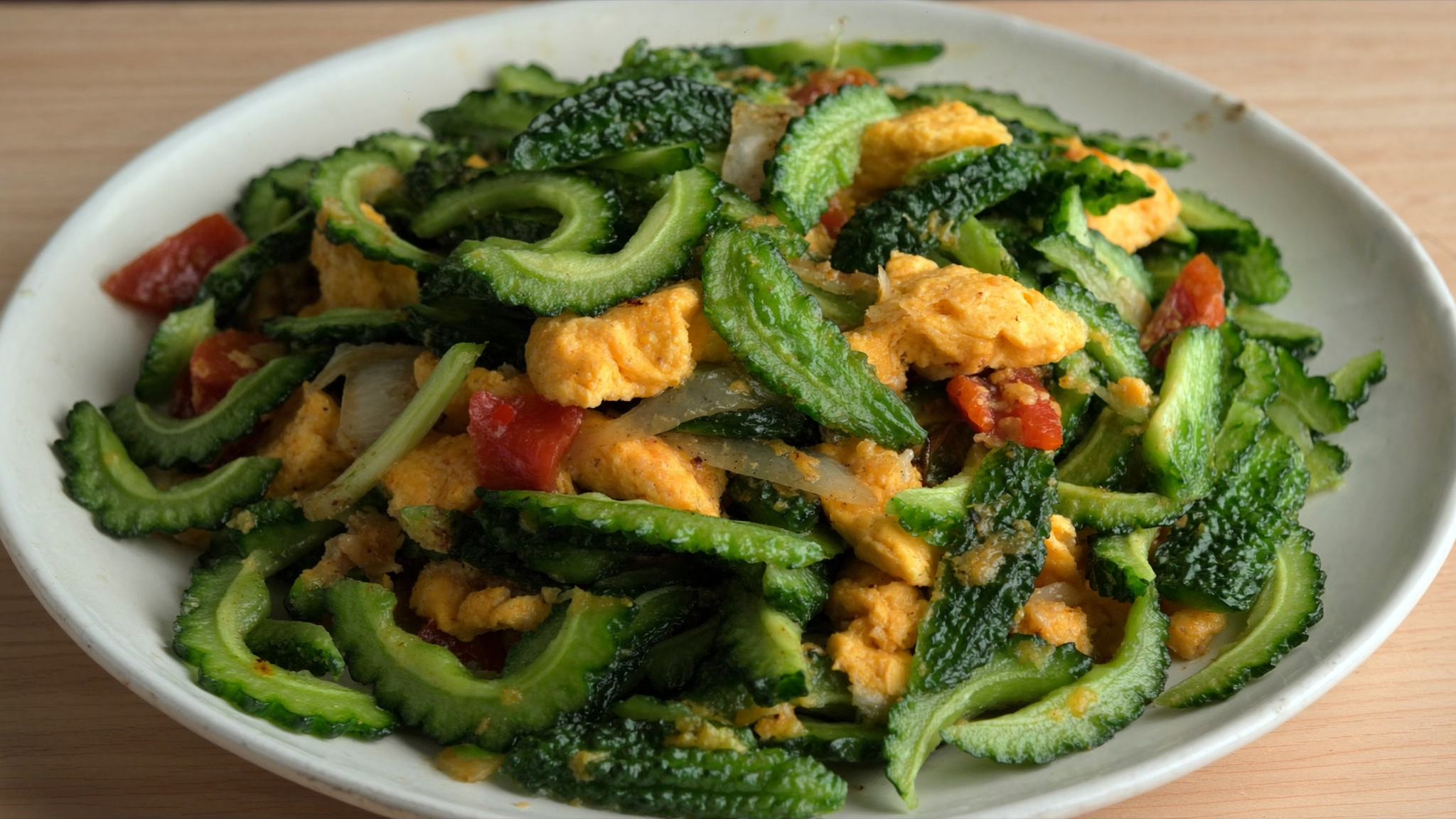
This bitter melon recipe makes a fast, savory skillet of bright-green bitter melon slices with fully cooked scrambled eggs, onion, garlic and tomato. The vegetable’s bitter edge is the point, but thin slices, a short salt rinse and gentle eggs make the dish approachable for cooks who have never used ampalaya or bitter gourd before.
For four modest servings, start with about one pound of green bitter melon, three eggs, half an onion, garlic, one tomato and two tablespoons of oil. The core technique is to cook the eggs first, soften the vegetable separately and fold everything together at the end. The result is a light sauté, not a soup, curry or creamy casserole.
You’ll find exact prep steps, options for adjusting bitterness, storage and food safety here. This recipe is original editorial work rather than a claim of physical kitchen testing. Texture and timing may vary with the type and size of bitter melon you purchase.
Why bitter melon and eggs belong together
This bitter melon recipe is a home-style vegetable and egg stir-fry with fresh green bitter melon, yellow scrambled eggs, tomato, onion and garlic. The flavor is intentionally savory with a pleasantly bitter edge rather than sweet or creamy. Soft eggs balance the vegetable’s assertive flavor, and a small amount of tomato adds moisture without turning the skillet into a watery stew. The dish works as a quick lunch with rice or as one of several shared dinner plates.
There are related dishes in Chinese and Filipino home cooking; this version is our own practical, measured adaptation, not a claim to reproduce one family’s exact method. We use the familiar technique of slicing and salting the vegetable, cooking the eggs separately, then folding them back into the sauté at the end. The process is designed for four modest portions and can be adjusted for your preferred level of bitterness.
What bitter melon actually is
Bitter melon, also called bitter gourd, ampalaya, karela or goya, is a knobbly green vegetable fruit used in many Asian cuisines. The University of Florida IFAS Extension describes bitter melon varieties and preparation, including cutting the fruit open and removing seeds. Despite the name, it is not a sweet melon for fruit salads. The edible green flesh brings an unmistakable bitter taste to cooked meals.
Its surface can have deep bumps or ridges, especially on Indian types, while some Chinese types are smoother and longer. Both can be used in a skillet if you slice thinly enough. The bitterness is part of the ingredient’s identity; cooking and salting can mellow it, but no responsible recipe should promise to remove it completely or make the vegetable taste like zucchini.
Chinese and Filipino influences without claiming one original
A combination of bitter melon and eggs appears in Chinese home-style cooking, including the stir-fry technique explained by The Woks of Life. Filipino ginisang ampalaya commonly includes eggs alongside tomato, onion and garlic. Our version borrows the sensible idea of cooking vegetables and eggs separately so both maintain texture, while using a small tomato for a gentle savory base.
The differences matter: this is not an oyster-sauce-heavy stir-fry, a curry, a deep-fried dish or a medicinal preparation. The method is written for an ordinary American grocery-store kitchen with a skillet, three eggs and one pound of green bitter melon. We call it inspired by those traditions rather than insisting it is the only authentic representation of either cuisine.
Ingredients for four servings
Use two medium green bitter melons weighing about one pound total before trimming, three large eggs, one small ripe tomato diced, half of a small yellow onion sliced thinly, two garlic cloves minced, two tablespoons of neutral cooking oil, one teaspoon of low-sodium soy sauce if desired, a quarter teaspoon of freshly ground black pepper and two tablespoons of water. For the bitterness-mellowing step, use half a teaspoon of salt, which is rinsed off rather than added directly to the finished skillet.
Keep salt available for the final taste adjustment, but begin conservatively because some may remain after rinsing and soy sauce contains sodium. The recipe is dairy-free but contains eggs; if you use soy sauce, it also contains soy and often wheat unless you choose a certified wheat-free product. This ingredient list deliberately avoids oyster sauce, shrimp paste or pork, making the finished vegetable-and-egg combination easier to understand.
How to shop for fresh bitter melon
Look in Asian grocery stores, farmers markets or supermarket produce sections with a broad selection of international vegetables. Choose fruit that feels firm and relatively heavy for its size, with a bright to medium-green surface and no slimy or deeply bruised patches. Some bumps and irregular shapes are completely normal. A very yellow or orange fruit is more mature and will behave differently from the fresh green bitter melon used in this recipe.
If you can buy a smooth Chinese-type melon, its shallow ridges make thin half-moon slices visually easy to recognize. A sharply ridged Indian type can also work, though the slices look different and may need slightly more attention while trimming. Avoid cutting an unfamiliar ripe fruit and assuming its red seed coverings belong in the stir-fry; we remove the seed cavity entirely.
How to clean and halve it safely
Rinse the entire bitter melon under running water and rub the bumpy surface gently to remove visible soil. Dry it on a clean cutting board, cut off both ends and split it lengthwise. Use a spoon to scrape out the inner seeds and pale pith. The cut halves should show a green ridged exterior and a relatively thin edible wall, without large loose seeds remaining inside.
A stable cutting board is important because the surface can roll as you work. If a fruit has a very thick pith layer, remove it without gouging away most of the green flesh. The dark-green outer peel is not treated like a citrus rind; it remains part of the sliced vegetable. Keep the vegetable and any raw egg handling areas separate until they have been washed.
Slice thin half-moons, not large chunks
Place each hollowed half cut-side down and slice into arcs around one-eighth inch thick, or approximately three millimeters. Thin half-moons cook rapidly while showing the distinctive ridged green outline of bitter melon. Large pieces may remain unpleasantly firm or intensely bitter by the time the eggs finish. Very tiny shreds, on the other hand, disappear among the onions and make the dish harder to recognize.
Aim for similar slice thickness rather than perfect visual uniformity. If one part of the fruit is much wider than another, cut it carefully so the inner curve stays visible. Keep the pieces relatively dry before they reach the skillet. You should have roughly three cups of sliced melon, depending on how much pith and seed cavity were removed.
Should you salt the bitter melon first?
For a mild-moderate result, toss the sliced melon with about half a teaspoon of salt and let it stand in a colander for ten minutes. The salt encourages some liquid to leave the vegetable and can reduce perceived sharpness. Rinse thoroughly under cool running water afterward and squeeze or pat the slices dry gently with a clean towel. This is a practical option, not a guarantee that all bitter flavor will disappear.
If you already enjoy a pronounced bitter taste, shorten or skip the treatment. For a first attempt, use it to make the vegetable easier to approach without hiding its identity. Do not leave the salted slices sitting in an unwashed sink or combine their drained liquid with the cooked dish. Much of the preparation time is hands-off, so you can dice the tomato and prepare the eggs while the slices rest.
The alternative thirty-second blanch
Some Chinese home-style preparations blanch thin bitter melon slices briefly before stir-frying. A thirty-second dip in boiling water followed by draining is a possible alternative to salting when you want the vegetable tenderer and a little less assertive. The technique is also described in recipes published by established Chinese cooking sources. The important part is to drain thoroughly: water carried into hot oil will make the skillet steam and splash.
For this specific recipe we use the salt-and-rinse method, so there is no need to both salt heavily and blanch for several minutes. Doing both aggressively can soften the melon too far and fade its color. Choose one technique, note how bitter you find the result, and adjust the next time rather than changing five variables at once.
Prepare the aromatics before heating the skillet
Slice half a yellow onion into thin strips, mince two cloves of garlic and dice one small tomato into pieces around half an inch. Keep the ingredients in separate small bowls or piles on a clean board. Stir-fries move quickly; there is not much time to chop garlic after the pan begins to heat. Tomato supplies a little savory liquid, while onion and garlic round out the bitter flavor.
Using too much tomato creates an orange sauce that obscures the bitter melon. We want green arcs and yellow egg curds to remain visible when the dish reaches the table. The vegetables can be prepared during the ten-minute salt rest. If you plan to serve over rice, have the rice cooking in advance so the stir-fry is not left cooling while everyone waits.
Beat the eggs and season lightly
Crack three refrigerated eggs into a clean bowl, add a small pinch of black pepper and beat until the whites and yolks are mostly combined. Do not add milk or cheese: they are unnecessary and would change the texture and allergens. The eggs should form tender curds that can be folded through the green vegetables, not a thick omelet sheet or a runny sauce.
Keep the beaten eggs cold until just before cooking. Handle the shells and raw mixture hygienically, and do not reuse the whisk or bowl for cooked food without washing. The FDA’s egg safety guidance advises that scrambled eggs should not remain runny, so the final skillet must be cooked through even if the curds are still moist and soft.
Cook eggs first, then set them aside
Heat one tablespoon of neutral oil in a large nonstick skillet over medium heat. Pour in the beaten eggs and let them begin to set, then push the solidifying edges toward the middle with a clean spatula. Continue just until no liquid egg remains and the curds are fully set but not browned hard. Transfer them to a clean plate and keep them ready for the final fold.
This separate first step keeps the eggs from coating raw bitter melon in an uneven film. It also allows the vegetables to receive enough direct heat to become tender. If you leave the eggs in the pan while the melon cooks, they can become dry or rubbery. Do not use the same plate that held uncooked eggs unless it has been washed.
Sauté onion and garlic without scorching
Return the skillet to medium heat and add the remaining tablespoon of oil. Stir in the sliced onion and cook for about two minutes until the edges begin to soften. Add minced garlic and stir for thirty seconds, watching closely because garlic can brown and become bitter very quickly. The aim is a fragrant base, not dark crunchy garlic chips.
The vegetables are already naturally bitter, so scorched garlic would reinforce the sharpest flavor in the wrong way. If the pan looks dry, lower the heat and add a teaspoon of water rather than pouring in much more oil. Keep the onion slightly visible in the finished dish; it adds contrast and sweetness without making the stir-fry into an onion-heavy sauté.
Stir-fry the green slices until just tender
Add the drained bitter melon half-moons to the skillet and spread them in a relatively even layer. Toss for two to three minutes over medium-high heat. The edges should become glossy and a deeper jade green while the centers soften slightly. If the pan is overloaded, the vegetable will steam in its own moisture; a twelve-inch skillet is more predictable than a small saucepan.
Avoid stirring violently enough to break the curved slices into tiny pieces. The distinctive ridged arcs should remain recognizable. If you used an especially large or thick melon, the cooking time may be longer. Taste one piece carefully after it cools briefly; it should not be raw and rigid, but it does not need to collapse like long-cooked spinach.
Add tomato and a spoonful of water
Add the small diced tomato and two tablespoons of water to the skillet. Stir for one or two minutes until the tomato starts to release juice and the bitter melon is just tender. The purpose of the liquid is to prevent scorching and help the flavors mingle, not to create a soup. The slices should still hold their green outlines, with small red tomato pieces visible between them.
If your melon has released a great deal of moisture, omit some of the added water. If the skillet is very dry and the vegetable is not tender, add another tablespoon and cover briefly. A short covered phase can help without diluting the dish. Do not pour in a cup of broth: the final result should be a light sauté that can sit neatly beside rice.
Soy sauce is optional, not a requirement
Stir in one teaspoon of low-sodium soy sauce if you want a gentle savory undertone. The amount is deliberately small so the color of the dish stays bright and the vegetable remains the lead flavor. If avoiding soy or gluten, omit the sauce and taste before adding a pinch of salt; this version still works with garlic, onion and tomato alone.
Do not combine soy sauce with large amounts of additional salt before tasting. The salted-melon preparation may leave a little residual seasoning despite the rinse. We also avoid oyster sauce or fish sauce in the base formula, because they would change the allergen and vegetarian profile. Such additions belong to separately tested variations, not hidden ingredients in an otherwise simple recipe.
Return the eggs at the very end
Slide the fully cooked egg curds back into the skillet when the bitter melon is almost tender. Use a spatula to fold the eggs through the vegetable for about one minute, distributing yellow pieces among the green crescents without chopping everything into crumbs. The eggs are already cooked; they only need to heat through and pick up the garlic-tomato seasoning.
Check that there is no raw or liquid egg in the pan before serving. The small tomato should remain in visible pieces rather than becoming thick red sauce. Taste a bite of melon with egg and adjust the final seasoning conservatively. A good result has bright green slices, tender yellow curds, pale onion and small tomato pieces in a lightly glossy skillet, not a creamy casserole.
How bitter should the finished dish taste?
Bitter melon is supposed to taste bitter. Some people love that assertive quality immediately, while others prefer it balanced by eggs and aromatics. A few minutes of salting or blanching may reduce the edge, but the vegetable is still recognizable. If your first batch seems too strong, serve a small portion with plain rice instead of adding lots of sugar or syrup to mask the flavor.
Different cultivars and ripeness levels can taste very different, and even fruits from the same shop may vary. It helps to use the same approximate slice thickness when trying a new batch. Do not treat bitterness as evidence that the dish is spoiled; instead, judge freshness separately by the fruit’s firmness, aroma and visible condition before cooking.
How to prevent watery eggs and melon
A watery stir-fry is often caused by adding slices straight from the salt rinse without drying them or adding too much liquid with the tomato. Pat the melon dry before it reaches hot oil. Cook in a skillet that gives the slices enough room for moisture to evaporate, and add only the two tablespoons of water in the recipe unless the pan genuinely needs more.
Cooking eggs separately is another useful safeguard. When mixed with wet vegetables at the beginning, eggs can form a thin coating and release liquid as they overcook. The finished dish should be moist but not swimming in a puddle. If excess liquid collects at the end, remove the eggs briefly, reduce the moisture for a minute, then fold everything together again.
What to do when the vegetable remains too firm
Large or thick half-moons need more time than the suggested brief sauté. If you taste a cooled piece and the flesh feels rigid, add a tablespoon of water, cover the pan for one minute and check again. Repeat carefully rather than turning the heat to maximum and scorching garlic or onions. The vegetable should become tender enough to bite comfortably while retaining some character.
Do not keep cooking after the slices turn mushy and dull. The dish is best when the bitter melon remains visibly green. A very mature fruit may also be more fibrous than a young green one; longer cooking does not always fix poor produce selection. Choose green firm melons and make thinner slices for a more consistent next batch.
Serve with rice or other simple sides
Plain steamed rice is a natural partner because it absorbs any savory juices and balances the bitter character. For four portions, the stir-fry can be served as a vegetable-and-egg main with rice, or divided into smaller side servings for a larger meal. Avoid burying the green slices under a thick sauce; their appearance is part of what makes the dish distinctive.
Readers who enjoy vegetable skillet dishes can explore our garlic-ginger Chinese long beans for a different green vegetable preparation. The bean dish should be cooked separately; it is not a replacement for bitter melon in the measured recipe. Serving the two together makes sense for a shared vegetable-forward meal without claiming they taste the same.
Other vegetable-forward meals to try
For a breakfast-style dish with grains and vegetables, our vegetable poha with peas and peanuts offers a different approach to a quick savory meal. Poha uses flattened rice and Indian seasoning, so it is not a direct substitute for this bitter melon stir-fry. Its appeal is variety: you can learn a new vegetable texture and a new grain preparation without mixing recipes.
Another option is our oven-roasted eggplant with tomato and chickpeas. Roasting produces a soft, rich vegetable flavor quite unlike bitter melon’s assertive bite. Linking related vegetable dishes helps readers choose according to taste rather than pretending that all green or squash-like vegetables can be swapped one-for-one.
Can you make the dish without eggs?
You can prepare the onion, garlic, tomato and bitter melon portion without eggs, then finish with a little more oil and seasoning. That would be a different vegetable-only variation with fewer protein-rich ingredients, so do not expect the same balance or yield. For a substantial vegan meal, serve the sauté with rice and another protein source prepared separately, observing its own cooking instructions.
Do not silently substitute a liquid egg replacement in the exact directions unless its label provides suitable cooking guidance. Plant-based egg substitutes behave differently in hot oil and may contain allergens. The article’s measured formula uses three ordinary eggs; any alternative deserves a separate recipe test and an updated recipe card rather than simply changing one ingredient line.
Allergens and ingredient choices
The main allergen in the base formula is egg. Optional soy sauce introduces soy and may introduce wheat, so check the bottle carefully. Guests with allergies need clean utensils, clear ingredient disclosure and avoidance of cross-contact. No dairy, pork or seafood is specified, but that does not mean any home kitchen or packaged ingredient is guaranteed to be free of contamination.
There are no medicinal claims attached to this recipe. Bitter melon is used as an edible ingredient, not a diabetes treatment, supplement or replacement for medical care. Readers taking medication or managing health conditions should seek personalized advice from a qualified clinician rather than changing their treatment because of a recipe article.
How to keep the egg food-safe
Keep eggs refrigerated until preparing the dish, wash hands and surfaces after handling raw egg, and avoid tasting the uncooked mixture. The U.S. Food and Drug Administration specifically advises that scrambled eggs should not be runny. Cook the eggs until firm throughout before moving them to a clean plate, then return them only for a brief final fold with the hot vegetables.
Do not assume a tender-looking egg curd is safe if liquid egg remains in the center. If serving someone at higher risk of foodborne illness, use extra care with thoroughly cooked eggs and prompt refrigeration. Never place the finished stir-fry on a plate or board that was used to hold raw egg without cleaning it first.
Meal prep and refrigerator storage
The stir-fry tastes brightest just after cooking, when the melon is still green and the eggs are tender. For meal prep, cool the finished food promptly and refrigerate in shallow sealed containers rather than leaving a deep pan sitting out. Use refrigerated leftovers within three to four days under typical food safety guidance, or sooner if their condition is uncertain. Reheat until thoroughly hot before eating.
Egg curds can become firmer after reheating, and bitter melon may soften further. A small splash of water helps prevent the skillet from scorching during reheating, but avoid simmering everything into a sauce. Do not leave prepared food at room temperature for hours while assembling multiple meals. If the dish smells unusual or has been stored improperly, discard it rather than attempting to fix it by cooking again.
Can this stir-fry be frozen?
Freezing is possible after prompt cooling, but the vegetable becomes softer and the egg curds may lose their pleasant texture once thawed. For best flavor and appearance, cook a fresh batch rather than making a very large frozen supply. The ingredients are quick to prepare, particularly if the onion and garlic have already been chopped and refrigerated safely.
If freezing is necessary, pack small portions in freezer-safe containers, label the date and thaw in the refrigerator before reheating. Avoid repeated freeze-thaw cycles. Because the recipe contains eggs, check that the center becomes fully hot when reheating. Frozen quality can vary considerably; this is a practical storage suggestion, not the result of a tested laboratory shelf-life study.
Common mistakes in a bitter melon recipe
The most common mistake is leaving seeds and thick pith inside the melon, which creates an unpleasant bite and inconsistent cooking. Another is cutting thick pieces that remain rigid while the other ingredients are ready. If you salt the vegetable, failing to rinse can make the finished dish far too salty. Failing to dry afterward creates steam and splatter instead of a light sauté.
A fourth mistake is overcooking the eggs in the same pan from the beginning; they become dry while the melon takes its time. Finally, adding multiple sauces and large quantities of sugar conceals the vegetable rather than balancing it. The reliable approach is straightforward: prepare thin green arcs, cook the eggs safely, sauté aromatics, finish the melon, then fold the eggs in.
How to scale the recipe for two or six
For two modest portions use approximately half a pound of bitter melon, two eggs if you want generous curds, a small portion of tomato and onion, one garlic clove and about a tablespoon of oil. For six servings use roughly one and a half pounds of melon, five eggs, a larger tomato and about three tablespoons of oil. These are starting points, not exact laboratory ratios.
Avoid crowding a single small skillet when doubling or tripling the recipe. Cook the melon in batches to preserve a light sauté rather than trapping large amounts of steam, then combine the vegetables with the cooked eggs at the end. If the ingredient proportions change, taste before adding more soy sauce or salt. The recipe’s timing is a guide for a normal four-serving batch.
Short method recap
Cut the bitter melon lengthwise and remove the seeds and pith, then slice into thin green half-moons. Toss with a little salt for ten minutes if you want a milder result, rinse thoroughly and pat dry. Beat three eggs and scramble until fully set, keeping them on a clean plate. Soften onion and garlic in the skillet, add the bitter melon and cook until bright and nearly tender.
Add diced tomato and a little water, season gently, then fold in the cooked egg curds just before serving. Keep the vegetable’s distinctive green shape visible and do not drown the pan in sauce. A bowl of steamed rice completes a practical meal. Do not claim this recipe has been physically prepared or photographed by the editorial team unless such a test occurs separately.
Research sources and editorial disclosure
The vegetable identification and seed-removal guidance were checked against the University of Florida IFAS Extension; related culinary methods were compared with Foodwise’s ginisang ampalaya recipe and Chinese home-style techniques. Egg handling follows the FDA food-safety resource. We credit these sources for context and principles, not as owners of our exact measurements.
This formulation is original editorial work and has not been independently kitchen-tested, tasted or photographed in a real kitchen by MySavorista. Preparation times, serving sizes and texture descriptions are informed estimates that should be validated before anyone claims firsthand results. Photos created with generative tools must match actual ingredients and be treated as illustrative, never as proof of a recipe test.
Frequently asked questions about bitter melon
What is the easiest bitter melon recipe for beginners?
A thin-sliced bitter melon and egg stir-fry is a manageable start. Salt and rinse the melon briefly if desired, cook eggs separately until firm, then combine them with garlic, onion and tomato in a skillet.
Do you need to peel bitter melon?
Usually not for green edible types. Rinse the bumpy outer surface, cut it lengthwise, scoop out seeds and pith, then slice the remaining green flesh thinly.
How do you reduce bitter melon bitterness?
A ten-minute salt treatment followed by a thorough rinse can mellow the flavor. Short blanching is another option, but neither method guarantees that the vegetable will stop tasting bitter.
Can you eat the seeds?
For this recipe remove the seed cavity and pith, as recommended by common preparation guides. Do not include mature seed coverings or assume they belong in the cooked stir-fry.
How long does bitter melon take to cook?
Thin half-moons can become tender after several minutes of sautéing, with a short covered stage if needed. Large or mature pieces may require more time; taste a cooled sample before ending the cooking.
Can I use frozen bitter melon?
You can try it, but thaw and drain it carefully before stir-frying. Frozen slices can be softer and may release extra water, so the finished texture will differ from fresh green fruit.
Is bitter melon the same as zucchini?
No. Bitter melon has a distinctive knobbly surface, hollow seed cavity and assertively bitter taste. Zucchini would make a different vegetable-and-egg dish even if the skillet technique is similar.
Are the eggs fully cooked in this recipe?
Yes. Eggs are scrambled separately until no liquid remains, then returned briefly to the pan. FDA guidance recommends scrambled eggs be firm and not runny.
Does the recipe need soy sauce?
No. A teaspoon is an optional seasoning. Omit it if avoiding soy or wheat and adjust lightly with salt after tasting; the vegetable and egg identity remains the same.
Is this Filipino ginisang ampalaya?
It is an original, Filipino-inspired and Chinese-influenced home-style preparation. Similar dishes exist across cuisines, but this article does not claim to present any family’s definitive authentic version.
What should I serve with bitter melon and eggs?
Plain steamed rice is a good match because it balances the vegetable’s bitter flavor. The dish also works as one element of a shared meal with other separately prepared vegetables.
How should leftovers be stored?
Cool promptly, refrigerate in shallow sealed containers and reheat until thoroughly hot. Egg texture may firm and the melon may soften; discard leftovers that were stored improperly.
Print
Bitter Melon Recipe: Garlic and Egg Stir-Fry
- Prep Time: 20 minutes, including optional 10-minute salting rest
- Cook Time: 12 minutes
- Total Time: 32 minutes
- Yield: 4 modest portions 1x
- Category: Global Flavors & Street Food
- Method: Skillet stir-fry
- Cuisine: Filipino-inspired and Chinese-influenced home cooking
Description
A beginner-friendly bitter melon and egg stir-fry with bright green ampalaya crescents, garlic, onion, tomato and completely cooked scrambled eggs.
Ingredients
2 medium green bitter melons, about 1 lb total
3 large eggs, kept refrigerated until cooking
1 small ripe tomato, diced
1/2 small yellow onion, thinly sliced
2 garlic cloves, minced
2 tbsp neutral cooking oil, divided
1 tsp low-sodium soy sauce, optional
1/4 tsp ground black pepper
2 tbsp water, plus a little more only if necessary
1/2 tsp salt for optional melon prep, rinsed off; additional pinch only after tasting
Instructions
1. Wash bitter melon, trim ends, slice lengthwise and scrape out seeds and pale pith. Cut the green edible flesh into thin 1/8-inch half-moons.
2. For milder bitterness, toss the slices with 1/2 tsp salt for 10 minutes, rinse thoroughly and pat completely dry. Skip or shorten this if you enjoy bitterness.
3. Beat three eggs in a clean bowl with a little pepper. Heat 1 tbsp oil in a large skillet over medium heat and scramble the eggs until firm throughout with no runny liquid; transfer to a clean plate.
4. Add remaining tablespoon of oil to the skillet. Soften sliced onion about 2 minutes; add garlic and stir 30 seconds without scorching.
5. Add bitter melon and stir-fry for 2–3 minutes until green and partially tender. Add tomato and 2 tbsp water, and cook for 1–2 more minutes. If needed, cover briefly and add only small amounts of liquid until melon is pleasantly tender.
6. Stir in 1 tsp low-sodium soy sauce if using. Return cooked eggs and fold gently for about 1 minute to heat throughout without mashing the green crescents.
7. Confirm eggs are fully cooked and no liquid egg remains. Taste, add only a small pinch of salt if necessary and serve hot with steamed rice. Cool leftovers promptly and refrigerate.
Notes
This editorial recipe has not been independently kitchen-tested. Bitter melon should retain a recognizable bitter flavor; salting and rinsing may mellow but not eliminate it. Contains eggs; optional soy sauce may contain soy and wheat. Cook scrambled eggs until fully set and not runny according to FDA guidance. The recipe is food, not medical treatment; no diabetes or therapeutic claims are made. Images generated with AI are illustrative and must faithfully show the described dish.
Nutrition
- Serving Size: About 1 cup of vegetable-and-egg stir-fry
Keywords: bitter melon recipe, bitter gourd, ampalaya, bitter melon with eggs, ginisang ampalaya inspired