
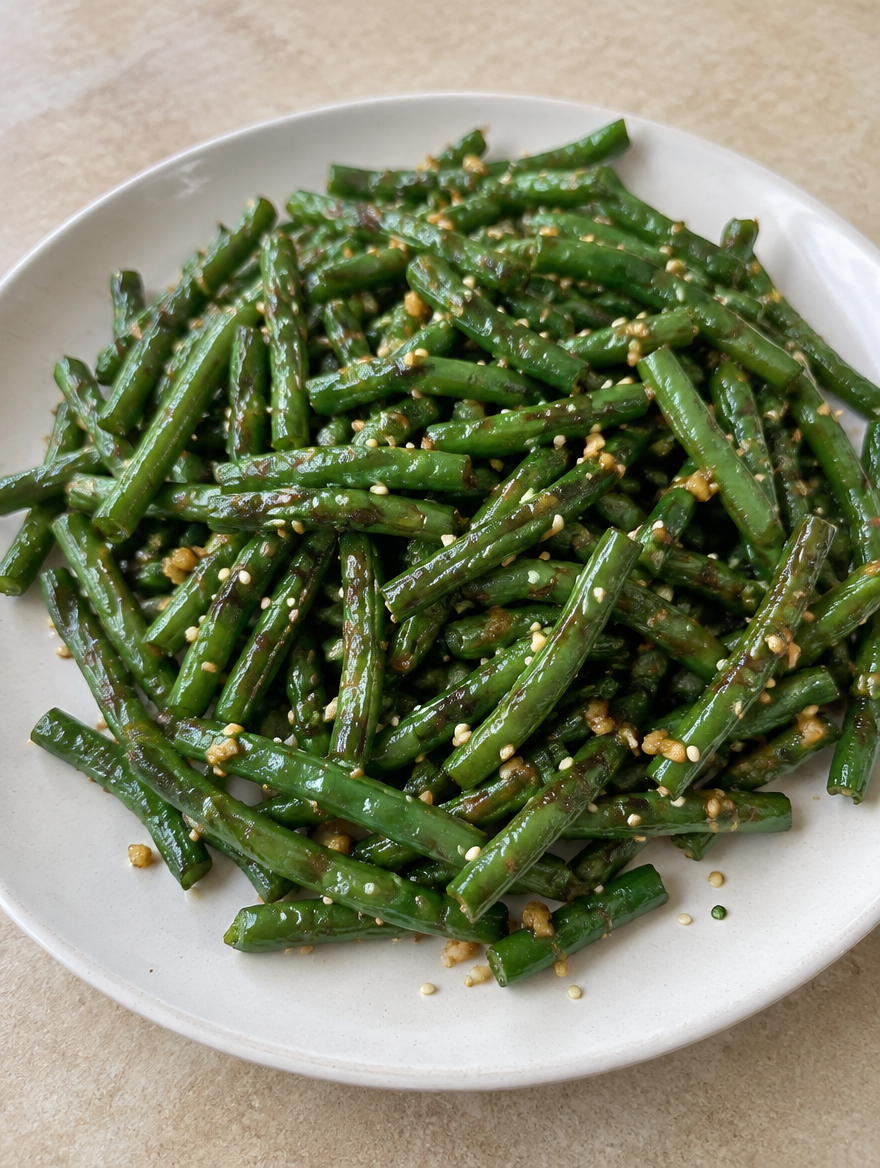
Chinese long beans with garlic and ginger are a simple, flavorful way to cook the extra-long green pods you may have noticed bundled in Asian grocery stores. Also called yardlong beans, these slender beans have a pleasantly firm texture and a distinctive vegetable flavor. They look similar to familiar American green beans at first glance, but they are often far longer and can handle a brief stir-fry without falling apart.
In this recipe, the beans are trimmed and cut into short sections, blanched briefly, then tossed in a hot skillet with garlic, ginger, a modest amount of soy sauce, and a little toasted sesame oil. The result should be tender enough to eat comfortably, with a little bite remaining, but not tough or raw at the center. A few toasted sesame seeds add a finishing accent without turning the dish into a heavy sauce.
Quick answer: start with 1 pound (454 g) fresh Chinese yardlong beans. Wash, trim, and cut them into 2-inch pieces. Blanch in boiling water for about 4 minutes, drain, and dry. Sear with 2 tablespoons neutral oil for 3–4 minutes, lower the heat and briefly cook 3 minced garlic cloves and 1 tablespoon grated fresh ginger. Add a mixture of 1 1/2 tablespoons reduced-sodium soy sauce, 1 tablespoon water, 1 teaspoon rice vinegar, and 1/2 teaspoon granulated sugar; let it coat the beans for 1–2 minutes. Finish off heat with 1 teaspoon toasted sesame oil and 1 teaspoon toasted sesame seeds. Serves four as a vegetable side.
This is an original, AI-assisted editorial recipe formulation and has not been independently kitchen-tested. Actual bean maturity, skillet heat, and water content may change timing and texture. Any image used with the article is AI-generated illustration, not documentation of a physical cooking session.
What Are Chinese Long Beans?
Chinese long beans are elongated green pods from the yardlong-bean or asparagus-bean group. The pods are thin and flexible, often longer than ordinary snap beans, and can be harvested before the seeds inside mature fully. Grocery-store bundles may be labeled Chinese long beans, yardlong beans, asparagus beans, or snake beans. Different markets and producers can use slightly different names.
They are not identical to standard American green beans. The long-bean flavor is somewhat different, and the pods may feel firmer when fresh. They are also not the same thing as dried beans or dried black-eyed peas, even though the plants are related. This recipe requires fresh, slender pods, not dry seeds that need soaking.
The Hmong American Farmers Association’s Chinese long-bean guide describes selection, trimming and cooking uses, including simple garlic-based stir-fries. It is a useful reference if yardlong beans are unfamiliar in your kitchen. The method presented here is an original, garlic-and-ginger variation with a small measured soy-sesame finish.
Ingredients for Four Side Portions
For a generous vegetable side dish, gather:
- 1 pound (454 g) fresh Chinese long beans, washed, trimmed and cut into 2-inch lengths;
- 2 tablespoons (30 ml) neutral cooking oil, such as canola, suitable for skillet sautéing;
- 3 garlic cloves, peeled and finely minced;
- 1 tablespoon (about 6 g) freshly grated ginger;
- 1 1/2 tablespoons (22.5 ml) reduced-sodium soy sauce;
- 1 tablespoon (15 ml) water, for the finishing glaze;
- 1 teaspoon (5 ml) unseasoned rice vinegar;
- 1/2 teaspoon granulated sugar, to balance the soy and vinegar;
- 1 teaspoon (5 ml) toasted sesame oil, to finish off the heat;
- 1 teaspoon toasted sesame seeds, for serving.
You will also need a pot of potable boiling water for the initial blanching stage. That blanching water is not part of the sauce and does not need to be measured as a consumed ingredient. Avoid adding salt automatically before tasting: even reduced-sodium soy sauce contains sodium, and brands can vary.
Allergen note: most conventional soy sauces contain soy and wheat, and this dish also includes sesame. Check the actual bottle and packaged sesame ingredients. A tamari labeled gluten-free is not automatically a safe substitution for every diner: verify its certification, other components and kitchen cross-contact. The original ingredient list is not presented as gluten-free or sesame-free.
Finding Fresh Yardlong Beans in U.S. Markets
Try an Asian grocery store, farmers market or a supermarket with a broad produce selection. Long beans are sometimes sold in long tied bundles because the pods naturally grow well beyond the length of a typical green bean. Choose pods that feel firm and flexible, with a fairly bright color and no significant soft, slimy or moldy areas.
Some pods are a deeper green and some may be lighter; exact color can vary with variety and age. Avoid very mature beans with strongly swollen seed bulges if you want the tender-crisp texture described here. Thicker old pods can turn stringy and take longer to soften.
Store the fresh pods according to the seller’s packaging instructions, normally chilled rather than on a sunny counter. Rinse them just before cooking. Do not leave washed wet beans for hours in a sealed bag: excess moisture makes quality harder to preserve and can increase splattering when the beans hit oil.
Do You Have to Blanch Chinese Long Beans First?
You can encounter stir-fried long-bean recipes that go straight into a wok, and others that briefly blanch them before the high-heat stage. This specific method uses a four-minute blanch so the bean pieces begin softening evenly before the garlic enters the skillet. It also helps keep the garlic from burning while you wait for hard beans to cook through.
The blanch is not a promise that every pod will have the same tenderness after exactly four minutes. Large, mature or unusually dense beans may need more time. Test a small piece after blanching: it should begin to bend and become less raw-firm, but should still withstand tossing in a skillet without disintegrating.
After blanching, drain and dry the pieces well. Wet beans thrown into hot oil can splatter. Drying also gives the beans a better chance of lightly browning or blistering during the short skillet phase instead of merely steaming under a layer of water.
If you are using ordinary green beans because the long variety is unavailable, consider that an adaptation with different texture and cooking times, not a perfect one-for-one reproduction of the original recipe.
Essential Equipment and Timing
Use a cutting board, knife, medium pot, colander, clean kitchen towel or paper towels, large wide skillet or wok, a wooden spatula and a small bowl for mixing the sauce. A 12-inch skillet is ideal for a single pound of trimmed beans; a much smaller pan will need batches to prevent crowding.
Allow about 15 minutes to rinse, trim, chop and organize, then roughly 15 minutes of active cooking including blanching, heating the skillet, sautéing and coating the beans. This is an estimated 30-minute recipe rather than a guarantee for all equipment and vegetable sizes. If your pot takes longer to heat or your beans need additional cooking, follow the texture and safety cues rather than forcing the clock.
Keep the garlic and ginger close to the stove but away from splattering oil. Minced garlic can turn bitter if exposed to very high heat for too long, so it will be added after the beans have started searing and the burner has been reduced.
How to Make Chinese Long Beans With Garlic and Ginger
1. Wash, Trim and Cut the Beans
Rinse 1 pound Chinese long beans under cool running potable water. Pat them dry enough to handle, then trim away the tough stem tips and any damaged sections. Cut the remaining pods into pieces approximately 2 inches long. The thin, fairly uniform pieces make it easier to toss them evenly in the skillet.
Do not use beans that are slimy, moldy or badly deteriorated. If some pods are much thicker and older than the rest, check them separately for tenderness later because they may take longer to cook.
2. Blanch Until the Beans Begin to Soften
Bring a pot of fresh water to a steady boil. Add the trimmed long beans and cook for approximately 4 minutes, adjusting as necessary until they start becoming tender but still hold their structure. Drain in a colander, then spread the beans out to let excess steam escape.
For better skillet browning and less oil splatter, dry the drained pieces gently using clean paper towels or a clean cloth. Do not pour wet beans directly into a hot oiled pan.
3. Mix the Light Soy Glaze
In a small bowl, combine 1 1/2 tablespoons reduced-sodium soy sauce, 1 tablespoon water, 1 teaspoon rice vinegar, and 1/2 teaspoon sugar. Stir until the sugar has dissolved. Keep the bowl beside the stove for the quick final coating stage.
The ginger does not go into this little sauce bowl in the core method; it will cook in the pan with the garlic. This lets its aroma develop briefly rather than disappearing into a pool of liquid.
4. Prepare the Garlic and Fresh Ginger
Peel and mince three garlic cloves into small pieces, and grate or finely mince one tablespoon fresh ginger. Keep both ready on a separate clean plate. Do not add them to smoking-hot oil at the beginning, because finely minced aromatics can scorch before the beans are cooked.
This recipe deliberately avoids large slices of garlic that could stay raw or overpower individual bites. You should see small golden garlic flecks clinging to the beans after cooking.
5. Sear the Long Beans in the Skillet
Heat a wide skillet or wok over medium-high heat and add 2 tablespoons neutral oil. When the oil is hot but not smoking, add the dried, blanched beans and spread them across the pan. Cook for about 3–4 minutes, turning or tossing periodically, until the beans show a little light browning and are more tender.
Keep moving the beans enough to avoid scorched spots, but allow occasional contact with the hot metal to create a few browned marks. If the pan is crowded and the beans release water, cook in two batches or allow the moisture to evaporate rather than turning the burner to an unsafe temperature.
6. Add Garlic and Ginger Without Burning Them
Reduce the heat to medium. Make a small clear area in the skillet, add the minced garlic and grated ginger and stir for about 30–45 seconds, until fragrant. Fold them through the beans. The garlic should smell mellow and lively, not burned or acrid.
If your pan is unusually hot, move it briefly off the burner before adding the aromatics. Fresh garlic can turn dark surprisingly quickly, and blackened bits are not the desired result.
7. Coat the Beans With a Thin Glaze
Pour in the prepared soy sauce, water, rice vinegar and sugar mixture. Toss to distribute and cook for approximately 1–2 minutes, allowing the liquid to bubble and lightly coat the beans without pooling heavily in the bottom of the skillet. The beans should be hot and tender with a little bite, not crunchy and raw.
If they remain too firm, add just a small splash of potable water, cover briefly to steam and continue cooking until the actual texture is appropriate. Do not claim that the original clock guarantees safe or pleasant cooking for every variety of bean.
8. Finish With Sesame and Serve
Turn off the heat. Drizzle in 1 teaspoon toasted sesame oil, toss once, then scatter 1 teaspoon toasted sesame seeds. Transfer to a clean serving plate and serve promptly. The sesame oil is an aromatic finishing ingredient, not the main cooking fat and should not be heated aggressively for several more minutes.
Taste before adding any salt. The soy sauce may already provide enough seasoning. The finished side should be shiny and lightly glazed, not swimming in dark sauce.
How Cooked Long Beans Should Look and Feel
The beans should still be long, slim sections with recognizable pod texture, not a pile of mush. A few blistered or browned areas are normal after pan-searing. They should flex and bite through comfortably, with no tough, unpleasant raw center. The garlic should be small and fragrant, while the ginger should complement rather than dominate the vegetable flavor.
A successful sauce is thin and clingy. If there is a puddle of dark liquid under the beans, either the water did not reduce long enough or too much extra sauce was added. This recipe uses only a modest quantity of soy sauce and water, so a heavy syrup-like coating is not expected.
If the beans look extremely dry and charred before the center cooks, lower the heat, add a very small splash of water and cover briefly. The goal is a cooked vegetable with pleasant texture, not an intentionally blackened or undercooked one.
Common Problems and Easy Fixes
Beans that are too tough. They may be older, thicker, or insufficiently cooked. Trim carefully, blanch until they begin softening, and test a piece before finishing. Increase the gentle steaming step if needed; don’t try to solve undercooked beans with extra raw garlic.
Burned garlic. Garlic goes in after the sear, not at the beginning of the high-heat stage. Reduce the heat first and keep stirring briefly. If the garlic has turned black and tastes bitter, start with fresh aromatics rather than hiding the flavor under more soy sauce.
Too much liquid. The glaze is not a braising sauce. Let the small quantity of liquid reduce until it barely coats the beans, then turn the heat off. Pouring in additional water without checking tenderness can make the pan soupy.
An overly salty finish. Reduced-sodium soy sauce still contains salt. Measure it, do not add salt by habit, and taste before adjusting. Different brands differ enough that a fixed “extra pinch” would be unreliable.
Wet beans splattering. Drain and pat the blanched pods dry. This is both a practical cooking step and a way to make working around hot oil less hazardous.
Beans crowding a small pan. Use a broad skillet or cook two batches. A mound of overlapping beans releases moisture and steams rather than lightly searing.
Yardlong Beans Versus Regular Green Beans
Yardlong beans are a specific, slender, elongated type of edible bean pod. They are commonly sold in bundles and may have a firmer bite than standard snap beans. They can be cut into short sections for easier serving but are still recognizably different in appearance.
Regular green beans can be a convenient supermarket substitute for a different version of the recipe, yet the blanching, searing time, tenderness, and appearance may change. If you use them, do not describe the result as original yardlong beans. The exact type of vegetable matters to someone searching specifically for a Chinese long-bean recipe.
If you are interested in growing or sourcing fresh beans, the Hmong American Farmers Association’s produce guide provides useful selection and storage guidance. Look for pods that feel fresh and firm rather than ones that have become swollen and tough with age.
Is This Recipe Spicy?
No hot chile is included in the main ingredient list. The dish has a savory garlic-and-ginger flavor with a little acid and sweetness balancing the soy. It is designed as a mild vegetable side, not a fiery Sichuan-style dry-fried bean preparation.
You could add a restrained amount of crushed red pepper as an optional variation, but that would change the flavor and is not necessary. Keep the base method simple for a household with different heat preferences, and serve any extra chile separately.
The sesame oil and seeds also have a recognizable flavor. If anyone cannot eat sesame, don’t simply remove the visible garnish and assume the sauce is safe: the finishing oil also contains sesame, and cross-contact must be considered.
What to Serve With Garlic-Ginger Long Beans
The beans work as a vegetable side beside other independently cooked dishes. For a different stir-fry concept using chicken, our sweet and spicy maple chicken stir-fry
If you like garlic-based weeknight flavors, our crispy honey-garlic chicken thighs with roasted veggies
For a plant-forward meal with an entirely different flavor profile, spicy chickpea tacos with avocado-lime crema
Can You Make Long Beans Ahead?
You can trim and cut the raw beans ahead if you refrigerate them appropriately in a clean container and avoid excess moisture. The garlic and ginger can be prepared close to cooking, and the sauce ingredients can be measured beforehand. This speeds up a weeknight meal without sacrificing the beans’ freshly cooked texture.
The finished dish is best served promptly because lightly blistered beans can soften during storage and reheating. If cooking in advance is unavoidable, chill it rapidly and reheat thoroughly when serving. Toasted sesame seeds may lose crunch, so you can reserve part of the garnish until after reheating.
Do not leave cooked long beans on the stovetop overnight, even if the dish contains soy sauce or vinegar. Neither seasoning makes a cooked vegetable shelf-stable at room temperature.
Safe Refrigeration and Reheating
For leftovers, use shallow clean containers and refrigerate within two hours, at 40°F (4°C) or lower. In very hot conditions above 90°F, follow the stricter one-hour practice for perishable foods. Keep raw meat and seafood away from ready-to-eat vegetables and clean cutting boards after use.
The FoodSafety.gov Four Steps to Food Safety
A general cautious household guideline is to consume properly refrigerated cooked leftovers within 3–4 days, subject to any stricter instructions or risk factors. This recipe has not undergone shelf-life or microbiological testing. Reheat leftovers thoroughly to 165°F (74°C), making sure the center is hot, and consume promptly. Repeated reheating can further soften the vegetables.
If you have doubts about how long the dish was held warm, discard it rather than attempting to rescue it with an extra splash of soy sauce. The sauce is a flavoring, not a preservation technique.
Frequently Asked Questions
Where can I buy Chinese long beans in the USA?
Look in Asian grocery stores, at markets with specialty produce, and occasionally in larger supermarkets. They may be labeled Chinese long beans, yardlong beans, asparagus beans or snake beans. Buy firm slender pods without soft or moldy sections.
Are yardlong beans the same as green beans?
No. Both are edible green pods, but the yardlong type is typically much longer and may have a different bite and flavor. This recipe specifically uses yardlong beans; ordinary snap beans require their own timing checks.
Do I have to cut the long beans?
They are easier to cook evenly and serve when cut into about 2-inch lengths. Very long uncut pods can tangle in a small pan. Keep sections relatively even so they soften at a similar rate.
Should I blanch long beans before stir-frying?
This formulation uses a brief four-minute blanch for more predictable tenderness, followed by drying and a short skillet sear. Other recipes omit that stage, but cooking times may differ.
How do I know long beans are cooked?
They should be hot, flex easily and bite through without a tough, raw center. A little firmness is pleasant, but the exact duration depends on maturity and thickness. Adjust the final steam if the beans remain too hard.
Is this a vegetarian recipe?
The listed core ingredients contain no meat or fish and use soy sauce rather than oyster sauce. Check every packaged ingredient if serving someone who avoids animal-derived additives, as formulations can vary by brand.
Is the recipe gluten-free?
Not automatically. Many ordinary soy sauces contain wheat as well as soy. A gluten-free alternative needs verified labeling, and kitchen cross-contact still matters. This recipe as written is not claimed to be gluten-free.
Can I omit sesame?
Omitting toasted sesame seeds and the sesame oil would make a different flavor profile. If sesame is a medical allergen, check every label and preparation surface; simply removing the visible garnish is not enough.
Why does my garlic burn?
Very hot oil can scorch minced garlic quickly. This recipe cooks the beans first, then lowers the heat before adding garlic and ginger for a brief fragrant stage.
How much soy sauce should I use?
1 1/2 tablespoons reduced-sodium soy sauce for one pound of beans, mixed with a tablespoon of water and a little rice vinegar and sugar. Taste after coating, before deciding whether any more salt is necessary.
Can I cook these beans without a wok?
Yes. A broad 12-inch skillet works well. Use enough room to spread the beans out, and cook in batches if your pan is smaller.
Can I freeze the finished long beans?
The texture may become softer after freezing and thawing, and this particular finished formulation hasn’t been tested for freezer quality. Fresh cooking or prompt refrigeration is preferred for the original tender-crisp result.
Final Tips for a Simple Chinese Long Beans Recipe
Choose fresh slender yardlong beans, cut them into consistent lengths, blanch until just beginning to soften and dry thoroughly before searing. Add minced garlic and ginger only after reducing the heat, then coat the beans with a measured, small soy-vinegar glaze. Sesame oil belongs at the end for aroma, not as the main hot-pan oil.
The finished garlic-ginger long beans should look like slim green bean sections, lightly blistered, shiny, with tiny garlic and sesame accents, rather than a heavy casserole or a pool of sauce. Taste before adding salt, manage soy and sesame allergens carefully, and refrigerate cooked leftovers promptly.
Editorial transparency: This is an original AI-assisted recipe guide, not independently kitchen-tested. Any illustration shown with the article is AI-generated and should not be mistaken for a photograph of a physical test. Nutrition values have not been independently calculated or verified.
Print
Garlic-Ginger Chinese Long Beans in a Skillet
- Prep Time: 15 minutes
- Cook Time: 15 minutes
- Total Time: 30 minutes
- Yield: 4 side servings 1x
- Category: Global Flavors & Street Food
- Method: Brief boil blanch followed by wide skillet stir-fry
- Cuisine: Chinese-inspired American home cooking
Description
Tender-crisp Chinese yardlong beans briefly blanched, dried and seared in a skillet with garlic and fresh ginger, then glazed lightly with reduced-sodium soy sauce, rice vinegar, and toasted sesame.
Ingredients
1 pound (454 g) fresh Chinese long beans (yardlong beans), washed and trimmed, cut into 2-inch sections
2 tablespoons (30 ml) canola or other neutral cooking oil
3 garlic cloves, peeled and finely minced
1 tablespoon (about 6 g) grated fresh ginger
1 1/2 tablespoons (22.5 ml) reduced-sodium soy sauce
1 tablespoon (15 ml) water for finishing glaze
1 teaspoon (5 ml) unseasoned rice vinegar
1/2 teaspoon granulated sugar
1 teaspoon (5 ml) toasted sesame oil, added off heat
1 teaspoon toasted sesame seeds
Potable water for blanching, amount needed to cover beans (not part of glaze)
Instructions
Rinse one pound of fresh yardlong beans in potable running water. Trim both tips and damaged portions, then cut the slender beans into even 2-inch segments.
Bring a medium pot of fresh potable water to a steady boil and blanch the cut long beans for about 4 minutes, until they begin to soften but hold their shape. Drain thoroughly and pat dry on a clean towel to minimize hot-oil splashing.
In a small bowl mix 1 1/2 tablespoons reduced-sodium soy sauce, 1 tablespoon water, 1 teaspoon unseasoned rice vinegar and 1/2 teaspoon granulated sugar until dissolved. Reserve for the finishing sauce.
Finely mince 3 peeled garlic cloves and grate 1 tablespoon fresh ginger. Keep them ready separately from the small soy sauce bowl.
Heat a wide 12-inch skillet over medium-high heat, add 2 tablespoons neutral oil, then spread drained dry beans in the pan. Cook around 3–4 minutes, turning, until lightly browned/blistered and more tender, but not burned.
Reduce heat to medium, create a small space in the skillet and add minced garlic and ginger. Stir for 30–45 seconds until fragrant, then fold them into the beans without allowing the garlic to burn.
Add the prepared soy-vinegar mixture and toss; cook about 1–2 minutes to lightly coat the beans, ensuring they are thoroughly hot and tender with a slight bite. If unusually tough, cover briefly with a small splash of potable water until tender, then uncover and reduce excess moisture.
Turn off the heat, toss with 1 teaspoon toasted sesame oil, sprinkle with 1 teaspoon toasted sesame seeds and serve immediately. Transfer leftovers to shallow clean containers and refrigerate within 2 hours at 40°F (4°C) or colder.
Notes
This original AI-assisted editorial formulation has NOT been independently kitchen-tested. The accompanying photo, if published, is an AI-generated illustration, not a kitchen-test record. Yardlong beans are not interchangeable with ordinary short green beans without cooking-time adjustments. Soy sauce contains SOY and usually WHEAT, and sesame oil and seeds contain SESAME; check labels and cross-contact for all dietary needs. Reduce-sodium soy is not sodium-free, so taste before salting. Beans must be adequately cooked and tender, not raw/tough. FoodSafety.gov clean/separate/cook/chill guidance requires prompt refrigerator storage; use within an appropriate period (general cooked leftovers guidance 3–4 days), and reheat thoroughly to 165°F if served again. Nutritional figures have not been computed/verified.
Nutrition
- Serving Size: 1 of 4 vegetable-side servings
Keywords: Chinese long beans recipe, garlic ginger long beans, yardlong beans recipe, stir fried Chinese long beans, Chinese long beans with garlic
2 thoughts on “Garlic-Ginger Chinese Long Beans in a Skillet”