
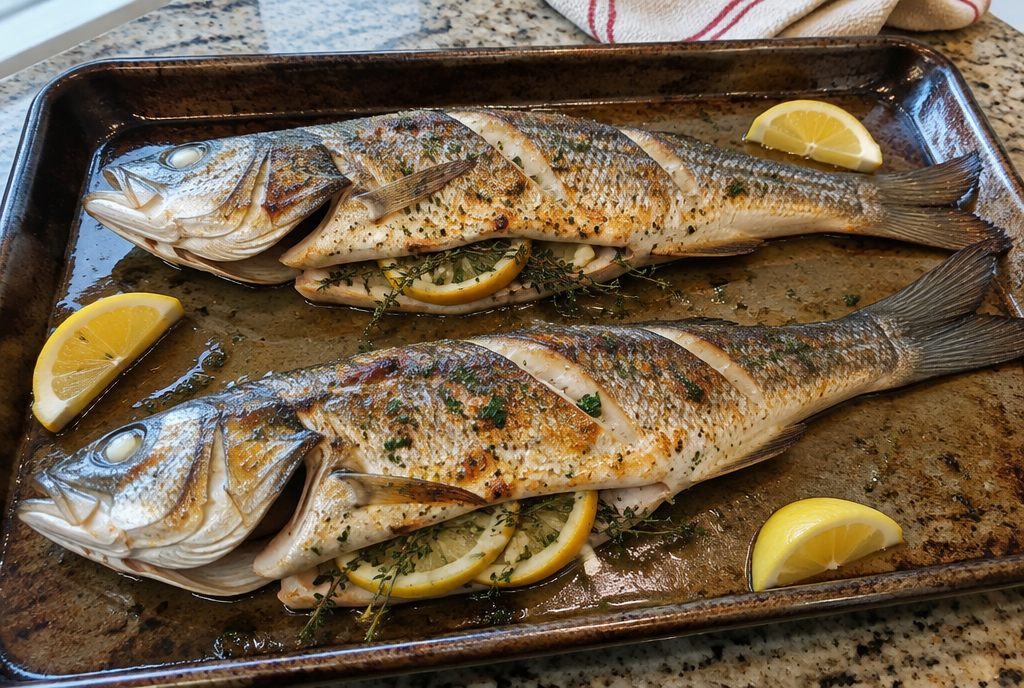
Whole Roasted Branzino With Lemon and Herbs
A whole roasted branzino recipe is one of the simplest ways to turn a beautiful fresh fish into a fragrant Mediterranean-style dinner. This version uses two cleaned whole European sea bass, olive oil, fresh lemon, thyme, parsley, garlic, kosher salt and black pepper. The fish are roasted on a sheet pan until the flesh reaches the FDA-recommended 145°F (63°C) in the thickest edible section. Expect moist white fish beneath lightly golden skin, not a creamy sauce or a heavily breaded coating.
Quick answer: heat the oven to 425°F (220°C). Pat two 1–1¼-pound cleaned branzino completely dry, make two shallow scores on each side, season lightly inside and out with olive oil, salt and pepper, and tuck lemon, thyme, parsley and garlic into the cavities. Roast on a prepared sheet pan, checking the thickest meat after roughly 18 minutes. Remove the fish only once a food thermometer confirms 145°F (63°C), then carefully separate the fillets from the backbone and pin bones before serving.
This original editorial formulation has not been independently kitchen-tested. The cooking-time range is a starting point, not a substitute for taking the fish’s temperature.
Ingredients for two generous servings
- 2 whole branzino (European sea bass), each about 1 to 1¼ pounds (450–570 g), professionally scaled, gutted and cleaned
- 2 tablespoons (30 ml) extra-virgin olive oil
- 1 medium lemon, half thinly sliced and the remaining half cut into wedges
- 3 garlic cloves, lightly crushed and peeled
- 4 small sprigs fresh thyme
- ¼ cup loosely packed fresh flat-leaf parsley, plus a little extra for serving if available
- 1 teaspoon kosher salt, or to taste based on the fish’s size
- ½ teaspoon freshly ground black pepper
The listed measurements are for two whole fish, not two fillets. Branzino have heads, backbones and small bones that reduce the edible yield; two 1–1¼-pound whole fish generally suit two main-course servings. If yours are much smaller, portion sizes and cooking times will differ. Use ingredients from safe, trustworthy suppliers, and check for any fish allergy before preparing or serving.
Equipment to have ready
Use a rimmed metal sheet pan, food-safe parchment suitable for the stated oven temperature, a clean cutting board, a sharp knife for shallow scoring, a paper towel, tongs or a fish spatula and an instant-read food thermometer. A spoon and a clean serving platter are enough for the finishing step. You don’t need a salt-crust mixture or special fish rack.
The fishmonger can remove the scales, gills and internal organs when you purchase the fish. Request that the cavity be cleaned before leaving the counter. Handling and gutting whole fish can be messy, and an experienced fish seller can make the preparation considerably simpler and more consistent. If the fish arrives frozen, thaw it safely in the refrigerator before using this recipe.
How to roast whole branzino in the oven
1. Preheat the oven and prepare the pan
Set an oven rack near the center and preheat the oven to 425°F (220°C). Line a rimmed metal baking sheet with oven-safe parchment if desired. Keep raw fish away from foods ready to eat, and place clean serving utensils on a separate surface from your raw-fish preparation board.
2. Check and dry the cleaned branzino
Confirm each fish has already been properly gutted and scaled, and remove any remaining packaging. Pat the skin and the inside of the cavities dry with disposable paper towels. Do not soak fish in a sink full of water. If there is excess moisture on the skin, it tends to steam rather than brown in the oven.
3. Score the skin and season the fish
With a sharp knife, make two or three shallow diagonal cuts across the thicker flank of each fish on both sides, without cutting through the backbone. Rub the fish with the two tablespoons of olive oil, including a little inside the cavities. Sprinkle the salt and black pepper evenly over the exterior and cavity.
4. Add lemon, herbs and garlic
Tuck a few thin lemon half-moons, some thyme, parsley and the lightly crushed garlic into the open cavity of each fish. Don’t pack the cavity tightly; the herbs should scent the fish while allowing heat to circulate. Keep the lemon wedges aside to squeeze over the finished fish. Spread the fish separately on the sheet pan so they are not touching.
5. Roast and check the thickest part
Put the pan in the hot oven. Begin checking for doneness after about 18 minutes, with many fish of this size taking roughly 18–25 minutes, depending on oven behavior and actual thickness. Insert a clean instant-read thermometer into the thickest edible portion near the backbone without letting the probe touch bone. The temperature must reach 145°F (63°C). If the fish is below that temperature, return it to the oven and check again soon.
6. Remove carefully and let the fish settle
Use oven mitts to take the hot pan out. Set it on a heat-safe surface and let the fish stand briefly while you organize the plates. The flesh should look opaque and flake readily, but use the thermometer reading, not appearance alone, for the safety decision. Discard any visibly burned herb fragments if necessary.
7. Separate the bones and serve
Slide a fish spatula under the top fillet, follow the natural seam along the backbone and gently lift the edible flesh away. Remove the backbone and check carefully for remaining pin bones before serving, particularly to children. Finish with a squeeze of the reserved fresh lemon wedges and a little parsley. Serve while hot, using clean plates and utensils that have not touched raw fish.
What exactly is branzino?
Branzino is the Italian name commonly used in American markets for European sea bass. It is known for delicate, mild white flesh and comparatively thin skin that can brown pleasantly during roasting. Whole fish are often sold in the seafood case with head and tail attached, but the fishmonger should clean the internal cavity and scales before cooking.
The recipe’s appeal is simplicity. Unlike a thick salmon fillet with a stronger flavor, branzino benefits from a restrained mix of lemon, herbs, olive oil and garlic. A high oven gives the skin enough heat to develop color, while the intact fish protects some of the delicate flesh from drying out. There is no need to disguise the fish beneath a heavy cream sauce or breadcrumbs.
European sea bass may be sold under a few labels, so look for the species and preparation information at the seafood counter. Fish marketed as branzino should not be confused with any generic “sea bass” species without checking the actual product. If the fish seller supplies a much larger species, the timing and quantities in this specific recipe might not apply.
How to choose fresh whole fish
Buy from a reputable fish counter where fish are kept refrigerated or properly displayed on ice. The FDA’s seafood selection and handling guidance recommends checking for a mild fresh smell, clear and shiny eyes, firm flesh and gills that are red rather than dried out. An off, sour or ammonia-like smell is a reason not to buy or use the fish.
Color alone is not an absolute freshness test, and previously frozen fish may not look identical to fish that has never been frozen. Ask the fishmonger whether the product is previously frozen, when it was thawed and whether it has been cleaned. Transport it home cold and refrigerate at 40°F (4°C) or below; use within two days of purchasing fresh seafood, or freeze promptly when longer storage is needed, in line with the FDA’s advice.
If fish comes frozen, thaw in the refrigerator in a covered dish. An unsafe countertop thaw can allow the outer layers to warm while the center remains frozen. Fish that seems noticeably spoiled should be discarded, not cooked in an attempt to mask the odor.
Why the cavity is stuffed instead of the skin being covered
Adding lemon slices, thyme, parsley and garlic inside the cleaned belly cavity lets their aromas reach the fish while the skin remains more exposed to hot air. A thick layer of wet lemon directly on the skin could prevent that area from browning. The cavity should have room around the herbs and lemon, not be packed with an enormous amount of stuffing.
The herbs are flavoring, not a food-safety treatment. Garlic and lemon do not make seafood safe if it has been kept at the wrong temperature, nor does lemon juice substitute for cooking. This recipe uses only a few cloves and a modest handful of herbs, so the branzino remains the main flavor. You can remove large pieces of thyme stem and garlic before serving.
Lemon acidity also brightens the cooked fish at the table. Hold back a few clean lemon wedges until the end rather than squeezing all the juice into the raw cavity beforehand; that way diners can control the amount on their portions.
Why 425°F works for whole sea bass
A relatively hot oven encourages some browning on the skin while cooking the fish through in a reasonable amount of time. For two modest branzino, 425°F is a common starting temperature. In her whole roasted branzino recipe, Italian-American chef Lidia Bastianich also uses a hot oven and whole fish with aromatic flavorings. Our ingredient amounts and process are independently authored rather than copied from that recipe.
The pan, actual fish thickness and oven calibration affect the cook time. A thick fish may need additional minutes, while a smaller one might be done before the 25-minute mark. The recipe is therefore written to direct you to the internal temperature rather than claiming that a number on the timer guarantees safety.
Avoid packing the fish so tightly that they overlap. Hot air needs to reach their surfaces, and a crowded tray can create steamy pockets. If you need to cook four fish, use two adequately sized pans rather than cramming them onto one.
How to use a thermometer in a whole fish
A thermometer is the simplest way to verify proper cooking. Insert the probe from the side into the thickest edible muscle near the spine, taking care not to place the tip against the backbone itself. Bone can give an unrepresentative reading. If the fish are different sizes, check both individually; if you are uncertain, check more than one thick location.
According to the FDA’s seafood cooking guidance, most finfish should reach 145°F (63°C). Properly cooked fish normally looks opaque and separates into flakes, but appearance alone is less precise than a thermometer. Do not serve a thick center that remains below the safe temperature merely because the thin tail looks cooked.
Clean the thermometer’s stem before and after probing raw or cooked fish. Handle the hot tray with proper mitts. When the fish reaches 145°F, remove it rather than leaving it in a very hot oven for a long time to achieve a darker color; overcooking makes delicate white fish drier.
How to handle skin, scales and fins
A fishmonger should remove the scales before the branzino goes into the oven. A small stray scale or tough fin can make the experience unpleasant, so check the skin during prep and ask for assistance at the seafood counter if you aren’t comfortable finishing this work. The fins may become crisp but are not intended to be eaten as part of the soft fillets.
A little oil on thoroughly dried skin helps it brown, though it won’t necessarily turn into the crackling texture of a separately pan-fried skin-on fillet. Whole roasted fish are usually valued for the moist flesh as well as the aromatic skin. The photograph or recipe description shouldn’t promise restaurant-level brittle skin every time.
Shallow scoring can help exposed parts cook consistently and allows seasoning to reach some of the flesh. These slashes should be controlled cuts in the skin and nearby meat—not deep openings through the backbone that break apart the whole fish.
Removing the backbone and small bones at the table
Whole fish needs careful serving. Work on a stable board or platter and use a fish spatula or serving spoon to separate the top edible fillet from the bones. Follow the length of the spine with the utensil and lift the flesh gently. Then lift out the backbone, head and tail and check the bottom portion for any bones before transferring it to a clean plate.
Run a careful fingertip inspection along the flesh only after it has cooled enough to handle safely, or use a clean utensil. Small bones can remain even after a whole fish is professionally cleaned, and they are a choking hazard. For young children or anyone who cannot safely manage bones, remove every visible bone before serving and inspect portions especially carefully.
Do not encourage guests to bite directly into the side of the whole fish if they are unfamiliar with the bones. Explaining how to remove the fillets is part of a genuinely useful whole-fish recipe, not an optional decorative note.
This recipe is intentionally focused on fish rather than a sheet-pan meal crowded with unrelated side dishes. A small side of roasted vegetables, steamed greens or cooked grains can make the plate more substantial. Keep sauces light when you want the delicate fish to remain prominent, and let guests squeeze fresh lemon according to their taste.
If you’re comparing seafood methods, our air fryer lobster tails are another special-occasion seafood recipe, but use a very different shellfish cooking method. For a convenient sandwich meal rather than a whole-fish dinner, our classic tuna and dill-pickle melt takes a pantry-fish approach. If the appeal is garlic and herbs cooked on a tray, our crispy garlic-herb chicken thighs with roasted vegetables illustrate a poultry alternative with a separate, higher poultry-safe cooking temperature.
These links are related cooking ideas, not instructions to use the lobster, tuna-melt or chicken ingredients in this branzino recipe. Chicken must reach its own safe cooking temperature, so never carry fish’s 145°F threshold over to poultry.
Common problems and what to change
Skin stays pale: The fish may have been wet, crowded or shielded by thick lemon slices. Pat it dry and keep herbs and citrus primarily inside the cavity. Focus on reaching 145°F safely rather than overbaking to chase color.
Fish smells very strong: An unpleasant sour or ammonia-like smell can indicate spoilage. Do not try to correct questionable fish with more garlic or lemon. Dispose of it and source fresh or properly frozen seafood.
Flesh is dry or cottony: Fish may have remained in a hot oven too long. Start checking early and remove once a properly placed thermometer confirms the safe internal temperature.
Some parts cook faster: Whole fish naturally has thinner tail sections and thicker shoulder areas. Position similarly sized fish in the pan and check the thickest edible area of each one.
Lemon tastes bitter: Large pieces of pith or seeds can contribute bitterness. Use thin slices inside and squeeze the fresh wedges over the cooked fillets instead of crushing the entire lemon into the pan.
Fish sticks to the pan: Use suitable parchment, a lightly oiled nonstick-compatible pan, or a careful fish spatula to lift the cooked fish. Don’t pull quickly on the tail, which can tear away from the rest of the fish.
Too many tiny bones: Even professionally cleaned whole fish can retain pin bones. Remove the fillets slowly, inspect before eating and be particularly careful when feeding children.
Storage, leftovers and reheating safely
Fish is highly perishable. Cook it near serving time when practical. Refrigerate any leftover cooked branzino promptly in shallow, covered containers at 40°F (4°C) or below, within two hours of cooking, or within one hour when the surrounding temperature is above 90°F (32°C). Refrigerating promptly matters even when the fish was thoroughly roasted.
A conservative plan for this home recipe is to use refrigerated cooked portions within one to two days for best quality, or freeze promptly if you won’t use them soon. The FDA’s seafood-handling advice covers refrigerated storage, cross-contamination prevention and safe serving. For leftovers, reheat thoroughly to 165°F (74°C) rather than repeating the raw-fish 145°F threshold; the general FDA safe food-handling chart addresses reheating leftovers.
Remove bones from the stored edible fillets if possible. Reheated branzino is delicate, so warm gently in a covered oven-safe dish while still checking the center temperature. Discard cooked fish that has been improperly stored; normal appearance or aroma doesn’t prove safety.
Frequently asked questions
What kind of fish is branzino?
Branzino is commonly the European sea bass sold whole in American seafood markets. It has relatively mild white flesh and delicate flavor. Check the label with the fish seller rather than assuming every fish marketed as sea bass is the same species.
Do I have to clean and gut the fish myself?
No. Ask the fishmonger to scale, gut and clean the fish before purchase. That’s the easiest option if you’re new to preparing whole fish. Verify the cavity has been properly cleaned before roasting.
What temperature do you roast whole branzino at?
This recipe uses 425°F (220°C) as an oven setting. Start checking after about 18 minutes and keep cooking as necessary until the thickest flesh reaches 145°F (63°C).
How long does a whole branzino take in the oven?
A modest 1–1¼-pound branzino may take approximately 18–25 minutes at 425°F, but exact time varies with oven and fish thickness. Use a food thermometer rather than assuming a timer can verify doneness.
How do I tell when branzino is safely cooked?
Insert a clean thermometer into the thickest edible part without touching the bone and confirm at least 145°F (63°C). The flesh should usually also be opaque and flaky.
Can I use frozen whole branzino?
Yes, provided it was handled safely. Thaw slowly in the refrigerator before following this method. Pat it dry and verify the fish is fully thawed and cleaned.
Should I flip whole branzino while roasting?
You generally don’t need to flip the fish in this sheet-pan version. Avoid unnecessary handling, which can tear the skin. Check the thickest meat with a thermometer before removing the pan.
Is roasted branzino safe to serve with its head and bones?
Whole fish can be presented head-on, but the flesh must be carefully separated from the backbone and small bones before eating. Extra attention is essential for children or people unfamiliar with whole fish.
Can I use the same method for salmon?
Not without revisiting the fish’s size, shape and preparation. This specific method and timing are built around two small whole branzino, not a large fillet of a different species. Always verify fish is cooked safely.
Can I prepare the fish with lemon ahead of time?
You can chop herbs and lemon in advance and keep them refrigerated, but prepare and roast the fish close to serving. Avoid leaving raw fish at room temperature while you prepare unrelated dishes.
Editorial transparency and source references
This is an original AI-assisted editorial recipe that has not been independently kitchen-tested. Ingredient amounts, stated times and visual cues are practical guidance, not the results of a recorded cooking test. The featured photograph is an AI-generated illustration of the intended cooked dish, not a photograph of fish physically cooked by the MySavorista editorial team. No independent nutrition or allergen certification is claimed.
For seafood selection, temperature and storage practices, consult the FDA’s fresh and frozen seafood guidance and its safe food-handling chart. For contextual culinary reference to a traditional branzino roasting method, see Lidia Bastianich’s whole roasted branzino. These references support relevant principles but do not certify our particular recipe as kitchen-tested.
Editorial transparency: This original recipe has not been independently kitchen-tested. Its featured photograph is an AI-generated illustration, not a photograph of a physically prepared test batch. Check finfish reaches 145°F and remove all bones before serving.
Print
Whole Roasted Branzino With Lemon and Herbs
- Prep Time: 15 minutes
- Cook Time: 25 minutes
- Total Time: 40 minutes
- Yield: 2 generous main-course servings 1x
- Category: Dinner
- Method: Whole fish oven roasted at 425°F
- Cuisine: Mediterranean-inspired American home cooking
Description
Oven-roasted whole branzino with olive oil, lemon, garlic, thyme and fresh parsley. Two cleaned whole European sea bass are roasted to a thermometer-confirmed 145°F.
Ingredients
2 whole branzino, each 1–1¼ pounds (450–570 g), gutted, scaled and cleaned
2 tablespoons (30 ml) extra-virgin olive oil
1 medium lemon, half thinly sliced and remaining half cut in wedges
3 garlic cloves, lightly crushed and peeled
4 small thyme sprigs
1/4 cup fresh flat-leaf parsley, loosely packed
1 teaspoon kosher salt, adjusted to fish size
1/2 teaspoon freshly ground black pepper
Instructions
Preheat oven to 425°F (220°C) with a rack near center. Prepare a rimmed sheet pan with suitable oven-safe parchment and keep raw fish equipment separate from serving utensils.
Confirm both branzino have been properly scaled and gutted. Pat the skin and inside cavities completely dry with disposable paper towels. Do not thaw fish at room temperature.
Make two or three shallow diagonal scores on each side of each fish without cutting through the backbone. Rub outside and inside with olive oil, then season with kosher salt and black pepper.
Tuck a few thin lemon slices, lightly crushed garlic, thyme and some parsley into each cleaned belly cavity. Lay fish separately on the pan; reserve the other lemon wedges for service.
Roast about 18–25 minutes as a starting guide, checking early with a food thermometer inserted into the thickest edible flesh without touching bone. Keep roasting until EACH fish reaches 145°F (63°C); do not judge solely by appearance.
Remove the hot tray using oven mitts and rest briefly on a heat-safe surface. The flesh should be opaque and flaky once safely cooked; do not return cooked fish to a raw-fish plate or utensils.
Carefully lift fillets away from the backbone, remove head, spine and small bones, and inspect portions before serving, especially for children. Squeeze over reserved lemon wedges and serve with clean utensils.
Notes
Original AI-assisted editorial formulation, not independently kitchen-tested. Whole fish must be fully cleaned and scaled. FDA minimum internal cooking temperature for finfish is 145°F (63°C), measured in the thickest meat without touching bone. Buy fish refrigerated or on ice; use within two days if fresh and refrigerated at 40°F (4°C) or below, otherwise freeze promptly. Refrigerate cooked leftovers within two hours (one hour above 90°F), reheat leftovers thoroughly to 165°F (74°C). Remove all fine fish bones before serving. Contains fish allergen. Image is AI-generated illustration, not a test-batch photograph.
Nutrition
- Serving Size: 1 whole 1–1¼ lb branzino before bones removed per serving
Keywords: whole roasted branzino recipe, whole branzino with lemon, oven roasted European sea bass
1 thought on “Whole Roasted Branzino With Lemon and Herbs”