

Oven-Baked Steelhead Trout With Lemon and Dill
This steelhead trout recipe uses a single skin-on fillet, fresh lemon, garlic, chopped dill and olive oil for an easy oven-baked fish dinner. The fish cooks on a parchment-lined sheet pan, with no breading, sugary glaze or complicated sauce. A modest coating of oil and lemon keeps the flavor bright while allowing the naturally rosy fillet to take center stage.
Quick answer: preheat the oven to 400°F (205°C). Pat a 1½-pound skin-on steelhead trout fillet dry and place it skin-side down on an oven-safe parchment-lined rimmed sheet pan. Rub with olive oil, minced garlic, lemon zest, a tablespoon of lemon juice, dill, salt and pepper; arrange a few lemon slices near the fish. Bake approximately 12–18 minutes as a starting point and check the thickest part with an instant-read thermometer. The fish is safe to serve when the edible center reaches 145°F (63°C). Let it settle briefly, divide into portions and serve with fresh lemon.
This original editorial formulation is AI-assisted and has not been independently kitchen-tested. Oven heat, fillet thickness and the exact shape of the fish can change the time substantially. Always use a food thermometer instead of relying on appearance or a fixed minute count.
Ingredients for four servings
- 1 large skin-on steelhead trout fillet, about 1½ pounds (680 g), fully thawed, pin-bone checked and from a safe supplier
- 2 tablespoons (30 ml) extra-virgin olive oil
- 1 medium lemon, finely zested and juiced, using 1 tablespoon (15 ml) of its juice
- 1 additional small lemon, sliced into thin rounds and wedges for the pan and serving
- 3 garlic cloves, finely minced
- 2 tablespoons chopped fresh dill, plus a few optional small fronds from the measured amount for the final garnish
- ¾ teaspoon kosher salt, or adjusted to taste and product size
- ¼ teaspoon freshly ground black pepper
The fish amount is the uncooked weight before any skin or small bones are removed. A 1½-pound fillet generally yields about four moderate main-dish servings, depending on appetite and trimming. Skin is retained for cooking but can be left on the tray when dividing portions if diners prefer.
The recipe contains fish, a major allergen. Confirm all dietary needs and avoid cross-contact with raw seafood. If the fillet still has pin bones, ask the fish seller to remove them or use appropriate fish-bone tweezers before cooking. Do not assume that a package marked “fillet” is perfectly boneless.
What is steelhead trout?
Steelhead is a form of rainbow trout associated with migratory life in the ocean, and its cooked flesh can resemble salmon in color and richness. In many U.S. seafood cases, steelhead is sold as a relatively large orange-pink fillet rather than as a small whole panfish. Check the product label to understand what you’re purchasing rather than relying on color alone.
This method is written for one skin-on fillet, not for a whole gutted trout with its head and tail attached. Whole fish, multiple small fillets and boneless portions of different thicknesses will cook on different schedules. If you are shopping at a fish counter, explain that you want a fillet suitable for oven roasting.
The steelhead’s flavor is generally mild and pleasant with citrus. Lemon and dill work well here because they complement the fish instead of masking it under heavy seasoning. You do not need a sugary syrup or a thick mayonnaise crust for a flavorful baked result.
Equipment and preparation
Use a rimmed metal baking sheet, parchment rated for 400°F, paper towels, a clean cutting board, knife, measuring spoons, a fine lemon zester, a small mixing bowl, a flexible fish spatula and an instant-read food thermometer. The rimmed pan helps contain small amounts of cooking juices and oil.
Set the oven rack in the middle and preheat fully before the fish goes in. Keep the raw-fish station away from the plate you will use for cooked portions. Wash hands, utensils and surfaces after handling raw seafood. Do not rinse fish in a sink full of water; carefully blot it dry instead.
If the fish was frozen, thaw it safely in the refrigerator, not on the countertop. Keep the fillet chilled until you are ready to assemble the tray. Place the prepared fish in the hot oven soon after adding the seasonings; don’t leave it at room temperature while preparing other dishes for an extended period.
How to bake steelhead trout with lemon and dill
1. Preheat the oven and prepare the tray
Set the oven to 400°F (205°C). Line a rimmed metal sheet pan with a piece of parchment suitable for the oven temperature, leaving no loose paper near the heating elements. Use a pan large enough for the fillet to lie flat without folding or curling it over itself.
2. Dry the fillet and check for bones
Remove the fish from the refrigerator just before preparation. Pat the flesh and visible skin dry with disposable paper towels. Check carefully for any pin bones and remove them using clean fish-bone tweezers. Place the fish skin-side down in the center of the tray. Discard the paper towels and wash your hands before handling the herbs and other ready-to-eat ingredients.
3. Make the lemon-dill seasoning
In a small clean bowl combine 2 tablespoons olive oil, minced garlic, zest from one lemon, 1 tablespoon of its fresh juice, chopped dill, kosher salt and pepper. Stir until the garlic and herbs are evenly dispersed in the oil. This is a thin aromatic coating, not a heavy sauce or marinade.
4. Coat the fish and position the lemon
Brush or spoon the seasoned oil across the top of the fillet, distributing garlic and dill without pressing into the flesh. Place a few thin rounds from the second lemon around the fish and, if desired, near the thinner edges. Do not pile thick layers of wet lemon over the entire surface, because that can block some of the roasting heat.
5. Roast and check the thickest section
Put the tray on the center rack. Begin checking after approximately 12 minutes, expecting many fillets of this weight to take around 12–18 minutes, depending on thickness and oven behavior. Carefully insert a clean instant-read thermometer into the thickest edible flesh without touching the hot pan or skin beneath it. Continue roasting and checking until the fish reaches 145°F (63°C). If the tail section is much thinner, it may be done first; the thick center is the important check.
6. Remove from the oven safely
Use oven mitts to move the hot baking pan to a heat-safe surface. The cooked fish should be moist and opaque, and the flesh will generally separate into broad flakes. These visual cues are helpful but do not replace the 145°F thermometer reading. Let the fillet settle briefly while you prepare clean serving plates and a spatula.
7. Portion and serve with fresh lemon
Use a broad fish spatula to divide the fillet into four portions, carefully checking again for any small remaining bones. The skin can be served with the portion or eased away from the flesh on the pan. Offer clean lemon wedges from the reserved lemon and a little of the measured dill. Serve promptly with clean utensils that have not touched raw fish.
Why roast steelhead skin-side down?
The skin forms a useful barrier between the delicate flesh and the metal tray. It can help the fish stay intact while cooking and makes portions easier to lift after roasting. This method does not promise extremely crisp skin; a parchment-lined sheet pan and gentle oven roast are designed mainly for moist fish rather than the crackling skin created in a hot skillet.
A large fillet often has an uneven taper: thicker at one end and thinner near the tail. Placing it skin-side down supports the whole piece while you monitor the thickest section. Avoid turning it repeatedly, because a partly cooked fillet can tear more easily than an intact piece.
If you do not eat the skin, you can slide the spatula between it and the flesh when serving. The skin does not have to be peeled off before baking; removing it early might make the delicate fillet harder to handle. If your package is already skinless, use a separate skinless-fillet procedure and monitor doneness especially closely.
How long does steelhead take in the oven at 400°F?
The answer depends on thickness, starting temperature, pan material and whether the fish was properly thawed. A 1½-pound fillet is not necessarily twice as thick as a ¾-pound fillet; it may simply be longer or wider. That means weight alone cannot guarantee a specific number of minutes.
Begin checking around 12 minutes and use 12–18 minutes as a rough range. An unusually thick fillet may need longer, while a thin tail portion can finish sooner. Use a fine probe inserted into the thick edible center, and continue cooking if it has not reached the safe target.
The FDA’s official seafood preparation guidance lists a safe cooking temperature of 145°F for finfish. That temperature is more important than a recipe’s clock time. Fish that looks opaque near the edge can still be undercooked in its thickest center.
How to tell when trout is actually done
Cooked steelhead usually turns more opaque and the flesh separates into flakes under gentle pressure, but those signs are not sufficiently precise on their own. Different natural pigments and thicknesses make visual estimates less reliable. Use the thermometer in the thickest portion, avoiding the skin and the hot tray.
When the probe confirms 145°F (63°C), the minimum safe temperature for finfish, remove the fish promptly to avoid unnecessary drying. Do not deliberately keep it roasting until every flake looks very pale if the thermometer already confirms safe doneness.
A digital fine-tipped probe is valuable for thin fish. Insert it horizontally where possible into the thick section so the tip measures the center of the flesh rather than the parchment or the hot pan. Wipe and sanitize a probe that has contacted undercooked fish before it touches ready-to-eat food.
What lemon and dill contribute to the flavor
Fresh lemon juice brightens the natural richness of steelhead. Zest provides an aromatic citrus note without adding much liquid to the surface. We use both, but in modest amounts: one tablespoon of juice and zest from one lemon for a fillet of about 1½ pounds.
Dill has a fresh grassy flavor that pairs naturally with fish. Chop the measured two tablespoons finely enough that it adheres to the olive oil coating. Don’t pile entire handfuls of thick herb stems onto the fish; the goal is even coverage with small pieces that will not burn easily.
The second lemon is for slices near the fish and fresh wedges at the table. Keeping the squeezed juice and serving wedges separate makes the written ingredients easier to follow. Lemon juice does not make raw seafood safe for consumption, and the presence of citrus does not replace cooking to 145°F.
Should you marinate steelhead trout first?
No long marinade is necessary for this recipe. The seasoned olive oil goes directly over the fillet immediately before roasting. This keeps the preparation simple and avoids leaving raw fish sitting out while the citrus mixture is prepared.
A prolonged acid marinade can change the surface texture and may cause some portions to look “cooked” even when they have not reached a safe internal temperature. That is not the intended method. Keep the fillet chilled until prep and use the oven plus thermometer for doneness.
If you enjoy deeper garlic flavor, finely mince the cloves so they disperse in the coating. Avoid large chunks that may scorch and taste bitter. Lemon zest, a measured tablespoon of juice and dill already provide plenty of aroma without extended marinating time.
Buying and handling fresh steelhead
Buy seafood from a reputable supplier with proper refrigeration or fish displayed on ice. Fresh fish should smell mild rather than sour, fishy in a strong unpleasant way or ammonia-like. According to the FDA’s seafood selection and storage recommendations, seafood should be kept cold and used promptly.
Bring the fish home in a chilled container if possible. Keep it at 40°F (4°C) or below and plan to use fresh seafood within about two days of purchase, or freeze it promptly if you cannot use it in time. If you buy frozen fish, thaw it in the refrigerator so its outer layers do not spend hours at room temperature.
Discard fish that smells spoiled or has been kept in unsafe conditions. Strong seasoning and baking cannot be relied upon to repair improper storage. Also check the product label for the actual fish species and skin-on condition; marketing names can differ between counters.
What to serve with baked steelhead
Because lemon and dill already bring plenty of flavor, choose a simple side. Tender roasted potatoes, steamed green vegetables or a modest serving of grains can complement the fish. Those sides are not ingredients in this exact recipe and should be cooked using their own safe methods.
If you enjoy whole fish rather than fillets, our whole roasted branzino with lemon and herbs uses an entirely different whole-fish preparation and includes guidance for removing the backbone. For a shellfish-based special-occasion dinner, our air fryer lobster tails use another distinct seafood cooking method. For a simple lunch instead of a roasted seafood dinner, the classic tuna dill-pickle melt on rye offers a pantry-fish sandwich.
These are contextual links to related seafood dishes, not instructions to combine lobster, tuna or their cooking times with this steelhead tray bake. Each seafood item has its own handling requirements.
Common baked steelhead mistakes
Fish turns dry: The oven roast may have continued too long after reaching 145°F. Begin checking early with a properly placed thermometer and remove when safe.
Garlic tastes bitter: Large garlic pieces may be exposed to strong heat. Mince finely, mix into oil and do not mound it in thick patches.
Fish sticks to the tray: Use properly rated parchment and lift with a flexible spatula. Do not drag the skin roughly across the metal.
The thin tail is overdone: The fillet has uneven thickness. Check the center early and consider separating an extremely thin tail portion before serving; don’t cook the entire piece much longer just to achieve a darker surface.
Lemon flavor seems sharp: Excess fresh juice may dominate the delicate fish. Measure the tablespoon in the coating and offer serving wedges separately.
Dill looks scorched: A thick pile of herb stems may have rested on the hot pan. Chop the dill and scatter it thinly over the fillet instead.
Fish looks done but thermometer is low: Continue roasting. Opaque edges do not prove the thick center has reached 145°F.
Fish breaks apart when lifted: A large fillet is fragile. Use a broad spatula, portion on the sheet pan and lift individual servings rather than moving the entire cooked fillet at once.
Can you prepare the fish ahead?
You can mince the garlic, chop dill, zest lemons and measure the olive oil ahead, keeping the fresh ingredients refrigerated as appropriate. This saves prep time without asking the raw fillet to sit coated in citrus for hours.
Keep raw steelhead in its safe chilled storage until baking time. Bring the pan and ingredients together close to the meal, then let the preheated oven do the work. For entertaining, prepare side dishes separately first and roast the fish near serving time so it remains moist.
Do not leave the cooked tray at room temperature throughout a long gathering. If the meal is delayed after cooking, follow hot-holding or rapid-refrigeration practices appropriate to seafood rather than assuming cooked fish is safe sitting out indefinitely.
Storing and reheating leftovers
Refrigerate cooked steelhead promptly in shallow covered containers at 40°F (4°C) or colder, within two hours of cooking or within one hour if the ambient temperature is above 90°F (32°C). For best quality with a delicate fillet, a conservative plan is to eat leftovers within one to two days, or freeze promptly.
When reheating leftovers, warm gently until the center reaches 165°F (74°C). A covered oven-safe dish with a small splash of water can reduce drying. Reheat only the portion needed, and don’t repeatedly warm and refrigerate the same batch. Always check for remaining small bones before serving leftover fish to children.
The FDA’s safe food handling chart explains prompt refrigeration and general leftovers safety. It is not a substitute for deciding whether a specific fish portion was stored correctly. If you are uncertain about storage conditions, discard the food rather than relying on smell alone.
Frequently asked questions
Is steelhead trout the same as salmon?
No. Steelhead is associated with rainbow trout, although the fillet can have a salmon-like orange-pink color. Confirm the actual species on the seafood label.
Should I bake steelhead with the skin on?
This method uses a skin-on fillet placed skin-side down. The skin helps support the fish and can be removed when portioning if desired.
What oven temperature should I use?
400°F (205°C) is the specified oven temperature for this sheet-pan recipe. The fish’s internal temperature, not oven time alone, determines safe doneness.
How long does a 1½-pound steelhead fillet take?
Start checking at about 12 minutes and expect roughly 12–18 minutes for many fillets, depending mainly on thickness. Continue until the thickest edible flesh reaches 145°F.
What is the safe internal temperature for steelhead?
The FDA recommends 145°F (63°C) for finfish. Insert a cleaned instant-read thermometer into the thickest edible part, away from the hot pan.
Can I use frozen steelhead?
Yes, but thaw safely in the refrigerator before following this method. A partly frozen center would change the roasting time and make doneness less even.
Can I bake trout without parchment?
Yes, provided the pan is prepared appropriately and the fillet can be lifted without tearing. Parchment simply makes handling and cleanup easier.
Is fresh dill required?
Fresh dill is the baseline in this recipe. Dried dill has different potency and texture; an exact substitution has not been independently tested for this formulation.
Can I use lime instead of lemon?
A different citrus can be a variation, but flavor and acidity differ. The specified amounts were written for lemon zest, juice and serving wedges.
Do I need to flip the trout while baking?
No. A single large skin-on fillet can bake skin-side down without flipping. Handle it as little as possible to preserve its shape.
How long will cooked steelhead keep?
Promptly refrigerate at 40°F or below; for this recipe we recommend consuming within one or two days for quality or freezing promptly. Discard fish stored unsafely.
Editorial transparency and reliable references
This is an original AI-assisted editorial recipe that has not been independently kitchen-tested. Ingredient amounts, roasting times and visual descriptions are practical guidance rather than observations from a documented MySavorista test batch. The featured photograph is an AI-generated illustration of how the intended baked steelhead may look, not a photograph of food actually cooked by the editorial team. No nutrition or dietary-health claims have been independently validated.
For fish purchasing, safe storage and the minimum 145°F finfish cooking temperature, see the FDA seafood selection and serving guide. For prompt refrigeration and leftovers, see the FDA safe food handling advice. These references inform the safety instructions but do not certify this particular recipe as kitchen-tested.
Editorial transparency: this original AI-assisted steelhead trout recipe has not been independently kitchen-tested. The featured photograph is an AI-generated illustration rather than a cooked food test. Fish must reach 145°F (63°C) in the thickest flesh; check for bones before serving.
Print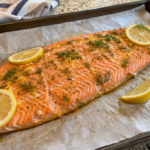
Oven-Baked Steelhead Trout With Lemon and Dill
- Prep Time: 12 minutes
- Cook Time: 18 minutes
- Total Time: 30 minutes
- Yield: 4 servings 1x
- Category: Dinner, Seafood
- Method: Oven-baked skin-on steelhead trout on a rimmed sheet pan at 400°F
- Cuisine: American home cooking, Mediterranean-inspired
Description
A simple skin-on steelhead trout fillet roasted on a sheet pan with olive oil, fresh dill, lemon zest and juice, and garlic, cooked until the thick center reaches 145°F.
Ingredients
1 large skin-on steelhead trout fillet, about 1 1/2 pounds (680 g), thawed and pin-bone checked
2 tablespoons (30 ml) extra-virgin olive oil
1 medium lemon, zested and juiced (use 1 tablespoon juice)
1 additional small lemon, thinly sliced and cut into wedges
3 garlic cloves, finely minced
2 tablespoons chopped fresh dill
3/4 teaspoon kosher salt, adjusted to taste
1/4 teaspoon ground black pepper
Instructions
Preheat oven to 400°F (205°C). Line a rimmed metal sheet pan with oven-safe parchment kept clear of oven heating elements.
Pat the fully thawed skin-on steelhead fillet dry; check for and remove pin bones with clean tweezers. Place fish SKIN-SIDE DOWN on parchment. Discard raw-fish paper towels and wash hands and utensils.
In a small bowl mix olive oil, minced garlic, zest from the first lemon, 1 tablespoon of its juice, chopped dill, kosher salt and black pepper.
Brush or spoon seasoning over the top of the fish evenly; place a few thin slices from the second lemon beside the fillet, keeping thick layers off the top.
Bake on the center rack, checking from about 12 minutes. A 1 1/2 pound fillet may take roughly 12–18 minutes or longer, depending on thickness. Use a cleaned food thermometer inserted into thickest edible center and keep roasting until it reaches at least 145°F (63°C), without touching the hot pan.
Remove the hot tray with oven mitts, rest the fish briefly on a heat-safe surface, and confirm the thick center was measured at 145°F (63°C). Flesh should be opaque and flake, but appearance is not a substitute for the thermometer.
Divide into four servings with a clean wide fish spatula, check for remaining small bones and offer clean fresh lemon wedges. Refrigerate cooked leftovers promptly at 40°F (4°C) or lower within two hours; reheat leftovers to 165°F (74°C).
Notes
Original AI-assisted editorial recipe, not independently kitchen-tested. Contains FISH allergen. Finfish such as steelhead must reach a minimum 145°F (63°C) at the thickest edible center; check with a thermometer. Buy properly refrigerated seafood, thaw frozen fish in the fridge, avoid raw-fish cross contamination and remove remaining pin bones before serving to children. Refrigerate leftovers within 2 hours (1 hour in >90°F ambient heat) at <=40°F, conservatively use within 1–2 days for best quality, reheat leftovers fully to 165°F (74°C). Featured food image is an AI illustration, not a kitchen-test photograph.
Nutrition
- Serving Size: One-quarter of a 1 1/2 pound uncooked fillet, before skin and small bone trimming
Keywords: steelhead recipe, oven baked steelhead trout, steelhead with lemon and dill, baked steelhead fillet
1 thought on “Oven-Baked Steelhead Trout With Lemon and Dill”