
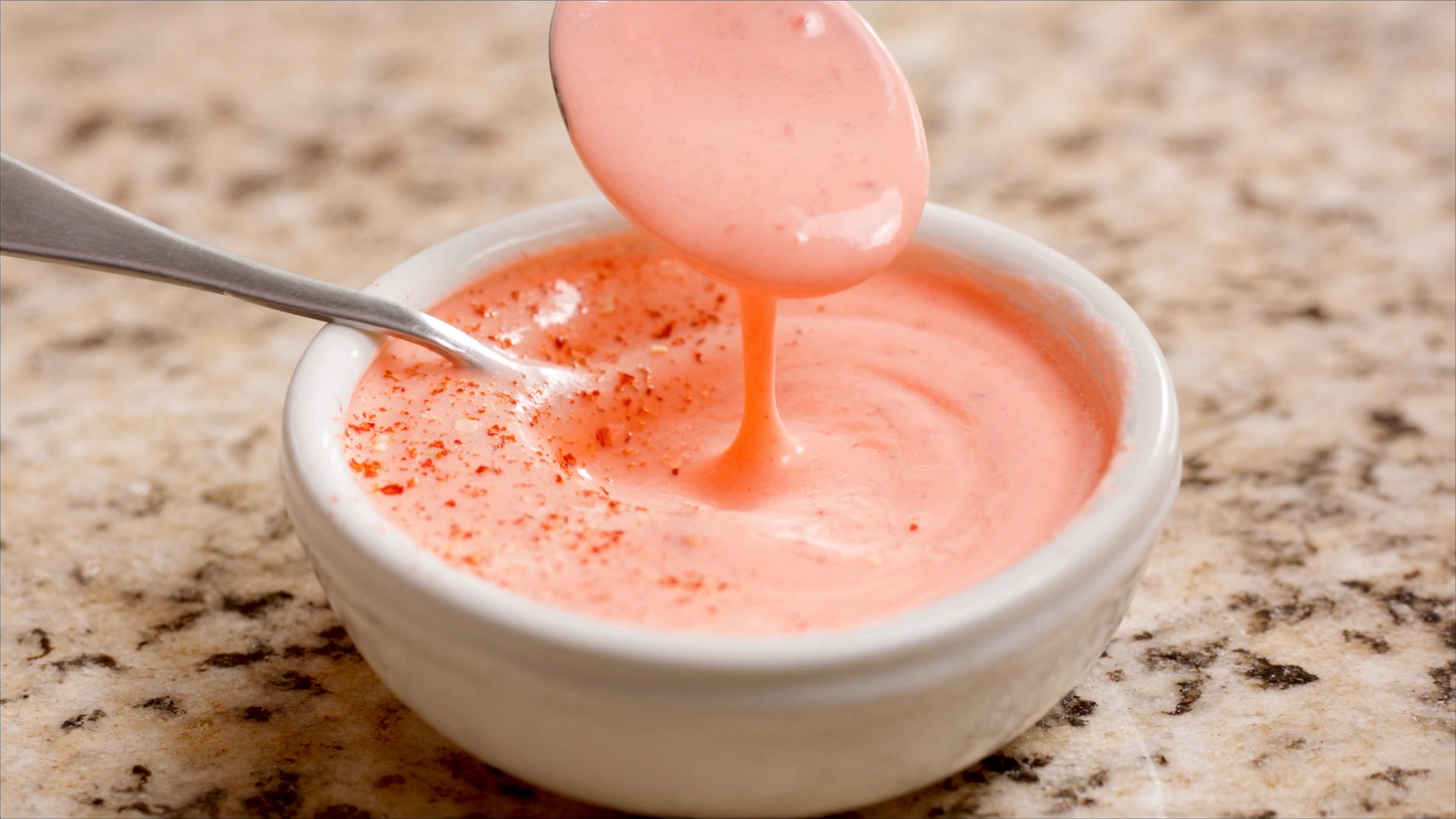
Recipe for yum yum sauce with creamy mayonnaise, ketchup, plain rice vinegar, a touch of sugar and mild paprika, garlic and onion powders. This pink-orange Japanese-American steakhouse-style dipping sauce mixes cold in a bowl and is chilled before serving. The formula contains no melted butter, raw eggs, dairy, mirin or hot sauce. Because it is a homemade mixed mayonnaise condiment, refrigerate it promptly: it has not been tested for room-temperature safety or shelf life. This is an original editorial formulation, not independently kitchen-tested.
Recipe for yum yum sauce: the quick answer
This recipe for yum yum sauce makes a pale coral-pink, creamy American hibachi-steakhouse-style dipping sauce by whisking 1 cup store-bought mayonnaise with 2 tablespoons ketchup, 2 teaspoons plain rice vinegar, 1 tablespoon water, 1 teaspoon sugar, ½ teaspoon sweet paprika, ¼ teaspoon garlic powder, and ¼ teaspoon onion powder. Whisk until smooth, cover and refrigerate for at least 30 minutes before serving. The result should coat a spoon but still flow as a thick ribbon, with fine orange-red spice speckles and no visible chunks. No raw eggs, melted butter, mirin, chili sauce or dairy are added to this original version.
What yum yum sauce actually is
Yum yum sauce is the creamy, slightly sweet and tangy pink-orange condiment commonly associated with American Japanese-style hibachi and teppanyaki steakhouses. Despite the restaurant association, it is not a traditional everyday sauce originating in Japan. The Kitchn’s background explains the American steakhouse context, and The Woks of Life documents one home variation using a richer set of ingredients. Our recipe is independently proportioned for an approachable U.S. pantry, with commercial mayonnaise, ketchup, mild seasonings and a small splash of rice vinegar. It is not a purported copy of a particular restaurant’s protected recipe.
Why we chose a short ingredient list
You don’t need a long collection of specialty condiments to make a creamy pink dipping sauce. This version starts with familiar commercial mayonnaise for body and bottled ketchup for a mild tomato note. Rice vinegar contributes a small tart edge, sugar adjusts the balance, and paprika, garlic and onion powders add color and aroma. The tablespoon of water helps the finished sauce fall off a spoon rather than remain in a dense mound. Avoid adding new ingredients halfway through the instructions without updating the card: consistency between the list, method and photographs matters. The formula has not been independently kitchen-tested, so its precise viscosity and yield remain editorial estimates.
Mayonnaise is the base, not a side ingredient
Use 1 cup of plain commercially prepared mayonnaise, preferably a fresh product that has been stored correctly according to its label. Mayonnaise already contains fat, acid and emulsifiers, creating the thick, smooth texture associated with this sauce. Don’t substitute plain yogurt or sour cream and claim the same result; they would change tanginess, texture and allergens. This recipe does not ask you to prepare mayonnaise from raw eggs, reducing the need for a separate egg-emulsion procedure. Commercial mayonnaise brands can vary in sweetness and salt level, so the final balance is not mathematically identical across products. Always refrigerate the completed mixed sauce, even if the unopened ingredients had different pantry-storage instructions.
What ketchup adds besides pink color
Two tablespoons of regular tomato ketchup create the warm salmon-pink tone as they blend into the white mayonnaise. Ketchup usually includes tomato, sugar and vinegar, so it also contributes mild sweetness and tang. Don’t replace it with a whole cup of tomato sauce or fresh tomato puree without redesigning the recipe; that would introduce much more water and a different texture. Plain ketchup is intentionally the visible red source of color in the ingredient list. No artificial pink coloring or roasted red peppers are necessary. If your ketchup is highly seasoned, the sauce may taste slightly different. Read packaging labels for allergens or sensitivities that matter to your household.
Plain rice vinegar provides a gentle tang
Measure 2 teaspoons of plain unseasoned rice vinegar. This small amount helps brighten the rich mayonnaise base without making the sauce taste like salad dressing. Seasoned rice vinegar sometimes contains added sugar or salt, so it is not the exact same ingredient. No mirin or rice wine is needed, and there is no alcohol beverage in the formulation. Do not overpour vinegar in an effort to extend the sauce’s storage time: a home recipe without validated pH and microbiological testing cannot be made shelf-stable by taste alone. The vinegar is a flavoring component, not a verified preservation procedure. Keep the finished sauce cold and use it promptly.
One teaspoon of sugar is enough to start
The recipe adds 1 teaspoon of granulated sugar for a mild rounded sweetness. Because ketchup and mayonnaise already have varied sweetness, this is a restrained amount rather than a dessert-like sauce. Stir until no sugar granules remain; a short chilled rest also allows the flavors to combine. If you prefer a less sweet version, that would be a deliberate personal variation, not the precise recipe recorded on the card. Brown sugar, honey and maple syrup may affect taste and color differently. They are not photographed or listed here. The purpose is a balanced sauce to accompany savory foods, not something to pour over pancakes.
Sweet paprika provides a subtle rosy warmth
Half a teaspoon of sweet paprika deepens the pale orange-pink color and adds a mild savory note. Use a fresh powder, not a smoked paprika that would make the sauce noticeably smoky or a hot paprika that might dominate. Stir well so the spice distributes as fine tiny orange-red specks rather than forming dry powder clumps on the surface. The sauce is intended to be mild. It should not appear dark red like chili paste or almost black like barbecue sauce. Do not increase paprika simply to force a more saturated social-media image. Natural pale coral color is an accurate signal for a mayonnaise-based yum yum sauce.
Garlic powder without raw garlic chunks
A quarter teaspoon of pure garlic powder gives the dipping sauce a light garlicky backbone. It disperses smoothly and avoids raw minced garlic pieces that could be unappealing in a silky condiment. Garlic salt is not the same ingredient and would introduce extra salt beyond what comes from the mayonnaise and ketchup. This recipe does not include fresh garlic cloves stored in oil. If a spoonful appears visibly chunky in a photo, it is not faithful to this mixture. The goal is a homogeneous sauce with only tiny dissolved or suspended spice flecks. Garlic powder can clump in storage, so break apart large dry lumps before whisking.
Onion powder completes the familiar flavor
Use a quarter teaspoon of pure onion powder, not onion salt or dried chopped onions. It gives a mild background note without creating visible pieces or requiring a sautéing stage. This sauce is mixed cold and chilled; no stovetop cooking is necessary. Onion powder, garlic powder and paprika should be distributed evenly so every spoonful tastes similar. There is no need to add raw chopped scallions or onion rings for visual interest. Those garnishes are not in the base formula and would create a different dish identity. Keep the bowl and whisk clean, especially if the sauce will be served beside ready-to-eat foods.
Water changes the texture, not the identity
The recipe uses 1 tablespoon of clean drinking water to bring the mayonnaise mixture to a thick but gently pourable consistency. Stir it in after the main ingredients have been combined, then look for a smooth ribbon that briefly sits on the surface before blending back. If you dump in several extra tablespoons, the sauce can become runny and watery, especially with thin commercial mayonnaise. The exact behavior will depend on the brand, and this recipe has not been physically tested to establish a universal viscosity. Do not describe it as a bottled pour-on dressing if the actual mixture remains almost stiff. The intended texture works for dipping or small spoonfuls.
No melted butter is required in this version
Some hibachi-style yum yum sauce formulas contain melted butter. Our eight-ingredient version deliberately omits it to avoid a separate heating and cooling stage and keep the texture centered on commercial mayonnaise. That doesn’t mean butter-based versions are wrong; they are distinct formulations with different richness, appearance and cooling needs. You should not add butter silently while telling readers that the card has only these ingredients. A butter-free recipe can still be creamy because mayonnaise supplies the main fat. The original photos should show a smooth pale coral condiment, not separate yellow pools of melted butter or curdled fat. Consistency between instructions and imagery is more important than decorative richness.
A simple mixing bowl and whisk are all you need
Use a clean medium bowl large enough to whisk without splashing, measuring cups and spoons, a clean whisk or silicone spatula, and a food-safe container with a lid for refrigeration. No blender, food processor, frying pan or oven is needed. A small clear glass bowl can help you inspect the color while mixing. Wash the utensils beforehand and avoid placing finished sauce in a dish that held raw chicken or shrimp. If you’re preparing several party sauces, use a fresh spoon for each mixture to avoid cross-contact. This straightforward setup makes the recipe accessible even without restaurant kitchen equipment.
Step one: combine the creamy and tomato bases
Measure 1 cup of mayonnaise into the clean mixing bowl, add 2 tablespoons ketchup and whisk slowly until no separate red streaks remain. The color should shift to pale pinkish orange rather than bright tomato-red. Scrape the bowl’s sides with a spatula so no white mayo remains hidden around the edges. The mixture may initially be very thick, which is normal before the water and vinegar go in. Do not begin with a steaming pan or melted butter. This is a cold-mixed dipping sauce and the ingredients should not be left at room temperature longer than necessary during preparation.
Step two: add vinegar and the dry seasonings
Pour in 2 teaspoons plain rice vinegar, then sprinkle in 1 teaspoon sugar, ½ teaspoon sweet paprika, ¼ teaspoon garlic powder and ¼ teaspoon onion powder. Whisk until completely combined and the powders are finely dispersed. If the paprika sits in one corner, a few spoonfuls will taste much stronger than the rest. The finished color should be evenly rosy with subtle spice speckles. No chunks of raw onion, tomato or garlic should remain because none are listed. Keep any used spoon away from the original spice containers if it has touched the wet mixture. Small hygienic habits matter when preparing a ready-to-eat dip.
Step three: add the measured water
Stir in the 1 tablespoon of clean water and whisk again until the sauce is satiny and smooth. Lift a little on a spoon and observe whether it falls slowly in a thick ribbon. It should coat the spoon without breaking into grainy clumps. The water amount is modest and part of the recipe, not a signal to keep pouring until the mixture looks like milk. Since mayonnaise brands have different thicknesses, the exact spoon test is a practical guide rather than a claim from a completed physical test. The sauce should be pale coral, slightly glossy and consistent from surface to bottom.
Step four: cover and refrigerate before serving
Transfer the mixed sauce into a clean food-safe covered container and refrigerate it promptly at 40°F (4°C) or below. A rest of about 30 minutes is a practical flavor-development suggestion, not a preservation step. The vinegar, sugar and powders have time to distribute while the sauce remains cold. If the sauce becomes a little thicker during chilling, stir gently with a clean spoon before serving. Never set the whole batch on a buffet table for several hours simply because commercial ketchup can be shelf-stable before opening. This mixed mayonnaise condiment has not undergone any microbial stability testing and requires cold storage.
What consistency should yum yum sauce have?
A spoonful should be thick and smooth enough to cling to a fried vegetable or bite-size piece of chicken, but soft enough to move when tilted. It should make a short gentle fold rather than stand in sharp peaks like cake frosting or spill like flavored water. The mixture is not a whipped mousse, melted cheese dip or chunky salsa. Tiny paprika specks are expected, but a separated layer of clear water is not the goal. Photos must communicate a velvety pink-orange sauce with natural swirls. The precise viscosity has not been measured with an instrument, so brand variation should be acknowledged rather than hidden.
Why yum yum sauce sometimes looks different
Different restaurant-style recipes use tomato paste, ketchup, paprika, hot sauce, sugar, melted butter or mayonnaise brands with differing colors. That produces a range from very light peach to salmon-pink and sometimes a stronger orange tone. A photo does not prove the exact composition, which is why our visual identity relies on both appearance and a pinned ingredient list. We choose a mild rosy color associated with ketchup and sweet paprika. A dark smoky red sauce would suggest barbecue or chili rather than this particular yum yum formulation. Avoid adding artificial colorants, cayenne or smoked spices solely to force a more dramatic image.
Why we don’t call it a traditional Japanese condiment
The yum yum sauce familiar at U.S. hibachi restaurants is part of Japanese-American restaurant culture, not evidence of a centuries-old condiment traditionally served in every Japanese household. The Daring Gourmet explains its American steakhouse association, while The Kitchn notes the context of North American restaurants. Our recipe uses that culinary description transparently and does not invent an origin story or claim association with a named restaurant. The name ‘Japanese steakhouse-style’ is useful for readers searching for a familiar dipping sauce, but it should be qualified rather than presented as exclusive authentic Japanese cuisine.
A dipping sauce for grilled chicken
This mild mayonnaise-based condiment can be served in a small bowl beside cooked chicken, which fits the casual appetizer-and-party food category. The site’s crispy garlic herb chicken thighs with roasted vegetables are an independent complete dinner that could be served with a small amount of sauce on the side as an optional variation. Do not pour the yum yum sauce onto raw poultry or reuse a sauce bowl contaminated by raw juices. Place a clean portion in its own serving dish. The chicken recipe has its own ingredient list and cooking directions; this page remains specifically about how to prepare and refrigerate the sauce.
Compare it with a yogurt-based ranch dip
The published Greek yogurt ranch dressing with dill and chives offers a different creamy sauce, with yogurt and herbs instead of a mayonnaise-and-ketchup base. Linking it is helpful for readers deciding which dipping sauce suits a party spread. This yum yum version contains no dill, chives or yogurt and should not be pictured with them as garnishes. Both are chilled condiments, but their storage instructions and exact ingredient labels should be followed separately. A plain pink sauce in a ramekin must be distinguishable from a white herb-speckled ranch. The side-by-side choice is useful without implying one sauce is a substitute for the other in every recipe.
What if you prefer a spicy sauce?
Our jalapeño hot sauce made with fresh green peppers serves diners who want a noticeably hotter, green-pepper-forward condiment. This yum yum sauce is intentionally mild and contains no chilies, sriracha or hot sauce. Adding those ingredients would create a spicy variant with different appearance and possibly different storage characteristics. For the exact source recipe, the subtle warmth comes from sweet paprika and small amounts of garlic and onion powders. If guests want heat, set a different sauce on the table in a separate clean bowl instead of altering the entire batch without recording the change.
Another tomato-based condiment is not the same
The website also has a fresh tomato salsa with lime and cilantro. It contains recognizable tomato pieces and fresh herbs, while yum yum sauce uses a smooth creamy mayonnaise base with a small quantity of ketchup. These are fundamentally different dips even though both may look reddish. Do not blend the salsa into the yum yum base and call it the same eight-ingredient recipe. The internal link gives readers a lighter fresh tomato condiment option for snacks or grilled food. It also clarifies why the Tasty image must show a uniform pink sauce rather than chunky chopped tomato, onion and cilantro.
Can the sauce go with cooked shrimp?
Hibachi-style sauces are frequently served with cooked seafood, but the original sauce recipe contains no shrimp. If you’re offering it beside shrimp, cook and handle the seafood safely using its own recipe, and use a clean separate serving dish. Never return a dipping sauce exposed to raw seafood juices to the refrigerator for later use. You can also provide small individual portions to reduce contamination from shared plates. No seafood should appear in the hero or recipe-card images: those photos are for the standalone sauce and must accurately represent its ingredient list. The texture should be clear at a glance, not concealed under plated proteins.
How to build a party dipping station safely
For a gathering, portion the chilled sauce into small clean bowls and keep the main batch covered in the refrigerator. Refill from the protected container with a clean spoon rather than repeatedly pouring used sauce back. If the food will be served outdoors or in warm conditions, use a cold-holding arrangement suitable for perishable foods and monitor time. Do not leave a large uncovered bowl sitting out all afternoon. The FoodSafety.gov guidelines emphasize proper chilling, clean handling and avoiding prolonged unsafe temperatures. Yum yum sauce is easy to mix but should be treated with the same care as other refrigerated creamy dips.
How long will a homemade mixed yum yum sauce keep?
This exact eight-ingredient sauce has not been laboratory-tested for microbial stability or safe shelf life. It is made with commercially prepared mayonnaise but diluted and mixed with ketchup, vinegar and water, so commercial unopened-jar storage guidance does not transfer to it. Keep it covered at 40°F (4°C) or colder, use a clean serving spoon and prepare a modest batch near its intended use. As a cautious planning preference, aim to finish it within about three refrigerated days if consistently handled hygienically; this is not a validated safety guarantee. Discard sauce with uncertain storage, contamination, or spoilage. Do not can, mail or sell it as a shelf-stable product.
Why adding vinegar does not make it shelf-stable
Rice vinegar contributes flavor, but a couple of teaspoons do not establish a tested safe pH or validated preservation process for a mayonnaise mixture. Without precise laboratory measurements, ingredient control and packaging conditions, no home cook can assume a thick pink sauce is safe on a pantry shelf just because it tastes tangy. This recipe instructs prompt refrigeration, not hot filling, water-bath processing or room-temperature gifting. Do not combine it with a commercial bottle’s shelf life. Likewise, an attractive airtight jar is not a substitute for microbiological safety. Photograph a plain bowl or ramekin rather than a vacuum-sealed commercial jar that would imply a preserved product.
How to avoid a watery sauce
The most likely cause of thin texture is adding too much water or using a runny mayonnaise without adjusting expectations. Start with the measured 1 tablespoon and whisk completely before judging. Do not add another half cup of water to make the color look lighter. If you want a firmer sauce, a future variation could use less water; that would be a different recorded formula. Do not sprinkle cornstarch into the cold bowl expecting it to dissolve and stabilize instantly, because it isn’t on the ingredient list and generally requires different handling. The base sauce should remain creamy and cohesive, not a clear liquid with patches of floating spice.
How to avoid an overly thick sauce
A mayonnaise that is especially stiff may give the initial mixture a dense consistency before water and vinegar are added. Whisk thoroughly, then incorporate the specified liquid rather than reaching for cream, milk or melted butter. The final sauce should form a short ribbon when a spoon is lifted, not a rigid peak like frosting. It may thicken slightly after refrigeration; stir gently before serving. Because the formula hasn’t been tested with every mayonnaise brand, no single photograph can guarantee exactly the same flow in every kitchen. If you’re changing the liquid ratio, document the adjustment rather than quietly keeping the original ingredient amounts in the recipe card.
How to fix dry seasoning clumps
Paprika, onion powder and garlic powder sometimes form tiny dry lumps, especially when their jars have been exposed to humidity. Break apart obvious lumps in a clean dry spoon before adding them to the mayonnaise. Sprinkle the powders across the surface instead of depositing them in one concentrated mound, then whisk until no dry patches remain. You shouldn’t need to blend the sauce at very high speed or heat it on the stove. The finished sauce can have minute evenly distributed orange-red dots but no large dusty paprika islands. Store your seasonings appropriately so they remain easy to measure. This attention to small details is often enough for a smoother result.
What to do if the sauce tastes too sweet
Sweetness depends partly on ketchup and mayonnaise brand formulas. The recipe already uses a modest one teaspoon of sugar, but if your particular products taste sweet, note that for a future batch and consider a measured variation with less sugar. Adding large quantities of vinegar after mixing can make the sauce harsh and unpredictable, and it does not prove safer storage. There is no need to introduce hot sauce just to distract from sweetness. The intended balance is creamy, slightly tangy and gently sweet rather than candy-like. Since this formula was not physically tasted by the editorial team, we avoid declaring a guaranteed restaurant-identical flavor score.
What to do if the sauce tastes too acidic
Rice vinegar is a small part of the formulation, but different ketchups and mayonnaises also contain acidity. Before adding more sugar at random, check whether you measured plain rice vinegar or an unexpectedly concentrated or flavored product. A sauce intended for savory food should have a lively edge without making the eyes water. If a batch turns harsh, use it cautiously and rethink the next batch’s proportions rather than claiming the published ratio still describes it. Do not add a large amount of baking soda or chemicals to neutralize acidity: that would be an unsafe and unpredictable deviation. Accurate measuring is preferable to last-minute rescue tactics.
Is this sauce gluten-free or dairy-free?
The ingredient list does not deliberately add milk, butter or wheat flour, but individual mayonnaise, ketchup, vinegar and seasoning products may have different formulations, allergen statements and cross-contact risks. Do not promise a strict gluten-free or dairy-free certification based only on a generic pantry recipe. Check each actual package if the sauce is intended for someone with allergies or celiac disease. It is not vegan because ordinary mayonnaise usually contains egg. Mayonnaise may also contain mustard or soy depending on the brand. No nutrition panel is invented because it would require validated brand data and a measured finished volume.
Can you make it with homemade mayonnaise?
This recipe specifically calls for commercially prepared mayonnaise, not mayonnaise whipped from raw eggs. Homemade raw-egg mayonnaise introduces additional food-safety concerns and would require its own carefully developed process and handling instructions. Swapping it in without changing the narrative would be misleading. Even commercially made mayonnaise mixed into this sauce must be kept refrigerated promptly. Do not treat a countertop-mixed dipping sauce as shelf-stable because it contains vinegar. If you want a home-emulsified version, use reliable pasteurized-egg guidance and a separate tested formulation rather than assuming the same storage properties as the original recipe.
What is the estimated yield?
One cup mayonnaise plus the measured ketchup, vinegar, water, sugar and spices should produce a little more than one cup of sauce, roughly about 1¼ cups as an editorial estimate. The exact final volume has not been measured after a documented kitchen trial. For small dipping portions, you might divide it into approximately eight servings of around 2½ tablespoons each; individuals may prefer more or less. It is best to use a clean spoon to portion the sauce instead of repeatedly dipping raw meat or shared utensils into the storage container. No nutritional claim per serving is presented as verified.
A recipe-card photograph that matches the ingredient list
The featured image should show only the finished thick pale coral-pink sauce in a small plain shallow white ceramic bowl on a warm speckled everyday kitchen countertop. A single clean teaspoon may be suspended above the surface or resting in the sauce to demonstrate a short creamy ribbon, but no visible hand should appear. There should be a natural soft swirl and fine paprika dots, not a blob of red ketchup, a white dairy dip or a thick cheese pull. No shrimp, rice, chicken, parsley, chopped peppers, lemon, brand packaging or labels should be staged around the bowl. The sauce is the product.
A distinct image for the Tasty Recipe card
The Tasty card requires an independently generated original photo with a genuinely different view, such as a slightly overhead clear glass dipping ramekin of the same pale peach-pink creamy sauce. Its smooth glossy surface should show the same moderate thickness and tiny reddish spice speckles. The second image cannot be cropped from the featured source or edited to pretend it is independent. Each native 2K original must be checked by source-byte SHA256, full-frame visual inspection and true 100% original source-pixel review. Packaging, fake writing, unlisted garnish or a sauce that looks watery should block release. AI food photos are illustrative only, not evidence of an actual cooking test.
Editorial transparency and limits
This original MySavorista formula is not independently kitchen-tested in a physical kitchen. The measured ratios were chosen as a plausible approach to a familiar American hibachi-style sauce, not as a verified copy of a restaurant product or result of a taste-test panel. The final viscosity, exact yield, nutrition, storage life and serving sizes have not been tested or measured. Generated photos, if later approved, illustrate the intended appearance and do not document a real batch. We do not claim the recipe is authentic Japanese cuisine, safe for room-temperature storage, canned, commercially preserved or suitable for sale without appropriate food-safety validation. Use clean utensils and keep refrigerated.
Recipe for yum yum sauce: frequently asked questions
What is the easiest recipe for yum yum sauce?
Whisk 1 cup commercial mayonnaise with 2 tbsp ketchup, 2 tsp plain rice vinegar, 1 tbsp water, 1 tsp sugar, ½ tsp sweet paprika and ¼ tsp each garlic and onion powder. Cover and refrigerate for 30 minutes before serving.
What is yum yum sauce made of?
Common U.S. hibachi-style versions use a mayonnaise base with tomato ketchup or tomato paste, spices and a little sweetness. This exact recipe contains eight measured ingredients and no melted butter, mirin or hot sauce.
Is yum yum sauce from Japan?
It is best described as a Japanese-American steakhouse-style condiment popular in North American hibachi restaurants, not a traditional sauce originating in Japanese home cooking.
Why is yum yum sauce pink?
White mayonnaise combines with red ketchup and a small amount of sweet paprika to create a natural pale peach or coral-pink color.
Can you make yum yum sauce without butter?
Yes. This version uses commercial mayonnaise as its creamy base and contains no melted butter, making it a simple cold-mixed sauce.
Is homemade yum yum sauce spicy?
Not this mild formulation. Sweet paprika, garlic and onion powder supply gentle savoriness; no chili flakes, sriracha or hot sauce are included.
Does yum yum sauce need to be cooked?
No. The sauce uses commercially prepared mayonnaise and is simply whisked in a clean bowl. It must be refrigerated promptly after mixing.
How thick should yum yum sauce be?
Smooth enough to flow in a slow short ribbon from a spoon and thick enough to coat food, not run like water or stand like firm frosting.
What do you serve with yum yum sauce?
It can be offered as an optional chilled dip alongside cooked chicken, vegetables or safely cooked shrimp, in clean individual bowls. Those foods aren’t ingredients in the standalone sauce recipe.
How long does homemade yum yum sauce last in the refrigerator?
This version has no validated shelf life. Keep covered at or below 40°F and prepare modest batches; aiming to use it within roughly three days is conservative planning guidance, not a safety guarantee.
Can yum yum sauce stay on a counter overnight?
No. Treat this mixed mayonnaise condiment as perishable and refrigerate promptly. It is not validated for room-temperature storage or home canning.
Was this recipe actually cooked and tested?
No. It is an original editorial formulation not independently kitchen-tested; all timing, yield and texture claims are presented as estimates, and any generated photos would be illustrative.
Print
Yum Yum Sauce Recipe: Easy Hibachi-Style Pink Dip
- Prep Time: About 5 minutes to measure and whisk all ingredients, editorial estimate
- Cook Time: No cooking; cold-mixed sauce using commercially prepared mayonnaise
- Total Time: Approximately 35 minutes including 5-minute mixing and about 30-minute refrigerated flavor rest; estimated
- Yield: About 1 1/4 cups, roughly 8 small dip portions of about 2 1/2 tablespoons each; estimated not measured 1x
- Category: Appetizers, Snacks & Party Bites
- Method: Whisk commercial mayonnaise with ketchup, rice vinegar, sugar, paprika and garlic/onion powders; add measured water, stir until glossy and uniform, cover and promptly refrigerate at 40°F or below
- Cuisine: Japanese-American hibachi-style steakhouse dipping sauce popular in the United States, not traditional Japanese home cuisine
Description
Recipe for yum yum sauce: smooth pale coral-pink American hibachi steakhouse-style mayo ketchup dip with rice vinegar, sugar, paprika, garlic and onion powders. Cold-mixed, refrigerated, and not independently kitchen-tested.
Ingredients
1 CUP (about 240 ml) PLAIN COMMERCIALLY PREPARED MAYONNAISE, store-bought and stored correctly, NOT homemade raw-egg mayonnaise
2 TABLESPOONS REGULAR TOMATO KETCHUP, plain
2 TEASPOONS PLAIN UNSEASONED RICE VINEGAR, not sweetened seasoned vinegar and NOT rice wine or mirin
1 TABLESPOON CLEAN DRINKING WATER, measured
1 TEASPOON GRANULATED WHITE SUGAR
1/2 TEASPOON SWEET PAPRIKA, not smoked or hot paprika
1/4 TEASPOON PURE GARLIC POWDER, NOT garlic salt
1/4 TEASPOON PURE ONION POWDER, NOT onion salt
NO melted butter, no raw eggs, no additional vinegar, no chili sauce, no dairy, no fresh garlic in oil, no tomato chunks, no cilantro, no extra herb garnish, no bottled branding or extra dipping foods
Instructions
1. Gather a clean mixing bowl, whisk, measuring cup and measuring spoons, and a clean covered food-safe storage container. Use properly stored COMMERCIAL mayonnaise rather than homemade mayonnaise made from raw eggs.
2. Measure 1 CUP PLAIN MAYONNAISE and 2 TABLESPOONS KETCHUP into bowl. Whisk until the mixture becomes uniform PALE CORAL PINK without bright red ketchup streaks.
3. Add 2 TEASPOONS PLAIN RICE VINEGAR, 1 TEASPOON SUGAR, 1/2 TEASPOON SWEET PAPRIKA, 1/4 TEASPOON GARLIC POWDER and 1/4 TEASPOON ONION POWDER. Whisk thoroughly until sugar and dry powders are distributed with no big lumps.
4. Add exactly 1 TABLESPOON CLEAN WATER and whisk to a SMOOTH SATINY CREAM that coats a spoon and falls back in a slow short ribbon. Don’t add extra water, milk, cream, melted butter or oil.
5. Transfer to a clean food-safe covered container and REFRIGERATE PROMPTLY at 40°F (4°C) or below. Chill approximately 30 minutes before using so flavors settle. This is NOT home canning, pasteurization or shelf-stable preservation.
6. Stir gently with a clean dry spoon before use. Offer small clean portions as dip for separately prepared fully cooked foods. The image must show only a plain bowl of peach-pink thick creamy sauce with tiny paprika dots, no garnish or other ingredients.
7. Keep covered and refrigerated at or below 40°F (4°C); do not leave overnight at room temperature. Prepare small batches close to intended use. Aiming to use within about THREE refrigerated DAYS if correctly handled is conservative editorial planning, NOT a laboratory-validated safe shelf life. Discard contaminated, mishandled or spoiled sauce.
Notes
ORIGINAL MY SAVORISTA EDITORIAL RECIPE NOT INDEPENDENTLY KITCHEN-TESTED; no physical trial of viscosity, exact finished volume, microbial shelf life, calories or nutrition. Japan/United States cultural identification: American Japanese steakhouse hibachi-style condiment, NOT historic traditional Japanese original. Use plain commercially prepared mayonnaise; eggs, mustard, soy, wheat or dairy allergen statements may vary by brand so inspect actual packaging. Home-mixed mayonnaise dip with added water is PERISHABLE, KEEP REFRIGERATED 40°F/4°C, no shelf-stable, no canning or room-temperature gifting claims. Visual lock for both independent source-native 2K images: pale peach-pink creamy satiny slightly orange coral sauce in a single small plain bowl, mild natural paprika dots, spoon-ribbon or swirl, not watery, not thick cheese pull. NO shrimp, chicken, rice, vegetables, parsley, chili pieces, tomato slices, seasoning bottles, cartons, labels, commercial packaging, hands, printed letters, words, watermarks. Images AI illustrative, not evidence of actual cooking. Two independent source-original 2K SHA256 image QA mandatory before release.
Nutrition
- Serving Size: About 2 1/2 tablespoons as a suggested dip portion; approximate, not measured after physical test
Keywords: recipe for yum yum sauce, homemade yum yum sauce recipe, hibachi pink dipping sauce, Japanese steakhouse style sauce