
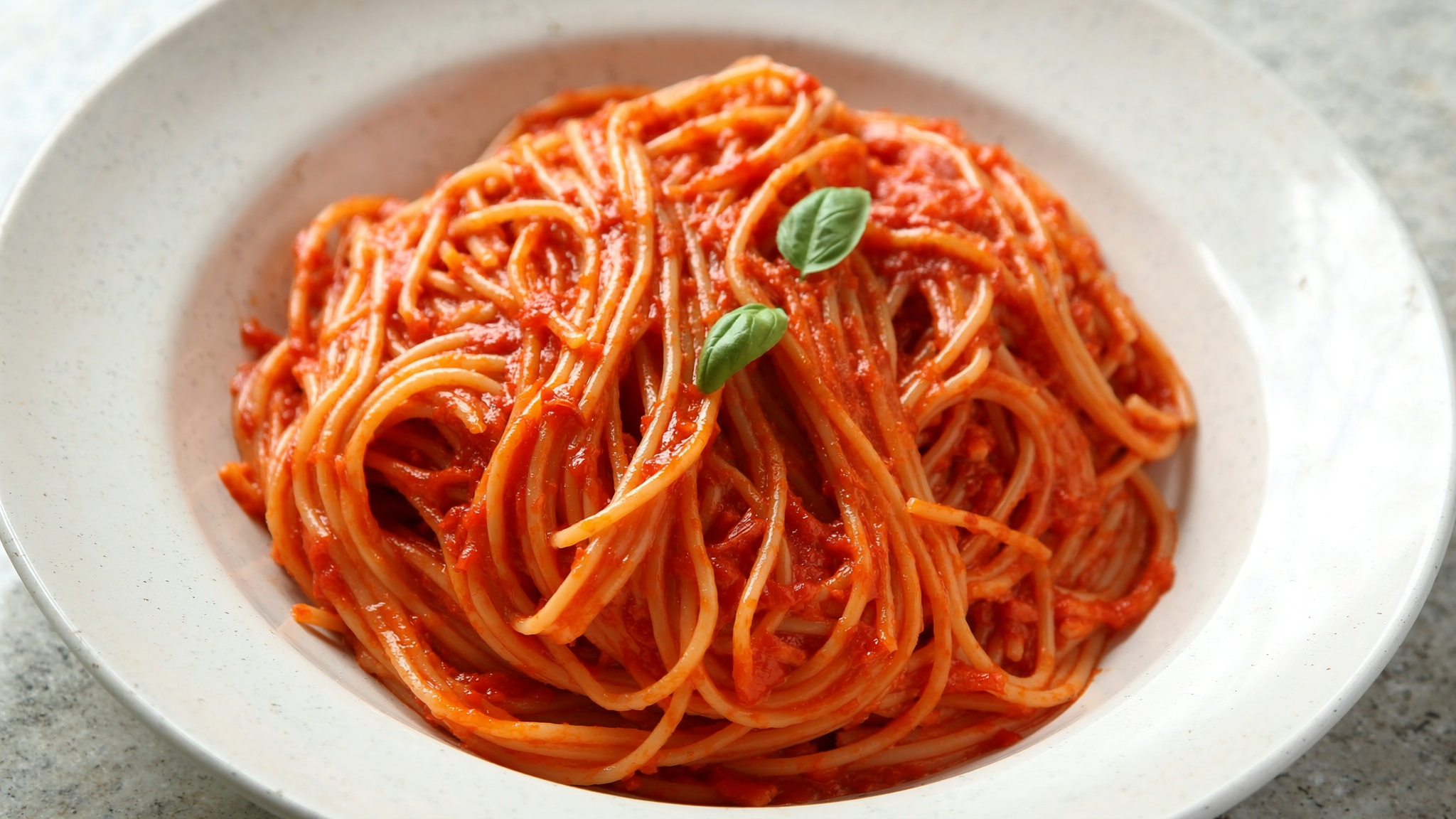
Recipe for pomodoro in a simple spaghetti dinner: canned peeled tomatoes, garlic, olive oil and basil become a silky red sauce that coats each pasta strand. This American-friendly guide shows how to simmer the tomatoes and finish spaghetti with reserved pasta water. The recipe is an original editorial formulation, not independently kitchen-tested; times and final yields are estimates.
Recipe for pomodoro: the quick answer
A simple recipe for pomodoro starts with good tomatoes, garlic, extra-virgin olive oil, basil, and salt. This particular recipe turns a 28-ounce can of whole peeled tomatoes into a glossy sauce for 12 ounces of dried spaghetti. Cook the garlic gently in olive oil without browning it, add hand-crushed tomatoes, and simmer until the flavors come together. Cook the spaghetti until just short of al dente, then finish it in the skillet with the sauce and a little reserved starchy pasta water. Tear fresh basil into the hot pasta off the heat. The result is a tomato-forward dinner, not a heavy cream sauce.
Pomodoro means tomato, not a complicated ingredient
Pomodoro is the Italian word for tomato. In American recipe searches, it can refer to tomato-basil sauce or pasta dressed in that sauce. This page provides one complete, recognizable spaghetti pomodoro dinner while explaining how the same tomato component works independently. The sauce uses a short ingredient list and a gentle simmer, so the tomato flavor stays dominant. We avoid adding meat, cream, vodka, carrots, peppers or a complex spice blend that would shift the recipe into a different category. The accompanying article and Tasty card must represent the same defined pasta dish rather than promising a generic tomato sauce with an unrelated noodle image.
How this pasta differs from marinara and bolognese
Both pomodoro and marinara are tomato-based preparations, and households use the names somewhat differently. Pomodoro in this recipe emphasizes a smooth-ish tomato texture, garlic-infused olive oil and fresh basil coating pasta. Marinara may be a looser sauce with additional aromatics such as oregano and onion. Bolognese is a meat-centered sauce prepared in a very different way. For additional traditional context, Eataly’s spaghetti al pomodoro guide also emphasizes the essential tomato-and-pasta composition. The point is not to police regional terminology but to set an accurate expectation: a bright red tomato coating over separate spaghetti strands, without chunks of ground beef or a substantial layer of cheese. A tomato-basil pasta dinner is the main search intent here.
Why canned whole peeled tomatoes are reliable
Choose one 28-ounce (794 g) can of good-quality whole peeled tomatoes with their juices. Canned tomatoes let you make this dish when ripe fresh tomatoes are unavailable or inconsistent, and a can provides a defined quantity. Some brands are sweet and mellow; others taste sharper. Taste the finished sauce before deciding whether additional salt is needed. Avoid pre-seasoned pasta sauce, since it already contains an unknown blend of aromatics and may not respond the same way to the measured garlic and olive oil. Crush the tomatoes by hand into a clean bowl, away from clothing, or use a clean utensil to break them apart in the skillet.
The texture of tomatoes makes a difference
The sauce here should be thick enough to cling to spaghetti while still moving naturally when tossed. Large half-tomato pieces take longer to break down, while an aggressively pureed tomato mixture can become too homogeneous for a rustic home meal. Crush each whole peeled tomato into uneven smaller pieces before heating. During simmering, stir and press the larger pieces lightly against the pan with a spoon. You should see tiny tomato pieces integrated into an even red sauce, not chunky salsa and not clear tomato water. If the canned tomatoes are exceptionally watery, a few more minutes of gentle simmering may be needed.
Choose an olive oil that tastes good
Three tablespoons of extra-virgin olive oil are sufficient to soften garlic and give the sauce a gently glossy texture. Since the ingredient list is small, the oil’s flavor remains noticeable. A balanced, moderately fruity oil is easier to pair with the sweetness of tomatoes than an oil so bitter that it dominates the finish. Heat the oil gently, not until it smokes. The purpose is to carry garlic aroma into the sauce, not to brown the garlic aggressively or deep-fry it. If you reduce the oil drastically, the sauce may feel less rounded; that would be a variation of the specified recipe.
Garlic should perfume the sauce, not burn
Use three medium garlic cloves, peeled and thinly sliced. Slices are easier to monitor in the oil than very fine mince, which can brown almost immediately in a hot skillet. Warm the garlic over medium-low heat for roughly one to two minutes, stirring as it becomes fragrant and just begins to soften. Add the tomatoes before it turns dark brown. Burned garlic brings a bitter flavor that tomato acidity cannot fully hide. Whole cloves left floating in the final pasta would be a different presentation; the defined dish uses thin, softened slices that blend into the sauce.
Fresh basil goes in near the end
A small handful—about twelve to fifteen fresh basil leaves—gives the tomato sauce its recognizable aromatic finish. Rinse the leaves gently and dry them, then tear them by hand when the pasta is nearly finished. Add most leaves once the skillet is no longer over strong heat, reserving two or three small leaves for a minimal garnish if desired. Boiling fresh basil vigorously for an extended period dulls its fragrance and can darken the leaves. Dried basil is not a one-for-one replacement in this formula; it produces a different flavor and different speckled appearance. The final photograph should show only a modest amount of green basil.
Salt is the main seasoning
Start with about one teaspoon of kosher salt for the sauce, but measure according to the specific salt brand because flake sizes differ. The pasta water will also be lightly salted, and some may enter the finished skillet. Season the tomato sauce after it has simmered a little, taste, and adjust modestly. Pepper and red chili flakes are not needed to make a recognizable pomodoro. This intentionally simple ingredient list avoids turning the sauce into arrabbiata, which centers a more assertive chili heat. Do not report a precise sodium amount without calculations using the real ingredient labels, final yield and the water actually retained in the pasta.
Twelve ounces of spaghetti serves a practical dinner
The defined pasta quantity is 12 ounces (340 g) of dry wheat spaghetti for approximately four moderate portions. A box of spaghetti is often one pound, so measure rather than using the whole package automatically. Four portions may be more or less substantial depending on individual appetites and what else is served. The noodles should stay long, flexible and distinct, not chopped into tiny pieces. This formula assumes ordinary dried durum wheat spaghetti; thick bucatini, fresh egg pasta or gluten-free noodles can need different cooking and finishing times. The hero photo should show spaghetti rather than penne, gnocchi, macaroni or ravioli.
Make your sauce while the water heats
Before opening the can, place a large pot of water on the stove, gather a wide skillet, a clean bowl for crushing tomatoes, a spoon and long tongs. Peel and slice the garlic, measure the olive oil, and wash the basil. These few minutes of preparation make the cooking smoother, since the garlic needs attention right after it meets the warm oil. Start the pasta water heating while you prepare the sauce ingredients. Keeping the tools nearby also reduces the chance that someone tries to drain pasta without saving the water needed for the finishing step. No food processor or blender is required.
The skillet matters more than a long simmer
A wide skillet gives the crushed tomatoes room to reduce and makes it easy to toss the spaghetti directly in the sauce at the end. A large saucepan can also work, but the narrower shape requires more careful turning of long pasta. Use medium-low to medium heat and stir enough to prevent sticking. The tomato sauce does not need several hours on the stove; this is a weeknight recipe designed for gentle cooking and a bright flavor. If you use a very thin pan, watch the bottom carefully and lower heat before the tomato sugars scorch.
Step one: crush the tomatoes
Pour the whole peeled tomatoes and all the juices from the 28-ounce can into a clean mixing bowl. Break them into smaller pieces with clean hands or a sturdy spoon, keeping splashes low. Do not drain away the liquid; it forms part of the sauce and gradually reduces during simmering. You should still see some tomato texture in the bowl, but not large intact tomatoes. If you prefer a completely smooth sauce, that is a separate variation requiring a different processing step. The main recipe’s finished tomato coating has small pieces, enough to cling to spaghetti without forming a stew.
Step two: warm the garlic in olive oil
Set a wide skillet over medium-low heat and add the measured three tablespoons of olive oil and three thinly sliced garlic cloves. Stir gently as the oil warms. When the garlic smells fragrant and its edges soften—roughly one or two minutes—move to the next step. Do not wait for a deep golden color; garlic continues cooking after the tomatoes enter. If you see dark bits, reduce the heat immediately rather than trying to counteract them later with sugar. The aim is a pale garlic infusion, not crispy garlic chips. Use a heat-safe utensil and keep water away from an overheated oil pan.
Step three: simmer the tomato sauce
Add the crushed tomatoes and their juice to the skillet carefully, since the mixture may sputter when it meets the oil. Stir and bring it to a gentle simmer over medium heat. Reduce the heat so small bubbles break the surface but the sauce does not splatter aggressively. Cook about fifteen to twenty minutes, stirring occasionally, until the tomato pieces have softened and the sauce looks cohesive. If the sauce thickens too far before the pasta is ready, reduce the heat or add a small splash of hot pasta water later. Season lightly with salt. This simmer is about taste and texture, not a food-preservation procedure.
Step four: cook the spaghetti just short of al dente
As the tomato sauce simmers, add the dry spaghetti to a large pot of boiling, lightly salted water. Stir once after the strands soften enough to submerge and again occasionally to prevent clumping. Use the package’s recommended time as the primary guide, then begin tasting around two minutes before its al-dente endpoint. The pasta will finish cooking in the tomato sauce, so it should still have a slight firmness when transferred. Do not assume every spaghetti brand cooks in exactly eight minutes. Stop short of overcooking, as extremely soft spaghetti can break apart while being tossed in the skillet.
Step five: save starchy pasta water
Before draining spaghetti, scoop out about one cup of its cooking water into a heat-safe cup. You will usually need only a few tablespoons, but reserving more gives you room to regulate sauce consistency. The suspended starch helps oil, tomato and water combine into a lightly glossy coating rather than separate pools. Be careful when handling the hot cup and draining the pot. Do not replace it with a full cup of cold tap water as an identical technique; the hot starchy liquid is valuable precisely because it comes from cooked pasta. You will add it only as needed rather than dumping all of it into the skillet.
Step six: finish pasta and sauce together
Transfer the spaghetti into the tomato sauce using tongs or drain it and immediately add to the skillet. Toss gently over medium-low heat for approximately one to two minutes so the noodles finish cooking in the sauce. Add reserved pasta water two tablespoons at a time when the skillet looks dry or the sauce clings in heavy clumps. The finished pasta should appear saucy and glossy, with red tomato coating each strand but no watery tomato soup collecting at the bottom. Turn off the heat once the spaghetti reaches your preferred al-dente texture. The technique of finishing spaghetti in tomato sauce appears in Bon Appétit’s spaghetti pomodoro instructions; our ratios and editorial writing here are independently developed. This combining step is more important than chasing an exact minute count.
Step seven: fold in basil and serve
Turn off the burner and gently stir most of the torn fresh basil leaves into the warm pasta. Taste a cooked strand with sauce and adjust salt only if needed. Divide among four warmed shallow bowls with tongs, twisting each serving into a relaxed mound, and spoon any small amount of remaining sauce from the skillet over the top. Add two or three small basil leaves to the full serving if desired. The primary recipe does not include cheese, butter or meat, so do not make them part of the main photograph. Serve promptly while the spaghetti is still loose and the basil smells fresh.
Why pasta water is not optional to understand
Not every pot of pomodoro needs the same amount of reserved water. A watery brand of canned tomatoes may require none, while a thick sauce or a wide skillet on a hot burner may benefit from several tablespoons. Add gradually and toss, observing how the sauce clings. If the noodles sit in a shallow pool of red liquid, stop adding water and allow a little more gentle tossing so excess evaporates. If they are stuck together with dull thick tomato paste, another splash may help. The objective is a flexible method, not a predetermined cup poured into every pan regardless of conditions.
A silky coating without heavy cream
Pomodoro gets its appealing sheen from olive oil, tomato solids and the starchy pasta water worked together while the spaghetti finishes cooking. Cream is not necessary and would change the flavor and color to pink or orange. A photograph of pasta under a heavy white Alfredo sauce would therefore contradict the recipe. Likewise, a large amount of butter or grated cheese would create a richer dish than the specified formula. The intended sauce remains red, fluid enough to coat long strands, and lively with small tomato pieces. This is what lets a short ingredient list produce a satisfying, recognizable pasta dinner.
Can you use fresh tomatoes instead?
Yes, but it is a separate variation rather than an exact swap by weight and time. Fresh tomatoes contain different amounts of water, skin and seeds depending on ripeness and variety. A fresh-tomato method may involve peeling or grating, reducing for longer and adjusting the quantity to match the volume of the 28-ounce can used here. If the goal is to follow this precise original recipe card, use canned whole peeled tomatoes. The Italian-language fresh tomato and basil sauce guide on MySavorista describes another tomato-centered preparation, useful when cooking with garden produce.
How to rescue a sauce that is too acidic
First, check that the tomatoes are fully warmed and have simmered long enough for their raw canned taste to mellow. Salt can change how acidity is perceived; add modestly, then taste again. Some canned tomato brands are sharper than others. A small extra drizzle of olive oil on the finished plate can round flavors, although that changes the measured oil proportion. Avoid adding cups of sugar or baking soda automatically: both can alter the intended straightforward tomato character and, in the case of baking soda, create unexpected foaming. Choosing good tomatoes and cooking gently is a more reliable first response than heavily sweetening the pan.
How to rescue a watery sauce
If sauce remains thin after about fifteen minutes, keep it at a gentle simmer uncovered for several more minutes, stirring occasionally to prevent sticking. A wide skillet helps water evaporate. Avoid stirring flour or cornstarch into the tomatoes; it changes the natural texture and is not part of traditional-style pomodoro. Do not add pasta water while the sauce is obviously watery. Cook the spaghetti until nearly al dente, then combine and judge the texture together because pasta can absorb and bind some of the remaining liquid. Remember that a slightly loose sauce in the skillet often looks more cohesive once served and allowed to settle briefly.
How to rescue an overly thick sauce
Tomatoes can reduce quickly if the skillet is wide or the burner is too strong. Lower the heat, then add a small amount of the reserved hot pasta water and stir until it loosens. If the sauce is thick before pasta is cooked, turn off the heat temporarily rather than leaving it to simmer dry. When spaghetti is added, introduce water in measured tablespoons and toss so each strand becomes coated. Avoid pouring an entire cup of water at once: a sauce that is too thin can take more time to recover. A deep red coating and relaxed separate strands are the visual cues for stopping.
Avoid browning tomato or garlic too hard
Pomodoro is not a roasted tomato paste sauce. Browned garlic becomes bitter, and scorched tomatoes at the bottom of a skillet can create dark fragments throughout the finished pasta. Use medium-low heat for garlic and a gentle simmer for the tomatoes, stir along the bottom, and correct burner intensity when small bubbles become violent. If you accidentally burn the sauce, scraping blackened residue into it rarely improves matters. The best prevention is a wide, adequately heavy skillet and ingredients ready before heating. Do not add fresh basil to a pan that is actively scorching, since it will wilt instantly and lose its aroma.
How to hold sauce before the pasta is cooked
If the tomatoes finish reducing while the pasta still needs several minutes, turn the skillet to its lowest heat or switch it off. A covered pan may collect moisture, so uncover carefully and stir before using again. Do not leave cooked sauce at room temperature for hours. When spaghetti is ready, rewarm the sauce, add pasta and toss over gentle heat, reserving pasta water for consistency. This timing flexibility lets a cook work with different stoves and dried pasta brands. The final dish should be plated immediately afterward, rather than sitting in a covered pan until the noodles absorb nearly all of the sauce.
Make the sauce ahead, but cook pasta fresh
You can make the tomato component ahead and refrigerate it promptly in shallow sealed containers at 40°F or below, then reheat it before cooking fresh spaghetti. This is more reliable than storing fully dressed pasta and expecting the same texture a day later. The sauce has a simple composition, but it is not a shelf-stable preserve and has not undergone pH or canning validation. Do not pour it into a hot jar and store it in a pantry. If you want a tested canning recipe, follow an authoritative home preservation process instead of converting this stovetop dinner into one.
Refrigerator storage and leftovers
Treat cooked pasta and tomato sauce as perishable leftovers. Divide extra portions into shallow clean containers and refrigerate them within two hours of cooking, or within one hour in an environment hotter than 90°F, at 40°F or colder. The FoodSafety.gov guidance explains the basic steps of cleaning, separating, cooking and chilling. General USDA guidance allows properly refrigerated leftovers for about three to four days, but quality of dressed spaghetti will often decline sooner. The exact recipe has not been physically tested for storage life. Reheat leftovers thoroughly and discard any food kept at unsafe temperature.
Freezing the tomato sauce separately
A small container of cooled pomodoro sauce can be frozen for convenience, though the exact texture after thawing has not been measured for this formulation. Leave space for expansion in a freezer-safe vessel, label it and freeze promptly. Thaw in the refrigerator, not on a counter, and bring back to a safe serving temperature before tossing with freshly cooked pasta. Basil aroma may soften during storage, so a few fresh leaves at service can help. Freezing the entire pot of spaghetti is possible but often leads to softer pasta; the sauce alone is the more flexible component. Do not present freezer storage as a guarantee of indefinite perfect quality.
Is this a vegetarian or vegan dinner?
The defined ingredients—dried wheat spaghetti, canned peeled tomatoes, garlic, olive oil, basil, salt and water—can make a plant-based dinner when the chosen spaghetti contains no egg or other animal ingredients. Check the actual pasta packaging and any processing information relevant to your needs. The recipe does not add Parmesan in the base version. If you decide to finish with grated cheese, treat it as an optional serving variation and consider its dairy content and whether the cheese uses animal rennet. A cheese-covered image would not be faithful to the published primary ingredient list.
Food allergies and gluten-free alternatives
Ordinary dried spaghetti contains wheat and gluten. Even though the tomato sauce itself is simple, a guest with wheat allergy or celiac disease needs a suitable alternative pasta product and attention to cross-contact in the kitchen. Gluten-free spaghetti may cook faster or release different starch into the water, so do not expect identical minutes or sauce binding without adjusting. Garlic, basil and tomato allergies or sensitivities can also occur. The recipe card identifies the ingredients clearly rather than claiming universal allergen safety. If you use a different pasta to meet dietary needs, follow its package instructions and verify how it behaves in the sauce.
Which side dishes work with pasta pomodoro?
A bright tomato pasta pairs with vegetables or proteins served separately. On MySavorista, oven-roasted eggplant with tomato and chickpeas offers a vegetable-heavy plate with a different texture. The lemon-garlic oven-roasted whole chicken can serve as a separate family-style main when meat is desired. Neither dish belongs in the skillet for this recipe: the exact keyword targets a basic spaghetti-and-tomato combination. If serving a rich main, a smaller portion of pasta can work as a side rather than the center of the plate.
A different one-pot pasta for busy nights
The published creamy Parmesan garlic orzo is a useful comparison for home cooks choosing between quick pasta meals. Orzo is a small pasta shape with a creamier cheese-forward method, unlike this spaghetti pomodoro with a red tomato coating and no dairy in the primary formula. The cooking techniques are not interchangeable: do not pour the measured canned tomatoes into the orzo recipe and assume the same simmering liquid ratios. Internal links should offer readers meaningful next dishes while keeping this page centered on its precise tomato-basil spaghetti intent.
Serving pasta in a home kitchen
A shallow white ceramic bowl works well because it reveals the red sauce and distinct long spaghetti strands. Twist a modest portion with tongs, allowing the tomato-coated noodles to sit naturally rather than constructing an improbably tall restaurant tower. Spoon a little remaining sauce over the top and add just one or two fresh basil leaves, which are already in the ingredient list. No huge mound of Parmesan, meatballs, fresh cherry tomatoes, garlic bread, olive garnish or roasted vegetables should appear on the main image, since those are not in the source recipe. The finished appearance ought to match what a home cook could serve directly from the skillet.
Featured and recipe-card images must be different
The featured photo should showcase a satisfying bowl of spaghetti coated in vivid natural red pomodoro sauce, with tiny tomato pieces and a restrained basil finish. The separate Tasty Recipe card image must be generated independently, with another plate or bowl arrangement and camera angle—not a crop or edit of the featured image. Both files need source-native 2K verification and careful review for invented text, stray ingredients and wrong pasta shape. If one image looks like penne, macaroni, a white cheese sauce or chunky bolognese, it must fail even if the other image is excellent. Both images are illustrations of an editorial recipe, not proof of a physical cooking test.
Transparency about what this article does not claim
This original MySavorista editorial recipe has not been independently kitchen-tested in a physical home kitchen. Ingredient ratios, time estimates, final yield and exact nutrient content are reasoned instructions, not measurements collected in a cooking trial. We do not pretend that an AI-generated food photo documents the actual recipe being prepared. Spaghetti cook times differ by manufacturer; tomatoes vary by brand; sauce texture depends on pan and stove. Use the dish’s actual doneness and the pasta package to guide cooking. The aim of this page is an accurate, useful recipe with a clear ingredient contract, simple technique and transparent limitations.
Recipe for pomodoro: common questions
What is a recipe for pomodoro?
Pomodoro refers to a tomato-based Italian sauce and often pasta dressed in it. This complete recipe uses canned peeled tomatoes, garlic, olive oil, fresh basil and spaghetti finished together in a skillet.
What are the basic ingredients in pomodoro sauce?
The sauce portion uses one 28-ounce can of whole peeled tomatoes, three tablespoons of extra-virgin olive oil, three thinly sliced garlic cloves, fresh basil and salt. Pasta and its cooking water complete the dinner.
Does pomodoro sauce have cream?
Not in this recipe. Olive oil and reserved starchy pasta water help make a glossy red tomato coating without cream, butter or cheese.
What is the difference between pomodoro and marinara?
Both use tomatoes, but this pomodoro emphasizes a simple smooth-ish tomato-basil sauce finished around pasta. Marinara recipes may include additional aromatics or be served separately; the terms can overlap among home cooks.
Can I make pomodoro with canned tomatoes?
Yes. Whole peeled canned tomatoes are the defined ingredient here because the 28-ounce quantity and juices give a consistent starting point year-round.
Can I use fresh tomatoes instead?
Yes as a variation, but the water content, peeling and reduction time may differ. Follow a fresh-tomato sauce formula rather than expecting exactly the same outcome from a direct swap.
Why add pasta water to the sauce?
A few tablespoons of hot starchy pasta water help loosen thick tomato sauce and bind it to spaghetti while the strands finish cooking. Add gradually, not automatically all at once.
How long should pomodoro sauce simmer?
About fifteen to twenty minutes at a gentle simmer is a planning estimate for the defined canned tomatoes. Look for a cohesive sauce with softened small tomato pieces and adjust for your skillet and heat.
Is pomodoro spaghetti vegan?
The base formula contains no meat or dairy. Check the dried spaghetti label to ensure it contains no egg or other animal ingredients, and do not add cheese when a fully plant-based meal is required.
What pasta shape works best?
Spaghetti is specified and photographed in this recipe. Other shapes may work, but cooking and finishing characteristics differ; use the manufacturer’s cooking guidance.
How should leftovers be stored?
Refrigerate in shallow covered containers at 40°F or below within two hours of cooking, or one hour if the environment exceeds 90°F. Reheat thoroughly and use within prudent general leftover guidance.
Has this pomodoro recipe been physically cooked and tested?
No. It is an original editorial formulation, not a documented kitchen test. The timing and yield are estimates, and AI food photos, if approved, are illustrative.
Print
Recipe for Pomodoro: Silky Tomato Basil Spaghetti
- Prep Time: About 10 minutes to measure ingredients, crush tomatoes and slice garlic; editorial estimate
- Cook Time: About 25–30 minutes including tomato simmer and spaghetti cook/finishing, depending on pasta brand and pan
- Total Time: About 35–40 minutes, untested estimate
- Yield: Approximately 4 moderate portions using 12 oz dry spaghetti; final cooked yield not physically measured 1x
- Category: Global Flavors & Street Food
- Method: Gently infuse sliced garlic in extra-virgin olive oil, simmer crushed canned tomatoes, cook spaghetti short of al dente and finish with sauce and pasta water, add basil off heat
- Cuisine: Italian-style pasta pomodoro adapted for an American home kitchen
Description
Recipe for pomodoro with spaghetti, canned whole peeled tomatoes, olive oil, garlic and fresh basil. Tomato sauce finishes around the pasta with a splash of starchy water. Original recipe not independently kitchen-tested.
Ingredients
12 oz (340 g) DRIED WHEAT SPAGHETTI (not penne, rice or macaroni)
1 (28 oz/794 g) CAN WHOLE PEELED TOMATOES WITH JUICES, unseasoned
3 tbsp (45 ml) EXTRA-VIRGIN OLIVE OIL, plus no other cooking fats
3 medium GARLIC CLOVES, peeled and thinly sliced
12–15 FRESH BASIL LEAVES, cleaned, dried and torn just before serving
Approximately 1 tsp KOSHER SALT for tomato sauce, adjusted by brand and taste
Additional SALT for pasta boiling water, modest amount as preferred
About 1 cup HOT STARCHY SPAGHETTI COOKING WATER reserved; add only about 2 tbsp at a time as needed and do not necessarily use it all
NO cream, NO butter, NO cheese, NO meat, NO chopped cherry tomatoes, NO chili pepper and NO extra vegetables in the primary recipe
Instructions
1. Prepare a wide heavy skillet, a large pot for boiling spaghetti, tongs, a clean mixing bowl and a heat-safe cup for reserving pasta water. Peel and thinly slice 3 garlic cloves, rinse and dry 12–15 basil leaves, and measure 3 tbsp olive oil.
2. Empty the entire 28 oz can of whole peeled tomatoes with its juices into the mixing bowl. Carefully crush the tomatoes into small uneven pieces with a clean spoon or clean hands, without discarding the juice.
3. Warm 3 tbsp olive oil and sliced garlic together in the wide skillet over MEDIUM-LOW heat. Stir for approximately 1–2 minutes just until fragrant and softened. Do not let garlic brown or burn.
4. Carefully add crushed tomatoes and their juice. Bring to a GENTLE simmer and cook uncovered approximately 15–20 minutes, stirring occasionally, until the tomatoes soften and form a cohesive sauce. Adjust about 1 tsp kosher salt to taste, mindful of the salt in pasta water.
5. Meanwhile bring a large pot of water to a boil, salt lightly as desired, and cook 12 oz dried spaghetti according to its brand instructions until roughly 1–2 minutes SHORT OF AL DENTE. Stir occasionally to separate strands.
6. Before draining, reserve roughly 1 cup hot starchy spaghetti cooking water in a heat-safe cup. Transfer spaghetti to skillet with the tomato sauce using tongs or drain it and add immediately.
7. Toss spaghetti gently with pomodoro sauce over medium-low heat about 1–2 minutes until the pasta is cooked and every long strand is coated. Add reserved starchy water roughly 2 tbsp at a time only if sauce seems too thick; stop when glossy, NOT soupy. It is normal not to use all the reserved water.
8. Turn off the burner. Tear basil leaves into the pasta, reserving 2–3 small leaves for optional minimal finishing. Taste the COOKED pasta and adjust salt modestly. Serve promptly in about 4 shallow white bowls with only a small basil finish. NO cheese or other unlisted garnishes.
9. Refrigerate any leftover cooked pasta promptly in shallow covered clean containers at or below 40°F/4°C within 2 hours, or within 1 hour when ambient temperature exceeds 90°F/32°C. Reheat thoroughly and use general refrigerated leftover guidance; the recipe has no verified laboratory shelf life.
Notes
MySavorista original editorial recipe NOT independently tested physically in kitchen; the 35–40 minute time and 4-portion yield are estimates, NOT measured food experiments, and AI pictures are illustrative. Uses precisely dried WHEAT SPAGHETTI with a tomato-red sauce from a 28 oz can whole peeled tomatoes, 3 tbsp olive oil, 3 cloves sliced garlic, fresh basil, kosher salt, and only necessary starchy pasta water. NO cream, cheese, meat, chili flakes, cherry tomatoes, basil pesto, additional sauces or garnish. Food safety: clean preparation, prompt chilling of leftovers at 40°F or colder and careful handling of hot water. Contains wheat/gluten; check alternative pasta labels. No fabricated nutrition figures. Related Italian-language tomato sauce page is a separate recipe, not this US spaghetti meal.
Nutrition
- Serving Size: Approximately one quarter of completed recipe; cooked weight not measured
Keywords: recipe for pomodoro, pasta pomodoro recipe, spaghetti pomodoro, homemade pomodoro tomato basil sauce