
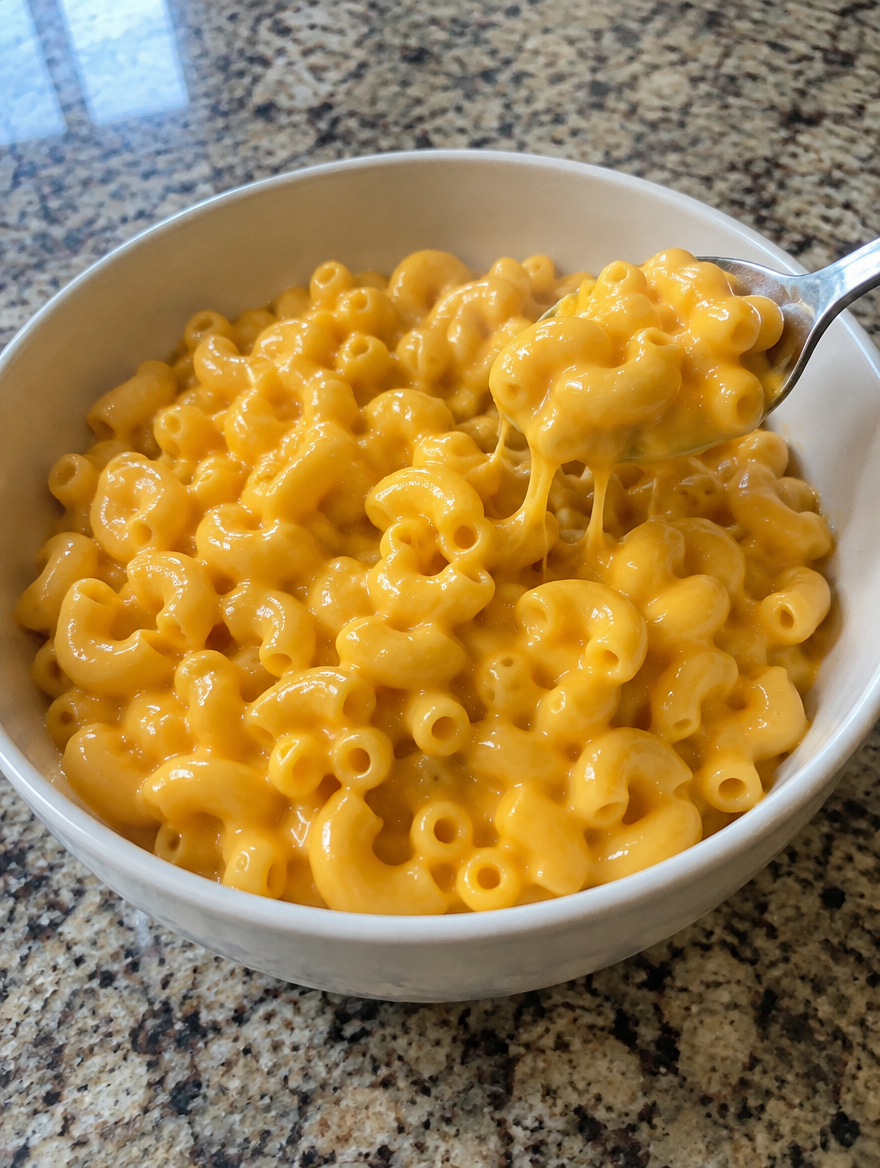
Quick Answer: 30-Minute Stovetop Mac and Cheese
Creamy stovetop mac and cheese with evaporated milk is a homemade, no-oven macaroni dish that uses a small amount of starchy pasta water, unsweetened evaporated milk, and freshly grated sharp cheddar to make a smooth sauce without baking or making a flour-based roux. Cook 12 ounces (340 g) dry elbow macaroni until just tender; reserve starchy cooking water and drain. Warm one 12-fl-oz (354 ml) can of unsweetened evaporated milk with 2 tablespoons (28 g) butter and optional Dijon, then gradually melt 12 ounces (340 g) freshly grated sharp cheddar into the warm liquid off the heat. Toss the pasta in the sauce, loosening with reserved cooking water as needed. Serve immediately while the sauce is glossy. The recipe makes six side servings or four generous main servings, with about 10 minutes of hands-on preparation and 20 minutes of cooking. There is no flour roux, bread topping, oven or processed cheese.
Recipe concept and measured ingredient draft
Makes four generous main-dish portions or six smaller sides.
- 12 ounces (340 g) dry elbow macaroni
- 1 can (12 fluid ounces / 354 mL) unsweetened evaporated milk, not sweetened condensed milk
- 12 ounces (340 g) sharp cheddar cheese, grated fresh from a block
- 2 tablespoons (28 g) unsalted butter
- 1 teaspoon Dijon mustard (optional, but contributes tang)
- 1/2 teaspoon kosher salt, plus salt for pasta water, adjusted to taste
- 1/4 teaspoon freshly ground black pepper
- 1/4 teaspoon garlic powder (optional)
- 1 cup starchy macaroni cooking water reserved before draining, with approximately 1/4 to 3/4 cup added by tablespoons only as needed
Estimated preparation: 10 minutes. Estimated cooking: 20 minutes. Estimated total: 30 minutes. These timings are editorial estimates, not results from a physical kitchen test.
Method: eight steps
Step 1
Set a large pot of water over high heat. Salt it moderately; because the cheese is salty, do not heavily salt the water without tasting the finished sauce.
Step 2
Grate the cheddar using the coarse holes of a box grater. Avoid preshredded cheese when possible: its anti-caking coating can affect smooth melting. Measure the remaining ingredients before the pasta finishes cooking.
Step 3
Add macaroni to the boiling water and stir promptly. Cook according to the package, checking a minute early. The noodles should be tender but not falling apart; they will be stirred in warm sauce.
Step 4
Before draining, carefully scoop out at least 1 cup of starchy cooking water. Drain the macaroni; do not rinse. Return the empty pot to the stove on low heat.
Step 5
Melt butter in the pot. Add evaporated milk, mustard, pepper, and optional garlic powder. Warm gently until steaming, not boiling. Boiling the dairy mixture aggressively can destabilize the eventual cheese sauce.
Step 6
Turn off the burner and move the pot away from direct heat. Add grated cheddar in three or four handfuls, stirring until each addition has mostly melted before adding the next. If the cheese resists melting, use only brief low heat, never a rolling boil.
Step 7
Fold in the drained macaroni. Stir gently until coated. Add reserved pasta water a tablespoon or two at a time to reach a glossy, flowing consistency. The sauce will thicken as it cools, so stop just before it looks as thick as you ultimately want.
Step 8
Taste and adjust salt and pepper. Serve promptly in warm bowls. Refrigerate leftovers within two hours in shallow containers.
Why evaporated milk works here
Evaporated milk is ordinary milk from which part of the water has been removed; it is sold shelf-stable in a can before opening. It is not sweetened condensed milk. The concentrated milk solids help make a full-bodied sauce without needing a separate flour-and-butter roux. The starch in a small splash of cooking water helps the sauce cling to macaroni while maintaining a looser texture. Cheese is still sensitive to heat: adding it off heat is the most important practical safeguard against graininess.
This is a stovetop method, not a baked casserole. There is no breadcrumb topping, oven time, bacon, pumpkin, bourbon, or chile. Those additions would change the dish’s intent and compete with distinct existing recipes on the site.
Ingredient choices and substitutions
Cheddar: Sharp cheddar supplies the familiar flavor. Freshly grate it to give the sauce the best chance of melting evenly. An extra-aged crumbly cheddar may produce a less predictable texture; if using one, replace part of it with a younger, better-melting cheddar. Do not promise a perfectly smooth sauce from every brand or aging level.
Evaporated milk: Check the can label carefully. Unsweetened evaporated milk is required; sweetened condensed milk will make an unpleasantly sweet dish. If you only have ordinary milk, this exact no-roux formula has not been validated for a one-to-one substitution. Use a separately tested conventional milk-and-roux recipe rather than asserting identical results.
Pasta: Elbows have a familiar texture and hold sauce in their curves. Small shells or cavatappi can work, but use the package timing and watch the water quantity. Gluten-free pasta may release starch differently and soften rapidly; reserve its cooking water but add it cautiously.
Mustard: Dijon contributes acidity and depth without turning the finished pasta into mustard mac. Omit it if preferred. A small amount of dry mustard could be trialed, but it has not been independently evaluated in this formulation.
Salt: Cheddar varies significantly in sodium. Start with less seasoning than you think you need, then taste the combined dish.
Troubleshooting
Sauce looks grainy: Excess heat is a common cause. Take the pot off the burner and stir in a little warm reserved pasta water. This may improve the texture, but cannot guarantee recovery of a sauce that has separated.
Sauce is too thick: Stir in pasta water a tablespoon at a time. Remember that the sauce will thicken further as the noodles absorb moisture.
Sauce is too thin: Let the pasta sit briefly off heat while stirring; the sauce often tightens as it cools. Do not boil it down vigorously after adding cheddar.
Macaroni tastes bland: Check the cheese flavor and salt before adding extra spices. This simple recipe relies on cheddar rather than many toppings.
Noodles are mushy: Cook the pasta just until tender and drain promptly. The sauce is not intended for a long bake or simmer.
Make-ahead, storage, and reheating
Mac and cheese has its best texture immediately after cooking. For a small head start, grate the cheese and measure the seasonings in advance; keep grated cheese refrigerated. Avoid leaving the finished dairy-based pasta on the counter for extended periods.
Transfer leftovers to shallow covered containers and refrigerate promptly, within two hours of cooking. Use refrigerated leftovers within three to four days. Reheat individual portions gently on the stove with a splash of milk or water, stirring frequently until thoroughly hot. For food safety, reheat leftovers to 165°F (74°C), checking with a food thermometer; avoid repeated cooling and reheating. Freezing is possible from a safety standpoint if promptly handled, but the cheese sauce may separate on thawing, so freezing is not recommended for the best texture.
Serving ideas
Serve as a main dish with a crisp green salad, steamed broccoli, or roasted vegetables. As a side, pair it with simply prepared chicken or vegetables. These are serving suggestions, not additional ingredients in the core recipe or the proposed image. Keep the featured image focused strictly on plain cheddar-coated elbow macaroni in a bowl, with no garnish that the recipe does not include.
Frequently asked questions
Can I use sweetened condensed milk instead of evaporated milk?
No. Condensed milk is sweetened and is not interchangeable with the unsweetened canned evaporated milk specified here.
Do I need to bake this macaroni and cheese?
No. It is deliberately cooked and served on the stovetop. There is no oven stage or breadcrumb crust.
Why add the cheddar off the heat?
High heat can cause a cheese sauce to become oily or grainy. Residual warmth helps melt grated cheese more gently.
Can I use preshredded cheese?
You can try it, but anti-caking ingredients may make melting less smooth. Freshly grated block cheddar is preferred.
What if I forget to reserve pasta water?
Add small splashes of warm water to adjust consistency. It will lack some of the starch that helps the sauce cling, so add cautiously.
Is this a one-pot recipe?
It uses one pot sequentially: cook and drain the macaroni, then prepare the sauce in that same pot. A colander and measuring cup are also useful.
Can I double it?
A larger batch needs a sufficiently wide pot for even mixing. Keep the same proportions initially, add cheese gradually, and adjust water by texture rather than assuming an exact amount.
Is it safe to leave it out for a party?
Keep hot food hot or refrigerate promptly. Do not leave perishable cooked macaroni and cheese at room temperature beyond the recommended two-hour limit (one hour in temperatures above 90°F/32°C).
What You Need for a Creamy Sauce
The success of this recipe depends more on heat control than a long ingredient list. A package of elbow macaroni, a can of unsweetened evaporated milk and a freshly grated block of cheddar make up most of the dish. Butter contributes richness, while a spoonful of Dijon can round out the cheese flavor. Small measured amounts of salt, pepper and optional garlic powder finish the sauce without turning it into a complicated bake.
Because this is a sauce based on cheese, it should not be boiled after the cheddar has melted. Heat can cause the cheese proteins to tighten and the fat to separate, leaving an oily film or small clumps. Evaporated milk helps the sauce stay creamy, but it cannot rescue every combination of overcooked cheese and excessive heat. A pot with a thick base and a burner that can hold low heat are useful tools.
If you are looking for a different baked comfort-food treatment, try our smashed onion mac and cheese casserole, which has a distinctly different flavor and oven-casserole intent. This article deliberately focuses on plain cheddar-coated elbows cooked and finished entirely on the stove.
Ingredient Measurements and What Each One Does
Elbow Macaroni: 12 Ounces Dry
Use 12 ounces (340 g) of dry elbow macaroni, not 12 ounces of cooked pasta. The familiar hollow curves hold pockets of cheese sauce. Pasta brands have different cooking times and can vary slightly in shape, so check the package and begin tasting early. If you use a large pasta shape, the sauce-to-pasta ratio and timing may feel different.
Cooking water is the only flexible liquid in this formulation. Reserve one cup before draining, then start by adding just a few tablespoons to the finished sauce. There is no reason to pour the entire cup in immediately: you cannot easily reverse a sauce that becomes watery.
Evaporated Milk: One Unsweetened Can
Select one 12-fluid-ounce (354 ml) can of unsweetened evaporated milk, often sold in the baking aisle. It is concentrated milk with part of its water removed. Sweetened condensed milk is not a substitute; it contains added sugar and would make savory macaroni unpleasantly sweet.
Shake the closed can as instructed if the product has separated during storage. After opening, use the amount called for and check the can for damage or a broken seal. Evaporated milk is shelf stable while safely sealed but becomes perishable once opened. This article does not propose replacing it with heavy cream, ordinary milk or plant-based beverage without reformulating the sauce.
Sharp Cheddar: Twelve Ounces
For cheddar, measure 12 ounces (340 g) after removing packaging and grate it from a block. The finer pieces melt more evenly than large cubes. A very old, crumbly extra-sharp cheddar can be less forgiving than a younger sharp cheddar; choose one you enjoy eating that melts reasonably well.
Pre-shredded cheddar is convenient, but anti-caking ingredients can make the texture less predictable. That does not mean all packaged shredded cheese will fail; it means freshly grated cheese gives you one less variable. Do not force the cheese to melt by returning the pot to a high boil.
Butter, Dijon and Seasonings
Melt 2 tablespoons (28 g) unsalted butter before warming the evaporated milk. A teaspoon of Dijon mustard is optional. It contributes a little tang and can soften the perception of richness without turning the dish into mustard-flavored macaroni. Black pepper and a little salt are sufficient for the plain cheddar sauce. A quarter-teaspoon of garlic powder is also optional.
The salt content of sharp cheddar is significant, and some pasta water will already be salted. Start with the recipe’s modest half-teaspoon seasoning proposal and taste after the cheese sauce is mixed. Avoid adding a large amount of salt before you know what the cheese contributes.
The Equipment That Makes This Easy
You need a large sturdy pot, a colander, a measuring cup for pasta water, a grater, a whisk or heatproof spatula and an ordinary serving spoon. A heavy-bottomed pot helps distribute heat evenly. There is no baking dish, no oven-safe casserole and no broiler step.
Grate the cheddar before the macaroni finishes cooking. Having the cheese ready matters: if you start grating after the evaporated milk is heated, it may simmer too long while you work. A clean measuring cup also prevents the common mistake of draining away all the pasta water.
The one-pot description refers to cooking macaroni and then sauce sequentially in the same pot. You still need a colander and a place to catch the drained pasta. Avoid interpreting it as a no-drain pasta method unless you deliberately use a different formulation.
Detailed Cooking Method
The eight steps above are written in the correct order. To make the sequence reproducible, keep these checkpoints in mind: (1) the elbows are only just tender, not falling apart; (2) starchy water is reserved before draining; (3) evaporated milk is warmed gently; (4) cheddar melts in small additions with the burner off; and (5) the pasta is folded through a sauce that looks slightly looser than the final plated dish.
Be patient at the cheese stage. If the pot is very hot from boiling macaroni, briefly lift it away from the burner after the butter and milk warm. Add the first handful of cheddar and stir until nearly dissolved before adding the next. Cheese sauce often appears thin while it is warm but coats pasta more heavily after it stands for a minute or two. Do not solve that appearance by boiling for several minutes.
Once the macaroni is mixed in, serve promptly. Leaving cooked elbows sitting on a warm burner can make them softer and can thicken the sauce until it becomes sticky. This recipe is designed as a quick fresh dinner, not a pasta dish intended to bake for another half hour.
Why the Sauce Can Turn Grainy
Cheddar contains fat, moisture and proteins that respond differently to heat. If you heat a mixture too aggressively, liquid fat can separate and proteins can form a grainy texture. A pot that looks smooth when evaporated milk is added can still separate if the cheddar is boiled for too long.
The practical solution is to use freshly grated cheese, moderate warmth and small additions. Off-heat stirring takes advantage of the residual heat in the pot. If the cheese resists melting, return to the lowest possible heat only briefly while stirring. Do not crank the burner to high.
The ingredient and cheese-sauce science is also discussed by Serious Eats in its guide to grainy mac and cheese. The main lesson is that smooth sauce depends on heat, moisture, suitable cheese and emulsification. This MySavorista version uses a measured can of evaporated milk and a separate drain-and-return method, rather than copying a particular no-drain three-ingredient recipe.
Getting the Right Thickness Without Flour
You do not need a flour-and-butter roux for this particular recipe. The evaporated milk brings concentrated milk solids to the sauce, cheddar adds body and the reserved starchy pasta water makes the consistency adjustable. Start with the sauce just thick enough to coat the pasta, then add reserved water in small amounts until it turns glossy and spoonable.
Adding too little water can make the macaroni clump together as it cools. Adding too much can leave a watery pool at the bottom of the bowl. The instructions call for approximately a quarter to three-quarters cup as needed, not a requirement to use the whole amount. Pasta releases different amounts of starch into the cooking water depending on brand, pot size and how much water it was boiled in.
Do not attempt to fix an overly thin sauce by scattering dry flour into a warm cheese mixture. Raw flour can form lumps, and that would make it a different recipe. Let the mixed pasta sit briefly away from the burner so the sauce settles, then reassess.
Six Common Mac-and-Cheese Mistakes
Using condensed milk: This is the biggest label mix-up. Evaporated milk must be unsweetened. Sweetened condensed milk is not a savory sauce shortcut.
Boiling cheddar: Once cheese enters, high heat can ruin an otherwise smooth sauce. Turn the burner off or use the briefest lowest heat necessary.
Forgetting pasta water: Scoop it out before the colander. You may not need much, but it provides the option to loosen the sauce without changing the entire ingredient list.
Overcooking the elbows: Pasta that becomes mushy while boiling cannot recover its structure after being mixed with cheese. Taste near the package’s lower cooking time.
Using a pre-grated very dry cheese blend: Different cheeses and anti-caking ingredients melt differently. A block of sharp cheddar gives more control over the outcome.
Waiting too long to serve: Stovetop macaroni is best warm and fresh. A thick, cooling cheese sauce is not a sign that the recipe needs a final oven stage.
How This Differs From Baked Mac and Cheese
The defining feature is the lack of oven cooking. Once macaroni is drained and the cheddar sauce is assembled, the dish is ready to eat. There is no breadcrumb crust, baking time, broiler, casserole topping or waiting for a bubbly brown surface.
Our bacon mac and cheese casserole with a crunchy topping is an intentionally different dish with bacon and an oven-style crust. It fits a more elaborate dinner or party side. This plain stovetop version avoids those extras and emphasizes sauce texture, low heat and speed.
For another variation using vegetables, our creamy pumpkin mac and cheese casserole uses a different flavor base. Don’t add pumpkin to this recipe and still present it as the same simple evaporated-milk cheddar macaroni. Clear distinctions help readers choose and prevent nearly identical pages from competing for the same search intent.
Serving Sizes and What to Serve Alongside
The full batch is intended for about six side portions or four generous main portions. Because 12 ounces of dry pasta expands as it cooks and the sauce contains a large amount of cheese, a small side portion can be satisfying alongside vegetables. A main portion may be paired with a salad or steamed greens prepared separately.
A side suggestion is not an ingredient in the core recipe. The photographed bowl should show plain cheddar-coated elbows, not broccoli, peppers or crumbled bacon. Serving the dish with vegetables on a separate plate doesn’t change its mac-and-cheese identity.
For a related creamy pasta without elbow macaroni, creamy Parmesan garlic orzo in one pot is another published MySavorista recipe. It uses a different pasta shape and cheese profile. Its cooking time and liquid amount are not interchangeable with this recipe.
Planning Ahead Without Losing Sauce Quality
The best short advance step is to grate cheddar, measure butter, open your pantry ingredient list and set out the seasonings. Keep grated cheese refrigerated until cooking. If you are serving family, start warming plates and preparing vegetables before draining the pasta; then everyone can eat while the sauce is glossy.
For a larger gathering, doubling the amounts might work in an appropriately large pot, but it is not independently kitchen-tested at double scale. A wider pot helps the pasta mix with sauce evenly. Avoid making a giant batch in a very narrow container, where the bottom may overheat while the top remains cool.
This is not a freezer-first casserole recipe. A previously frozen dairy cheese sauce can separate and become less smooth on thawing. If you plan to make it ahead, understand that refrigeration and reheating can alter its texture even when food-safety practices are followed.
Dairy Safety and Leftover Storage
Milk, butter and cheddar are perishable ingredients once opened or removed from their appropriate storage conditions. Keep the cheese refrigerated before preparation. Once the pasta is cooked, serve it hot and promptly chill any leftovers in clean shallow containers instead of leaving a pot on the kitchen counter overnight.
FoodSafety.gov’s guidance on leftover food safety recommends refrigerating perishable leftovers within two hours, or one hour if the surrounding temperature exceeds 90°F (32°C). Use properly refrigerated leftovers within approximately four days and reheat them thoroughly to 165°F (74°C). Those are general food-safety practices, not a laboratory validation of this particular untested recipe.
For texture, place a small leftover portion in a saucepan with a spoonful of milk or water and warm while stirring. Do not treat gentle heat as proof of a food-safe internal temperature: measure the center with an appropriate food thermometer and verify 165°F throughout. Heating enough for safety may soften or thicken the sauce, so use the extra liquid sparingly and serve promptly after reheating.
Additional Frequently Asked Questions
Can I make this without evaporated milk?
That would be a different formula. Ordinary milk has different concentration, and a no-roux cheddar sauce made with it may be less stable. For this original recipe, purchase unsweetened evaporated milk rather than promising a direct substitute.
Is sharp cheddar required?
Sharp cheddar is the intended flavor, but you can experiment with medium cheddar if you prefer a milder taste. A very aged, dry cheddar may not melt as smoothly. The specific result with other cheeses has not been physically tested.
How do I prevent an oily sauce?
Avoid boiling once the cheese is added. Move the pot off the burner, melt cheddar in several additions and keep enough moisture for a smooth sauce. If separation has already occurred, a little warm starchy water may help, but not every broken sauce can be fully recovered.
Why does the sauce thicken after serving?
As the dish cools, cheese firms up and pasta continues absorbing moisture. That is why the sauce can look a little loose just before it goes into the serving bowl. It should be glossy, not watery.
Can I use shells or cavatappi?
You can use another short pasta as a separate variation, but follow its package cooking instructions and add reserved water according to texture. Large pasta shapes hold sauce differently from small elbows.
Can I add bread crumbs?
Bread crumbs are not in this plain stovetop recipe. Adding them creates a different topping and could draw the dish toward the baked casserole recipes that already exist on MySavorista.
Does this contain gluten or milk?
Yes. Elbow macaroni is generally made from wheat, and the sauce includes evaporated milk, butter and cheddar. Check packaged foods and cross-contact warnings if you cook for someone with an allergy.
Can I prepare it the night before?
You can prepare ingredients in advance, but the complete sauce is best served freshly cooked. Refrigerated finished mac and cheese generally loses some of its original glossy texture even when reheated safely.
Final Tips for Better Stovetop Macaroni
Use an actual block of cheddar, grate it before the macaroni is done, and use unsweetened evaporated milk. Drain pasta only after setting aside its starchy water. Warm the dairy gently and add cheddar gradually with the burner turned off, then adjust the sauce with small spoonfuls of pasta water. The cooked elbows should be coated evenly and served promptly.
This is one possible original home-cooking formulation among many ways to make stovetop macaroni and cheese. The proportions were developed through AI-assisted editorial preparation and has not been independently kitchen-tested. Results may differ with specific cheeses, pasta and equipment. Any featured food photograph is an AI-generated illustration rather than a photo of an independently cooked batch. No verified nutrition calculation or allergy-free certification is claimed.
Print
Creamy Stovetop Mac and Cheese With Evaporated Milk
- Prep Time: 10 minutes
- Cook Time: 20 minutes
- Total Time: About 30 minutes, including boiling water and pasta cooking
- Yield: 6 side servings or 4 generous main servings 1x
- Category: Comfort Classics & Casseroles
- Method: Stovetop saucepan: boil and drain elbow macaroni, melt cheddar off heat into warm evaporated milk, fold cooked macaroni through sauce
- Cuisine: American
Description
Creamy cheddar elbow macaroni made entirely on the stovetop with unsweetened evaporated milk, freshly grated sharp cheddar, gentle low heat and reserved starchy pasta water; no flour roux, baking or breadcrumbs.
Ingredients
12 oz (340 g) dry elbow macaroni
1 can (12 fl oz / 354 ml) UNSWEETENED evaporated milk, not sweetened condensed milk
12 oz (340 g) sharp cheddar cheese, freshly grated from a block
2 tbsp (28 g) unsalted butter
1 tsp Dijon mustard, optional for tang
1/2 tsp kosher salt to start, plus modest salt in pasta water as desired, adjust after tasting cheese
1/4 tsp freshly ground black pepper
1/4 tsp garlic powder, optional
1 cup starchy hot macaroni cooking water RESERVED before draining; use roughly 1/4–3/4 cup by tablespoons as needed for texture
Instructions
Grate all 12 oz (340 g) sharp cheddar freshly from block; measure the 12-fl-oz can of unsweetened evaporated milk, 2 tbsp unsalted butter, Dijon and seasonings. Prepare a large heavy-bottomed saucepan, colander, heat-safe spatula and measuring cup.
Bring about 3 quarts (2.8 L) water to a boil. Salt moderately and add 12 oz (340 g) elbow macaroni; stir and cook according to package until just al dente, checking early to avoid mushy noodles.
Before draining pasta, reserve at least 1 cup starchy hot cooking water in a heat-safe measuring cup. Drain macaroni thoroughly in a colander; DO NOT rinse it. Use the emptied same pot for sauce.
Over LOW heat, melt 2 tbsp (28 g) unsalted butter in emptied pot. Add 12 fl oz (354 ml) unsweetened evaporated milk and optional 1 tsp Dijon. Warm gently until steaming, NOT vigorously boiling; stir to combine.
TURN OFF heat and move pot away from active burner. Add grated cheddar in 3–4 handfuls, stirring each portion until nearly melted and glossy before adding another. Use only brief very low heat if essential, never boil after adding cheese.
Stir in 1/2 tsp kosher salt to start, 1/4 tsp black pepper and optional 1/4 tsp garlic powder. Use reserved hot pasta water 1–2 tbsp at a time, approximately 1/4–3/4 cup TOTAL AS NEEDED, to make glossy creamy sauce; do not automatically add the full cup.
Fold the fully cooked, drained elbow macaroni gently into the warm cheese sauce. Stir 30–60 seconds over the very lowest heat or off heat until evenly coated. Taste and correct salt and pepper cautiously, as cheddar sodium varies; sauce thickens on standing.
Serve immediately in warm bowls as 6 sides or 4 generous mains. For leftovers, transfer promptly to shallow covered containers and refrigerate within 2 hours at 40°F (4°C) or lower (within 1 hour above 90°F); use refrigerated leftovers within 3–4 days and reheat to 165°F (74°C) throughout, loosening gently with a splash of water or milk as needed.
Notes
This original AI-assisted recipe has NOT been independently kitchen-tested. Any featured image is AI-generated illustration, not a physical cooked or independently-tested batch. Unsweetened EVAPORATED MILK, not sweetened CONDENSED MILK. No flour roux or processed cheese, no oven/baking/breadcrumbs, no bacon/chiles/vegetables. Important: once cheese is added, keep heat LOW or OFF to reduce risk of sauce breaking; freshly grated cheddar preferable to highly aged/preshredded. Gluten allergen in wheat elbow macaroni, milk allergen in evaporated milk, butter, cheddar. 12 oz is DRY pasta, 12 oz is weight of CHEDDAR, and 12 fl oz is volume of evaporated milk—do not mix units. Reserve 1 cup pasta water but use 1/4–3/4 cup as needed, add slowly. Store cooked dairy pasta safely =165°F measured with thermometer, note texture may change. No invented numeric nutrition or medically validated health claims.
Nutrition
- Serving Size: 1 of 6 side servings (or 1 of 4 generous mains)
Keywords: stovetop mac and cheese with evaporated milk, creamy cheddar macaroni, easy homemade mac and cheese, no roux mac and cheese