
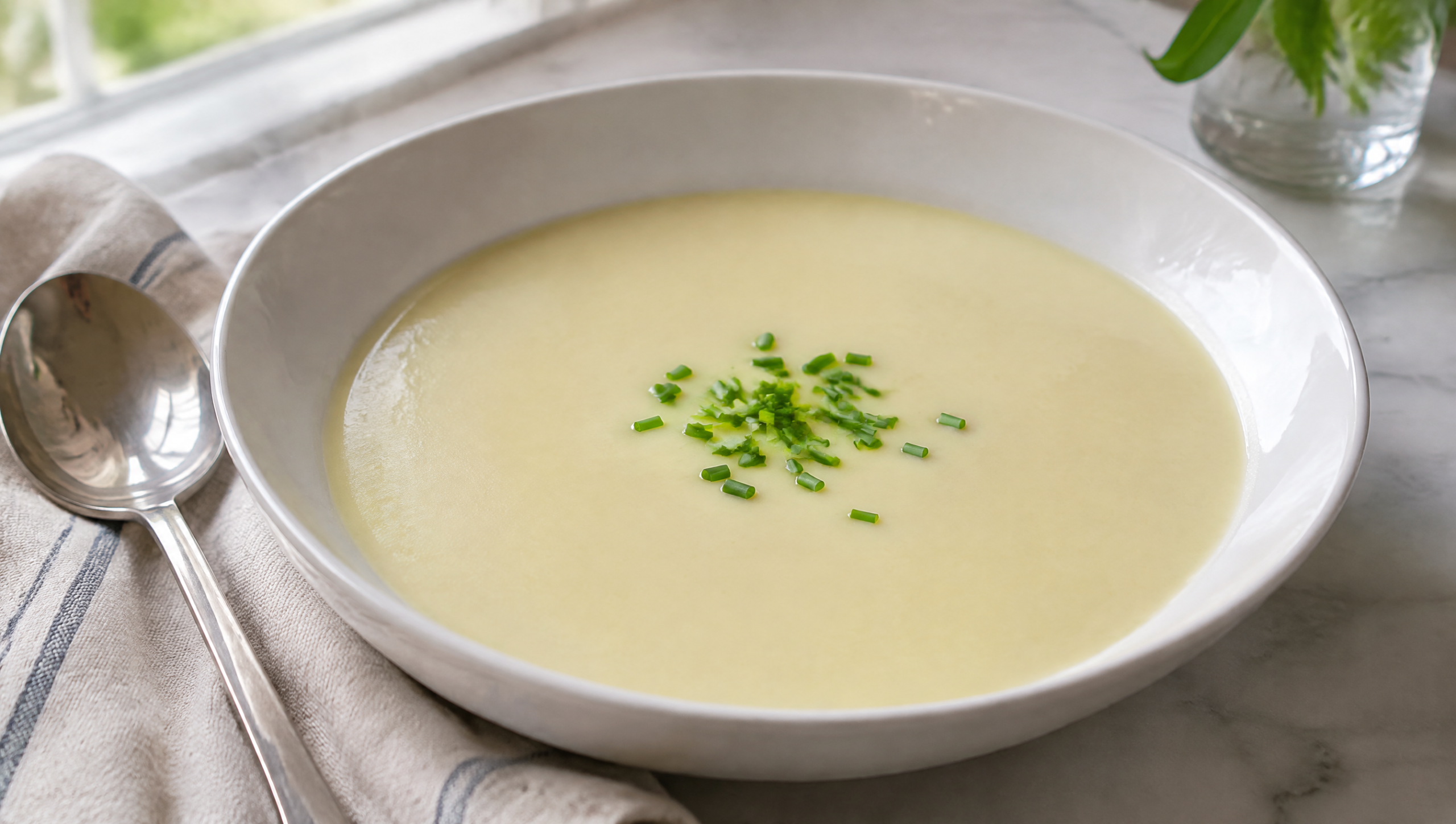
Quick answer. This vichyssoise recipe makes a silky, chilled potato and leek soup with Yukon Gold potatoes, tender leeks, a small onion, low-sodium vegetable broth, butter, and heavy cream. Cook the vegetables gently without browning, simmer until the potatoes are tender, blend just until smooth, then chill safely and serve cold with finely chopped chives. The soup is pale ivory with a faint green tint, not a brightly colored purée or a chunky potato chowder. It is designed for six appetizer portions.
Vichyssoise is a useful make-ahead soup, but the cold serving temperature makes good chilling practices essential. Transfer the blended soup to shallow containers and refrigerate promptly; never let a large pot sit at room temperature for several hours while cooling. The cooked potato and cream base needs to be kept cold until service. This version is a clear single-recipe formula with measured ingredients, a predictable workflow, and practical troubleshooting for soup that tastes flat, becomes too thick, or develops a gluey texture.
Editorial disclosure: this recipe has not been independently kitchen-tested. It is an original digitally assisted recipe formulation, not a preparation independently cooked and measured in a physical test kitchen. Exact yields, times, and textures can vary by potato variety, leek size, and equipment. There are no invented ratings, nutrition lab results, or verified search-volume claims. The accompanying images are independently generated digital food illustrations, not photographs of this recipe from a physical test kitchen.
What is vichyssoise?
Vichyssoise is a creamy soup built around leeks and potatoes, traditionally served cold. The method is deliberately gentle: soften the leeks rather than caramelizing them, simmer potatoes until tender, purée the vegetables with the cooking liquid, and finish with a dairy component for a smooth, rounded mouthfeel. Chives are a familiar garnish because they provide a fresh, mild onion note without overwhelming the subtle flavor of the soup. Unlike a rustic potato leek soup, the defining feature of vichyssoise is its refined texture and chilled serving temperature.
The dish is commonly associated with French-born chef Louis Diat and New York’s Ritz-Carlton in the early twentieth century, with its roots in the everyday French tradition of leek-and-potato soup. Rather than claiming this specific version reproduces a historical original, it is more accurate to describe it as a contemporary home-kitchen adaptation of the classic chilled style. The ingredient list and cooking order are meant to be accessible in an ordinary American kitchen.
Why this recipe uses Yukon Gold potatoes
Potatoes are the body of the soup. Yukon Golds have a naturally creamy quality and are easy to find in many U.S. grocery stores. They soften readily in broth and produce a velvety texture when blended carefully. For six small bowls, 500 grams of peeled, diced potatoes is a practical starting amount; the result should feel substantial without turning into mashed potatoes. You can use another all-purpose potato, but the viscosity and finished taste will change.
Choose firm potatoes without large green patches or obvious spoilage. Peel them and cut them into even half-inch cubes so that the simmering time is consistent. Rinse briefly if there is visible surface starch, but there is no need for a long soak. Overcooking is less troublesome than undercooking here, because any firm piece can leave a grainy purée. The goal is tender cubes that crush easily when pressed, followed by restrained blending.
Choosing, trimming, and washing the leeks
Leeks trap fine soil between their layers. Trim off the dark green tops and tough roots, keep the white and tender pale-green sections, and split the stems lengthwise. Fan the layers under cool running water and check the inner folds for grit. Slice them into thin half-moons only after they are clean, then drain well. Aim for about 600 grams of prepared leeks, measured after trimming rather than before; three medium leeks may be enough, but sizes vary.
The darker, tougher greens are not included in this silky soup because they can make the purée stringy. If you like, save suitable clean trimmings for a separate stock project, but do not put dirty or woody pieces into the pot. The washed leeks should smell fresh and sweet. If water remains trapped between the layers, let the pieces drain briefly; excess washing water slightly changes the starting liquid amount, although it is less important than the measured broth.
All the measured ingredients for six bowls
The base calls for 600 grams cleaned and sliced leeks, 500 grams peeled Yukon Gold potatoes, one small yellow onion weighing approximately 120 grams, 30 grams unsalted butter, 800 milliliters low-sodium vegetable broth, and 180 milliliters heavy cream. For seasoning, start with about three-quarters of a teaspoon of fine salt, then adjust to taste after chilling. Add a small pinch of white pepper if you like, and finish with two tablespoons finely minced fresh chives.
Measure the broth and cream rather than guessing by how full the pot looks. The potatoes thicken the soup as it cools, so a very small amount of additional cold broth may be needed before serving. Using unsalted butter and low-sodium broth gives better control over the final salt level. If you choose chicken broth instead, it will produce a different version and the soup will no longer be vegetarian. This recipe does not require flour, garlic, bacon, cheese, or potatoes that were baked first.
The right pot and blender
A heavy-bottomed pot of about four to five quarts provides enough space for the leeks, potatoes, and broth. Use a lid while the vegetables simmer, but keep the heat moderate so the liquid does not boil away. A wooden spoon or silicone spatula is useful for stirring during the first phase. An immersion blender lets you purée directly in the pot with less transfer; a countertop blender may produce a particularly fine texture but requires more care with hot liquids.
Hot soup can expand and splash in a sealed blender. If using a countertop model, follow the manufacturer’s hot-liquid instructions, work in small batches, and allow steam to escape as directed. Do not fill a blender to the rim with hot soup. Purée only until the ingredients are smooth, since prolonged vigorous processing of potatoes can make the texture gummy. A fine-mesh sieve is optional for those who prefer a restaurant-style finish, but it is not essential to make a good bowl.
Step one: soften the leeks without browning
Melt the butter over medium-low heat, add the cleaned leeks and finely diced onion, and stir until every piece is lightly coated. Cook for about eight to ten minutes, stirring every so often. You are looking for tender, translucent vegetables and a mellow fragrance. If you hear aggressive sizzling or see brown edges forming, lower the heat and add a tablespoon of water. Browning will not ruin all soup, but it changes the flavor and the pale color expected from this particular vichyssoise.
The first phase is not a caramelization step. Leeks contain enough moisture to soften gently, and the covered simmer that follows will finish the vegetables. Avoid adding the cream here: it belongs at the end, after the base has been fully cooked and blended. Season lightly rather than salting heavily from the start, because broth brands contain different amounts of sodium and the chilled soup may taste different from the warm mixture.
Step two: simmer the potatoes in broth
Add the diced potatoes to the softened leeks and stir for about one minute to coat them. Pour in 800 milliliters of low-sodium broth, bring to a gentle simmer, then partly cover the pot. Maintain small bubbles rather than a hard boil for roughly 18 to 22 minutes. Stir once or twice so potato pieces do not settle on the bottom. If the liquid falls below the vegetables because of rapid evaporation, add only a little hot water.
To check doneness, lift a potato cube and press it with the back of a spoon. It should crush without resistance or a chalky center. A knife should slide in easily, too. If the potatoes remain firm, simmer for a few additional minutes instead of relying on the clock. A completely cooked base is important because blending cannot make undercooked potato starch taste properly cooked. Keep the vegetable mixture simple and avoid tossing in a handful of raw herbs, which would change both the flavor and color.
Step three: purée for a smooth, not gluey, texture
Remove the pot from the heat and let the vigorous bubbling stop. Purée the cooked vegetables with an immersion blender, using slow movements and short bursts until no obvious chunks remain. You may also blend carefully in small countertop batches according to your machine’s safety instructions. The soup should pour off a spoon in a cohesive stream rather than hold stiff peaks. It can seem slightly thinner while warm; refrigeration will make the potato starch firmer.
Overblending is the common texture trap. Potatoes release starch during processing, so an extended high-speed blend can turn the purée stretchy or pasty. Stop as soon as the mixture looks smooth. If you want an especially fine texture, pass the blended soup through a mesh sieve instead of repeatedly running the blender. The goal is a light, silky liquid that can be sipped or eaten with a spoon, not a whipped potato mixture.
Step four: add the cream and season thoughtfully
Stir in 180 milliliters heavy cream once the hot purée is no longer rapidly boiling. The dairy softens the earthy edges of the potato and balances the mild sweetness of the leeks. Add the initial measured salt and a little white pepper, then taste cautiously. This is a preliminary seasoning check; a soup served cold may seem differently seasoned than the same soup while warm. Hold back from large additions until it has chilled completely.
If the warm base looks too thick, resist adding a cup of water immediately. The texture will change as it cools, and it is easier to thin a cold bowl with measured spoonfuls of chilled broth than to recover flavor from an overly diluted pot. Stir well before transferring to refrigeration-safe containers. Heavy cream is a defining ingredient in this version; replacing it with milk or a plant-based product is possible only as a different, reformulated soup.
Step five: chill safely before serving
Divide the soup into several shallow, clean containers rather than leaving a deep pot on the counter. Refrigerate promptly at 40°F (4°C) or colder, following food-safety guidance for cooked leftovers. Do not leave a pot of soup at room temperature for more than two hours; one hour is the general limit when the surroundings are above 90°F. The refrigerator, not a warm countertop, is where the soup should finish cooling. Cover properly once the soup has cooled in the refrigerator.
Chill for at least about two hours, and preferably until thoroughly cold all the way through, before serving. The actual time depends on container depth and refrigerator temperature. If you are preparing for guests, making the soup the day before can simplify the schedule. That is a planning recommendation, not a license to leave it outside the refrigerator. Use a clean spoon each time you taste, and return any remaining portions to cold storage quickly.
Adjusting texture after refrigeration
Cold potatoes absorb and bind liquid, so vichyssoise often thickens substantially in the refrigerator. Stir the chilled soup before serving. If it is too thick to pour comfortably, whisk in one tablespoon of cold low-sodium broth at a time until the desired texture returns. If you add too much liquid, the soup will taste bland and watery; add in small increments. A little extra cream can make it richer, but increasing cream also alters the flavor and serving amount.
The soup should coat the spoon lightly while still flowing easily. It does not need to be as thin as milk, but it should not be difficult to ladle. If you see separated liquid on top, stir gently rather than blending for another minute at high speed. A smooth chilled purée can settle naturally in storage. Discard any portion with unusual odor, obvious spoilage, or unsafe storage history; stirring cannot make poorly stored dairy soup safe.
How cold should vichyssoise be served?
Serve it cold from the refrigerator, not frozen or icy. A soup that is too cold to perceive its delicate flavors may benefit from a few minutes in the serving bowl, but do not leave it sitting on a buffet table for a long time. For a summer lunch or dinner party, bring out only the portion you will serve and keep the rest chilled. Prechilled bowls are a nice presentation detail if you have time, but clean ordinary bowls are entirely suitable.
Classic vichyssoise can be served as a small first course with a few chives scattered over the surface. Its appeal comes from the pale, smooth soup and restrained garnish. Avoid turning it into an overloaded loaded-potato soup with bacon, cheddar, or piles of crunchy toppings: that produces a different dish and changes the recipe identity. A pinch of finely cut chives contributes a fresh aroma without covering the mellow leek-and-potato base.
Common mistake: browned leeks
The leeks should soften, not fry until golden. Too much heat makes thin slices brown at their edges and brings a toasted flavor into a soup intended to taste delicate. If you notice the pot drying out, add a tablespoon of water, stir, and lower the burner. You can continue if the leeks have only a little color, but the final soup may be darker. If anything burns and tastes bitter, do not scrape scorched residue into the broth.
Another reason for dark specks is including tough dark-green leek leaves. They are not necessarily inedible, but they can be fibrous and visually overpower the pale soup. Trim the leek carefully and wash the tender parts well. This is one of the simplest ways to improve the final appearance without adding extra dairy or making the recipe more complicated. Better trimming also reduces the risk of grit in a purée that cannot easily be fixed after blending.
Common mistake: soup tastes flat when cold
Cold soup can seem less aromatic than warm soup, and potatoes absorb a surprising amount of perceived seasoning. Start with low-sodium broth so the finished salt level is under your control. After the soup has chilled, taste a small spoonful and adjust with a pinch of salt if it truly needs it. Do not automatically add strong acid, garlic, or pepper; those ingredients can overwhelm the understated leek flavor. Fresh minced chives provide a gentle lift at the table.
If the finished soup is both bland and thin, it may have been diluted excessively during the cooking or cooling stages. Next time, use the listed 800 milliliters of broth and add only measured amounts after chilling. A dash of extra cream will not restore lost potato and leek flavor. It changes richness more than it changes the base. The best fix is controlling the initial ratio and blending the fully tender vegetables so the soup has real body.
Common mistake: gummy or stretchy soup
A gluey texture usually means the potatoes have been processed too aggressively. This happens most often when an immersion blender runs continuously long after the lumps have disappeared, or when a countertop blender is used at maximum speed for an extended time. Cook potatoes until tender, then purée just enough to create a consistent texture. There is no advantage to continuing for several minutes once the soup is already smooth.
Adding more cream may loosen a small portion that is only slightly overthick, but it cannot reverse a seriously gummy potato structure. If the soup has become unpleasantly elastic, consider it a useful learning point and shorten the blending time for the next batch. Choosing an all-purpose potato such as Yukon Gold helps, but technique remains important. Do not blame only the potato variety if the blending process was extended and vigorous.
Can you serve vichyssoise warm?
Yes, you can serve the cooked potato-and-leek soup warm, but the chilled presentation is the defining version discussed here. If you want a hot leek-and-potato soup, adjust the seasoning at the temperature where you plan to eat it and skip the refrigeration step for immediate service. However, do not treat the hot and cold serving styles as identical: a warm bowl may feel looser and more aromatic than the same soup after two hours in the refrigerator.
If making it warm from the beginning, avoid hard boiling once the cream has been added. Warm gently over low heat and stir until evenly hot. For a chilled version prepared yesterday, reheating individual portions is possible, but repeated heating and cooling of the entire batch is less practical and not recommended. Decide before serving how much soup you need and keep the remainder refrigerated.
Why the soup is a good make-ahead appetizer
Vichyssoise has an advantage over many last-minute appetizers: the final bowl is intentionally cold. You can cook the base earlier, portion it into shallow containers for safe refrigeration, and prepare the chives shortly before guests arrive. The main work is completed while the kitchen is quiet, leaving only a texture check and final seasoning before service. Choose bowls that are easy to carry and portion six small servings rather than presenting an enormous bowl before a substantial main course.
Keep the soup refrigerated during meal preparation and carry it to the table when everyone is ready. This is especially important with cream-based soup. A chilled pot is not a safe centerpiece to leave out for the whole afternoon. If you want a second soup option for guests who prefer warm food, MySavorista’s creamy harvest vegetable soup offers a different seasonal flavor profile; follow that article’s own ingredient amounts and instructions.
Serving ideas that preserve the classic character
A small ceramic bowl topped with finely sliced chives is enough. A tiny extra swirl of cream can look pretty, but it is optional and should not hide the color of the soup. Pair the bowl with plain crusty bread or a light salad instead of a very rich garnish. Since the soup already includes potatoes and dairy, a simple accompaniment often makes a more balanced course. Keep the garnish edible and proportionate rather than adding flowers or herbs that do not belong in the recipe.
At a dinner party, this is well suited to a first course before roast chicken, fish, or a vegetarian main. For a different cozy potato-based main course, the site also offers classic beef stew with carrots and potatoes; it is served hot and uses a separate method. For a comforting alternative, the site’s Mexican albóndigas soup is an entirely different hearty bowl with meatballs and rice. Linking the two helps readers choose between a cool creamy starter and a warm substantial soup without implying they share a method or ingredient list.
What to do if you do not have heavy cream
Heavy cream gives this version its smooth dairy finish and is easiest to incorporate consistently. Half-and-half or plain milk will create a lighter, thinner soup that may need a different broth-to-potato balance. A dairy-free substitute may change the flavor and texture even more. Rather than claiming an untested one-for-one replacement works perfectly, treat those as variations requiring their own measurements and a taste check after refrigeration.
If dietary needs are important, use a purpose-designed dairy-free potato-leek soup formula instead of relying on substitutions in a classic cream-based recipe. The base includes butter and dairy cream, and it is not vegan or dairy-free as written. Broth labels should also be checked for allergens and additives that matter to the person being served. The recipe itself does not intentionally include gluten-containing flour, but that is not a certification that all purchased ingredients are gluten-free.
Vegetarian stock versus chicken stock
Low-sodium vegetable broth keeps this version suitable for many vegetarian diets while providing a savory background for the leeks and potatoes. Choose a neutral broth that does not taste strongly of tomato, pepper, or aggressive herbs. A highly seasoned soup base can dominate the final cold flavor. If the broth is already salty, reduce the starting salt and adjust after chilling instead of trying to calculate a universal amount from different packaged products.
Chicken stock can be used in a traditional-style soup, but it changes the dietary classification and may taste richer. Do not promise the same calorie count or sodium profile after such a substitution. Since the recipe was not independently lab-tested, no numerical nutrition panel is supplied. Practical cooking success here depends on the texture, balance, and safe chilling of the soup rather than on a falsely precise nutrition estimate.
Ingredient scaling for a larger gathering
The six small servings are designed as appetizer bowls. For twelve, it is usually easier to make two batches or use a larger heavy pot rather than crowding the original. Doubling the ingredients gives more soup, but it does not mean the larger volume will cool in the same amount of time. Divide the cooked purée into numerous shallow containers so heat can dissipate rapidly under refrigeration. Do not try to chill a tall, tightly covered stockpot full of hot cream soup.
Keep a measured record of how much extra broth or cream you add at the end. If one batch is a little thicker than another, combine them only after both are safely chilled and adjust the final texture gently. When serving a crowd, prepare the chives and portion the soup with clean utensils. Replenish bowls from the refrigerator instead of setting the entire supply on the table for a long meal. Those precautions matter more with a dairy-rich chilled soup than with a hot broth served immediately.
How to store leftovers safely
Vichyssoise contains cooked potatoes, leeks, broth, butter, and cream, so leftovers are perishable. Transfer them into shallow, covered food-safe containers and refrigerate promptly at 40°F or colder. U.S. food-safety guidance says perishable food should not remain at room temperature for more than two hours, or one hour above 90°F. Plan to use properly refrigerated leftovers within three to four days, and discard any soup that was left out too long even if it still smells normal.
If you plan to freeze a portion, do so promptly. Creamy potato soups may separate or become grainy after thawing, so the quality can be lower even when storage was handled correctly. Thaw in the refrigerator and whisk gently to recombine; avoid long stretches at room temperature. Store chives separately and add them fresh before serving. Never present chilled dairy soup as shelf-stable simply because it has been boiled during the first stage.
The difference between vichyssoise and potato leek soup
Potato leek soup is a broad family of preparations. It can be rustic or smooth, hot or cold, enriched with dairy or left relatively light. Vichyssoise refers more specifically to the smooth, cream-finished leek-and-potato style traditionally served chilled. In this article, the recipe includes a measured cream finish and a deliberate refrigeration stage. Those choices are why the title emphasizes the chilled soup rather than just listing potatoes and leeks.
An ordinary hot potato leek soup can be delicious without following every one of these steps, but it is not automatically identical. A warm soup might use more broth, allow chunks, or be seasoned more assertively. Vichyssoise invites restrained flavors and a refined mouthfeel. Understanding the distinction lets readers choose the correct formula for the eating experience they want, instead of simply chilling any leftover potato soup and assuming the result will be the same.
Why chives are the best finishing touch here
Fresh chives add a clean onion aroma that echoes the leeks without adding an aggressive bite. Two tablespoons finely minced across six servings is plenty. Cut them shortly before service with a sharp knife or kitchen scissors so the edges stay green rather than crushed. A small pinch centered on each pale bowl makes the ingredient visible and gives the photo a recognizable vichyssoise identity. Avoid scattering large amounts of parsley, cilantro, or chopped scallion that could dominate the mild soup.
If chives are unavailable, serve the soup plain rather than adding an unrelated garnish only for decoration. A tiny pinch of white pepper can supply a little warmth without visible black flecks, though it remains optional. Do not add cheese or bacon to the base version; those are familiar on other potato dishes but change both the flavor and the classic appearance. The best garnish supports the soup rather than competing with it.
Practical timing for a same-day lunch
Allow about 20 minutes to trim and thoroughly wash the leeks, peel and dice the potatoes, and prepare the other measured ingredients. Softening the leeks takes roughly ten minutes, followed by about 20 minutes of simmering, a few minutes to blend and stir in the cream, and additional time to transfer the soup safely for chilling. The actual stove work is moderate, but the dish should not be promised as a 30-minute chilled recipe because proper cooling takes significantly longer.
If lunch is at noon, preparing the soup the previous evening is the simplest way to avoid rushing. The next morning you only need to check the consistency, adjust the seasoning, and mince chives. Refrigerate until service and move the soup to the table just before guests eat. If you prepare it that same morning, use shallow containers and check that it is truly cold throughout; a cold-looking surface does not guarantee that the center of a deep container has cooled.
Sources and editorial transparency
Historical accounts commonly connect vichyssoise to French-born chef Louis Diat working in New York, although recipes and retellings vary. Saveur’s historical vichyssoise account and Great British Chefs’ chilled soup overview provide culinary context, not a certification of this independent ingredient formula. The Mayo Clinic’s lighter potato-leek soup shows another recipe with a different dairy profile.
For safe preparation and storage, the CDC food-safety guidance supports prompt refrigeration and shallow containers; the typical three-to-four-day refrigerated leftover window is general USDA guidance. None of these sources is claimed to have tested this exact soup. The editorial version here is original and digitally assisted, with no physical kitchen test, independently measured nutrition, purchased customer ratings, or verifiable Google ranking guarantees.
Vichyssoise recipe FAQs
Is vichyssoise served hot or cold?
It is traditionally served chilled. This measured version is cooked on the stove, blended, finished with cream, and then refrigerated until cold. You can serve a leek-and-potato purée warm, but that becomes a different presentation. For the classic effect, use small chilled bowls and fresh chives.
How do you pronounce vichyssoise?
A common English approximation is ‘vee-shee-SWAHZ’ or ‘vih-shee-SWAHZ.’ Pronunciations vary by accent. The important culinary point is simpler: it refers to a chilled, smooth leek-and-potato soup, not a chunky chowder or a soup that must be made in France.
What potatoes are best for vichyssoise?
This recipe specifies 500 grams peeled Yukon Gold potatoes because they give a creamy purée with a gentle potato flavor. Other all-purpose potatoes can work, but their starch level affects thickness. Avoid prolonged high-speed blending, which can make cooked potato purée gluey regardless of the variety.
Do I have to use heavy cream?
Heavy cream is part of this exact recipe and adds richness to the blended base. Using milk, half-and-half, or plant-based cream changes texture and flavor. Those swaps may work in another formula, but they have not been tested as exact equivalents for these measurements.
How much of the leek do you use?
Use the white and tender pale-green sections, washed thoroughly between the layers. Remove tough dark leaves and the root end. Measure the 600 grams after trimming so the amount in the pot is consistent, regardless of how large the purchased leeks were.
Can I make vichyssoise in a blender?
Yes. Cook the potatoes and leeks until fully tender, then blend in small batches according to the appliance’s instructions for hot liquids. Hot soup can expand suddenly, so do not seal an overfilled blender. Stop blending as soon as the soup is smooth.
Why did my soup turn gluey?
Excessive processing of cooked potato starch is a common cause. Blend only until smooth and avoid running the machine at maximum speed for several minutes. If you want a more refined finish, use a fine sieve rather than blending endlessly. Cream cannot completely reverse a severely gummy texture.
How long does vichyssoise need to chill?
Plan at least about two hours, often longer if the containers are deep or the refrigerator is full. Divide soup into shallow food-safe containers and refrigerate promptly. Do not leave it on the counter for hours to ‘cool first,’ because that creates a food-safety risk.
Can you make vichyssoise the day before?
Yes. This is a natural make-ahead dish because it is meant to be served cold. Refrigerate promptly in shallow containers and keep it at 40°F or colder. Before serving, stir, thin with a little cold broth if needed, adjust the salt, and add freshly cut chives.
Why does my soup taste bland when cold?
The potato-and-cream base is mild, and chilled foods can seem less aromatic. Taste after chilling and add salt gradually if needed. The soup may also have been diluted with too much broth. Do not compensate by adding large amounts of garlic, acid, or spicy garnish that would mask the leeks.
What is the difference between vichyssoise and potato leek soup?
Potato leek soup is a broad category that includes chunky, hot, dairy-free, and creamy variations. Vichyssoise is generally a smooth cream-finished version served chilled. This recipe intentionally uses that definition and a clear refrigeration stage.
Is this recipe vegetarian or gluten-free?
It uses vegetable broth, butter, and cream, so it is vegetarian when the purchased broth is suitable but not vegan or dairy-free. No wheat flour is intentionally added. People who require gluten-free or allergen-controlled food should check the broth, cream, and all package labels and utensils.
How long does homemade vichyssoise last in the fridge?
USDA general leftovers guidance recommends using properly cooled and refrigerated leftovers within three to four days at 40°F or colder. That is not a lab-tested shelf-life claim for this particular recipe. Discard soup left out too long, and never store cream soup at room temperature.
Has this exact soup been kitchen-tested?
No. This is an original editorial recipe developed with digital assistance, informed by recognizable culinary technique and public food-safety guidance. Times and yield are estimates, not measurements from an independent physical cooking trial, and the article does not invent nutrition values or reader reviews.
Print
Classic Vichyssoise: Creamy Chilled Potato Leek Soup
- Prep Time: 20 minutes
- Cook Time: 35 minutes
- Total Time: 2 hours 55 minutes or longer, including at least 2 hours of safe chilling
- Yield: 6 small appetizer bowls 1x
- Category: Appetizers and Soups
- Method: Stovetop simmer, purée, refrigeration
- Cuisine: French-inspired / French-American classic
Description
A classic-style silky chilled potato-and-leek soup with Yukon Gold potatoes, softly cooked leeks, low-sodium vegetable broth, cream, and finely cut chives.
Ingredients
600 g cleaned white and tender pale-green leeks (about 3 medium), thoroughly washed and thinly sliced
500 g Yukon Gold potatoes, peeled and diced into 1/2-inch cubes
1 small yellow onion, about 120 g, finely diced
2 tablespoons (30 g) unsalted butter
3 1/3 cups (800 ml) low-sodium vegetable broth
3/4 cup (180 ml) heavy cream
About 3/4 teaspoon fine salt to start, adjusted after chilling
Small pinch of white pepper (optional)
2 tablespoons finely minced fresh chives, to finish
Extra cold low-sodium broth, 1 tablespoon at a time if needed after chilling
Instructions
Trim the leeks, split lengthwise, rinse carefully between layers, and thinly slice the white and tender light-green sections; measure 600 g prepared leeks. Peel and dice 500 g Yukon Gold potatoes and finely dice one small yellow onion.
In a heavy 4–5-quart pot, melt 30 g unsalted butter over medium-low heat. Add sliced leeks and diced onion. Cook gently 8–10 minutes, stirring occasionally, until softened and translucent but not browned. Reduce heat and add a spoonful of water if the pot dries out.
Stir in the diced potatoes and cook one minute to coat them with the softened vegetables.
Pour in 800 ml low-sodium vegetable broth, bring to a gentle simmer, partly cover, and cook about 18–22 minutes until a potato cube crushes easily with a spoon. Avoid a rolling boil and add a little hot water only if needed to keep the vegetables covered.
Remove from heat. Carefully purée with an immersion blender using short passes until just smooth. With a countertop blender, follow hot-liquid instructions and work in small batches; do not overprocess the potatoes.
Stir in 180 ml heavy cream, about 3/4 teaspoon fine salt to start, and white pepper if desired. Taste lightly but reserve final seasoning until the soup is fully chilled.
Immediately transfer the soup to several shallow, clean food-safe containers and refrigerate promptly at 40°F (4°C) or colder. Never leave a pot of cooked cream soup at room temperature for hours. Chill for at least 2 hours and until completely cold throughout.
Stir the cold soup. If too thick to pour comfortably, whisk in cold low-sodium broth one tablespoon at a time. Taste again and adjust salt gently.
Ladle into 6 small clean bowls and finish with a light scattering of the 2 tablespoons fresh minced chives. Serve cold and keep remaining soup refrigerated promptly.
Notes
This editorial formula has not been physically kitchen-tested; equipment, broth, leeks and potato type affect yield and chilling. The soup must remain pale and silky with no chunky potatoes; DO NOT vigorously overblend. Contains dairy (butter and cream). Verify package ingredients for allergies. Refrigerate in shallow containers within two hours (one hour above 90°F); use refrigerated leftovers in 3–4 days per USDA general guidance. Never treat dairy soup as shelf stable. No invented nutrition panel, user ratings or actual photo evidence. Two independently generated image sources must undergo full original-byte hash, native dimension, 100%-zoom and rights review before WordPress release.
Nutrition
- Serving Size: 1 of 6 small bowls, approximately 1 cup depending on finished reduction
Keywords: vichyssoise recipe, chilled potato leek soup, classic vichyssoise, cold potato soup with chives