
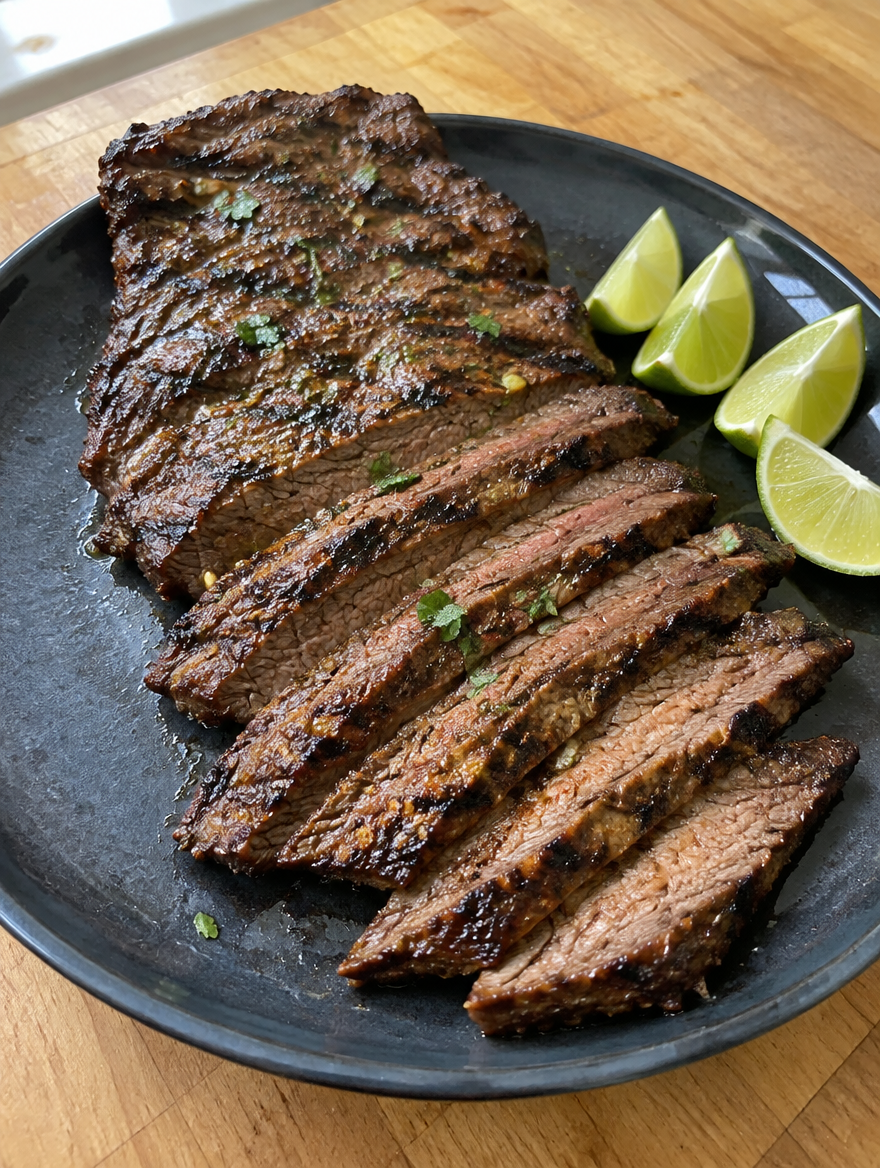
This garlic-lime skirt steak marinade is a practical way to season a flavorful, relatively thin cut of beef for a backyard grill or a hot cast-iron grill pan. The mixture combines fresh lime juice, extra-virgin olive oil, minced garlic, cumin, smoked paprika, cilantro, salt, and pepper. After a refrigerated rest, the steak is cooked using a food thermometer, rested, and sliced thinly against the grain so that a cut known for long muscle fibers is easier to enjoy.
Quick answer: for 1½ pounds (680 g) beef skirt steak, whisk ¼ cup (60 ml) fresh lime juice, ¼ cup (60 ml) olive oil, 3 minced garlic cloves, 1 tablespoon chopped cilantro, 1 teaspoon ground cumin, 1 teaspoon smoked paprika, ¾ teaspoon kosher salt, and ½ teaspoon black pepper. Pour over the steak in a clean food-safe bag or nonreactive container, cover, and refrigerate for 2–6 hours. Discard marinade that touched raw beef. Grill on a properly preheated grate, turning as needed, until the thickest part measures at least 145°F (63°C) with a food thermometer; rest at least 3 minutes before slicing across the grain. The yield is approximately 4 servings, depending on trim and serving size.
This is an original AI-assisted editorial formulation that has not been independently tested in a physical kitchen. Grilling time depends on steak thickness, actual fire temperature, and equipment; a photograph is only an AI-generated illustration, not evidence of a real cooking test or proof of safe meat temperature. The ingredient proportions and method are presented as a workable starting point, not a guarantee of identical results in every kitchen.
Why Skirt Steak Works with a Garlic-Lime Marinade
Skirt steak has prominent muscle fibers and an assertive beef flavor. It is typically a long, fairly thin cut compared with a thick ribeye, which makes it well suited to fast grilling. The right technique does not require tenderizing machines or a complicated overnight sauce: use a balanced marinade, cook with temperature awareness, allow a brief rest, and slice the cooked meat across its visible muscle grain.
The fresh lime supplies acidity and citrus flavor; garlic and cumin add a savory note; smoked paprika brings a subtle smoky aroma even if you cook indoors. Olive oil helps the seasonings spread over the surface. It is important not to promise that an acidic marinade will tenderize the entire interior of a steak: the most direct effects are at and near the surface.
The James Beard Foundation’s chile-lime skirt steak recipe is one example of the broader technique of pairing this cut with lime, aromatics, and a refrigerated marinade. The version here uses its own measured garlic, cumin, paprika and cilantro balance, with cooking temperatures specified according to federal food-safety guidance.
Ingredients for Four Servings
You need a small set of grocery-store ingredients for the marinade, plus the beef itself:
- 1½ pounds (680 g) beef skirt steak, trimmed of obvious tough membrane as appropriate.
- ¼ cup (60 ml) fresh lime juice, usually from approximately 2 medium limes, strained.
- ¼ cup (60 ml) extra-virgin olive oil.
- 3 medium garlic cloves, peeled and finely minced.
- 1 tablespoon fresh cilantro, finely chopped.
- 1 teaspoon ground cumin.
- 1 teaspoon smoked paprika.
- ¾ teaspoon kosher salt, adjusted if your brand’s crystal size differs.
- ½ teaspoon freshly ground black pepper.
There is no beer, wine, bourbon, bottled marinade, dairy butter, commercial ranch dressing, or sugar in this formulation. The flavor profile is citrus-garlic and mildly smoky, without unnecessary sweetness. The marinade is intended for the beef, not as a table sauce after it has come in contact with raw meat.
If your steak is much larger or smaller than 1½ pounds, scale all marinade ingredients together. Do not keep the salt or acid fixed while doubling only the oil, because the flavor balance would change. Exact marinating absorption and final sodium levels cannot be calculated reliably from the amount poured into a bag.
How Much Lime Juice Is Too Much?
Fresh lime juice adds brightness, but acidic liquid can change the outer texture of meat if it is left on too long. For this reason, the formulation uses 60 ml lime juice against 60 ml oil and a refrigerated 2–6 hour marinating window. This is a recipe-specific starting point, not a universal rule for every beef cut.
A long soak may be acceptable for some marinades, but there is no benefit in automatically leaving a thin steak in strongly acidic juice for several days. The goal is a well-seasoned exterior and beef flavor that still tastes like steak. Always marinate in the refrigerator at 40°F (4°C) or colder, not on a warm counter, regardless of the acid content.
If you have very little time, a shorter refrigerated rest may add surface flavor, although this exact version was written for 2–6 hours. Avoid leaving the raw beef at room temperature in an attempt to accelerate marinating. Citrus juice does not sanitize raw meat.
Which Skirt Steak Should I Buy?
Butcher counters may label cuts as inside skirt or outside skirt, depending on availability. Both can have pronounced fibers and may vary in thickness and tenderness. The important shopping decision for this recipe is to use actual beef skirt steak, not a thick chuck roast or a large sirloin steak with a very different cooking schedule.
Look for a piece with normal fresh color and safe refrigeration, and follow the store’s storage and use-by directions. Check for a tough silvery membrane that may need trimming, but do not remove every bit of fat, which can contribute flavor. If you are not comfortable trimming it, ask the butcher.
If you substitute flank steak or hanger steak, the marinade flavor may still be suitable, but thickness, portion size and cooking characteristics are different. This article’s visual examples and cut-specific slicing guidance refer to skirt steak; those substitutes need their own cook-time and tenderness checks.
Essential Equipment
Prepare a nonreactive glass container or a heavy food-safe resealable bag, a small bowl, a whisk, measuring spoons, a cutting board, a sharp knife, tongs, and a reliable food thermometer. A grill with a clean grate is ideal, although a properly ventilated indoor grill pan can be used with caution.
Keep a clean plate ready for cooked steak. Do not place grilled meat back on a plate or board that held raw beef without washing it first. Raw-meat juices can contaminate ready-to-eat foods and cooked dishes. Use separate utensils where possible or clean them before reuse.
A well-sharpened knife is especially useful after cooking because skirt steak has long fibers. Cut across those fibers rather than lengthwise along them. That detail often affects perceived tenderness more than a small change in marinade seasoning.
How to Marinate and Grill Skirt Steak
1. Measure the Lime Juice and Aromatics
Juice the limes and measure 60 ml, removing seeds. Mince 3 garlic cloves, chop 1 tablespoon fresh cilantro, and measure the ground cumin, smoked paprika, kosher salt and black pepper. Wash and dry herbs and citrus as appropriate before handling.
The marinade does not need a blender; finely minced ingredients spread easily with a whisk. Avoid leaving large hard garlic chunks that might scorch on the grill.
2. Whisk the Marinade Together
In a small clean bowl combine 60 ml lime juice, 60 ml olive oil, 3 minced garlic cloves, 1 tablespoon cilantro, 1 teaspoon cumin, 1 teaspoon smoked paprika, ¾ teaspoon kosher salt, and ½ teaspoon black pepper. Whisk until evenly distributed. The oil and juice may separate after sitting; simply stir again before coating the meat.
Do not add water, bottled ketchup, heavy syrup, or ingredients not listed in the core recipe. If you want extra seasoning for serving, mix a separate uncontaminated portion before the raw meat touches the marinade.
3. Prepare the Beef on a Clean Surface
Place 1½ pounds skirt steak on a dedicated raw-meat board or clean tray. Trim an obvious tough exterior membrane if needed and divide an unusually long piece into lengths that fit the grill. Keep a separate clean cutting board ready for slicing after cooking.
Do not rinse raw beef in the sink. The goal is to reduce opportunities for cross-contamination, not wash away microbes with tap water. Clean hands, knives, counters and utensils after raw-meat contact.
4. Coat and Refrigerate for Two to Six Hours
Put the steak into the food-safe bag or nonreactive container, add all the measured marinade, and turn the beef so both sides are coated. Seal or cover tightly, place in a secondary tray to catch possible leaks, and refrigerate for 2–6 hours at 40°F (4°C) or colder.
Do not leave the meat on the counter to marinate. A few turns of the sealed bag while it is refrigerated can help distribute seasoning, but do not handle raw beef unnecessarily. Store it below ready-to-eat foods so liquid cannot drip on them.
5. Preheat the Grill and Remove Excess Marinade
Preheat a clean grill to a moderately high grilling temperature appropriate for the equipment. Remove the steak from the refrigerator shortly before cooking, take it out of the marinade, and let the extra liquid drip off safely. Discard all marinade that has touched the raw beef and wash the container.
Excess wet garlic on the surface can burn quickly, so shake off clumps rather than scraping off every trace of flavor. Never set the steak down on a plate reserved for the cooked food.
6. Grill with a Thermometer, Not Just a Timer
Place the skirt steak on the hot grate with tongs. A thin cut may develop color within a few minutes per side; roughly 3–5 minutes per side can be a useful visual starting range but is not a verified cooking time. Turn as needed to control browning and monitor the actual internal temperature.
The U.S. Food and Drug Administration advises that beef steaks reach a minimum internal temperature of 145°F (63°C) and rest for at least 3 minutes. Use the food thermometer in the thickest part of the meat; color and visible juices are not reliable safety measurements. If you are cooking a particularly thin piece, insert the probe carefully according to the thermometer maker’s instructions to get an accurate center reading. See FDA Safe Food Handling.
7. Rest the Steak for At Least Three Minutes
Once the thickest measured portion has reached at least 145°F, transfer the meat to a clean board or platter. Rest it for at least three minutes before slicing. If you prefer a longer rest for serving convenience, make sure the meat remains handled safely.
Resting is included in the official minimum-temperature guidance, not merely an optional chef trick. Do not cut into a steak that has only been judged “done” because it looks brown on the outside.
8. Slice Thinly Against the Grain
Look at the direction of the long muscle fibers running through the skirt steak. Turn the piece or the cutting board so you can cut across those fibers, and make thin slices at a slight angle with a clean sharp knife. This shortens the fibers in each bite and helps the meat feel more tender.
Serve the steak immediately on a clean plate. Do not spoon the used raw-beef marinade over the finished slices. Optional extra lime wedges or a small sprinkle of freshly chopped cilantro are fine for serving, but they are not a substitute for the cooking and food-safety checks.
How Long Should Skirt Steak Be Marinated?
For the exact lime-heavy mixture in this article, use 2–6 hours under refrigeration. That provides a practical marinating window without requiring overnight preparation. The preferred duration will depend on the thickness and the flavor intensity desired, and the recipe has not been physically tested at every possible point in that range.
A shorter marinating period may still season the surface, but do not promise the same result as the listed method. A longer period with acidic liquid might change the exterior texture, so resist assuming that “longer is always better.”
The USDA also emphasizes that marinating must take place in the refrigerator, never at room temperature. Used raw-beef marinade must not be served as sauce; the easiest and safest option here is to discard it. The USDA’s food-safety guidance on marinating and grilling summarizes these precautions.
How to Prevent Burned Garlic on the Grill
Fresh minced garlic is flavorful but can scorch when left as thick wet clumps on a very hot grate. Whisk it finely through the marinade and let excess liquid drip off the steak before grilling. Avoid leaving large chunks stuck to one spot on the surface.
The smoked paprika and cumin can also darken quickly over high heat. Watch for char and adjust the grill if the outside burns long before the internal thermometer reaches the safety target. A clean, appropriately preheated grate gives more control than an uncontrolled flare-up.
Do not keep returning steak to a bag of raw marinade between turns on the grill. Once the meat is on the cooking surface, use clean tongs and a thermometer to finish the process safely.
Skirt Steak vs. Flank Steak: Does It Matter?
Both are fibrous cuts, but they do not have identical shapes. Skirt steak is usually comparatively thin and elongated, with prominent parallel muscle grain. Flank steak is generally broader and can be thicker. Because of that, a timing estimate for skirt steak cannot be blindly transferred to flank steak.
The marinade’s citrus, garlic, olive oil, and spice flavors may suit either cut, but a different cut should be treated as an adaptation. Cook to an appropriate safe internal temperature measured with a thermometer and slice it across its own muscle grain.
For a different steak-cooking method without a lime marinade, our garlic-herb oven-roasted tri-tip steak shows a separate oven-based beef recipe. Tri-tip is not the same piece of beef and should not be described as an interchangeable skirt steak.
Why Slicing Against the Grain Is Important
The “grain” is the direction of visible muscle fibers. In skirt steak, these lines can be especially clear. If you cut long strips along the grain, the fibers stay long in each piece, which can make chewing harder. Cross-grain slicing shortens them.
A simple way to remember the technique is to study the whole steak before cooking and note which way the lines run. After grilling, turn the cutting board until a knife held across the meat will cross those lines. Thin slices made at a slight diagonal can make serving easier.
The marinade itself is only one piece of the result. Proper cooking, a rest period and thoughtful slicing are essential; an expensive marinade cannot compensate for slicing with the grain.
Four Common Steak-Marinade Mistakes
Marinating on the counter. Lime and salt do not make raw beef safe at room temperature. Refrigerate the entire time, in a food-safe container.
Leaving steak in highly acidic juice indefinitely. The recipe is written for 2–6 hours; arbitrarily leaving thin skirt steak in lime juice for days can make the surface unpleasant.
Cooking by color. Brown grill marks do not prove the center reached a safe temperature. Measure at least 145°F for whole beef steaks and allow a three-minute rest.
Reusing raw marinade as sauce. Any liquid that touched raw meat can contain harmful microbes. Discard it, or reserve a completely separate portion before raw beef contact if a separate serving sauce is planned.
Slicing along the muscle grain. This leaves long fibers. Cut thinly across the visible grain, after the cooking and required resting steps.
How to Use the Grilled Steak in a Meal
Thinly sliced lime-garlic skirt steak can be served simply, or used in tacos with separate fresh vegetables. If you want a bright accompaniment, our fresh tomato salsa with lime and cilantro
For another beef-and-taco dinner with a distinct Korean-inspired seasoning profile, browse our Korean BBQ beef tacos with spicy slaw. That recipe is different from this garlic-lime grilled skirt steak and has its own ingredient and allergy considerations.
When planning a family meal, you can grill the steak and serve different sides at the table rather than mixing every garnish into one fixed recipe. Keep the raw-meat preparation area separate from any ready-to-eat salad, salsa or bread.
Marinating and Cooking Ahead Safely
Mixing the marinade ingredients in advance is straightforward, but raw steak should be combined with the marinade only within the planned refrigerated window. Keep it sealed, cold and away from foods that will be eaten without cooking. Do not pre-cook the steak halfway and finish it hours later.
If you need to bring marinated steak to a picnic or outdoor grill, transport it in a properly chilled cooler until cooking. Do not let it sit in a warm car or next to the hot grill while you prepare side dishes. Use a clean platter after grilling.
Cooking a little earlier and then leaving sliced steak at room temperature for many hours is not a safe make-ahead approach. Either serve promptly or refrigerate cooked leftovers following safe times and temperatures.
Storage and Reheating Leftover Skirt Steak
Cooked steak is a perishable food. Refrigerate leftovers in clean shallow containers within two hours, or within one hour if the surrounding temperature exceeds 90°F. Keep the refrigerator at 40°F (4°C) or below. Do not store sliced cooked steak on the same contaminated plate used for the raw piece.
A cautious editorial plan is to use refrigerated leftovers within 3–4 days when they have been handled and stored correctly; the exact safety of any particular batch cannot be assessed from the recipe alone. Reheat leftovers thoroughly to 165°F (74°C) as a practical FDA guidance target, using a clean thermometer when appropriate.
Keep cooked leftovers away from raw beef and uncooked marinade in the refrigerator. If the steak was not kept at safe temperatures after cooking or you cannot verify how long it sat out, it is safer to discard it rather than attempt to correct unsafe handling through reheating.
Frequently Asked Questions
What is a good marinade for skirt steak?
Fresh lime juice, olive oil, minced garlic, cumin, smoked paprika, cilantro, salt and black pepper make a simple savory marinade. This recipe gives exact quantities for 1½ pounds of beef and uses a refrigerated 2–6 hour marinating window.
Is skirt steak the same as flank steak?
No. They are different beef cuts with different typical shapes and thickness. Both have noticeable muscle grain, but the cook time and slicing details should be adjusted for the actual cut.
Can I marinate skirt steak overnight?
Some recipes use longer marinating periods, but this lime-forward formulation is written for 2–6 hours. A much longer acidic soak has not been validated here and may change the exterior texture.
Does lime juice make raw beef safe?
No. An acidic marinade does not replace refrigeration, safe handling, or reaching a safe cooking temperature. Marinate in the fridge, cook beef steaks to at least 145°F internally, and rest three minutes.
How hot should skirt steak be cooked?
The FDA/USDA minimum for whole beef steaks is 145°F (63°C) measured inside, followed by a three-minute rest. Use a calibrated meat thermometer; a photograph or grill mark is not a safety test.
Can I use a grill pan instead of an outdoor grill?
A clean, suitable grill pan may work, but thickness, ventilation, smoke and heat distribution will change cooking time. Use a thermometer, manage splattering safely and follow the pan manufacturer’s instructions.
Why is my skirt steak chewy?
Common contributors include slicing along the muscle grain, an overly thick slice, and cooking technique. Slice thinly across the grain after reaching the safe temperature and resting.
Should I add sugar to the marinade?
No sugar is included in this version. Lime, garlic, cumin and smoked paprika provide flavor without a sweet glaze, making the seasoning easier to control at grilling temperatures.
Can I use the leftover marinade as steak sauce?
Do not serve used raw-meat marinade directly. For this recipe, discard it. If you want a separate sauce, reserve a clean portion before raw meat touches the marinade, and handle it separately.
Is this marinade gluten-free?
The listed marinade does not intentionally include wheat flour or soy sauce, but that alone does not guarantee gluten-free status. Check every packaged spice and cross-contact concern; this is not certified gluten-free.
How much steak do I need for four people?
The recipe uses 1½ pounds (680 g) raw skirt steak, which is approximately four servings depending on trimming and appetite. Adjust the amount and marinade proportion together.
Can I freeze raw steak in the marinade?
Freezing raw meat in marinade introduces storage and thawing variables that have not been independently tested for this formulation. If you choose to do it, follow safe freezing and refrigerator thawing guidance and cook thoroughly using a thermometer.
Final Tips for a Flavorful Skirt Steak
The most important steps are easy to remember: mix a measured garlic-lime marinade, keep the beef refrigerated for 2–6 hours, discard raw-meat marinade, cook to at least 145°F, rest at least three minutes, and slice thinly across the grain. A hot grill adds browning, but it cannot substitute for the thermometer or safe handling.
This garlic-lime skirt steak marinade recipe is intended as a straightforward U.S. home-cooking guide with no alcohol, no bottled sauce, and a short ingredient list. Actual timing and texture depend on the cut and your cooking equipment.
Editorial disclosure: Original AI-assisted formulation, not independently prepared in a physical kitchen. Featured food photo, if used, is an AI-generated illustration and is not evidence of actual steak temperature or kitchen testing. No measured nutrition facts are claimed.
Print
Garlic-Lime Skirt Steak Marinade for Grilling
- Prep Time: 20 minutes
- Cook Time: 10 minutes
- Total Time: Approximately 2 hours 35 minutes to 6 hours 35 minutes including refrigerated marinade and 3-minute rest
- Yield: 4 servings from 1½ pounds raw skirt steak 1x
- Category: BBQ, Grilling & Smokehouse
- Method: Refrigerated beef marinade, outdoor grill or appropriate grill pan, thermometer verification and cross-grain slicing
- Cuisine: American grill cooking with citrus-garlic seasoning
Description
Garlic-lime skirt steak marinade made with fresh lime juice, olive oil, garlic, cumin, smoked paprika and cilantro, followed by safe grilling and cross-grain slicing.
Ingredients
1½ pounds (680 g) beef skirt steak, membrane trimmed if needed
¼ cup (60 ml) freshly squeezed lime juice (approximately 2 limes)
¼ cup (60 ml) extra-virgin olive oil
3 medium garlic cloves, minced
1 tablespoon finely chopped fresh cilantro
1 teaspoon ground cumin
1 teaspoon smoked paprika
¾ teaspoon kosher salt (varies by brand and crystals)
½ teaspoon freshly ground black pepper
Instructions
Measure 60 ml strained fresh lime juice; mince 3 garlic cloves and chop 1 tablespoon cilantro. Measure cumin, smoked paprika, kosher salt and pepper.
In a small clean bowl whisk 60 ml lime juice, 60 ml olive oil, garlic, cilantro, 1 tsp cumin, 1 tsp smoked paprika, ¾ tsp kosher salt and ½ tsp pepper until dispersed.
Place 1½ pounds of skirt steak on a clean raw-meat board, trim tough membrane if present and cut into grill-length portions as needed. Clean hands and surfaces after raw beef contact.
Put beef and marinade in a covered food-safe, nonreactive container or resealable bag, turn to coat, set on a leak-proof tray, and refrigerate 2–6 hours at 40°F (4°C) or less. Never marinate on a counter.
Preheat a clean grill appropriately. Remove steak from marinade, allow excess to drip off and DISCARD all marinade that touched raw beef; never use it directly as a sauce. Use clean tongs and a separate clean serving platter.
Grill on a suitably heated grate, turning as needed. A thin cut may brown in about 3–5 minutes per side but time is not a safety indicator; measure thickest part with a thermometer and cook whole beef steak to at least 145°F (63°C).
Transfer the steak reaching at least 145°F to a clean board or platter and REST AT LEAST 3 MINUTES before slicing or serving according to FDA/USDA guidelines.
Study the visible long muscle fibers and slice cooked skirt steak thinly ACROSS THE GRAIN at a slight angle with a clean sharp knife. Serve promptly; refrigerate safe cooked leftovers within 2 hours (within 1 hour above 90°F ambient).
Notes
AI-assisted original editorial formulation, NOT independently kitchen-tested. The image is AI-generated illustration, NOT evidence of measured cooking temperature. USDA/FDA safe whole beef steak minimum: 145°F (63°C) checked with accurate thermometer and REST 3 MINUTES. Marinate refrigerated at 40°F or below, never room temperature; discard used raw-meat marinade; avoid cross-contamination; raw beef never shares a serving plate. Recipe uses NO alcohol, butter, soy sauce or bottled marinade; spices can have cross-contact allergens so review labels. Note kosher salt crystal sizes vary. The 2–6 hour marinade duration is a suggested kitchen-untested window for a lime-forward marinade, not a universally established minimum. FoodSafety.gov/FDA leftovers: refrigerate cooked meat promptly, conservative 3–4 days and reheat leftovers to 165°F. No accurate calculated nutrition or guaranteed allergen safety.
Nutrition
- Serving Size: Approximately ¼ of finished cooked steak from 1½ pounds raw beef
Keywords: skirt steak marinade recipe, garlic lime skirt steak marinade, grilled skirt steak marinade, easy beef skirt steak marinade