
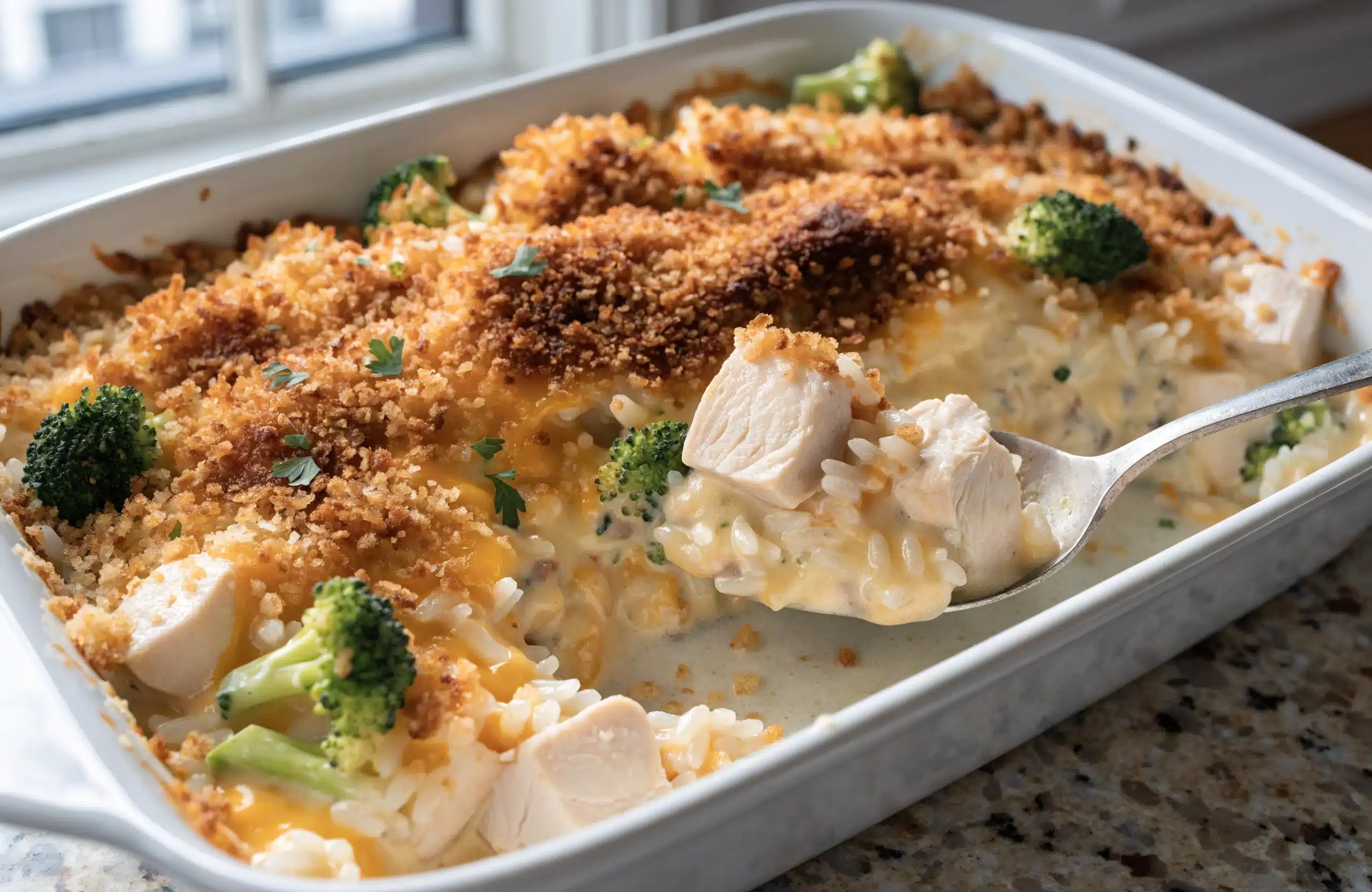
When it comes to comforting weeknight meals, few dishes match the heartiness and satisfaction of a classic casserole. Creamy Chicken and Broccoli Rice Casserole is a staple in American home kitchens for good reason: it combines tender chicken, vibrant broccoli, fluffy rice, and a luscious sauce in every bite. This dish makes use of wholesome, widely available ingredients and comes together with simple preparation methods. Whether you’re feeding a hungry family or looking for make-ahead meals, this casserole brings nourishment and ease to your dinner table.
A hallmark of American chicken casserole recipes, this version incorporates both nutrition and indulgence. Broccoli adds color, texture, and balance to the richness of the creamy sauce, while rice absorbs flavors as it bakes, making every forkful comforting. Prepared with boneless chicken breast or thighs, this casserole can be adapted for different tastes and dietary preferences. The ease of prepping ingredients in advance and baking it in one dish will appeal to both busy weeknights and casual gatherings.
Not only does Creamy Chicken and Broccoli Rice Casserole satisfy appetites, but it also simplifies meal planning. You can assemble it ahead of time, use convenient store-bought shortcuts, or opt for homemade sauces if you prefer. This recipe guides you through every step, ensuring even novice cooks achieve delicious results. It also provides helpful advice on food safety, ingredient substitutions, and making the dish your own. Whether you’re new to casseroles or a seasoned home cook, this guide will help you create a truly comforting and crowd-pleasing meal.
Ingredients
- 2 cups cooked white rice (or 1 cup uncooked long-grain white rice)
- 2 cups cooked or raw boneless, skinless chicken breast or thighs, cubed
- 2 cups broccoli florets (fresh or frozen, thawed & drained)
- 1 can (10.5 oz) condensed cream of chicken soup (or homemade equivalent)
- 3/4 cup milk
- 1 cup shredded cheddar cheese, divided
- 1/2 cup sour cream
- 1 teaspoon garlic powder
- 1/2 teaspoon onion powder
- 1 tablespoon Dijon mustard
- Salt and black pepper to taste
- 1 cup panko breadcrumbs or crushed buttery crackers
- 2 tablespoons melted butter
- Cooking spray or butter for greasing baking dish
- Chopped fresh parsley or chives for garnish (optional)
Choosing the Best Chicken for Your Casserole
Selecting the right chicken is important for both flavor and texture in your casserole. Most home cooks prefer boneless, skinless chicken breasts for their mild taste and lean profile, but thighs are also an excellent choice for more moisture and richer flavor. You can use raw chicken cut into bite-sized pieces, or opt for cooked chicken from a rotisserie or leftovers to speed up preparation. Just ensure whatever chicken you use is cooked to a safe internal temperature of 165°F for food safety.
If you’re using raw chicken, sautéing it first with a bit of salt and pepper ensures it cooks through and seasons evenly before baking with the rice and sauce. For pre-cooked or leftover chicken, stir it in with the other ingredients before baking. This recipe is flexible: you can use shredded, cubed, or sliced chicken. Avoid strongly flavored smoked or spiced chicken, as these may overpower the casserole’s creamy base.
Preparing Broccoli for Optimal Texture and Flavor
Broccoli brings color and nutritional value to this casserole, but how you prepare it affects the final dish. Fresh broccoli crowns are recommended for best texture; cut them into small, bite-sized florets so they cook evenly. Frozen broccoli is a convenient alternative—just thaw and drain well to avoid excess moisture in the casserole. Steaming or lightly blanching fresh broccoli before adding it will help maintain its vibrant green color and crisp-tender bite after baking.
It’s important not to overcook the broccoli ahead of time, as it will continue to soften during baking. If you prefer very tender broccoli, a brief steam is sufficient. For those who like a little crunch, add raw florets directly to the mix. Always check that the broccoli is free from large stems or tough pieces to ensure even cooking throughout your casserole.
Essential Rice Selection and Preparation Steps
Rice forms the hearty base of this casserole, soaking up flavors from the sauce and chicken. Long-grain white rice is a reliable option for a fluffy, non-sticky result; you can also use brown rice for added nutritional value, but increase the liquid and baking time accordingly. Pre-cooked rice minimizes baking time and gives you more control over the texture. If you add uncooked rice, it will absorb plenty of sauce while baking, which is convenient but requires careful measurement of liquid.
Before assembling the casserole, rinse rice under cold water to remove excess starch and prevent clumping. If you use leftover rice, break up any clumps before mixing it into the casserole. For uncooked rice, double-check that you add enough broth or liquid to allow the grains to become tender as the casserole bakes. Adjust the bake time if you substitute different rice varieties.
Crafting the Creamy Sauce Base
The creamy sauce brings together the chicken, rice, and broccoli, making the casserole rich and cohesive. A common shortcut is to use canned condensed cream of chicken soup, but you can also make your own using a simple roux of butter and flour, milk, and chicken broth for added freshness and control over the flavors. Season well with salt, pepper, garlic powder, and a splash of Dijon mustard for depth.
Whisk the sauce ingredients thoroughly until smooth, either in a saucepan or a bowl if using pre-made ingredients. If you like extra cheesiness, stir in shredded cheddar or mozzarella to the sauce. Allowing the sauce to cool slightly before mixing with the chicken and rice can help prevent it from thinning out excessively. Season the sauce to your taste, keeping in mind the saltiness of pre-made soups or broths if you use them.
Assembling the Casserole Layers
A key step in casserole recipes is layering ingredients to ensure even cooking and rich flavor throughout. Start by spreading the prepared rice (either cooked or rinsed uncooked) at the bottom of a lightly greased baking dish. Then scatter the cooked or raw chicken pieces and fresh or prepped broccoli in an even layer over the rice. Pour the creamy sauce over the mixture, ensuring all ingredients are well-distributed and the sauce covers them completely.
Once all layers are in place, use a spatula or wooden spoon to gently mix the ingredients in the baking dish, helping the sauce flavor penetrate throughout. Don’t overmix, as you want some separation in textures for a satisfying casserole experience. If desired, top with shredded cheese or a sprinkle of breadcrumbs before baking for an appealing golden crust.
Toppings for Crunch and Flavor
Finishing your casserole with the right topping adds both visual appeal and extra texture. A layer of shredded cheddar or a blend of cheeses creates a delicious, melty crown when baked. For crunch, sprinkle panko breadcrumbs or crushed buttery crackers (such as Ritz) evenly over the top before baking. You can combine grated Parmesan or a bit of melted butter with crumbs for richer flavor and better browning.
To ensure an even golden color, drizzle a little melted butter over the topping before placing the casserole in the oven. Add the toppings just before baking to prevent them from getting soggy. If the topping browns too quickly, loosely cover with foil for the remainder of the bake time. Consider adding a sprinkle of fresh herbs like parsley or chives after baking for a fresh pop of color.
Proper Baking and Timing Techniques
Baking your chicken and broccoli rice casserole at the right temperature ensures everything cooks through without the topping burning. Preheat your oven to 375°F (190°C) to strike the right balance between thorough cooking and browning. An average casserole with pre-cooked ingredients typically needs 25–30 minutes to become bubbly and heated through; if using raw chicken or uncooked rice, increase the time to 40–50 minutes, checking that the chicken reaches a safe internal temperature of 165°F.
Place the casserole dish on the center rack for even heat distribution and use a baking sheet underneath if spillovers are a concern. If the cheese or crumb topping browns faster than the casserole cooks, tent loosely with foil. Check the center with a food thermometer if you’re unsure, especially when starting with raw ingredients.
Safe Chicken Handling and Food Safety Tips
Handling raw chicken safely is essential to prevent cross-contamination. Always wash hands, utensils, and cutting boards thoroughly with hot, soapy water after contact with raw chicken. Use separate cutting boards for chicken and produce when possible. If using pre-cooked chicken, ensure it is heated through in the casserole for at least 20 minutes to reach a proper serving temperature.
When baking with raw chicken, confirm with a food thermometer that it has reached 165°F in the thickest part before serving. Store leftovers promptly—within two hours of cooking—in shallow, airtight containers. Refrigerate for up to four days or freeze for longer storage. Always reheat leftovers to at least 165°F before eating.
Customizing Your Casserole with Add-Ins
A great advantage of homemade casseroles is the ability to add ingredients that suit your family’s tastes or work with what you have. Consider tossing in sautéed mushrooms, diced red bell peppers, or chopped spinach for more vegetable content. Diced ham or crispy cooked bacon can offer a smoky, savory flavor, pairing well with the creamy sauce.
Mix in fresh herbs such as thyme, rosemary, or chives for extra aroma and brightness. For more protein, throw in a can of rinsed white beans or use a combination of chicken and turkey. Cheddar and mozzarella are classic cheese choices, but pepper jack or Swiss can give a tangy twist. Each addition should be finely chopped so it cooks evenly with the casserole.
Making the Recipe Gluten-Free or Dairy-Free
To adapt the recipe for gluten-free diets, choose a gluten-free condensed soup or prepare the sauce with gluten-free flour or cornstarch. Make sure any breadcrumbs or cracker toppings are certified gluten-free as well. Double-check the labels on prepared broths and sauces to ensure no hidden gluten ingredients are present.
For dairy-free needs, replace regular milk with unsweetened almond, oat, or soy milk, and use dairy-free cheese or omit cheese altogether. There are also dairy-free condensed soups available, or you can make your own sauce using non-dairy butter and milk substitutes. These swaps can change the texture and flavor slightly, but they still produce delicious and creamy results.
Substituting Ingredients Based on Pantry and Preference
If you find yourself missing an ingredient, this recipe lends itself to plenty of substitutions. Swap white rice for brown rice, wild rice, or even cooked quinoa to add variety. You can use any mild vegetable, such as cauliflower or peas, in place of broccoli. For the creamy base, cream of mushroom or cream of celery soup can sub in for cream of chicken with equally tasty results.
If you don’t have pre-shredded cheese, slice or grate your own from a block for better melt and flavor. Use rotisserie chicken to save time or leftover turkey after a holiday meal. Just adjust the seasoning to taste and watch the liquid levels if swapping in vegetables with higher water content.
Make-Ahead and Freezer Instructions
Creamy Chicken and Broccoli Rice Casserole can be assembled up to a day in advance. Cover tightly and refrigerate until you’re ready to bake—just expect to add about 10 extra minutes to the bake time if going straight from fridge to oven. This make-ahead method is perfect for busy schedules or when entertaining guests.
For freezing, assemble the casserole but do not bake. Wrap the baking dish tightly with plastic and foil, label with the date, and freeze for up to three months. Thaw overnight in the refrigerator before baking as directed. If baking from frozen, cover with foil and increase the bake time, removing the foil for the last 15 minutes to brown the top.
Troubleshooting Common Casserole Issues
If your casserole turns out too dry or the rice is undercooked, it may need more liquid or longer in the oven. Always check that uncooked rice is fully submerged in sauce before baking and add a few tablespoons of broth if it appears dry halfway through. Cover the casserole loosely with foil for part of the bake time to help trap steam and prevent drying out.
For casseroles with too much moisture or a soupy consistency, let the dish rest uncovered for 10–15 minutes after taking it out of the oven. This helps the liquid redistribute and thicken. If the topping looks pale, increase the oven temperature briefly or broil for a couple of minutes at the end (watching closely to prevent burning).
Serving Suggestions and Side Pairings
Creamy Chicken and Broccoli Rice Casserole is filling enough to serve as a main dish, but complementary sides make the meal more festive and well-rounded. A crisp green salad tossed with a bright vinaigrette offers a refreshing counterpoint to the richness of the casserole. Steamed green beans, roasted carrots, or sautéed zucchini also work well and keep the plate colorful.
Warm dinner rolls or a crusty baguette are perfect for mopping up every bit of creamy sauce. For a homestyle meal, add a simple fruit salad or sliced fresh fruit on the side. This casserole is equally popular at potlucks, family gatherings, and weeknight dinners, and its mild flavors pair well with almost any vegetable or bread.
Storing and Reheating Leftovers Safely
Proper storage ensures leftovers stay safe and taste fresh. Allow the casserole to cool to room temperature before dividing into airtight containers. Store in the refrigerator for up to four days. If you want to freeze leftovers, cool completely and freeze portions in tightly sealed containers for up to three months.
For best results, reheat leftovers in a 350°F oven covered with foil until warmed through, about 20–25 minutes. You can also microwave portions in a microwave-safe dish, stirring halfway to distribute heat evenly. Always check that the internal temperature reaches 165°F before serving. If the casserole appears dry upon reheating, add a splash of milk or broth to restore creaminess.
Adjusting for Smaller or Larger Crowds
This recipe is easily scalable to suit your gathering. To halve the recipe, use an 8×8-inch square baking dish and reduce all ingredient quantities by half. Bake time may be slightly shorter, so check for doneness after 20 minutes if using pre-cooked chicken and rice.
For a crowd, double the recipe and use a large 13×9-inch baking dish or two standard-sized casseroles. Ensure the oven is not overcrowded so heat circulates effectively. You can prepare two separate dishes if your oven is small—just rotate them if necessary during baking for even cooking.
Tips for Lightening Up Your Casserole
For a lighter version of chicken and broccoli rice casserole, use low-fat or fat-free condensed soup or make your own with skim milk. Reduce the amount of cheese or use part-skim varieties for less saturated fat. Substitute brown rice for added fiber and choose boneless, skinless chicken breast.
Add more broccoli and other non-starchy vegetables, like mushrooms or spinach, to boost nutrition and reduce the proportion of rice. Skip the buttery topping or replace it with a thinner layer of whole grain breadcrumbs. With these tweaks, you can enjoy a creamy, comforting casserole while keeping calories and fat in check.
Recipe Card
Print
Creamy Chicken and Broccoli Rice Casserole
- Prep Time: 20 minutes
- Cook Time: 30 minutes (up to 50 if using raw chicken and uncooked rice)
- Total Time: 50–70 minutes
- Yield: 6–8 servings 1x
- Category: Main Course
- Method: Baking
- Cuisine: American
Description
A comforting, creamy chicken and broccoli rice casserole perfect for family dinners, with easy make-ahead and freezer options.
Ingredients
2 cups cooked white rice (or 1 cup uncooked long-grain white rice)
2 cups cooked or raw boneless, skinless chicken breast or thighs, cubed
2 cups broccoli florets (fresh or frozen, thawed & drained)
1 can (10.5 oz) condensed cream of chicken soup (or homemade equivalent)
3/4 cup milk
1 cup shredded cheddar cheese, divided
1/2 cup sour cream
1 teaspoon garlic powder
1/2 teaspoon onion powder
1 tablespoon Dijon mustard
Salt and black pepper to taste
1 cup panko breadcrumbs or crushed buttery crackers
2 tablespoons melted butter
Cooking spray or butter for greasing baking dish
Chopped fresh parsley or chives for garnish (optional)
Instructions
Preheat oven to 375°F (190°C). Grease a 9×13-inch (or similar size) baking dish with cooking spray or butter.
If using uncooked rice, rinse it under cold water and cook according to package instructions, or set aside rinsed uncooked rice for baking with extra liquid. Prepare chicken by cutting into bite-sized cubes; if starting raw, season lightly with salt and pepper.
Steam or blanch broccoli florets briefly if using fresh, or thaw and drain thoroughly if using frozen.
In a large bowl, combine cream of chicken soup, milk, 3/4 cup shredded cheddar, sour cream, garlic powder, onion powder, Dijon mustard, salt, and pepper. Whisk until smooth.
Add the cooked (or uncooked) rice, chicken, and broccoli to the bowl. Mix until evenly coated with the sauce.
Transfer mixture to the prepared baking dish and spread evenly. If desired, lightly mix in the dish for even distribution.
In a small bowl, combine panko or cracker crumbs with melted butter. Sprinkle mixture evenly over the casserole. Top with remaining 1/4 cup cheddar.
Bake uncovered for 25–30 minutes (or 40–50 minutes if using raw chicken and uncooked rice), until the casserole is bubbly, topping is golden, and chicken has reached 165°F internally.
Remove from oven and let sit 10 minutes before serving. Garnish with fresh parsley or chives if desired.
Notes
This recipe was AI-assisted and has not been independently kitchen-tested. For best results, adjust liquid and bake time if using uncooked rice or chicken. Check internal temperature for food safety.
Nutrition
- Serving Size: 1/8 of casserole
Keywords: chicken casserole recipes, creamy chicken and broccoli casserole, easy chicken rice bake, weeknight casserole
Frequently Asked Questions
Can I use raw chicken in the casserole?
Yes, you can use raw chicken in this casserole. Cut the chicken into small, evenly sized pieces to ensure it cooks through. When baking, make sure the casserole reaches an internal temperature of 165°F as measured in the chicken pieces. For additional peace of mind, you may prefer to sauté or partially cook the chicken beforehand, but it will cook safely in the oven as long as proper time and temperature are followed.
What’s the best type of rice for this recipe?
Long-grain white rice is the most common choice for a classic creamy chicken and broccoli rice casserole, as it becomes fluffy without getting mushy. Brown rice can be used for more fiber and a nuttier flavor, but requires extra liquid and baking time. Precooked rice works well if you want a faster casserole. Just ensure the rice (whether cooked or uncooked) is distributed evenly and receives enough moisture while baking.
Can I make this casserole ahead of time?
Absolutely. You can assemble the entire casserole a day in advance—just cover and refrigerate until ready to bake. Add 10 extra minutes to the bake time if it is cold from the fridge. The casserole also freezes well before baking; wrap tightly and store for up to three months. Thaw overnight in the refrigerator and then bake, or bake from frozen with a longer cook time and foil covering.
How do I prevent the casserole from turning out dry?
To keep your casserole moist and creamy, ensure there’s enough sauce to fully coat the rice and chicken. If using uncooked rice, check that it is fully submerged in liquid before baking. Cover the dish with foil for the first part of baking to retain moisture, then uncover to allow the topping to brown. If your casserole seems dry after baking, drizzle with warm broth or milk before reheating leftovers.
Which substitutions work for dairy or gluten allergies?
For dairy allergies, use plant-based milk and non-dairy cheese, and choose a dairy-free cream soup or homemade sauce. For gluten allergies, use gluten-free flour or cornstarch as thickener and check that condensed soups and toppings are certified gluten-free. Always verify ingredient labels for hidden allergens, and avoid cross-contact by using clean utensils and prep areas.
Is it safe to reheat chicken casserole more than once?
For best food safety, leftovers should only be reheated once. Each time food is reheated and cooled, the risk of bacteria growth increases. If you expect multiple meals from a large casserole, divide it into smaller, single-meal containers soon after cooking and refrigerate or freeze them separately. Always reheat leftovers to 165°F before serving, and discard any portions left out at room temperature for over two hours.
What’s the best way to freeze and reheat leftovers?
Cool the casserole completely, then portion it into airtight containers and freeze for up to three months. For reheating, thaw portions overnight in the refrigerator or use the microwave’s defrost setting. Reheat covered in a 350°F oven for 20–25 minutes or until hot throughout, or use the microwave in short bursts, stirring often. Adding a splash of milk or broth helps restore the creamy texture during reheating.
Can I add extra vegetables or proteins to the casserole?
Yes, this casserole is easy to customize. Add quick-cooking vegetables like diced bell peppers, mushrooms, or peas along with the broccoli for more flavor and nutrition. Diced cooked bacon, ham, or even white beans can provide variety and extra protein. Make sure add-ins are chopped small and not too watery; if adding a lot of extras, you may need to increase the sauce slightly to maintain a creamy consistency.
Recipe note: This AI-assisted recipe has not been independently kitchen-tested. Preparation and cooking times are estimates, and the image is an illustration rather than a record of a physical kitchen test. Follow safe food-handling practices and adjust the method for your equipment.